

In the world of roadside assistance, the question of whether to tip a tow truck driver often emerges, especially for business owners relying on these services. Understanding the nuances of tipping in towing is essential, as it reflects your appreciation for service quality while also fostering relationships with service providers. This guide will delve into general tipping guidelines for tow truck drivers, shedding light on standard practices. Furthermore, we will explore the specific factors that may influence your tipping decisions, equipping you with the knowledge needed to make informed choices that could positively impact your business interactions and reputation.
Gratitude on the Road: How Much to Tip a Tow Truck Driver and When It Truly Counts
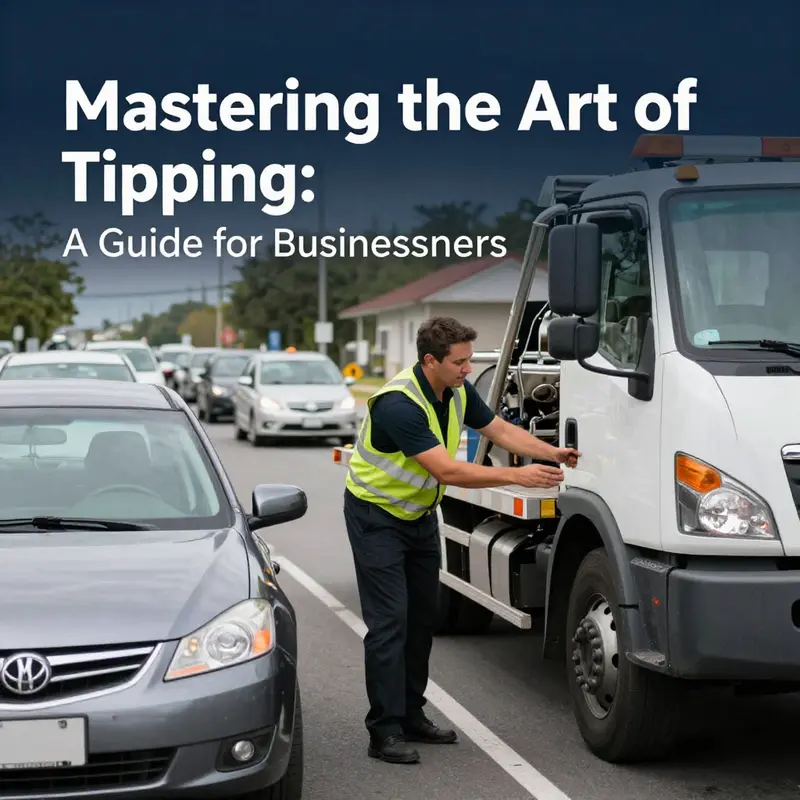
Tipping a tow truck driver is rarely framed as a fixed rite of passage the way tipping a server at a restaurant is. The practice varies by country, region, and even by company policy. In many parts of the United States, tipping is not expected, and the tow itself is treated as a service fee with specific charges tied to distance, vehicle type, time of day, and any special handling required. Yet the moment you find yourself stranded on the shoulder, with an oncoming lane closing and your vehicle immobilized, the gesture of a tip can feel less like a calculation and more like a thank-you for someone who helped you regain safety and mobility. The challenge for most people is to reconcile two truths at once: tipping is discretionary, and a well-timed tip can recognize exceptional effort without crossing into generosity that feels obligatory. Understanding when to tip and how much to offer requires attention to both the measurable costs of the tow and the intangible value a driver adds in a stressful situation.
The practical starting point is that tipping, in this context, is not universally expected or mandated. Unlike restaurants, where tips are a built-in expectation for service, tow trucks operate more like emergency responders in the eyes of many customers. The invoice you receive typically covers the base tow fee, defined by vehicle size, the distance traveled, and any special equipment use, such as a winch or flatbed transport. Some companies may itemize a service fee or add an after-hours surcharge, which is separate from any gratuity. It’s important to distinguish these charges from a tip and to be aware of any company policies that might discourage tipping altogether. If you’re unsure, a quick phone call to the dispatch office before the driver arrives can save your nerves and set clear expectations.
Even when tipping isn’t expected, the right gesture can still convey appreciation. In the moments after the driver arrives, demonstrates professionalism, and safely secures your vehicle, a tip becomes less about the percentage and more about recognition of care and competence. When you feel the driver has gone above and beyond, a tip can feel appropriate, proportionate to the overall cost and the level of service provided. The judgment call often rests on the driver’s responsiveness, the urgency of the situation, and how well they communicate options and safety considerations. If the driver arrives quickly during an emergency, takes steps to prevent further damage, or offers practical advice about the next steps after towing, these are the occasions where many people extend a gratuity.
A common framework used by many customers is to consider tipping as a percentage of the total tow fee, typically in the range of 10% to 15% for exceptional service. For instance, if the tow costs $150, a tip between $15 and $22.50 is a reasonable nod to a job well done. If the service was merely satisfactory, some people choose to forego a tip altogether, while others offer a small token, such as $5 to $10, to acknowledge effort and courtesy. It’s a delicate balance: the percentage provides a rough guide, but the actual amount should reflect the circumstances, your budget, and how the driver met or exceeded expectations under pressure.
Beyond the mathematics of a tip, the spirit of appreciation matters more than the exact figure. A respectful, single-tuck cash tip is traditional in many parts of the country because it’s immediate and tangible. Cash also leaves no ambiguity about whether the gratuity has been received. However, not all drivers can accept cash, and some companies have explicit policies about tips, or they may discourage them to avoid conflicts with customers and compliance concerns. In such cases, verbal gratitude carries significant weight, and you can also consider leaving a positive online review or sharing your experience with friends and family. The act of public praise reinforces good service and helps others make informed decisions when they face similar situations.
The decision tree for tipping is further influenced by service quality and the specific tasks performed. An emergency, after-hours arrival, or a difficult recovery typically justifies more generosity than a routine tow. If the driver demonstrates exceptional courtesy—such as communicating clearly about what happened, outlining safety steps, or offering to help locate the next service provider—you may feel compelled to reward that extra mile with a larger tip. Conversely, if the driver is unfriendly, unhelpful, or careless with your vehicle, tipping becomes a more nuanced decision. You might still acknowledge their time and travel with a modest gratuity, but you also retain the right to voice concerns in a formal review or complaint if the service fell short of professional standards.
Consider the practical realities of the towing business landscape. Rates are influenced by the vehicle type, the distance traveled, traffic conditions, and whether the tow required heavy equipment, winching, or specialized transport. These factors do not justify tipping on their own, but they do provide context for evaluating the value of the service. A long-distance tow across several counties with demanding weather or road conditions may warrant greater recognition than a short local tow during daylight hours. If a driver goes out of their way to minimize damage to your car, secure gear properly, or provide you with clear, calm guidance about the next steps after arrival, these elements contribute to the overall value and can shape your tipping decision.
Importantly, you should verify tips’ acceptability according to the company’s policy. Several towing outfits explicitly state that tips are not accepted, or they may permit tips only through certain channels. If a policy exists, you should respect it. In such cases, you can still express appreciation through non-monetary means: a courteous thank-you, a note to the dispatcher praising the driver, or a public review that highlights the driver’s professionalism. In the modern service economy, a positive digital footprint can go a long way for a company that relies on local reputation to attract more customers. This approach preserves goodwill and ensures you feel comfortable with the interaction while honoring the boundaries set by the business.
For readers seeking a broadly applicable reference, many consumer guidance resources point to a measured approach rooted in local norms. The American Automobile Association (AAA) provides general tips that help travelers gauge when tipping might be appropriate and how to navigate the etiquette in various scenarios. While the specifics can differ by region, the underlying principle remains consistent: tipping is a voluntary acknowledgment of outstanding service, not a requirement tied to the transaction. For readers who want to explore the official guidance, the AAA Towing Tips resource offers practical insights that help align expectations with real-world practice. This external resource serves as a valuable anchor for anyone trying to understand tipping in the broader context of roadside assistance.
To illustrate how these guidelines play out in everyday scenes, imagine you’re stranded on a dimly lit highway at midnight. The driver arrives promptly, assesses your vehicle with care, and explains what they can do to get you back on the road safely. They might suggest a lightweight discontinuation of certain repairs to avoid unnecessary risk, or they could propose a plan for towing to a nearby service center that can complete the work. In such a moment, the driver’s patience and clear communication can transform a stressful experience into a manageable one. If the total tow fee is around $120, and the driver has demonstrated exceptional professionalism, a tip of $12 to $18 could be a fair reflection of gratitude without feeling excessive. If the service was truly exceptional, a higher tip within the 15% range might be appropriate. If the service was routine and unremarkable, you might opt for no tip, or a minimal gratuity that signals appreciation without implying a standard expectation.
When discussing tipping, the practicalities of payment also matter. Cash remains a straightforward method that signals immediacy and reliability. If you’re open to digital options, verify whether the company accepts tips through mobile payment platforms or card readers. Some drivers may carry minimal cash due to safety concerns or company policies, which means a digital tip could be the easiest option for you. If you do decide to tip, you may present it discreetly at the end of the service, with a clear note of gratitude and a brief acknowledgment of what you found valuable. A simple, polite statement such as, “Thank you for getting me safely back on the road,” accompanied by the tip, can reinforce positive interactions and set a constructive tone for any future service.
Beyond the personal exchange, the broader etiquette of tipping in roadside assistance tends to intersect with workplace norms and local laws. In some jurisdictions, drivers are prohibited from accepting tips to avoid conflicts of interest or to comply with licensing rules. In other areas, tipping is customary in some neighborhoods but frowned upon in others due to specific company guidelines or security considerations. If you’re unsure, a prudent approach is to ask the dispatcher or check the company’s published policies. This small step can prevent awkward moments and ensures that you remain aligned with the local operational practices.
An important facet of the tipping conversation is recognizing that it is a private gesture that often lives on the edge of discretion. You don’t have to broadcast your tipping amount or justify it to bystanders. A tip is between you and the driver, and it should reflect your own experience and budget rather than a fixed script. In some cases, a driver may have agreed to a flat rate for the tow and then travel to a distant location. In such situations, a tip, if given, should be mindful of the overall value received, not simply the distance covered. If you feel compelled to offer more due to the complexity of the job, you should calibrate your generosity to the realities of the encounter rather than the fear of social judgment.
For readers who want to anchor their decision in a concrete rule of thumb, consider this practical approach: assess the service quality, document the total cost of the tow, and then apply a generous but reasonable percentage only if the circumstances merited it. If you favor a more conservative stance, you can acknowledge the effort with a modest tip within the suggested range or decide to withhold tipping altogether and opt instead for a review or a direct note to the company praising the driver’s strengths. In environments where tipping is discouraged, show your appreciation with respectful communication, clear feedback, and a quick online recommendation that highlights the driver’s professionalism. The goal is to preserve dignity, support good service, and encourage responsible practices among service workers who often operate in high-stress situations.
To further connect this chapter with ongoing conversations about tipping norms, some readers may want to explore local precedents or city-specific guidelines. If you’re in a large city with dense traffic and frequent roadside assistance needs, be mindful that tipping expectations can differ from rural areas where encounters with tow trucks are less frequent and tipping practices are less standardized. As you navigate these differences, it’s helpful to keep a flexible mindset: what counts as a fair gratuity in one place may feel excessive in another, and the absence of a tip does not necessarily reflect poorly on the driver’s performance. The key is to observe company policies, respond to service quality, and communicate appreciation in a manner that aligns with your values and budgets.
For readers seeking direct, city-specific guidance, you may find it useful to consult localized resources that discuss tipping etiquette for roadside assistance. In particular, a page focusing on practical tips for a specific market can offer nuanced expectations about whether tipping is standard, how much is typical, and what alternatives to tipping are appropriate when policies differ. In the broader sense, these resources reinforce the idea that tipping remains a personal decision rooted in respect for the work performed, the safety considerations involved, and the context of the service.
If you want a reliable starting point for general guidance, consider consulting the AAA Towing Tips resource. It provides a concise overview of factors to consider when deciding whether to tip, how to gauge the level of service, and what other forms of appreciation you might offer if tipping isn’t possible. This external resource offers a reputable frame of reference for readers who want to ensure they’re aligning their practices with widely accepted standards. In addition to the written guidance, many readers find it helpful to review anecdotal experiences from others who have faced similar choices in the moment. Shared stories illuminate how different drivers respond to generosity and how customers balance fairness with the realities of emergency services.
For those who need practical, location-specific advice, there are widely used local directories and consumer protection resources that can shed light on tipping norms in your area. The important thing is to approach tipping as a voluntary act that recognizes service quality and safety, rather than as a requirement that must be honored. By centering your decision on the actual service delivered, you maintain fairness for the driver and confidence in your own judgment. If you’re curious about how tipping norms unfold in a particular city, a quick glance at a city-focused towing page can provide clarity without forcing a one-size-fits-all stance onto you. For readers who want to explore a city-specific example, you can reference a local overview such as the page on tow service in Houston TX. This internal link offers a practical lens on how tipping expectations can differ by market and can guide you in future roadside encounters.
In sum, tipping a tow truck driver is a nuanced choice that blends monetary calculation with a sense of timing, professionalism, and gratitude. The core message is simple: tipping is usually optional, and it should reflect the driver’s conduct and the value you perceived in the service. A tip of 10% to 15% of the total tow cost is a common benchmark when the service feels outstanding, while smaller gestures or none at all are acceptable when the service is routine or when policies discourage tips. If tipping isn’t possible, verbal praise, a review, or a note to the company can still convey your appreciation. The key is to stay informed, respect policy boundaries, and choose an approach that aligns with your financial situation and your experience on the roadside. By keeping these principles in mind, you can navigate the tipping question with clarity and confidence, even in the high-pressure moments that put you in touch with a tow truck driver.
External resource: For a concise official overview of tipping practices in towing and roadside assistance, see AAA Towing Tips.
The Gratuity Roadmap: How Much to Tip a Tow Truck Driver and Why It Varies
A tow truck pulls up in a tense moment. The engine hums, the air smells like burned rubber, and the scene on the shoulder feels chaotic. In that instant, a decision about gratuity lands squarely in your lap. Is tipping expected in this situation? How much should you give? And does the answer change depending on where you are or what the driver has just done? The truth is that tipping tow truck drivers is not a universal rule. It shifts with the type of service, the quality of the interaction, and the context of the tow itself. What remains constant is the underlying idea that a tip is a gesture of appreciation, not a mandated fee. Understanding when and how much to tip requires a careful read of the situation, a sense of fairness, and a bit of local know-how. The path to a reasonable gratuity begins with recognizing the core factors that shape tipping decisions and then translating those factors into a tip that feels right for both parties.
At the heart of the decision is the type of service provided. A simple roadside pull to move a car a short distance is not the same as a complex operation that involves a flatbed lift, meticulous maneuvering through tight space, or the recovery of a severely damaged vehicle. In the first case, a tip in the range of $10 to $20 is commonly offered, a modest token that acknowledges promptness and courtesy. In the latter scenario, the demands on the driver increase. The operator may need to engineer a precise rigging setup, negotiate angles, and manage heavier machinery under potentially hazardous conditions. A tip of $25 to $50, or even higher in extreme cases, begins to reflect the extra effort, risk, and skill involved. These figures are not rigid commandments but practical benchmarks that many people use when the service does not fall on a basic, run-of-the-mill tow. If the car has to be winched from an awkward position, or if the driver contends with weather, traffic, or restricted access, the tip should acknowledge those added challenges with a corresponding boost.
Service quality matters as much as the service type. A tow driver who arrives quickly, communicates clearly, and handles the vehicle with gentleness deserves recognition. The emotional weight of a breakdown often makes drivers a sort of first aid for your day; their calm competence can spare you further stress. A courteous, professional demeanor can transform a tense moment into a cooperative effort. In those scenes, a tip can feel like a shared sense of relief—for both safety and efficiency. Conversely, when communication falters, delays become longer, or the driver seems indifferent to the vehicle’s fragile condition, some people reduce or omit a tip. Yet even in less-than-ideal circumstances, leaving at least a small token—if possible—often signals appreciation for the driver’s time and effort and helps preserve a positive interaction for the next customer.
Location and local norms exert a powerful influence on tipping expectations. In major metropolitan hubs, where towing costs rise and demand is persistent, tips can be larger, sometimes reaching $50 or more for especially demanding work. In smaller towns or rural areas, tipping norms may be more modest, yet the gesture remains valuable. The cost structure of towing in a city can drive both the base fee and the perceived need for a tip. If the same service is delivered quickly in a remote area, your appreciation may be read as a sign of respect for the driver’s willingness to travel, wait, or coordinate with other service layers such as dispatchers or garages. Understanding local custom is not about conforming to a stereotype but about aligning your behavior with the practical expectations of the community you are in. This is where the suggestion to seek local sources or consumer guidance becomes meaningful. In practice, many drivers will not expect a tip in a rural setting, yet the act of offering one remains a meaningful courtesy if service quality merits it and if the budget allows.
Insurance or roadside assistance coverage further colors tipping decisions. If your plan covers the full cost of the tow, some people feel less inclined to tip, arguing that the service did not require out-of-pocket payment. Others still tip as a sign of appreciation for the driver’s courtesy or the complexity of the job, and some motorists tip half or more of the base cost regardless of coverage when the service exceeds expectations. The key point is that tipping remains a discretionary gesture whose magnitude should reflect the perceived value of the service and the user’s financial situation. It is also helpful to separate the tipping decision from the billing itself. If there is a stated service fee for urgent or after-hours service, that fee is part of the charge for the tow and should not be conflated with a gratuity. A tip responds to the performance, not to the price tag, and that distinction matters for fairness.
Beyond these practical factors, a general framework emerges if you want a solid starting point. A common guideline is to tip roughly 10 to 20 percent of the total tow cost, but this is adjustable. For example, if a tow costs $150 and the driver provided exceptional service, a $30 tip could feel appropriate. If the tow costs $75 and the effort was minimal, a $10 tip might be more than sufficient to acknowledge the time and presence of the driver. The situation gets more nuanced with high-stakes work. Imagine a scenario where the vehicle is severely damaged and the driver performs delicate operations to recover it. In those cases, tipping toward the higher end of the scale—perhaps $25 to $50 or more—can reflect both the risk and the precision required. The key is to let the tip speak for itself: it should match the reality of the work performed, the driver’s attitude, and the context rather than arbitrary rules.
Practical tips for when you decide to tip begin with a quiet, direct exchange. If possible, hand the tip in cash to avoid the need for the driver to claim or reconcile a card-based payment. Present the tip discreetly and with a brief expression of thanks. For many, a simple, sincere line such as, “Appreciate your help today,” can convey gratitude without turning the moment into a negotiation. While some people want to use a deferring tone, others might prefer to emphasize the specific aspects they value—timeliness, care, or problem-solving. Acknowledge the service, not the person’s worth, to maintain respectful professionalism for every job the driver conducts in the future. If you do not have cash on hand, a tip can still be extended through a card gift or a small note of thanks, but cash often remains the most universally appreciated and easily demonstrable form of gratitude.
The discussion of tips also intersects with how a consumer thinks about cost and value in the moment. Tow services are essential services in emergencies, and the cost structure can be challenging to compare against other car-related expenses. Inflation, fuel prices, and regional wage differences play a role in how much a tow costs and, by extension, how much a tip might feel appropriate. In many communities, the tipping conversation is less a fixed rule and more a shared practice that signals mutual respect between customer and service provider. It can also influence a driver’s willingness to go above and beyond in the future. This social dynamic is part of the informal economy surrounding roadside assistance and is worth acknowledging when you navigate a stressful situation.
When reflecting on the broader landscape of tipping, it helps to look at credible sources that collect and share practice standards. The general guidance across reputable sources suggests that tipping is not mandatory, but it is a meaningful way to acknowledge good service, especially when the driver has faced adverse conditions, shown skill, or managed an after-hours scenario with professionalism. If you want more precise, location-specific guidance, you can consult consumer protection resources or industry associations that publish tipping norms or best practices. For a broader, widely recognized reference, consult sources that discuss roadside assistance and tow services, recognizing that the specifics can shift with geography and circumstance.
If you want to see how these ideas translate into real-world decisions, consider a few thought experiments. Picture a tow in a busy urban area during rush hour, with a driver who arrives within minutes, calmly explains the process, and completes the move without incident. The service is efficient, the vehicle is handled with care, and the information shared helps you proceed with your day. A tip at the higher end of the guideline—perhaps 15 to 20 percent of the tow cost or a flat $30 to $40 plus—would feel appropriate for many people in that situation. In a different scene, imagine a rural site with a long-distance tow and a driver who navigates tight turns or uneven terrain with deliberate care. In this case, a tip in the $20 to $40 range might reflect both the extended time and the specialized skill required. Or, if the service is merely a quick pull to clear a spot on a road and the driver is courteous but the effort is standard, a $10 to $15 tip can still communicate appreciation without overshooting the value of the work performed.
What if the experience leaves you disappointed? If the driver’s conduct or performance falls short of expectations, tipping is not mandatory. You might choose to forego a tip or offer a minimal amount to acknowledge their presence. The important thing is to stay respectful and to avoid venting your frustration in a way that could escalate the situation. If issues persist across multiple interactions, it can be useful to document the encounter and address it with the towing company later, rather than letting a single unfortunate moment color all future experiences. Remember that tips are a personal choice tied to your experience, not a contractual obligation, and your discretion matters.
For those who want a point of reference beyond personal judgment, there is value in consulting established guidance. The American Automobile Association (AAA) has official recommendations that can offer structure while leaving room for judgment. These recommendations align with the broader principle that tipping should be proportionate to service quality, complexity, and the overall experience. They also reiterate that tipping is not a given, but a recognized way to reward effort and care when deserved. As you weigh the options, you might consult AAA’s guidance to calibrate your expectations with a recognized benchmark. In practice, many travelers carry a small allowance for tips in their emergency fund, recognizing the unpredictability of roadside incidents and the likelihood that drivers will appreciate a thoughtful gratuity when the moment calls for it.
As you prepare for future incidents, a few practical habits can help you navigate the tipping question with more ease. First, keep a small pool of cash in your glove compartment or a designated wallet to ensure you can tip promptly. Second, save the tipping range in your notes so you can reference it quickly when a tow arrives. Third, consider the broader context: if the driver is coordinating with a dispatcher, assisting with paperwork, or arranging a secondary service such as a garage appointment, these factors can justify a larger tip. Fourth, acknowledge that tipping norms can differ by region. If you travel frequently, take a moment to observe what others in the area do and adapt accordingly. And finally, remember that tipping is a personal choice. Even in the absence of or in the face of higher costs, a sincere expression of thanks can become the most meaningful part of the exchange.
For readers seeking more about the kind of roadside assistance services that might be involved in a tow, you can explore resources like Mike’s Roadside Service, which offers broader context on how such services operate and what customers typically rely on during emergencies. Mike’s Roadside Service can serve as a practical reference point to understand the range of tasks a tow driver might perform and how those tasks relate to the tipping decision. Keeping this in mind helps ensure that your gratuity aligns with the actual work delivered rather than surfaces the moment with a guess about what might be expected in different places.
In the end, tipping a tow truck driver is about balancing fairness, local norms, and the value you feel the driver delivered in a tense moment. It is a small form of reciprocity that recognizes effort, skill, and human kindness. The amount you choose should reflect all the factors discussed—service type, quality, location, and the specifics of the job—while remaining within your means. If you approach tipping with a clear sense of purpose and a respectful tone, you contribute to a culture of mutual support on the road. That can be as helpful as any mechanical fix when you find yourself stranded and searching for a way forward. External resource: AAA’s official recommendations: https://www.aaa.com/.
Final thoughts
Deciding how much to tip a tow truck driver can be a nuanced consideration for business owners. By understanding the general guidelines and various factors influencing tipping decisions, you can make informed choices that enhance your service relations. Remember, while a tip is not mandatory, it can significantly reflect your appreciation for quick, efficient, and friendly service in times of need. Prioritizing relationships with service providers not only fosters goodwill but also can result in better service in the future.