
For business owners, understanding towing costs is crucial for effective planning and budgeting. When fleet vehicles experience breakdowns or require transport, knowing how much a tow truck charges per mile becomes essential. Towing rates can fluctuate based on a variety of factors, including the type of service provided, the vehicle’s specifications, and even the time of day. In this comprehensive guide, we’ll explore the typical costs associated with towing services, followed by an in-depth look at the various elements that influence these rates. By the end of this article, you’ll be well-equipped to navigate the charges associated with towing services, ensuring you can make informed decisions for your business’s transport needs.
Tow by the Mile: Decoding the Cost Behind Every Distance
Tow by the Mile: Decoding the Cost Behind Every Distance
When people ask, “How much is a tow per mile?” they are really asking about how much distance matters in a bill that also carries a hook, a plan, and a lot of moving parts. The quick answer is simple in theory but complex in practice: distance is the dominant driver of cost, yet the final number rides on the slope of several other factors. Most towing companies structure their pricing in one of two ways. They either tack a base hook-up fee onto a per-mile charge, or they use a tiered system that bills by distance brackets such as 0–10 miles, 10–25 miles, and so on. Both methods share a common core: the farther a vehicle must travel, the more fuel, labor, and equipment it consumes, and the more time the tow truck spends on the job.
At a glance, the numbers you’ll encounter fall roughly into two bands. A typical per-mile rate lands somewhere between $2.50 and $5 per mile in many markets, with some areas seeing higher or lower figures depending on local costs and competition. The per-mile range broadens to as much as $7 in certain situations or regions, especially where specialized equipment is required or where traffic and terrain intensify the challenge of the haul. On top of this, many operators apply a base hookup charge, commonly in the neighborhood of $50 to $75, before any miles are rolled up. That base fee covers the dispatch, readiness, and the initial outreach that begins the process of getting a vehicle back on the road. The combination of base fee plus per-mile costs means a short tow can land in a different price neighborhood than a long haul, even if the actual miles aren’t dramatically different.
Concrete examples help illuminate how these factors play out. A short five-mile tow often lands in the range of roughly $75 to $125, depending on the market and the towing company’s chosen pricing model. The base fee might be baked into that total, or it may appear as a separate line item, followed by a per-mile charge. For longer operations, the math shifts in two ways. First, the miles begin to accumulate more quickly, and second, the job is more likely to involve heavier equipment, possible fuel surcharges, and longer response times. A long-distance tow—say, over 100 miles—can range from about $300 to $600 or more, a spread that reflects both the extra miles and the logistical realities of moving a vehicle that far. In some cases, a 50-mile tow could exceed $300, especially if the vehicle is large or requires specialized equipment, or if the service is provided during an off-hours window when demand is high.
Vehicle type and weight are not mere footnotes in the pricing equation; they are a central influence on the final bill. Heavier vehicles—full-size pickups, SUVs, or commercial vans—demand heavier tow trucks, more powerful winches, longer rigging times, and greater fuel consumption. The labor intensity of securing a heavy vehicle, protecting it from damage during transport, and maneuvering it onto and off the tow cradle adds to the cost in tangible ways. A sedan might ride the same truck bed with less risk and less strain on the equipment, whereas moving a bulky or tall vehicle can require extra crew members and additional safety precautions. The result is a pricing nuance that mirrors the physical reality of moving different machines: the heavier the load, the higher the per-mile rate tends to climb, and the more likely a base fee will be accompanied by supplementary charges for fatigue and complexity.
Time of day and location contribute a second layer of variability that can tilt a quote upward or downward. Many towing services apply higher rates during evenings, nights, weekends, or holidays when the demand is volatile and the need is urgent. In urban settings, the price picture often reflects not just the miles but also congestion, parking restrictions, and the challenge of reaching a vehicle in a crowded area. Even when the distance is shorter in a city, traffic delays can stretch the service time and, by extension, the total cost. Rural or remote locations introduce their own form of pressure: miles stretch longer, fuel is spent on longer legs, and the odds increase that a tow truck has to navigate less forgiving terrain or access a vehicle stranded in awkward spots. Accessibility matters just as much as distance. If a car sits in a narrow alley, on a steep hill, or in a driveway with a tight turnaround, the crew may need extra maneuvering, equipment, or time to complete the job safely. All these factors can push a per-mile rate higher or trigger additional fees that weren’t anticipated at the outset.
In practice, a consumer should expect to see a detailed breakdown before service begins. An itemized estimate that lists the base hook-up fee, the per-mile charge, any minimum charge, and any add-ons—such as emergency roadside assistance, after-hours surcharges, or storage fees—allows for apples-to-apples comparison across providers. It also gives a clearer sense of where money is being spent. For instance, if you’re paying a base fee upfront but a large portion of the total stems from miles, you’ll know that the distance traveled is the principal driver. If the base fee is a sizable chunk of the total, you can infer that dispatch, readiness, and initial mobilization are playing a heavier role in the price. In either case, a transparent quote reduces the risk of unwelcome surprises when the bill arrives.
The pricing landscape is not uniform from state to state or city to city. Some operators rely on a simple base-plus-per-mile model, which can be easier to parse but still hides the reality that miles are rarely the sole determinant. Others adopt tiered pricing, where a vehicle’s distance falls into a bracket and the rate for each bracket is predetermined. Bracket pricing can offer predictability for certain ranges but may obscure the marginal cost of each extra mile if the distance strays into a higher tier. In either arrangement, the total cost is a tapestry of miles plus machinery, man-hours, and minute-by-minute decisions by the crew on the ground.
For readers navigating this topic in a specific locale, there is value in understanding how nearby providers structure their pricing. If you’re in or around Houston, you can explore options for a local provider via tow service in Houston. This kind of regional inquiry helps translate general pricing bands into a real-world expectation—what you’ll likely pay when a tow reaches your doorstep, how far the tow truck will actually travel to recover your vehicle, and what you can do to prepare for a fair, precise estimate. The key is to seek a written estimate with a line-by-line breakdown, confirm any minimum charges that might apply, and ask about potential surcharges tied to time of day, weather, or accessibility. A little upfront diligence can save not only money but also time and frustration during a stressful moment on the road.
Beyond the numbers, the broader takeaway remains consistent: distance matters, but it is joined by a constellation of factors that shape the final cost. A 5-mile tow is not simply a function of distance; it embodies decision points about the vehicle’s size, the equipment used, and the conditions under which the tow is performed. A 100-mile haul is not merely longer; it is more expensive because it demands more fuel, more labor, and a longer commitment of resources. In both cases, the prudent step is to request a detailed, written estimate before any work begins and to ask for a clear explanation of every line item on the bill. That approach not only clarifies the math but also fosters trust between the vehicle owner and the service provider, a mutual understanding that the miles traveled are a shared responsibility rather than a hidden fee.
In summary, the per-mile cost of tow services sits at the intersection of distance, vehicle type, time, location, and accessibility. The numbers you encounter—whether a typical range of around $2.50 to $7 per mile or more conservative bands in your region—reflect an ecosystem of costs that expand and contract with the situation. A base hookup fee adds a baseline level of charge that ensures the operator can cover dispatch and readiness, while the miles accumulate as fuel, equipment wear, and crew effort. The moral for consumers is straightforward: insist on an itemized estimate, ask about contingencies, and consider the whole picture rather than focusing only on the per-mile figure. When you understand the makeup of the bill, you are better positioned to budget, compare, and choose a service that aligns with both your needs and your circumstances.
External resource: The Zebra: Towing Costs.
Tow by the Mile: Understanding What Drives Per-Mile Costs in Towing
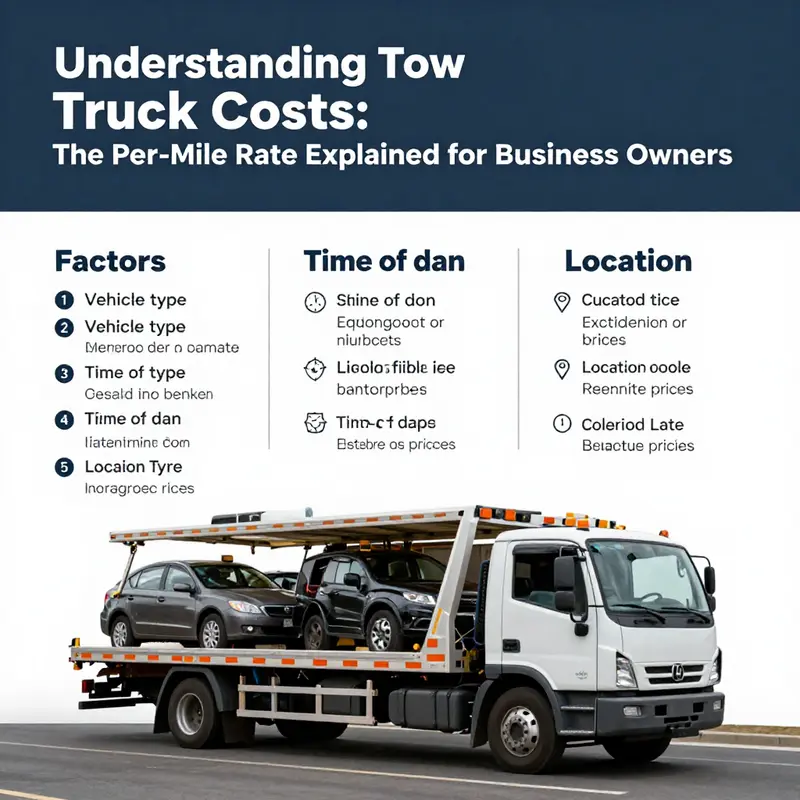
When you picture a tow truck arriving on a quiet highway or a busy city street, the math behind the price may not be the first thing that comes to mind. Yet the per-mile cost you pay for a tow is a simple thread that ties together distance, vehicle specifics, timing, and location into a single bill. Understanding how that number is stitched together can spare you sticker shock and help you navigate the moment when every minute counts and every mile matters. At its core, the per-mile component sits atop a base hook-up charge, a structure that varies from company to company but consistently reflects a mix of labor, equipment wear, and fuel consumption. In practical terms, most tow services express pricing in two common ways: a flat base fee plus a per-mile rate, or a tiered distance structure that segments travel into brackets such as 0–10 miles, 10–25 miles, and beyond. If you’re curious about the raw numbers, you’ll typically see a baseline somewhere in the neighborhood of $50 to $75 for the hook-up, followed by a per-mile rate ranging from about $2.50 to $5.00. Those figures offer a useful snapshot, but they don’t tell the whole story. The real price you walk away with is shaped by a constellation of factors that can nudge the final tally up or down, sometimes significantly. The distance itself is the most visible driver, but it sits among a web of other inputs that a dispatcher weighs as the situation unfolds.
Distance, as a concept, is straightforward, yet its implications are nuanced in the field. A short tow of around five miles might hover near the $75 mark, especially if the base fee is already factored in and there are no special requests. Conversely, a longer tow—say, fifty miles—can push the total well past the $300 threshold. The arithmetic seems simple on the surface: more miles equals more money. But the practical impact of miles is magnified by how those miles are covered. Traveling through heavy traffic, dealing with detours, or stopping for fuel at multiple points translates into extra time and fuel burn, which curators of pricing translate into higher per-mile figures or occasional surcharges. This is where the cost model edges beyond a neat spreadsheet into the real world of rovering trucks, shifting terrain, and unpredictable road conditions.
Vehicle type and weight complicate the picture in concrete ways. A sedan tows differently than a heavy work truck, a large SUV, a cargo van, or a commercial vehicle. Heavier loads demand equipment with greater heft and stability, a bigger winch, stronger chains, and sometimes specialized trucks designed to move weight without compromising safety. Those requirements complicate the job at the outset and ripple through the price. It’s not simply a matter of more metal moving from point A to point B; it’s about the resources necessary to secure, protect, and transport that weight. The more an operator has to tailor the approach to the vehicle, the higher the base on the bill, and often the higher the per-mile rate, particularly if the ride involves careful handling to prevent damage.
The type of vehicle can also enter the price equation in less obvious ways. Luxury or exotic cars, for instance, may trigger higher rates because they require more delicate handling, additional precautions, and sometimes a different class of tow equipment to minimize risk. The higher level of care means more time and attention per mile, even if the distance itself remains the same. In a similar vein, if a vehicle has unique features—an extended wheelbase, low ground clearance, or specialized undercarriage access—towing crews may deploy specialized rigs. Those specialized rigs incur additional wear and tear, maintenance costs, and, yes, billable time per mile. The bottom line is that the per-mile rate does not function in a vacuum; it’s shaped by the mechanics of the move and the characteristics of what is being moved.
Time of day and location introduce another layer of complexity. Towing is, at heart, a service with high demand when it’s most inconvenient. Late-night hours, weekends, and holidays can trigger a premium because emergency dispatches spike when roadside safety becomes a priority. Urban environments compound the effect, with dense traffic, complex parking constraints, and the need to navigate congested streets. In cities, even short trips can mushroom into longer durations as drivers contend with traffic delays and complex access routes. Rural areas, by contrast, may feature longer travel distances to reach a customer and longer response times, which can inflate the overall cost through longer use of fuel and labor over greater distances. In either setting, the price per mile reflects not only the physical miles but also the opportunity cost of keeping a tow truck tied up in one job rather than another.
Accessibility is a less visible but equally consequential factor. A vehicle tucked into a narrow alley, a vehicle perched on a steep hillside, or one lodged in a parking garage can require additional labor, equipment, and sometimes a second crew member to stabilize and winch the vehicle to safety. The need for extra labor translates into higher hourly charges or additional line items on the bill, and those charges frequently flow into the per-mile section as a multiplier of the base rate. It’s not just about miles traveled; it’s about the effort expended to reach the vehicle and recover it without creating new risks for the operator or for passersby. In some situations, such as a vehicle in an off-street location with limited access, the price per mile can feel like a secondary concern to the immediate need to get the vehicle out of danger and back on the road.
Emergency versus non-emergency service represents a fundamental psychology of pricing. An urgent call—where a tow truck is dispatched at the first possible moment—often carries a dispatch or quick-response fee in addition to the per-mile rate. This reflects the value of rapid availability and the costs tied to keeping a truck ready for immediate deployment. Non-emergency moves, which can be scheduled ahead of time or arranged to fit a budget, typically offer more predictable pricing and sometimes a chance to negotiate. The distinction between emergency and non-emergency is one of the most tangible levers a consumer can use to influence cost. If you can plan ahead and reduce the pressure of time, you may shave off some premium from the overall bill while preserving safety and reliability.
To navigate these variables wisely, it helps to think in terms of the entire pricing ecosystem rather than only the per-mile figure. The hook-up fee is the entry point—the initial commitment you make to engage a provider and mobilize the equipment. The miles are the core of the journey, but the journey is not just miles; it is time, fuel, labor, and risk that accumulate with every mile traveled. The rate structure you encounter most often balances these pieces into a price that must cover both predictable needs and unpredictable contingencies. For example, a typical short tow might hover around the base plus a few miles, landing near the mid-$70s if the hook-up is $50 to $75 and the per-mile rate sits at roughly $2.50 to $3.50. A longer haul of fifty miles, with a similar base and a higher per-mile charge or distance-based tier, can result in a total that surpasses $300. Those numbers, though representative, are not universal; they illustrate how distance and the built-in costs of the operation converge to create a final sum.
An important practical step when facing a tow is to seek a detailed, written breakdown before you agree to service. A transparent estimate should itemize the hook-up charge, the per-mile rate, any distance brackets, and any additional fees that could apply for emergency dispatch, heavy vehicles, or early morning or late-night calls. Having that itemized quote in hand helps you compare apples to apples across providers and makes it easier to spot any unexpected line items before you commit. In conversations with dispatchers or when you receive a mobile quote, you can ask targeted questions: Are there any minimum charges if the tow is short? Do you apply a higher per-mile rate after a certain distance? Is there a charge for winching or extra labor if the vehicle is in a hard-to-reach location? By framing the discussion around a clear, line-by-line price, you minimize ambiguity and reduce the chances of a surprise when the bill arrives.
The broader takeaway is that the per-mile cost is a fluid indicator of a broader service economy in motion. It reflects not only distance but the capacity, constraints, and responsiveness of a towing operation. Vehicles of different sizes, locations with varying access challenges, and the imperative to deliver timely service each push on the same dial in different ways. When you understand how these factors combine, you can anticipate the components of your bill, prepare for fluctuations, and engage with a provider in a way that respects both your budget and the safety of your vehicle.
To connect these ideas to real-world shopping, consider how you examine options in your local area. While distance remains a predictable factor, the difference between two nearby providers may lie in their handling of accessibility or the way they structure emergency pricing. A clean, itemized quote that separates the base hook-up from per-mile charges and clearly states any extra fees gives you a solid basis for comparison. And as you weigh the costs, remember the practical benefit of choosing a provider you can trust to handle your vehicle with care, especially when it matters most. For readers who want a direct touchpoint with a service provider, a quick look at a locally oriented resource such as mikes-towing can offer a sense of the common service menu, transparency in pricing, and a reminder that consistent, reliable labor costs are built into the per-mile rate you’re assessing. The goal is not to chase the absolute cheapest mile but to balance cost with reliability, accountability, and the safety of your vehicle.
As with any financial decision tied to an emergency or logistical need, arming yourself with context makes a difference. The numbers you see—$2.50 to $5.00 per mile, a $50 to $75 hook-up fee, and the occasional long-haul pattern—are touchpoints on a broader map of service quality, response times, and risk management. Reading the fine print, asking the right questions, and understanding the range of variables that influence the final price help you move through the moment with confidence. If you want to explore the broader landscape of towing costs beyond the mile-by-mile math, the industry discussion compiled by The Zebra offers a comprehensive diagnostic of how those costs are determined and how they can shift with market dynamics and policy changes. For a broader external resource, see The Zebra’s guide on towing costs. https://www.thezebra.com/insurance/towing-cost/
Final thoughts
In conclusion, understanding how much a tow truck charges per mile is essential for any business that relies on vehicle transport or roadside assistance. Recognizing the various factors that influence these costs, from vehicle weight to time of day, can help you anticipate expenses and budget accordingly. Whether you’re managing a fleet of vehicles or contemplating emergency towing options, being informed allows you to make the best choices for your operations. Take the time to gauge the potential costs involved, and don’t hesitate to reach out for quotes before you require service. Knowing this information will empower you to safeguard your business interests effectively.