
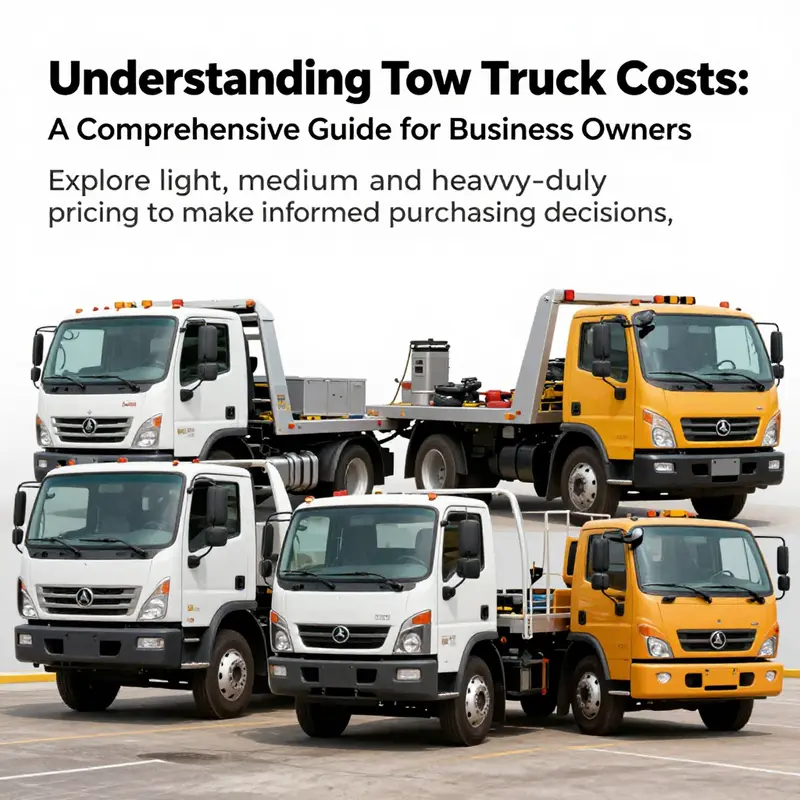
For business owners contemplating the investment in a tow truck, understanding the associated costs is paramount. Whether you are looking for light-duty equipment for personal vehicle towing or heavy-duty trucks for commercial recovery, knowing the price brackets can guide your decision-making. This article delves into the pricing breakdown for light to medium-duty tow trucks, followed by insights into the costs of heavy-duty models, providing a comprehensive view that will aid you in aligning your business’s towing needs with your budget.
Tow Truck Price Maps: A Practical Guide to Light- and Medium-Duty Units for Personal Use
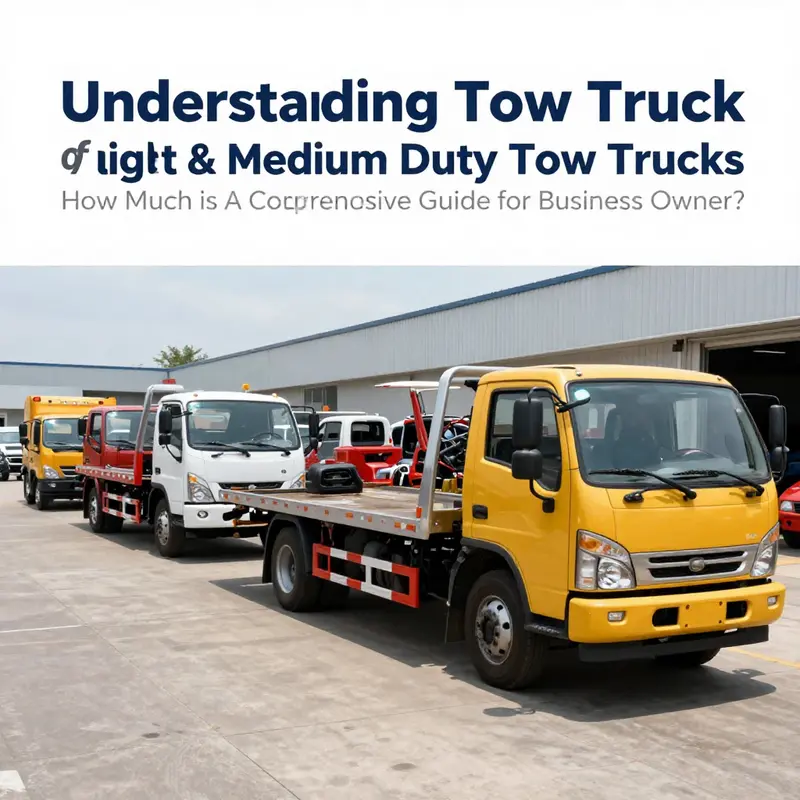
When you start shopping for a tow truck with personal use in mind, the sticker price becomes only part of the story. Price is driven by what the vehicle can do, not by what it looks like on the showroom floor. A light- or medium-duty unit must meet real needs—reliably lifting, winching, and hauling without breaking the bank. In practical terms, this means balancing capacity, powertrain robustness, and the recovery gear that actually gets you out of tight spots. Buyers often begin by asking what they can reasonably justify financially, and the answer hinges on a handful of factors that extend far beyond the mere price tag. Initial sticker shock can be softened by understanding how capacity translates into dollars, and how new versus used status shifts long-term costs in predictable ways. This is especially true for those who want a machine that can handle routine roadside calls and occasional larger recoveries without moving into purpose-built heavy-duty territory.
Light-duty tow trucks, typically in the five-ton class and frequently chosen for personal cars or small fleets, illustrate the central price dynamic. In broad market terms, new light-duty units commonly run from roughly thirty thousand to sixty thousand dollars, depending on the exact specification, engine power, and the presence of recovery features such as under-lift flatbeds or integrated hydraulic systems. On the used market, the price can drop sharply, often landing somewhere between fifteen thousand and forty thousand dollars, with condition, mileage, and maintenance history shaping the spread. This range reflects not only the harnessing of power to weight but also the durability of essential components like the hydraulic system and winch. For a buyer who plans to tow a mix of sedans and small SUVs, a light-duty option can be a sweet spot between maneuverability, fuel efficiency, and payload reliability. The mathematics of the choice often come down to how many calls you expect to handle per month and how much you value features such as automatic wheel-lift, precise skidding resistance, or the ability to roll the vehicle onto a flatbed in a single, smooth motion. In practice, a buyer weighing daily utility against occasional heavy jobs seeks a balance that minimizes downtime and maximizes uptime across the year.
Medium-duty tow trucks occupy a different part of the spectrum, designed to handle loads in the 15,000- to 25,000-pound range. The price landscape here is more varied. New medium-duty units can start around fifty thousand dollars, and they often exceed one hundred thousand dollars when fully equipped with a robust winch system, higher-capacity hydraulic pumps, enhanced chassis rigidity, and longer flatbeds or integrated rollback features. In some markets, early configurations with a winch on a flatbed benchmark around the upper twenties to the low thirties thousand-dollar range, but those are often entry-level builds or configurations with fewer options. For a personal-use owner who anticipates heavier removals or the occasional back-to-back tow of two mid-size SUVs, a medium-duty platform may be worth the premium, but only if the expected return justifies the investment. The decision frequently hinges on a careful forecast of typical workloads, service area, and the degree to which a single unit can replace or complement multiple light-duty assets. There’s also a practical consideration: larger machines demand more fuel, larger maintenance budgets, and more substantial operator training. Even at similar price points, the total cost of ownership can widen as you scale capacity and complexity.
Beyond the bare chassis price, the true cost of ownership expands quickly when you factor in long-term expenses that accompany any mobility-and-recovery asset. Insurance premiums typically reflect not just the vehicle’s value but the risk profile of tow operations in your region, the labor force required to operate it, and the likelihood of high-load recoveries. Maintenance costs grow with use, especially for hydraulic components, winches, and electrical systems wired into a recovery-only workflow. Licensing and permitting, though often overlooked at the initial purchase, become recurring costs as you navigate state or provincial requirements for commercial vehicles. Tire wear, brake life, and fuel consumption all scale with miles and the amplitude of jobs you take on. A light-duty unit may sip fuel when moving between calls, but when you stack multiple heavier loads, fuel efficiency shifts and the maintenance cadence intensifies. These dynamics are rarely visible in the sticker price, yet they decide the financial viability of a personal-use tow rig over a typical ownership horizon.
From a buyer’s perspective, the choice is rarely about chasing the newest gadgetry. Instead, the decision centers on the reliability of the recovery system and the adaptability of the chassis to a variety of roadside scenarios. The most cost-effective route for many individuals is to select a unit that offers essential capabilities without paying a premium for high-end extras that are rarely used. That often means prioritizing features like a sturdy winch, a durable bed or platform, and a hydraulic system that performs steadily in varied weather. It also means examining the availability of service networks and parts, because a tow truck is only as valuable as its uptime. If you live in an area with limited service centers, a broader coverage plan and easier access to spare parts can save more in downtime than a flashier, higher-priced configuration would. When discussing these considerations with a dealer or a former operator, the recurring emphasis is not the maximum weight limit, but the confidence that the vehicle will respond when a call comes in and will stay on the road afterward.
For personal buyers seeking practical guidance, a realistic approach to budgeting often includes a side-by-side look at new versus used scenarios across light and medium-duty categories. A new light-duty unit provides the full warranty and the latest safety updates, but the price premium can erode value if utilization is irregular. A well-maintained used light-duty truck can deliver years of service at a fraction of the new price, though it may entail higher maintenance costs or more frequent parts replacements. Medium-duty purchases tend to be more sensitive to ongoing maintenance demands; the higher upfront price is frequently offset by greater versatility and the potential to consolidate multiple small jobs into a single, capable asset. The math becomes a balancing act between upfront capital outlay, ongoing operating costs, and the predictable revenue you expect the machine to generate, whether through personal use, a small business, or a hybrid arrangement that includes occasional contract work.
For anyone trying to map a practical price range, it helps to anchor expectations around typical ownership scenarios. If a person tows two or three vehicles per month and uses the truck mainly for local calls, a lightly equipped mid-range light-duty model purchased used can be the most economical choice, provided maintenance intervals are kept strict and spare parts are readily accessible. If the workload involves more frequent heavy removals or a higher tempo of service calls, a new or near-new medium-duty configuration, with a solid warranty and a service network, becomes justifiable. The key is to avoid overbuilding a vehicle for the anticipated work and to resist under-equipping a truck that you will rely on in tight windows or weather-affected conditions. Each choice has a price, and each price carries a set of expectations about reliability, downtime, and the ability to respond to a call without delay.
In practice, most buyers find value in approaching the market like a careful consumer rather than a specialist technician alone. Compare total cost of ownership across a few representative configurations and consider the practical realities of your operation: the distance you drive between jobs, the typical road conditions, and the time you will spend in the shop rather than on the road. It helps to tap into community knowledge and real-world usage patterns. For example, many operators find it useful to consult a local service page that outlines what they offer and how they maintain readiness on days with back-to-back calls. If you want a practical snapshot of service scope and typical workflows, you can check a local operator’s page mikes-towing. This kind of real-world context can help you align your budget with the level of reliability you expect from a personal-use tow asset.
Ultimately, the question of “how much is a tow truck for personal use?” does not yield to a single figure. It resolves into a spectrum where your intended workload, tolerance for risk and downtime, and long-term maintenance commitments determine the best fit. A cautious appraisal considers upfront price, expected annual operating costs, and the likelihood that the investment will continue to meet your needs for years to come. When you step back and map your typical use, your budget minutes ago can turn into a clear plan for selecting a light- or medium-duty unit that delivers dependable performance without compromising financial sense. For readers seeking broader price signals and market breadth, broader market listings are available through large-scale platforms that host current listings and price ranges from multiple regions. For context on marketplace dynamics, consult the external resource at https://www.alibaba.com.
null
null
Final thoughts
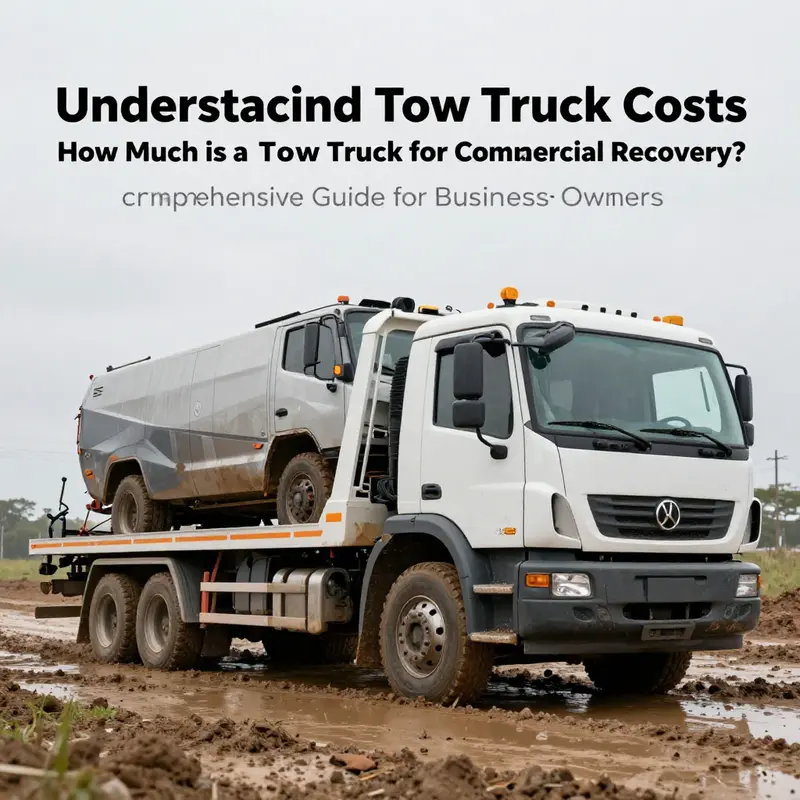
The journey to selecting the right tow truck encompasses more than just the initial price tag—it involves understanding your business’s unique needs and anticipated applications. From light-duty models best suited for personal vehicles to versatile heavy-duty trucks capable of tackling significant recovery tasks, your investment should reflect your operational goals. By considering factors such as weight capacity, functionality, and brand reliability, you’ll not only make a purchase but also an investment in efficiency and service quality.