
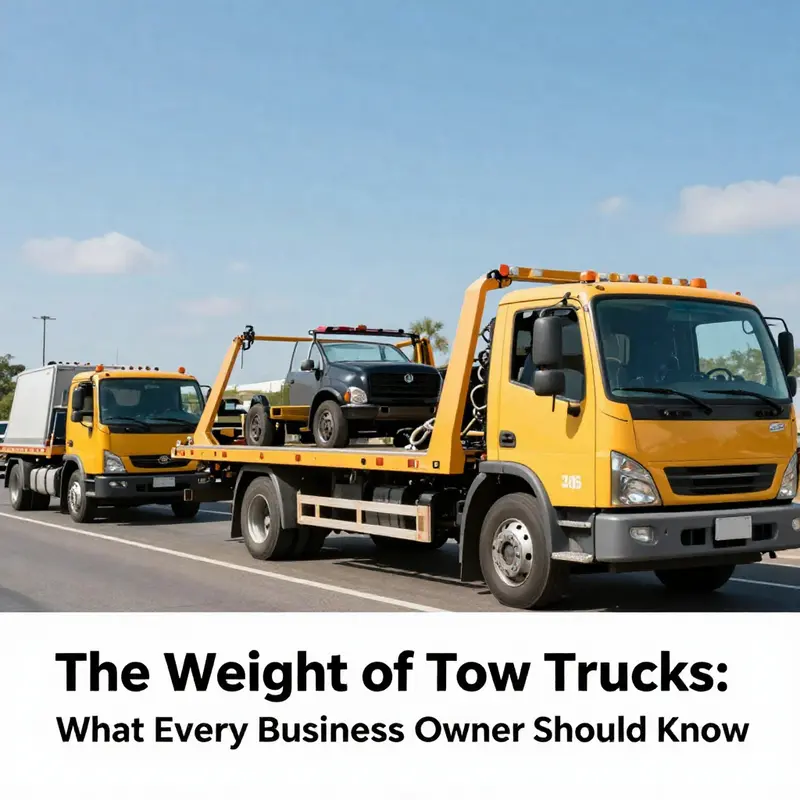
For business owners reliant on tow trucks, understanding the weight components is crucial for effective operations. This article delves into two key weight aspects: the curb weight of tow trucks and their gross vehicle weight (GVW). The first chapter analyzes curb weight, shedding light on the differences across various models. The second chapter explores gross vehicle weight, highlighting the total weight when fully loaded, which is vital for ensuring compliance with regulations and optimizing performance. Together, these insights not only clarify the operational capabilities of tow trucks but also assist in making informed purchasing decisions.
null
null
Carrying the Load: How Tow Trucks Are Measured from Curb Weight to GVW
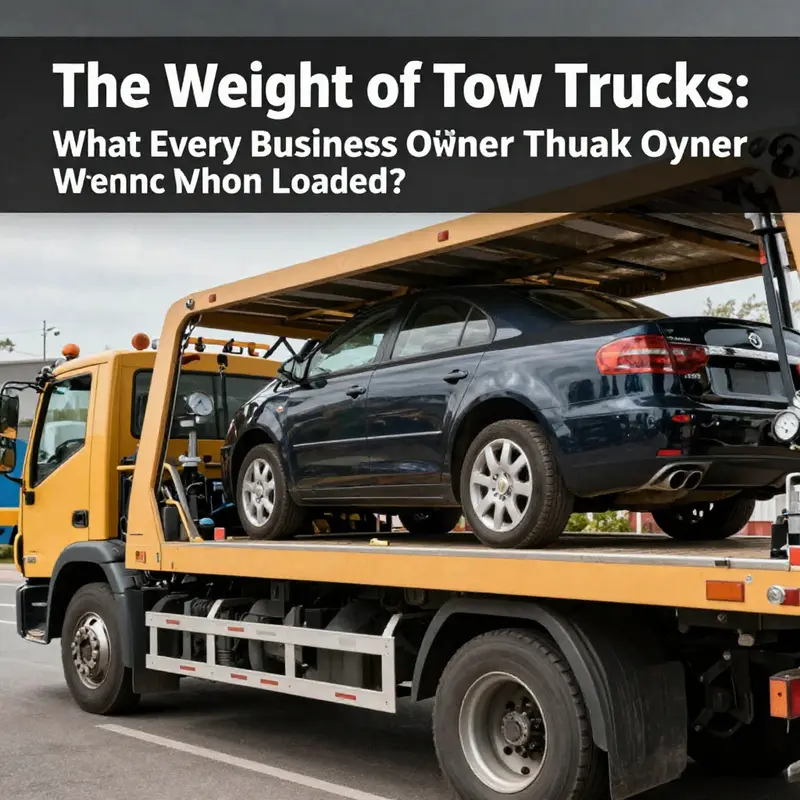
When people ask how much a tow truck weighs, they are really asking about two related but distinct measurements that govern performance, safety, and regulation. The first is curb weight, the truck’s mass with standard fluids and equipment, ready to roll but not carrying any extra payload. The second is gross vehicle weight, or GVW, which is the maximum weight the vehicle is allowed to haul, including fuel, crew, equipment, and any vehicle on the rack or bed. These concepts are more than numbers on a spec sheet; they determine how hard a tow truck can work, what roads it can legally traverse, and how the vehicle distributes weight across axles during lifts and pulls. In practice, weights vary widely because tow trucks come in multiple sizes and configurations, from compact roadside responders to heavy industrial wreckers designed for multimachine recovery. Reading the weight story behind a tow truck means listening to the language of curb weight, GVW, and GVWR, and translating those figures into what the vehicle is asked to do on a busy highway or a crowded work site.
To understand why weight matters, consider the difference between curb weight and GVW as a kind of two sided coin. Curb weight tells you what the truck itself weighs when it is empty of payload except for standard fluids and installed equipment. GVW tells you the ceiling—the most it should ever carry, including fuel, personnel, tools, and any vehicle the truck is actively moving or lifting. In a roadside scene, the loaded weight matters for braking distance, steering response, and the ability of the lifting mechanism to reach its rated height while still maintaining stability. It also matters for compliance with road rules and infrastructure limits. Bridges, overpasses, and tolling systems often impose weight restrictions that hinge on these totals, so a fleet operating across a region must know not just the empty mass but the combined load that will be carried on any given job night after night.
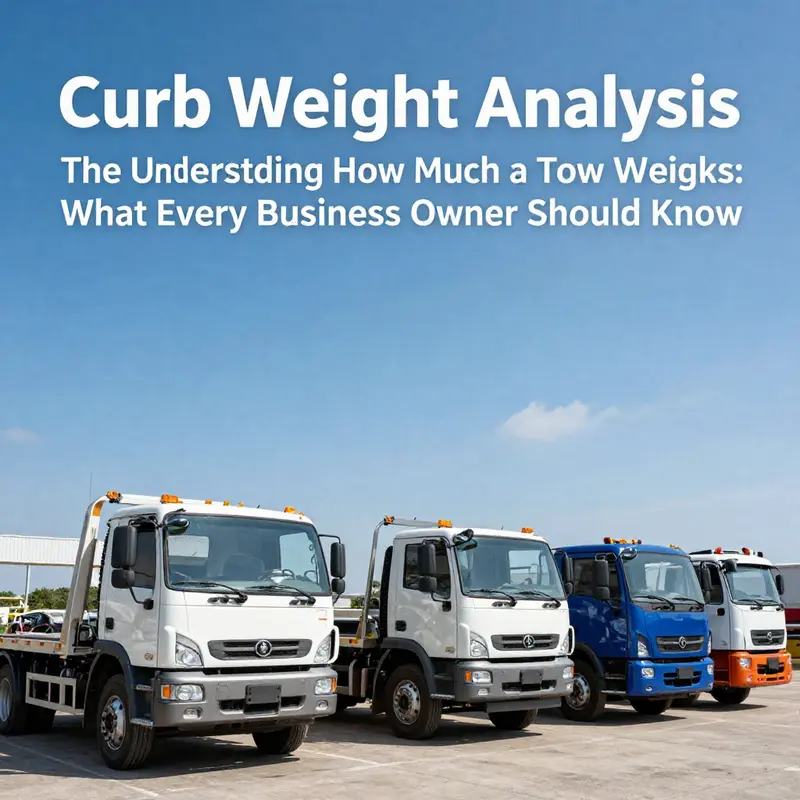
Tow trucks come in distinct families that approach weight in slightly different ways. Medium duty machines, which handle roadside assistance and repossessions, typically work with a GVW in the neighborhood of eight to nine metric tons. That range reflects a balance between maneuverability and lift capacity, allowing them to tow passenger cars and light trucks without overpowering the chassis or compromising braking and steering at typical urban speeds. In real terms, a mid range machine may tip the scales around 8,800 kilograms when fully loaded with fuel, equipment, and a vehicle in tow. This aligns with commonly cited examples of medium duty sets, where the overall mass is sufficient to handle frequent short hauls while keeping the rig within familiar traffic and permit regimes. At the same time, the curb weight of such units tends to be far lighter than their heavy duty counterparts, often around five tons or less, depending on the bed style and the presence of a slide or underlift as part of the configuration.
On the other end of the spectrum lie heavy duty tow trucks, built for commercial or industrial tasks. These machines are designed to recover large vehicles, move multiple units at once, and perform at a rate that demands serious chassis strength and high lifting capacity. When a truck earns its heavy duty designation, its GVW can exceed thirty metric tons in some configurations. In practice, that kind of mass is not just about raw power; it reflects a robust frame, reinforced axles, and a hydraulic or mechanical lifting system capable of handling substantial loads with precision. The curb weight for these giants is substantial as well, often well above ten thousand kilograms, because the underlying structure itself must withstand repeated heavy lifts without fatiguing. The exact numbers vary by design and intended use, but the pattern is clear: heavier dignity in the lifting gear translates to a higher curb weight and a higher GVW ceiling to match the task at hand.
Between the two poles, there is a useful set of practical reference points. Industry data typically places a wide range across the spectrum of tow trucks, with curb weights from roughly 4,800 kilograms to over 10,000 kilograms depending on size, equipment, and configuration. A mid sized flatbed recovery unit may weigh just under the five ton mark when empty, while a heavy wrecker built to haul multiple vehicles or a large recovery rig pushes toward the upper end of the scale. AGVW example sometimes recorded in product data sits around 7,800 kilograms for a particular configuration, illustrating how a unit can be quite loaded even when the base curb weight seems modest. These figures underscore a simple truth: the more you want a tow truck to lift or tow, the heavier the unit is likely to be, and the more critical it becomes to observe mass limits during operation and transport.
The weight story is not only technical; it is also regulatory. GVW is not simply the sum of what a truck weighs and what it carries in a given moment. It is a rating tied to the vehicle’s design, tires, braking system, suspension, and axles. Exceeding the GVW or attempting the wrong combination of payload and configuration can lead to unsafe handling, mechanical stress, and violations of road rules, with corresponding penalties. Because every model and configuration carries a different GVW or GVWR—often listed separately on the manufacturer’s data plate or official product sheet—it is essential to consult those precise specifications before a job. The general ranges discussed here provide a framework, but the exact limits must come from the source for a given unit.
For readers who want a snapshot of real world numbers in context, imagine a regional fleet that balances frequent urban calls with occasional longer hauls. A typical mid sized bed and wrecker combination might have a curb weight around 5,000 to 5,500 kilograms, with a GVW capable of rising into the high eight thousands when fully fueled, equipped, and ready to tow a vehicle. A larger, purpose built recovery unit used for heavier loads could easily push curb weight beyond 9,000 kilograms, with a GVW well into the thirties when carrying multiple units or large payloads. In both cases, the efficiency of weight distribution across the axle set is crucial. Proper load distribution protects tires, preserves braking performance, and maintains steering stability during the demanding operations that tow crews perform day after day. These considerations become even more important when a truck navigates tight streets, uneven surfaces, or crowded parking structures, where a momentary shift in weight can affect control and safety.
From a practical standpoint, understanding weight means reading the spec sheets with care and translating them into everyday decisions. The curb weight tells you what the truck itself contributes to the total mass, while GVW gives the ceiling for what you can legally and safely carry in a given job. When planning a recovery or a transport, fleet operators must assess not only the weight of the load but also how that weight is distributed on the bed, whether there is a towed vehicle attached, and what the weather and road conditions might do to traction and braking efficiency. In the field, every operation is a dynamic test of the machine’s mass management, and the better the team understands the weight envelope, the more efficiently and safely it can be executed.
For readers seeking a deeper dive into the mechanism behind underlift and heavy rescue configurations, local readers can explore related discussions on how different setups influence curb weight and GVW in practice. If you are curious about how weight considerations affect local fleets, you might look into resources that discuss tow trucks in Houston, which illustrate how urban requirements shape the weight profiles of commonly used recovery units. tow trucks in Houston offers a practical lens on how the same weight principles apply across a dense metropolitan context while highlighting the everyday realities of service calls and deployments in a bustling city.
In sum, weight in the tow truck world is a relationship between the truck’s own mass and what it carries. Curb weight provides the baseline, GVW supplies the ceiling, and GVWR anchors the maximum the vehicle was engineered to handle. The ranges span from nimble medium duty workhorses to gargantuan heavy duty machines, each created to meet a different spectrum of recovery needs. The numbers can be precise, but the real difference is how those numbers translate into safe performance on the road and on the job site. To stay compliant and perform at peak reliability, it is essential to rely on manufacturer documentation and reputable data sources when evaluating a unit’s weight characteristics for a given task. External reference materials, such as the comprehensive guides on underlift configurations, can complement the practical insights drawn from spec sheets and field experience. For those who want a broader technical anchor, see external reference: https://www.towtruckguide.com/underlift-tow-truck-guide/.
Final thoughts
In conclusion, grasping the nuances of tow truck weights—both curb weight and gross vehicle weight—is pivotal for any business owner engaged in towing operations. This understanding directly influences vehicle selection, compliance with regulations, and overall operational efficiency. When considering the investment in a tow truck, it is vital to account for both the unladen and fully loaded weights to ensure optimal performance and safety on the road.