
Investing in a tow truck is a critical decision for business owners involved in the towing, recovery, or transportation industries. Understanding not only the initial costs but also the various factors that influence these prices is essential for making an informed purchase. The range in cost can vary widely based on the type, capacity, and condition of the vehicle. This guide will delve into the specifics of how much a tow truck costs, followed by an exploration of the factors that can influence these prices, allowing you to make a sound investment that meets your business needs effectively.
Pricing, Capacity, and Practical Wisdom: Navigating the Financial Terrain of Tow Truck Purchases
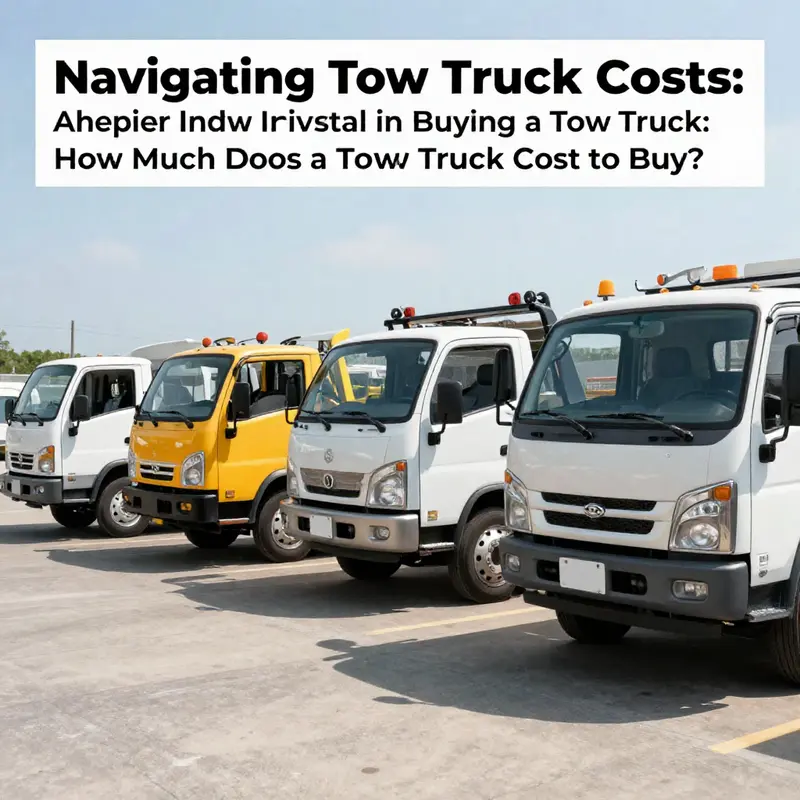
When a fleet manager or a solo operator starts sizing up a tow truck purchase, the question isn’t only what the sticker price reads. It’s how the vehicle will perform under load, how often it will be on the road, and which operational demands will shape both upfront costs and ongoing expenses.
Tow trucks come in a spectrum of configurations, and in this market the price you pay is a function of more than a single specification. It is driven by the truck’s type, its weight rating, the sophistication of its recovery gear, and whether it is fresh from the factory or a used workhorse that has already logged a few miles. Understanding these levers helps a buyer separate a fair price from a money pit, and it also reveals why two superficially similar units can diverge by tens of thousands of dollars. The core decision hinges on balancing capacity with reliability, and price with total ownership costs over the life of the vehicle.
For a practical frame of reference, consider the range you’ll typically encounter across the main categories. Small to medium-sized tow trucks, those built for urban towing and light recovery, commonly occupy a broad band. In many cases, a 2- to 10-ton configuration that is new can be priced somewhere in the mid-teens up to the upper fifty-thousands. But this is a landscape of gradations. A basic 4×2 flatbed wrecker, which excels at ease of loading and serviceability in city streets, frequently lands in a price corridor around sixty thousand to ninety thousand when built with modern controls, reinforced decks, and dependable winch systems. If you’re prioritizing heavier duty performance and faster turnarounds on larger incidents, the next tier up—heavy-duty rollback units and other road-wrecker platforms—tends to push the price into the forties to seventy-thousand-dollar range for new builds, with exact numbers influenced by horsepower, wheelbase, and the robustness of the recovery gear. Some of the most capable new units in the broader loading spectrum—those rated well into the 40- to 50-ton region—can also sit in a price band that climbs toward the upper end of sixty to ninety thousand, depending on whether you lean toward a longer chassis, an integrated boom lift, or a multi-axle arrangement designed for higher stability in demanding recoveries.
But the market is not only about new machines. The allure of used tow trucks lies in creating a leaner initial outlay while still obtaining dependable recovery capability. In many cases, a used vehicle in the 2- to 6-ton range can be found for a fraction of the new price, and even the higher-range used heavies sometimes drift into the low to mid tens of thousands. A representative example of the used market, particularly for older heavy-duty cores, can be found in budget offerings around the eight-to-twelve thousand dollar mark for certain older, high-capacity units. The variability is steep, however, because condition, mileage, prior usage, and the exact GVWR—along with the tied license classifications—play crucial roles in whether a used unit punches above its weight or simply wears its years with dignity. The cheap-to-buy option can carry with it higher maintenance costs or shorter intervals before major overhauls, so the long-term economics require careful inspection of mechanical history, structural integrity, and a realistic forecast of downtime.
Beyond these broad categories, several features act as price accelerants. The winch and wheel-lift systems, the presence of a flatbed versus a traditional tow body, and the sophistication of the hydraulic and electronic control systems all contribute to the delta between a base chassis and a fully equipped recovery platform. A modern flatbed with a reinforced deck and an integrated winch can dramatically improve payload safety and efficiency, especially in urban environments where precise loading and gentle handling of vehicles are valued. A heavy-duty rollback or road-wrecker configuration, with options such as larger gasoline or diesel power, heavier duty booms, and more resilient outriggers, will command higher prices but can also translate into faster recovery capability, greater versatility, and lower downtime on the job. In addition to the mechanical core, the cab, the driver environment, and the included safety features have meaningful price signals. Energy-efficient LED lighting, anti-slip decks, ergonomic cabs, better visibility aids, and robust remote diagnostics capabilities add to the base cost, but they also reduce real-world operating risks and maintenance surprises.
Another essential factor shaping price is the chassis and its underlying engineering. A well-regarded, heavy-duty chassis is a prerequisite for long-term reliability, but the choice of chassis must align with the intended workload and license class. For example, a configuration designed to handle higher GVWR will typically require a driver with a higher license class, plus more extensive maintenance coverage and potentially different insurance terms. When evaluating options, it’s not enough to compare sticker prices; one must cross-check the GVWR, axle configuration, and the exact mechanical load path of the towing system against the fleet’s real daily demands. For instance, a compact 2- to 3-car carrier with wheel lift may offer excellent adaptability for city streets at a relatively moderate price, while a 4×2 or 6×4 platform built to support heavier vehicles and longer shifts will carry a higher initial price but offer greater capability, which frequently translates into more jobs completed per day and better revenue potential. The math of cost and benefit is not abstract here; it’s a direct function of how many hours a unit can stay productive, how much time it saves at each recovery, and how many jobs it can complete before major component fatigue sets in.
This is also a market where the sourcing channel matters. The price you see in a factory quotation may reflect a specific configuration that is not identical to what a local fleet requires. Factory-to-door pricing often omits shipping, taxes, and freight surcharges, which can add a meaningful number to the final bill. When considering overseas sourcing, buyers should account for handling through a consolidator, currency risk, and the potential for import duties or port fees. Conversely, a domestic purchase may offer simplified logistics and faster delivery, with established service networks but sometimes at a premium driven by local labor and component costs. Either route demands due diligence on after-sales service, availability of spare parts, and the timeliness of warranty claims—factors that can silently eat into the value proposition if neglected.
To gainsay the temptation of focusing on sticker price alone, consider the broader picture of total ownership costs. A higher upfront price for a more capable unit can yield savings over time through reduced maintenance cost, better fuel efficiency, and lower downtime. A well-chosen high-quality chassis paired with a robust recovery system can deliver a longer service life and more reliable performance in demanding recovery scenarios. Conversely, a cheaper option sometimes becomes costlier over the long run if frequent breakages, field repairs, or missed schedules erode profitability. Buyers who treat the purchase as part of a larger asset plan should model predictable cash flows: depreciation schedules, monthly financing payments, insurance, maintenance reserves, and the expected volume of work. A practical approach is to map out the work pipeline for the fleet across a 3- to 5-year horizon, forecast the likely dispatch rate, and align the equipment’s availability with peak demand periods. The result is a price-to-performance equation where the best choice is rarely the least expensive option or the most expensive one, but rather the one that sustains steady operations and predictable costs.
The research landscape also points to a reality that buyers cannot ignore: the availability of options expands as you move up in capacity. For smaller operations, the immediate task is to secure a reliable unit that can handle routine urban recoveries with predictable maintenance demands. In that space, the price range is largely governed by how modern the equipment is, the level of automation integrated into the winching system, and the integrity of the body and deck. For larger fleets facing more complex recoveries, the decision becomes a balance of raw capacity and the reliability of heavy-duty components designed to move substantial loads in challenging conditions. It’s a world where scale matters, and where the incremental cost of a more robust system can be justified by a higher margin per job and an expanded service envelope. In all cases, price is a compass, not a destination, guiding buyers toward the configuration that maximizes uptime and profit while staying within budget.
When making a final decision, buyers should verify the numeric specifics that truly influence operation. Confirm the GVWR to ensure the vehicle sits within the intended licensing framework. Inspect the drivetrain and hydraulics for wear, listen for unusual noises during a short test run, and verify the stability of the outriggers and the integrity of the boom. Check the winch’s rated pull and line speed, and ensure the deck surface offers adequate grip and durability. Review maintenance and service history, and request a system diagnostic if available. Shipping and handling charges must be clarified up front, along with any customs duties if the unit originates abroad. Warranty terms deserve careful reading, especially for major components such as the engine, transmission, and the hydraulic system. Financing terms—interest rate, loan duration, and any required down payment—will color the final monthly expense and the true cost of ownership.
For operators who want a tangible glimpse into how these considerations translate into real-world budgeting, a practical path is to track reference prices and then contrast them with the daily demands of the business. If the goal is to be prepared for urban work with a capacity around a few tons, a mid-range new unit might be a sensible starting point, provided it comes with a solid service network and a reasonable warranty. If the aim is larger-scale recovery and long-term fleet resilience, a higher-capacity, higher-specification platform could offer better value, particularly if it reduces downtime and increases job throughput. The key is to avoid over-investing in capabilities you won’t fully utilize, while ensuring you don’t undercut safety, reliability, and the ability to meet service commitments. As you weigh these options, remember that the right choice is not merely a price tag but a purchase that aligns with the operational tempo, risk profile, and growth trajectory of the business.
To ground these reflections in real-market terms, consider that new small to medium platforms generally lie in a broad range that reflects both configuration and build quality. A compact flatbed with solid structural design and modern safety features tends to command higher starting prices than a leaner baseline. For heavier, multi-axle or road-focused units, the price lift is marked by the complexity and capability of the recovery gear, as well as the chassis’s capacity to sustain heavy loads across long shifts. Used units present a counterpoint, offering substantial savings but with the obligation to invest in inspection, refurbishment, and sometimes substantial component overhauls to restore reliability. The decision’s payoff rests in a balanced assessment of how the unit will be used, how quickly it can pay for itself through dependable service, and how well it fits within the broader equipment ecosystem of the fleet.
If you’re curious to see how a typical operator navigates these costs in their market, you can explore practical examples at mikes-towing. The narrative there reflects how cost, capacity, and reliability interact in everyday decision-making, lending context to the numbers above and illustrating the value of aligning a purchase with actual service demands. In parallel, for readers seeking a broader procurement landscape, industry data and current listings on global supplier platforms provide a snapshot of price bands across configurations and regions. These sources underscore that while the numbers vary, the underlying principle holds: the smarter the match between capacity, build quality, and expected workload, the more favorable the long-term cost of ownership.
As with any major equipment investment, buyers should approach price as one dimension of a holistic equation. The most prudent purchases are those that deliver consistent performance, reliable after-sales support, and predictable operating costs, all while accommodating the fleet’s growth. The path from a rough price estimate to a solid investment involves careful specification, rigorous due diligence, and a clear view of how the asset will perform across the job mix it is expected to handle. In this sense, buying a tow truck is less about chasing the lowest sticker price and more about choosing a platform that sustains revenue, minimizes downtime, and keeps a business moving forward through the toughest recoveries and busiest shifts.
External resource: https://www.made-in-china.com/products-detail/8705909990/20260203/1000000000.html
Counting the Cost: A Deep Dive into Tow Truck Purchases and What It Takes to Buy the Right Wrecker
Buying a tow truck is more than selecting a vehicle with a big engine and a sturdy winch. It is a strategic decision that determines how quickly a fleet can respond, how many types of incidents it can handle, and how resilient a business will be under varying conditions. The sticker price on a tow truck hides a broader calculus—one that weighs capacity, intended use, build quality, and the longer arc of maintenance, licensing, and depreciation. To understand what it costs to buy a tow truck, one must map the market’s realities against a fleet’s operating needs. This is not merely a matter of price tags; it is about aligning a machine’s technical profile with the daily demands of a towing operation, the regulatory framework it must navigate, and the financial plan that will sustain it for years to come.
The most conspicuous factor shaping price is the type of tow truck and its capacity. Light- to mid-duty models, which haul smaller cars and perform routine roadside work, sit at a comparatively accessible end of the spectrum. In markets where new units are preferred, these configurations tend to land roughly in the 30,000 to 50,000 dollar range, depending on features such as the winch system’s capability, the presence of a flatbed versus a wheel-lift arrangement, and the chassis platform chosen for reliability and serviceability. The nuance here matters: a flatbed brings advantages for all-wheel-drive or low-clearance vehicles and often commands a higher upfront investment due to its hydraulic tilt mechanism and the precise alignment required for safe loading. A wheel-lift combination, on the other hand, can lower initial costs while delivering solid performance in urban towing. For readers considering the full spectrum of options, it is worth noting that the exact price will drift with the added capabilities, the degree of automation, and the degree to which the truck is built to optimize crew ergonomics and safety.
As capacity grows—from 10 tons up toward 30 tons and beyond—the price escalates in a way that mirrors the broader market for heavy equipment. The heavy-duty rollback and wreckers, designed to haul larger trucks, construction equipment, or multiple vehicles, typically fall in the 35,000 to 70,000 dollar range when bought new. The premium for higher capacity is driven by a combination of chassis strength, hydraulic systems, and control architecture that can sustain repeated, high-load operations without compromising safety or uptime. When the recovery task requires specialized configurations—such as long-reach booms, integrated stabilizers, or advanced wheel-lift systems—the price can push upward toward the upper end of the spectrum for that size class.
Moving into the high-capacity realm—tow trucks designed to handle heavy loads up to 50 tons or more—prices become correspondingly steep. A new unit here can span roughly 44,000 to 90,000 dollars, with the upper edge reserved for chassis choices that emphasize durability, high-output hydraulic systems, and bespoke safety features. These units often incorporate robust engineering packages, such as extended booms, reinforced frames, and integrated safety tooling designed for complex recoveries. The logic is straightforward: the higher the potential payload and the more sophisticated the stabilization and recovery operations, the greater the investment required to ensure reliable performance under demanding conditions.
Beyond new models, the used-truck market introduces a different kind of price discipline. The appeal of a used tow truck is clear: a substantially lower entry price and a chance to accelerate market entry for a start-up or a contractor with tight liquidity. A typical used option can range from as low as eight thousand to twelve thousand dollars for older, high-mileage units or non-runner projects that require significant refurbishment. If buyers are willing to invest in a well-documented maintenance history and a solid overhaul plan, used units can offer a compelling value proposition. Caution is still warranted: Frame corrosion, worn hydraulics, degraded winches, and fatigued suspension components can quietly erode any perceived savings, turning a bargain into a future reliability headache without careful inspection and due diligence.
There are also specialty models that command premium pricing because they embody advanced engineering, durability, and safety beyond the basics. Custom-built or premium-brand configurations—often designed for peak uptime, extreme weather, or high-volume urban operations—tend to carry elevated price tags. These units may feature more efficient hydraulic loops, enhanced operator ergonomics, LED lighting packages, anti-skid decks, and cab designs intended to minimize operator fatigue on long shifts. The premium reflects not only the raw capability but also the long-term value of lower maintenance and higher dispatch reliability that such features can deliver in real-world operations.
In this landscape, buyers frequently consider rotor or rotator tow trucks, whose rotating booms enable lifting and righting overturned or hard-to-access vehicles. The rotator category represents a distinct value proposition with a corresponding price range that can extend well into the six-figure territory, and in some cases approach or exceed six figures for units with high-load capacities and versatile recovery capabilities. The rationale is straightforward: rotators consolidate complex lifting, stabilization, and rotational functions into a single, highly engineered system that demands premium components and rigorous safety design. A unit in this class often becomes a strategic asset for operations that must respond to severe incidents with a high degree of precision and minimal scene time.
The decision between new and used, between a flatbed and a wheel-lift setup, or between a standard wrecker and a rotator also hinges on how a fleet expects to scale. For some operations, a modular approach—starting with a well-built, mid-range unit and layering in capabilities as business volume grows—can be the most prudent path. For others, a higher upfront investment may yield greater uptime, lower maintenance surprises, and a longer service life that aligns with long-term business plans. In all cases, the price the buyer sees is the result of a careful balance between immediate cash outlay and the anticipated total cost of ownership over the vehicle’s life.
The conversation about price would not be complete without acknowledging the realities of the market channels through which buyers obtain quotes. New units are typically sold through authorized dealers or directly from manufacturers, with pricing influenced by regional demand, dealer incentives, and financing terms. Used trucks often transition through commercial auction platforms, independent sellers, or refurbishers who can certify the condition and prepare units for a new owner. In today’s globalized supply environment, buyers sometimes explore comparable platforms across borders to source budget-friendly components or complete assemblies. When considering such options, it is essential to verify the Gross Vehicle Weight Rating (GVWR) and ensure that the operator’s license class matches the vehicle’s classification. These regulatory touchpoints are not mere formalities; they define who can legally drive the truck and what kinds of operations it is authorized to perform, which in turn can influence insurance costs and risk exposure.
The practical realities of pricing extend into the ongoing costs of ownership. Insurance is a recurring expense that scales with the vehicle’s value, payload capacity, and the risk profile of the areas served. Maintenance costs accumulate as parts wear and fluids degrade under heavy use; the more demanding the work, the more frequent the octane, lubrication, and hydraulic servicing must be. Fuel consumption will vary with the payload, engine configuration, and idling patterns typical of a recovery fleet. Tires—especially heavy-duty ones designed to carry substantial loads—represent a nontrivial recurring outlay. Then there is depreciation, which erodes the initial purchase price and factors into an eventual resale value that can influence the overall cost of ownership. Even insurance deductibles and the total cost of financing should be folded into any long-range budget, because they shape the true economic footprint of owning a tow truck over several years.
Operational planning must also account for load planning, service coverage, and the ability to respond quickly to incidents within a given geographic area. A fleet that concentrates on urban towing may favor compact, agile units with good maneuverability and reasonable upfront costs. Conversely, a business that handles heavy-duty recoveries or multi-vehicle incidents will likely lean toward higher-capacity platforms despite their higher price tag, because the demand signals and revenue potential from those scenarios justify the investment. The gap between a vehicle’s sticker price and its real-world value is bridged by thoughtful specifications: winch capacity that matches anticipated maximum loads, boom reach that covers typical accident scenes, rotation range for efficient righting and loading, and safety features that protect drivers and bystanders. These considerations help quantify not just a purchase price but the potential return on investment through faster response times, reduced scene time, and enhanced reliability in spite of difficult conditions.
From a buyer’s perspective, the procurement journey is as important as the vehicle itself. It begins with a clear articulation of use cases, a careful audit of current fleet gaps, and a realistic forecast of service demand over the next several years. Then comes the market exploration: gathering quotes from multiple sources, evaluating total cost of ownership, and validating the equipment’s compliance with local regulations. The evaluation should extend beyond the upfront price to include warranties, after-sales support, and the availability of parts and skilled service in the region. For buyers contemplating cross-border sourcing or imported configurations, diligence about warranty coverage, spare-part availability, and service continuity becomes even more essential, because these factors directly impact uptime and the long-term value delivered by the purchase.
Within this broader framework, a few practical tips emerge. First, quantify how many incidents the fleet intends to handle per shift and per month, and translate that into a needed duty cycle and uptime target. Second, map the anticipated payload profile and the types of recoveries most common to the operation—whether it involves single-vehicle incidents, multi-vehicle scenes, or heavy equipment relocations. Third, build a risk-adjusted financial model that compares the master plan of a mid-range unit against the more capable options, including rotators or high-capacity sleepers for long shifts in remote areas. Finally, don’t overlook the regulatory layer: ensure that the GVWR classification aligns with the driver’s license category and the local licensing framework, so that the operation remains compliant and avoids costly compliance gaps.
In the end, the price of a tow truck reflects both the tangible equipment and the intangible value brought to a fleet’s dispatch capability. A modern unit is not merely a transportation tool; it is a linear investment in faster incident response, safer work zones, and more reliable service delivery to customers. For readers who want a regional focal point in considering what to buy, a practical step is to examine local market demand and supplier availability in the area you serve. This allows you to calibrate the choice—whether it be a compact, cost-conscious setup or a high-capacity, feature-rich platform—to the realities of your operating environment. If your business operates in a dense metro area with high call volume and a diverse mix of incident types, evaluating regional availability and demand can help align equipment choices with local needs; see Tow Trucks in Houston for a concrete example of how market dynamics shape procurement decisions in a large urban market. Tow Trucks in Houston.
As readers finish this exploration of price drivers, it is useful to connect the big-picture takeaway back to the initial question: how much does a tow truck cost to buy? The answer is nuanced and situational. A realistic budget must reflect not only the sticker price but also the longer-term financial consequences of ownership—maintenance, insurance, financing, and the vehicle’s ability to perform reliably in the environments where it will work. The market offers a spectrum of options—from economical, entry-level models suitable for small fleets or single-operator businesses to sophisticated, heavy-duty configurations intended for complex recoveries and high-volume demand. Each choice carries its own balance of risk and reward, demanding a careful calibration of needs, expectations, and capital availability. The optimal purchase sits at the intersection of operational requirements and financial pragmatism, where the vehicle that costs more upfront delivers dividends in uptime, safety, and service quality over the life of the asset.
External resource for further context on new tow-truck pricing and the factors that shape it can be found here: https://www.towtruck.com/new-tow-truck-prices-overview
Final thoughts
Acquiring a tow truck is undeniably a significant financial commitment for any business owner in the towing industry. By understanding the costs involved as well as the diverse factors that influence pricing, you can make a more informed decision that aligns with your specific business needs. Always prioritize evaluating both new and used options and consider consulting multiple suppliers to get the best deal possible. Empower your business with the right equipment and expertise to ensure operational success.