
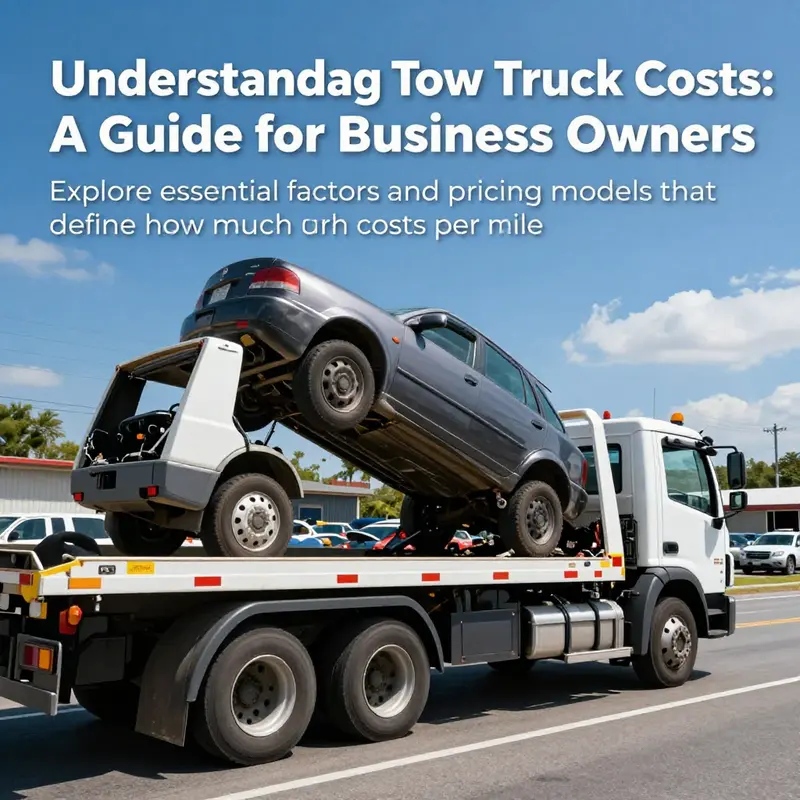
For business owners, understanding the intricacies of towing costs is vital, especially when a vehicle breakdown can disrupt operations. The expenses associated with towing can vary widely based on several factors, making a well-informed decision critical. This article will delve into the key influences on tow truck pricing and the various pricing models that towing companies use. By exploring each of these areas, you can gain a comprehensive understanding of how much a tow truck costs per mile, aiding you in budgeting and ensuring transparency when dealing with towing services.
Beyond the Mile: How Distance, Vehicle Type, and Timing Shape Tow Truck Costs Per Mile
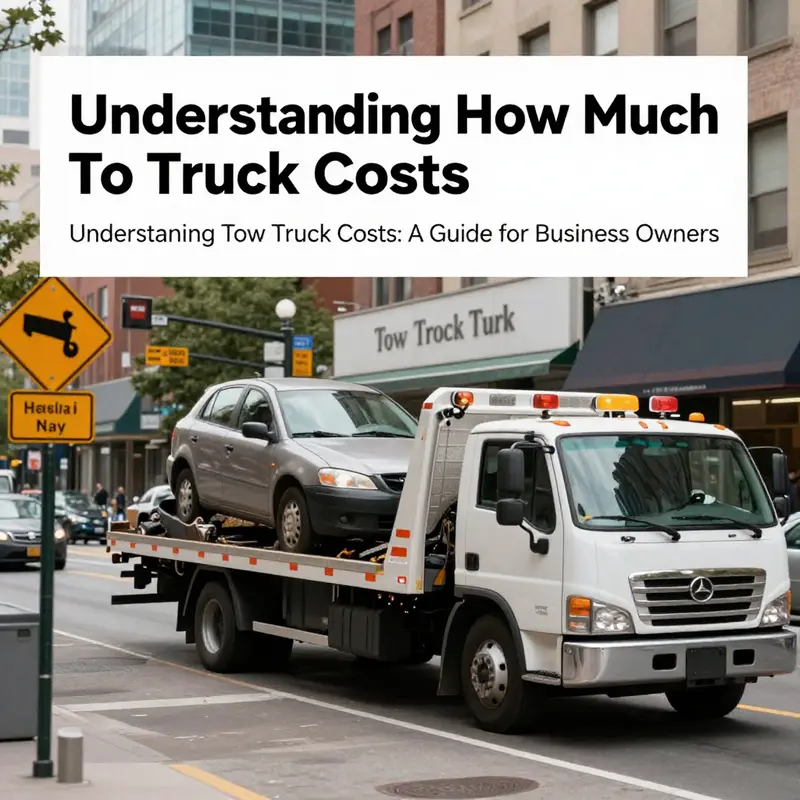
When people ask how much a tow costs per mile, they’re really asking about a system. The price per mile is not a simple, fixed number carved in stone; it shifts with distance, vehicle type, and the moment a call comes in. The most reliable way to understand the math is to see how several moving parts fit together to produce a final bill. Distance matters most, but it interacts with what is being moved, where the tow begins and ends, and when the driver is needed. A short, five-mile pull might look like a modest fare on the surface, yet the same engine and crew must still mobilize, gear up, and unhitch from the previous job. In many markets, a five-mile tow can land around a base range of several dozen dollars and a few extra charges, while a longer haul of fifty miles or more can push the total well past three hundred dollars. That kind of spread is less about a single per-mile figure and more about how a base fee, a mileage rate, and a handful of surcharges come together for a specific scenario.
Distance is king because fuel burn, wear and tear on the tow vehicle, and crew time scale with how far a tow travels. The math tends to be structured in one of two common ways. Some operators bill a base hook-up fee that covers the effort to lift, secure, and hook the vehicle to the tow rig, plus a per-mile rate for each mile driven with the vehicle in tow. Others lean toward a straight per-mile rate with a smaller or no hook-up charge. In neighborhoods where congestion or road work is constant, a fixed hook-up fee plus per-mile pricing often makes more sense for both the operator and the customer, because it captures the upfront labor and the variable fuel and time costs that rise with distance. Typical hook-up fees hover in the range of fifty to a hundred dollars, while per-mile rates can vary broadly—from around one to several dollars per mile depending on the region and vehicle type. The combination can feel like two numbers that sum to a single figure, but it is the breakdown that matters for transparency and budgeting.
The vehicle being towed is another major driver of cost per mile. Lighter, smaller cars require less mechanical effort, lighter equipment, and shorter setup times. They can be towed with smaller trucks and fewer personnel, which translates into lower per-mile charges, all else equal. Heavier vehicles—full-size pickups, large SUVs, commercial vans, or specialty equipment—demand bigger tow rigs, stronger gears, and more hands on deck. They also often necessitate longer hook-up times and more time spent securing the vehicle so it travels safely. That extra labor and risk premium is reflected in a higher per-mile rate and sometimes in additional line items on the invoice. In other words, the same mile can feel cheaper or more expensive depending on whether you’re moving a compact sedan or a heavy-duty work vehicle.
Time of day and urgency further tilt the numbers. A tow needed in the middle of the night, on a holiday, or during a weather event typically carries a premium. The realities of reduced staffing, higher risk, and the need to mobilize quickly push a surcharge into the pricing mix. Estimates from many operators show the possibility of a notable bump—often described as a percentage—that can add a meaningful amount to the base fee and the mile charges. The result is a price per mile that is not constant but varies with the context of the call. In practice, customers should expect to see a higher per-mile rate or an added surcharge when the tow is emergent or outside normal business hours.
Location and local market conditions shape what a mile costs, as well. Urban areas with dense traffic and expensive equipment maintenance tend to push per-mile rates higher than rural regions where fuel and labor costs run lower. Terrain and road conditions modify the work needed to secure and transport a vehicle. Mountainous routes, narrow lanes, or heavy traffic can increase drive time and fuel consumption, raising the effective cost per mile. Conversely, a straight shot on an open highway in a low-density area may yield a more economical per-mile rate. These geographic realities are not just about distance; they are about the practical effort required to complete the tow safely and efficiently.
The condition of the vehicle itself also matters. A car involved in an accident, a rollover, or a mechanical failure may require extra care, specialized tools, or an alternative securing method. In such cases, the process takes longer, and the complexity drives up both the base fee and the per-mile cost. That doesn’t necessarily mean the mile price itself is higher in every incident, but it does mean the overall cost structure becomes more involved. Operators must balance safety, efficiency, and the realities of the scene, which often translates into a more robust invoice.
With these realities in mind, a practical approach to understanding a tow’s cost per mile is to think in terms of pricing models and transparent estimates. Many reputable services offer an upfront estimate that itemizes the base fee, the per-mile charge, and any additional charges, such as after-hours or weekend surcharges. This upfront clarity protects both the customer and the provider, reducing the likelihood of sticker shock when the tow is complete. Understanding that the mile price sits atop a framework of hooks, miles, and surcharges makes it easier to compare quotes from different providers and to anticipate what the bottom line will look like for a given trip.
For those who want to see the practical implications in a local context, it helps to anchor the discussion in a known reference point. If you’re planning for a tow in your area, you can check options and get a sense of structure by visiting a local provider’s information hub, where they commonly present a breakdown of base fees, per-mile rates, and surcharges. For readers seeking a direct route to a transparent estimate and a clear breakdown, consider reviewing the details offered by Mikes Roadside Service, which often presents straightforward pricing information and a user-friendly way to gauge what a tow per mile might look like in real life. Mikes Roadside Service
As with any service that involves both risk and logistics, the most reliable guard against surprise costs is proactive communication. Ask for an upfront estimate before the tow begins, request a full itemization of charges, and confirm whether the quoted price includes any potential surcharges for time of day, traffic conditions, or vehicle complexity. Some operators may also provide a cap or a protection against excessive overage in cases where the distance is longer than anticipated or the job requires additional manpower. When customers take the time to seek clarity, they often find a price that may seem higher on the surface but delivers better value through predictability and safety, which is especially important in stressful roadside moments.
In the end, the cost per mile is a reflection of a broader routing equation. Distance is a powerful driver, but it interacts with the weight of the vehicle, the hour of the call, the terrain, and the level of precaution required to move a vehicle safely from one point to another. A mile is not just a mile; it is a segment of time, fuel, labor, and risk that adds up differently with every tow. The best strategy is to approach pricing with a clear eye for the breakdown, a preference for upfront estimates, and a readiness to compare how different providers construct their mile-by-mile charges. This approach helps ensure you are paying for what you need and nothing more, no matter how far your vehicle needs to travel.
External reference: For a broader industry overview of towing pricing structures and best practices, see the NAAC Towing Costs Guide: https://www.naac.org/towing-costs
Decoding the Mile: How Tow Truck Costs Evolve with Distance, Vehicle Type, and Timing
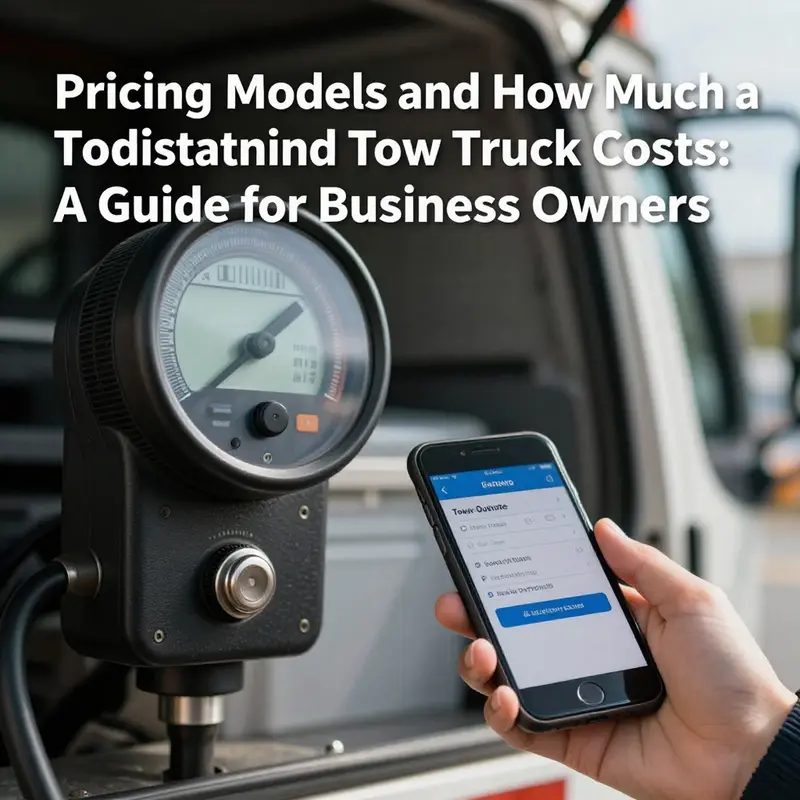
When you start to piece together the price of a tow, the concept of a simple per-mile charge quickly dissolves into a more complex map. Tow trucks don’t run on a single, fixed rate per mile. Instead, most bills are a blend: a base hookup or dispatch fee, a mileage charge that scales with distance, and a set of variable add-ons that can shoot up the final total depending on who, where, and when. Even though an industry-wide average around the three to seven dollar band per mile provides a useful rough guide, the exact tally inside your wallet can swing widely from one tow to the next. This isn’t vanity pricing; it’s a reflection of the real, practical costs of moving a vehicle safely and efficiently from point A to point B. The base fees compensate the operator for dispatch, preparation, and the use of the tow rig, while the mileage rate recognizes fuel, wear and tear, and the operational hours that keep a crew ready to respond on short notice. Add-ons—such as after-hours surcharges, winching under difficult conditions, or the use of specialized equipment—can shift the number again. The result is a pricing mosaic rather than a single fixed figure.
The type of tow truck matters almost as much as the distance itself. Standard tow trucks, commonly employed for passenger cars, carry a base fee typically in the neighborhood of seventy-five to one hundred fifty dollars, with mileage charges often ranging from two to five dollars per mile. Flatbed tow trucks, favored for modern cars with all-wheel drive or lower ground clearance, usually demand a higher base—roughly one hundred fifty to two hundred fifty dollars—while offering mileage rates that are not dramatically different from standard equipment. The rationale is simple: flatbeds require more precise setup, more specialized equipment, and sometimes more labor to protect the vehicle during transport.
Rotator tow trucks, the most capable and the most costly of the trio, enter the pricing picture in situations that are urgent or technically challenging. They can lift overturned or severely damaged vehicles and often command a base fee of three hundred dollars or more, with mileage rates that may range from four to eight dollars per mile or higher in emergency contexts. The premium here isn’t just the extra horsepower; it’s the readiness, the extra crew supervision, and the specialized safety protocols required to operate in high-risk scenarios. The same principle applies to service type. Emergency or on-demand tows usually trigger higher prices than scheduled or non-emergency tows, because they demand immediate mobilization, 24/7 availability, and rapid deployment of resources. Location matters, too. Urban areas tend to show higher rates due to congestion, demand spikes, and the cost of doing business in a dense market. Rural regions, despite sometimes lower base fees, can push the per-mile figure upward when longer distances are involved.
The math of mileage becomes especially telling when you compare short-distance moves to longer hauls. A typical short tow, say five to ten miles, often lands in the range of seventy-five to one hundred fifty dollars total, where the base fee and the first few miles carry most of the weight. As distance increases, the cumulative impact of the mile rate becomes more pronounced, and the total can exceed three hundred dollars for longer hauls, particularly when the vehicle requires additional equipment or when the tow involves multiple segments of transport. Heavy vehicles—SUVs, pickups with heavy payloads, or commercial vans—tend to pay more. They necessitate larger tow rigs, stronger winches, and sometimes more crew time to manage the load safely, translating into higher base fees and higher mileage costs.
A practical reality often arises in what some operators call a “hook and roll” model: an up-front hook-up or dispatch fee, plus a per-mile rate. The hook-up fee, commonly around fifty to one hundred dollars, covers the immediate mobilization and basic attachment of the tow apparatus. The mileage piece, as discussed, fluctuates with vehicle type and circumstance. In this model, the per-mile rate can span a broad range—from roughly one dollar seventy-five to seven fifty per mile or more, depending on region and service level. The result is a pricing structure that feels intuitive in the moment yet becomes opaque if you’re not prepared to parse the line-by-line breakdown.
For customers, the most reliable way to gain clarity is an upfront estimate that itemizes base fees, mileage, and any surcharges. Clear quotes help avoid surprise charges for after-hours service, weekend calls, or emergency deployments. When requesting an estimate, it’s wise to specify not only the distance but also the kind of tow required and any special circumstances. If a car is severely damaged, if the road has steep grade or shoulder constraints, or if heavy equipment needs to be used, articulate these details so the quote can reflect realistic contingencies rather than optimistic assumptions. Local factors also shape pricing: some regions trend higher than others, reflecting both the cost of living and the competitive landscape.
People often supplement direct quotes with online price platforms that aggregate local pricing. While these tools can be helpful for a rough gauge, they are best used as starting points rather than final word. The most accurate pricing comes from contacting local providers directly and requesting a written estimate that clearly breaks out base fees, per-mile rates, and any extra charges. If you’re in the vicinity of a familiar neighborhood provider, you might notice the process feels less opaque when you reference a local operator’s published rates or typical charge structure. For example, a local service page can sometimes offer a concise snapshot of what to expect, reinforcing the idea that the mile is only one component of a broader cost equation. Mikes Roadside Service can serve as a practical example of how a nearby company communicates its pricing and availability, illustrating how distance, vehicle type, and timing converge into a final bill.
As you plan, remember that the question isn’t simply “How much per mile?” but rather, “What will this tow cost given my car, my location, and my timing?” The answer requires weighing the base fixture of the service against the distance and the conditions under which the tow occurs. Urban rush hours, late-night emergencies, and oversized vehicles all nudge the total upward. Rural settings may require longer drive times or more travel to reach the scene, which also influences pricing. The final number is thus a negotiation between safety, service level, and logistics. In practice, the best approach is to secure a transparent quote that clearly delineates each element, confirm the expected total before the tow begins, and be aware of potential surcharges that could apply if circumstances change during the service window.
For readers seeking broader context on procurement practices and price benchmarks, further resources exist beyond local quotes. One external reference that provides broader industry insight into pricing dynamics can be explored at Alibaba.com. This resource offers procurement-related perspectives that, while not a consumer-facing price guide for local towing, can illuminate how base costs, availability, and logistics influence pricing across markets. https://www.alibaba.com
Final thoughts
Understanding the costs associated with towing services can empower business owners to make informed decisions. Recognizing the factors that influence pricing and the various pricing models employed by towing companies is essential for effectively budgeting for vehicle recovery needs. By seeking upfront estimates and maintaining communication with reputable towing services, you can mitigate unexpected costs and ensure a smoother recovery process when faced with vehicle issues.