
Understanding how much tow trucks charge is essential for business owners who manage fleets or deal with roadside emergencies. The costs associated with towing can vary greatly, influenced by a variety of factors such as service type, emergency response needs, and geographical location. This guide breaks down the cost structures typical to tow trucks, providing clarity on what to expect when a vehicle requires towing services. In the first chapter, we delve into the basic pricing models used in the towing industry. The second chapter explores the various factors that significantly impact these rates, ensuring that business owners are well-equipped to navigate this essential service.
Tow Truck Charges Unpacked: Understanding the Hidden Layers Behind the Tow Fee
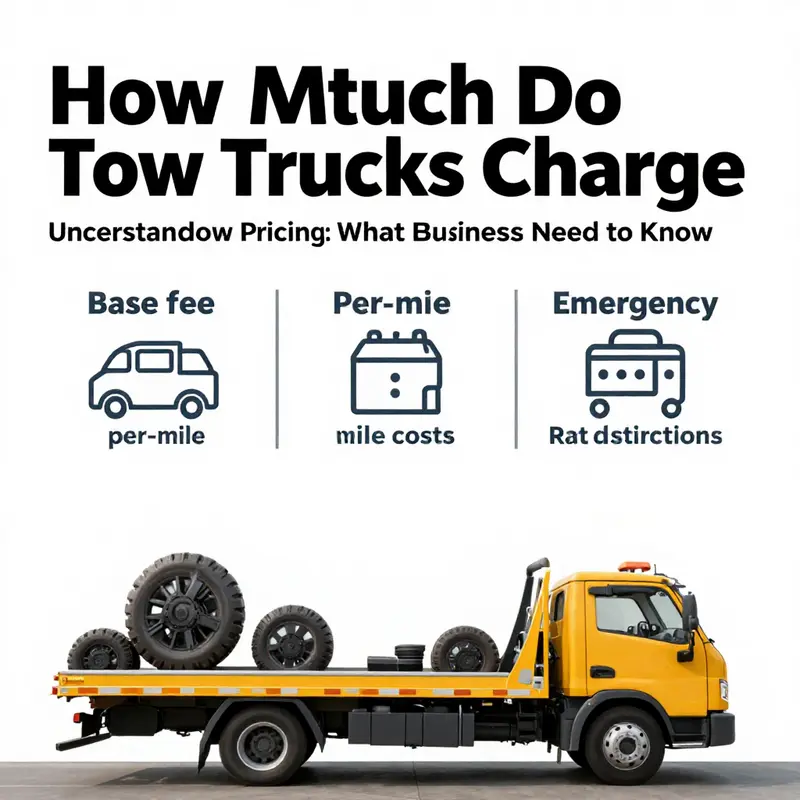
Tow truck pricing can feel opaque at first glance, but it follows a logic that, once understood, helps readers anticipate costs rather than chase surprises. At its core, the fee structure has two persistent pillars: a base service call or dispatch fee, and a mileage component that pays for the distance the tow truck travels to reach you and to return to the shop or destination. This simple pairing becomes more complex when you consider the many variables that surround a real-world tow: where you are, what you drive, the time of day, and the kind of tow you need.
Most operators start with a service fee, a charge designed to cover the truck being moved from its base to your location, the labor to assess the scene, and the administrative cost of dispatch. In practice, this base often falls in a broad range, roughly from fifty to a hundred dollars or more. That means even before the tow begins, your bill is already set at a minimum that reflects the immediacy of your call. Following the service fee is the mileage rate, a per-mile charge that covers the distance the tow truck must travel with or to your vehicle. A common figure you might encounter is about one dollar seventy-five cents per mile. Multiply that by the total distance the vehicle travels in your case—the ride to the scene plus the ride back to where the vehicle will be stored or repaired—and you’ll see how quickly the price can add up.
To illustrate, consider a typical scenario: the tow truck travels ten miles to reach your location and then ten miles back. At a service fee of fifty dollars and a mileage rate of one dollar seventy-five cents per mile, the mileage cost would be thirty-five dollars. The resulting bill, before any on-site time, after-hours surcharges, or equipment fees, would be eighty-five dollars. This example is a worksheet for understanding, not a prediction. Real-world prices can differ due to the factors that follow, and no two tow jobs are exactly alike.
The real nuance emerges when we look at the factors that push a simple base plus mileage into the realm of the higher end. Time spent on-scene matters. If a tow requires on-site winching to free a vehicle stuck in mud or snow, or if an accident scene demands careful handling and extra documentation, the clock adds an on-site time charge. That charge can accumulate quickly, especially if the driver must stay longer to secure the vehicle and ensure it is loaded safely. Types of vehicles also matter. Larger vehicles—SUVs, trucks, or vans—demand more effort and sometimes specialized equipment, which translates into higher minimums and possibly higher per-mile rates. In practice, the price ladder reflects these realities: the heavier the vehicle, the more resources the tow crew must mobilize, and the more you should expect to pay.
Beyond the basics, service profiles diverge further based on the situation you find yourself in. Emergency or after-hours calls, where the company is required to respond outside standard business hours, typically carry a premium. Private-property tows, such as a car that has been left on private land or in a garage, can incur a separate charge for the property access and the paperwork involved. If the tow involves specialized equipment—flatbed towing instead of a standard dolly, or winching in difficult terrain—the price can rise again. Long-distance towing is another category that stretches the numbers, because the base service fee often remains the same while the additional miles accumulate over a longer distance, creating a much higher total.
Technology is quietly reshaping these costs, too. Modern fleets increasingly rely on software that optimizes dispatch, route planning, and battery management for battery-powered equipment and hybrid operations. Efficient routing means less travel time and fewer hours on the road, which can translate to lower fuel usage and, in some cases, lower on-site labor time. Yet the flip side is that advanced equipment or electric or autonomous enhancements carry their own upfront costs, which some firms pass along to customers as a surcharge. The net effect is that cost structures are in flux, with old rules becoming blended by new efficiency and new equipment demands. These shifts underscore why it’s wise to think about the price as a package rather than a fixed sticker.
When you prepare for a tow, you can feel more confident by building a quick mental checklist that translates into an accurate, area-specific quote. Start with the core questions: What is the base service fee? What is the per-mile rate? Are there separate charges for the on-site time, after-hours service, or a private-property tow? Is there an equipment surcharge for flatbed or winching? How is the total distance calculated—round trip or one-way? For many people, asking these questions up front with the same dispatch person who will take the call helps avoid sticker shock. If possible, request a written estimate and a confirmed price range before the vehicle is loaded, especially if the driver must navigate a difficult location. In some markets, companies are required to provide a rough estimate of costs before service; in others, it remains a best practice to obtain a clear quote, in writing, that breaks down each price element.
Locally, price expectations differ as much as the weather does. Geography, population density, and local competition color what you’ll be asked to pay. A base fee that seems reasonable in a large city could be notably higher in a rural area where fewer tow operators are nearby and travel distances are longer. The best approach is to call ahead, describe where your vehicle is and what kind of tow you expect, and then compare a couple of local quotes. This is where consumer resources come into play. The AAA Towing Cost Guide is a trusted benchmark that outlines typical ranges and the kinds of factors that most influence total charges across the country. While you should treat any single price as a starting point rather than a verdict, this guide can help calibrate expectations and prepare you to ask the right questions when you call for help. For readers seeking continuity in local experiences, you can also explore a local service page such as mikes-roadside-service to see how a nearby provider describes its process and pricing in plain terms. That page often clarifies what is included in the base fee and how distance and time are billed, giving you practical insight into the real-world numbers behind the math. See mikes-roadside-service for more details.
The bottom line is simple: tow pricing is a structure. It is built from a predictable core—the service fee and the mileage charge—and layered with factors that reflect the complexity of your situation. If you plan ahead, ask the right questions, and compare a few local quotes, you’ll understand what determines the final bill and avoid surprises when the truck arrives. Prices may shift with emergencies, demand, or the exact equipment required, but you can measure the cost against the services rendered and the risk and effort the tow crew undertook. When you know where the charges come from, you can balance the need for urgent help with the need to protect your wallet. The conversation you have in those first minutes of contact matters, because it shapes not only the price you’ll see but also the efficiency, safety, and speed with which your vehicle is moved to a secure location until a repair plan is ready.
To learn more about the broader framework and regional differences in pricing, consult the external resource that aggregates industry perspectives on towing costs. This resource provides a general backdrop to the numbers you’ll encounter and helps you compare what you pay with what others pay. For a broader framework, see AAA Towing Cost Information.
Tow Truck Pricing Unpacked: The Hidden Levers Behind Your Tow Bill
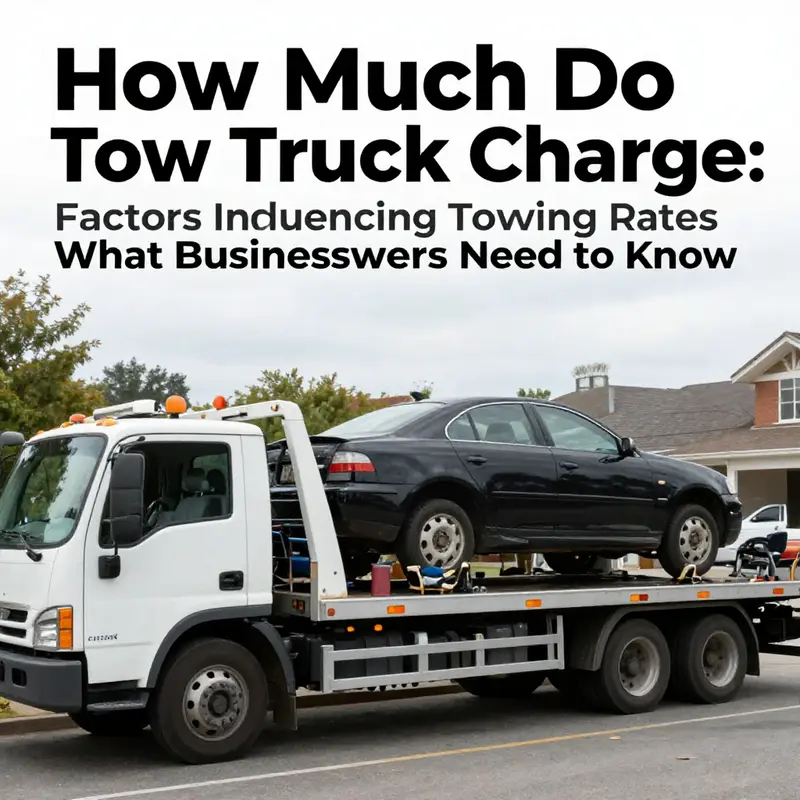
When your car stalls on a busy highway or refuses to start in a dimly lit parking lot, the price tag that appears on the invoice often feels like an afterthought. Yet tow truck pricing isn’t a single number you can memorize. It’s a blend of several moving parts that come together in real time, sometimes with little warning. Understanding how those pieces fit can make it easier to anticipate costs, ask the right questions, and avoid sticker shock when the work is done. At its core, most towing bills break down into a service call charge and a mileage component, but the exact figures dance to different tunes depending on where you are, what needs to be done, and when you call for help. A common starting point you’ll encounter is a base service fee, followed by a per-mile rate. In many outfits, that service fee hovers around fifty dollars, while the mileage charge runs somewhere around a dollar and seventy-five cents for each mile the tow truck has to travel to reach your vehicle and return. If the truck must travel ten miles to you and ten miles back, you’re looking at about thirty-five dollars in mileage fees, plus the fifty-dollar service charge, for a total around eighty-five dollars before any extras. It’s a useful rule of thumb, but it’s also a snapshot that can shift dramatically based on the circumstances described below.
The distance of the tow is the most obvious driver. Short tows, within ten miles, tend to cluster in the range of seventy-five to one hundred twenty-five dollars in base and mileage, depending on the operator and the exact route. Longer tows can push the total well beyond that range, particularly if the destination is far from the pickup point or if the vehicle must be moved to a different city or state. The miles aren’t a mere afterthought; they are the major currency in the pricing system because they reflect fuel, wear, driver time, and the availability of heavier equipment. The math becomes more nuanced when the tow requires extra labor on the scene—say, loading a car with a specialized set of straps, wheel lifts, or a flatbed. In those cases, the base service charge might still be the anchor, but the per-mile rate could be joined by additional line items for the equipment and the extra crew time that a more complex operation demands. A flatbed, for instance, often commands a higher total due to the careful handling and specialized equipment it requires. A high-end or exotic vehicle, which may need extra protection or a slower, more meticulous winching process, can lift the price further, sometimes into the hundreds for a single short tow when the vehicle needs careful onboarding and safeguarding.
Vehicle type and towing method also steer the bill in different directions. The type of vehicle determines how the tow will be performed and what kind of truck is dispatched. Flatbed towing is frequently safer and more versatile, especially for luxury cars, all-wheel-drive models, or vehicles with drivetrain concerns. Because flatbeds demand different equipment and more meticulous loading procedures, they tend to cost more than a traditional hook-and-chain tow. Larger vehicles—SUVs, trucks, or commercial vehicles—also push costs higher due to the weight and the specific heavy-duty tow trucks required to move them. In some cases, operators charge based on weight thresholds, adding another variable to the price. Compact cars, by contrast, often incur lower fees, though the exact cost can still climb if a long travel distance, off-street pickup, or special handling is needed.
Time of day and the nature of the dispatch add their own premium layers. Roadside assistance that arrives after regular business hours, during late nights, weekends, or holidays, commonly carries an after-hours surcharge. The magnitude of that premium can vary but often falls in the fifty-to-one-hundred-dollar range, and it’s not unusual to see added charges tied to urgent or emergency service when time is of the essence. The same dynamic applies when towing from private property or from locations where access is more difficult, such as a cramped driveway or a crash scene. In those cases, the price can reflect the extra labor or special permissions required to move the vehicle safely and legally. And because towing isn’t a one-size-fits-all service, some companies also include a temporary storage or impound fee if the vehicle must be kept somewhere overnight or longer, a cost that can surprise drivers who are not prepared for it.
Geographic location introduces another layer of variation. Urban markets tend to show higher baseline rates, driven by dense demand, higher operating costs, and the need to deploy heavier equipment more frequently. Rural areas might offer lower base prices, but a driver could encounter longer wait times or higher mileage charges to reach a remote location. In some regions, state or local regulations influence price ceilings or rate structures, which can create a ceiling effect that helps prevent wildly divergent quotes. The interplay of local competition and regulatory framework means that two neighboring towns can tell different price stories for the same service. What stays constant, even in different places, is the principle that the quote should be understood as a forecast rather than a fixed summary of the final bill. A careful approach to pricing is to request a detailed, itemized quote in advance and to confirm there are no hidden fees tucked away in the fine print.
With all these factors in play, a practical approach when you’re stranded is to think through what you actually need and to ask for a clear, written estimate before any work begins. Request the base service fee, the per-mile rate, the approximate distance to be traveled to reach your location and back, and any potential surcharges for after-hours service, private-property pickup, or special equipment. If the driver’s arrival is imminent, ask for a best-guest estimate and a definitive up-front cap if possible. Some operators will offer an on-site quote that breaks down each line item, while others will provide a rough estimate over the phone or through a text chat. Either way, insist on transparency and documentation. It’s also reasonable to inquire whether there are any options that could reduce the bill, such as waiting for regular business hours when a lower rate might apply, or whether a different towing method could achieve a similar result at a lower cost. In certain areas, a compact, straightforward tow to a nearby repair shop may be cheaper than a longer haul to a dealership, so knowing the approximate destination can help you gauge the overall cost.
For a sense of how this looks in a real local context, consider a nearby provider such as Mike’s Towing, which illustrates how a single call can unfold into a multi-part charge sheet. Their approach mirrors the broader market: a base dispatch fee, a mileage component, and the potential for add-ons depending on the vehicle, the distance, and the time of day. The lessons here are universal—know the components, ask for specificity, and compare apples to apples when you shop around. If you’re gathering information to make a decision, you’ll also find that many reputable sources encourage drivers to check up-to-date pricing with multiple local providers before committing. In this way, you turn a stressful moment into an informed choice rather than a reflex to accept the first quote.
When you’re finally handed the bill, the best result is a transparent, itemized invoice that aligns with the quotes you received beforehand. If a discrepancy arises, don’t hesitate to ask for a quick reconciliation. Most providers are willing to walk through the charges line by line and explain any unusual line items. And if you’ve faced repeated emergency calls or a pattern of high estimates, it may be worth asking whether there is a preferred partner who offers a stable rate for regular roadside needs. After all, knowing what drives the price is the first step toward feeling confident about the cost when you really need a tow. For a broader overview of tow-cost structures and what drives them in different circumstances, you can review industry discussions and calculations at the following external resource: https://www.roadside.com/blog/how-much-does-a-tow-cost.
Final thoughts
Understanding tow truck pricing is crucial for all business owners who may need towing services. By familiarizing yourself with the basic cost structures and the factors that can influence these rates, you can better prepare and budget for unexpected vehicle needs. Remember that establishing a strong relationship with a reliable towing service can not only save on costs but ensure quick response times during emergencies. Empower your operations by being informed about the financial aspects related to towing services.