
For business owners relying on transport, understanding the towing capabilities of a 2500 truck is essential. This class of vehicle is widely used in various industries, and knowing its towing capacity can significantly impact operational efficiency. A typical 2500 truck boasts a towing capacity between 1,500 kg to 3,000 kg. In the following chapters, we will delve deeper into what influences this range and how specific configurations can optimize towing capacity for your business needs.
Unpacking the Towing Potential of a 2500kg Truck: A Comprehensive Guide to Capacities, Calculations, and Safety
When considering how much a 2500kg truck can tow, the discussion goes far beyond a simple number on a sticker. The towing capacity of such a truck hinges on a delicate balance of engineering ingenuity, manufacturer specifications, and safety considerations that ensure both the vehicle and the trailer move harmoniously on the road. In this comprehensive guide, we explore the technical aspects, calculations, and real-world variables that determine the true towing potential of a 2500kg truck and explain why understanding these details is critical for any truck owner.
At the heart of the matter is the interplay between the truck’s Gross Vehicle Weight (GVW) and its Gross Combined Vehicle Weight Rating (GCWR). The GVW represents the maximum allowable mass of the truck when loaded with cargo, passengers, and certain consumables like fuel. On the other hand, the GCWR is a more expansive figure that accounts for the weight of both the truck and any towed trailer, inclusive of cargo and passengers. In practical terms, the difference between the GCWR and the GVW gives you the truck’s maximum towing capacity. For example, if a truck has a GCWR of 4500kg and a GVW of 2500kg, the mathematical simplicity of subtracting these two numbers yields a towing capacity of 2000kg. This calculation, while straightforward in principle, underpins all decisions regarding safe towing.
However, there is no one-size-fits-all answer to how much a 2500kg truck can tow because several factors influence the final towing capacity. One of the main variables is the specific make and model of the vehicle. Different manufacturers design their trucks with varying safety margins and build specifications. A lightly equipped model might only offer a towing capacity in the lower range because it is designed for moderate use, whereas a model with a robust engine—often a diesel variant—combined with enhanced suspension and a certified trailer hitch package might achieve towing capacities that reach or even exceed 3,000kg. This variance means that while some trucks in the 2500kg category might comfortably tow trailers approaching the upper limits of the spectrum, others are intended strictly for lighter towing demands.
Engine type and drivetrain configuration are among the next important considerations. In many cases, trucks fitted with diesel engines are known for their higher torque, which is crucial when starting from a halt with a heavy load. The reliability of a diesel engine, coupled with a well-designed powertrain, ensures that such trucks not only offer higher towing capacity on paper but also deliver safer and more efficient performance when under load. Equally important is the choice between rear-wheel drive and four-wheel drive. Rear-wheel drive systems, while excellent for dry, stable road conditions, may not perform as reliably in adverse weather or off-road conditions. Conversely, four-wheel drive trucks provide enhanced traction and stability, which can be essential when towing close to the maximum capacity, though this configuration might sometimes come with a slightly lower nominal towing rating due to additional weight and power distribution factors.
Beyond the raw numbers of GVW and GCWR, there are subtler support factors that influence how much a truck can tow safely. One of these subtleties is the truck’s suspension and braking systems. A truck built with advanced suspension technologies can manage heavier loads by distributing weight more evenly across the chassis. Similarly, modern braking systems, which are often integrated with electronic aids, provide the necessary stopping power that can be critical when towing heavy trailers. The interplay of these features means that the truck’s practical towing capacity might differ from the basic calculation if additional safety mechanisms have been installed that allow the vehicle to operate closer to its rated limits without compromising control or safety.
Safety is perhaps the most compelling argument for paying close attention to the specifics of towing capacity. Exceeding the rated towing capacity of a truck can lead to myriad problems ranging from reduced vehicle control to potential mechanical failures. When the trailer’s weight encroaches on or exceeds the safe limits, stopping distances can increase dramatically and the vehicle may react unpredictably during sudden maneuvers. Such scenarios not only put the truck and trailer at risk but also jeopardize the safety of other road users. Moreover, overloading a truck can void manufacturer warranties and, in many cases, lead to legal repercussions if the vehicle is found to be operating outside of recommended guidelines. Today’s truck owners need to respect these boundaries while making informed decisions based on a thorough understanding of both the theoretical and real-world implications of towing heavy loads.
An essential part of understanding towing capacity is the recognition that manufacturer specifications are not merely guidelines but are the result of rigorous testing and engineering. These documents, typically found in the vehicle’s owner’s manual or on the vehicle identification number (VIN) plate, provide insight into how the truck was designed to operate. They often include detailed breakdowns of the maximum load limits that the truck can handle under various configurations and conditions. In addition to the static numbers, manufacturers sometimes provide dynamic towing guides that account for variables such as gradient, altitude, and typical usage conditions. For those interested in delving deeper into a vehicle’s specific capacity details, the practice of consulting these resources cannot be overstated. For instance, owners might find that while a particular model of a 2500kg truck is rated at a towing capacity of 2000kg under ideal conditions, additional factors such as prolonged high-speed driving or mountainous terrain might necessitate a more conservative approach.
In practical terms, many truck owners may wonder how to apply this information when planning a tow. To begin with, knowing the intended usage pattern is crucial. If the truck is mostly used for short, urban commutes where the trailer will carry relatively light loads, then operating near the upper limit of the towing capacity might be acceptable. Conversely, for those who need to traverse long distances or navigate challenging landscapes, it might be wiser to remain well below the maximum capacity to safeguard the vehicle’s performance and longevity. Choosing the right configuration, including the correct hitch and distribution system for the trailer, also forms part of the equation. By optimizing these elements, truck owners not only maximize the truck’s towing potential but also enhance overall road safety.
Another critical aspect is the importance of regular maintenance and inspections. Even the most robust towing system cannot perform safely if the truck is not maintained to the standards recommended by its manufacturer. Regular checks of the suspension, brakes, and hitch connections are mandatory to ensure the truck remains in optimal towing condition. Wear and tear over time can erode the safety margins built into the vehicle’s design. Proactive maintenance schedules, self-inspection routines, and professional check-ups help in spotting issues before they become blatant safety hazards. This commitment to regular upkeep is a key pillar in the effective and safe utilization of the vehicle’s towing capacity.
Moreover, it is important to recognize that the theoretical towing capacity does not always translate into practical performance on the road. Variables such as the distribution of the trailer’s load, the aerodynamics of both the truck and the trailer, and even ambient weather conditions can play significant roles in the overall towing experience. For example, an unevenly distributed load in the trailer can lead to instability, thereby reducing the effective towing capacity even if the total weight remains within specified limits. Similarly, high winds or inclement weather can introduce additional forces that the truck must overcome, making it prudent to operate below the nominal towing capacity to maintain a margin of safety.
Turning theoretical considerations into practice also means being mindful of local regulations and guidelines. Many regions have legal requirements that govern towing practices, including specific weight limits and mandatory equipment standards. Owners should ensure that their towing setup adheres to all applicable rules in order to avoid fines or more serious legal consequences. Beyond mere compliance, these regulations are often designed based on extensive safety research and serve to protect both the vehicle operator and the wider public. Awareness and adherence to these standards is part of a broader commitment to safe and responsible towing.
In the realm of real-world applications, experienced truck owners frequently emphasize the need for a conservative approach when it comes to towing. The comfort of knowing that the truck is operating well within its safe limits can greatly enhance the confidence of the driver in challenging situations. This approach not only ensures a safer journey but can also extend the overall lifespan of the truck by minimizing the wear and tear associated with operating at maximum capacity. In essence, effective towing is not solely about achieving the highest possible weight on a trailer, but about striking the right balance between performance, safety, and durability.
Practical steps to ensure safe towing involve a combination of planning and execution. Before embarking on a journey with a heavy trailer, owners should always verify that their vehicle’s GVW and GCWR ratings are clearly understood and adhered to. This involves careful preparation, such as pre-trip inspections to ensure that all components of the towing system—from the hitch to the brakes—are functioning optimally. Additionally, many seasoned operators take the extra step of adjusting driving habits to accommodate the increased load. For instance, acceleration tends to be slower, and deceleration requires a longer stopping distance when towing near the upper threshold of capacity. Such adjustments, while seemingly simple, are a testament to the fact that mechanical limits should always be respected for the sake of safety.
It is also worth noting that detailed technological advances continue to reshape our understanding of towing dynamics. Modern trucks may be equipped with advanced telemetry systems that provide real-time feedback on load distribution, braking performance, and even road conditions. These systems offer invaluable data that can help the driver make informed decisions during a trip. As these technological innovations become more widespread, the gap between theoretical calculations and actual towing performance is likely to diminish, leading to safer and more efficient towing practices.
In conclusion, understanding the towing capabilities of a 2500kg truck requires a holistic view that incorporates technical specifications, rigorous maintenance practices, and a commitment to safe driving. The basic calculation of subtracting the truck’s GVW from its GCWR provides a starting point, but the reality of towing is influenced by an array of factors including vehicle configuration, engine performance, drivetrain setup, and environmental conditions. For truck owners, this means that while the theoretical maximum towing capacity may be impressive, practical use requires careful planning, ongoing maintenance, and adherence to manufacturer recommendations.
Owners looking to delve deeper into vehicle safety and towing guidelines might find it beneficial to explore additional perspectives on roadside and vehicle support measures. For further insights about ensuring a secure towing experience and understanding the mechanics behind truck performance, consider checking out this insightful resource on comprehensive towing support from a trusted Houston towing service. With safety as the paramount concern, taking these steps ensures that every journey is undertaken with confidence and respect for the mechanical limits of the vehicle.
To remain informed about the evolving standards for vehicle performance and towing capacities, it is also a good practice to consult authoritative external resources. For the most current and precise towing specifications tailored to a variety of truck models—including those in the 2500kg class—the resources provided by manufacturers such as Ford offer valuable technical data and operational guidelines. You can review more detailed manufacturer information at Ford’s official site. Embracing this detailed approach, truck owners can ensure their vehicles are used safely and effectively, bridging the gap between theory and actual performance on today’s roads.
Under the Hood: The Engineering Secrets Behind a 2500 Truck’s Towing Power
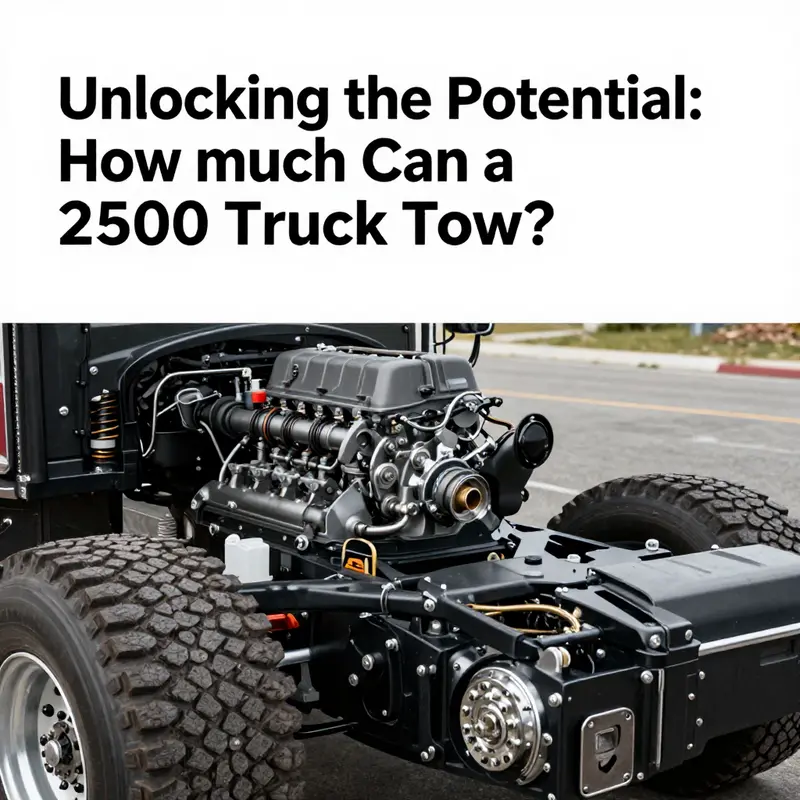
The capability of a 2500 truck to tow impressive loads is not a mysterious quirk but the result of carefully engineered principles, component choices, and design configurations that work in harmony. The towing capacity of these light trucks is determined by a number of interrelated factors including engine power, transmission, drivetrain, axle configuration, suspension design, braking performance, and weight ratings. Each factor plays its own integral role in ensuring that when you hook up a trailer, the truck maximizes its available power in a safe, efficient, and balanced manner.
At the core of a truck’s towing potential lies its engine. More powerful engines that are built to produce high amounts of torque facilitate towing by generating the necessary power to pull heavy loads over a range of speeds. Whether the vehicle is equipped with a modern diesel or a more conventional gasoline engine, the design focus is on ensuring that enough low-end torque is available. This feature helps the truck easily surge from a stop, maintain momentum on steep grades, and deliver a consistent performance even when burdened by the stress of a loaded trailer. The specifics of engine power, such as displacement, fuel delivery technology, turbocharging elements, and overall design efficiency, are integral to determining how much weight the truck can effectively pull without suffering undue wear or risking mechanical failure.
Closely intertwined with the engine’s capabilities is the transmission. The transmission acts as the intermediary between the engine and the wheels, adapting the raw power into usable motion. Trucks fitted with either automatic or manual transmissions present distinct advantages when it comes to towing. For instance, modern automatic transmissions are often equipped with adaptive gear ratios that optimize shifting sequences to keep the engine in its power band, especially critical when the vehicle is loaded. In contrast, a well-tuned manual setup can offer a more direct driving experience, allowing the operator to select gears that provide the necessary torque for climbing hills or accelerating with additional weight. The interplay between the engine and the transmission ultimately affects the vehicle’s ability to manage continuous loads, making this combination a crucial part of the towing equation in a 2500 truck.
Beyond the powertrain, the drivetrain configuration also has a profound influence on towing capacity. Trucks commonly come with either rear-wheel drive or four-wheel drive layouts. Rear-wheel drive systems are often lauded for their superior weight distribution during towing. By placing the weight of the trailer’s tongue on the rear axle, these systems help improve traction and stability, particularly on open highways and during acceleration. Four-wheel drive systems, while they provide enhanced traction in low-traction conditions like snow or off-road terrains, might require additional engineering considerations such as transfer cases and locking differentials that can alter the overall towing dynamics. Consequently, the choice between these systems will have a direct bearing on towing performance and stability under heavy loads.
Another essential element is the axle ratio, a detail that might seem minor at first glance but is of critical importance. The axle ratio defines the number of times the driveshaft rotates relative to one rotation of the wheels. A higher numerical ratio means that more torque is sent to the wheels, which is beneficial for towing heavy loads, as it can significantly improve acceleration and pulling power. However, this advantage can come at the cost of fuel efficiency at higher speeds. Manufacturers typically balance these parameters to meet the diverse needs of drivers, encouraging the proper configuration based on whether the truck is primarily used for daily commuting or for the more demanding task of hauling heavy trailers on a regular basis.
Equally important is the vehicle’s suspension system. A robust suspension does more than simply provide a comfortable ride; it plays a pivotal role in maintaining vehicle stability and controlling weight distribution when hauling a trailer. When towing, loads exert additional stress on the chassis of the truck, making it critical that both the front and rear suspensions are adequately supported. Heavy-duty shock absorbers, reinforced springs, and improved frame-to-body connections are all modifications designed to handle the extra strain. Without these improvements, even a truck with high towing ratings might suffer from compromised handling or rapid deterioration of components under relentless towing conditions.
Braking systems are yet another safety-critical component that influences the towing capacity of a 2500 truck. The ability of the brakes to dissipate the energy from a heavy load is essential to ensuring not only effective stopping power but also overall control during transit. In many towing setups, the brake performance is enhanced by including additional systems such as integrated trailer brakes. These offer an extra layer of control, ensuring that the deceleration is smooth and that both the truck and the trailer slow down synchronously. This coherence is especially important in emergency scenarios where a mismatch in braking performance could lead to dangerous situations like trailer jackknifing or loss of control. The quality and calibration of the braking system, including the use of anti-lock braking systems (ABS) and electronic brake-force distribution, work in tandem with other factors to help define the practical towing limits a vehicle can safely handle.
Another dimension to consider is the truck’s weight ratings, specifically the Gross Vehicle Weight Rating (GVWR) and the Gross Combined Weight Rating (GCWR). These figures are not arbitrary; they are meticulously calculated benchmarks that determine the maximum safe loads the vehicle can carry and tow combined. The GVWR indicates the total safe operating weight of the truck, including passengers, cargo, and any additional equipment. The GCWR, on the other hand, accounts for both the truck and its trailer. Exceeding these ratings can be catastrophic, as it places undue stress on the engine, transmission, suspension, and braking systems. The incorporation of these metrics into design guidelines serves as a reminder that towing is not just about raw power but also about respecting the overall structural limits of the vehicle. For those who use their trucks in demanding conditions, understanding these ratings is as critical as knowing the theoretical towing capacity rendered by other more visible components.
In certain configurations, such as those enhanced with high-torque diesel engines and heavy-duty transmissions, a 2500 truck can approach the upper limit of a towing capacity of approximately 3,000 kg. These setups are often built with additional reinforcements that include a more robust axle design and specialized suspension systems intended to minimize the risk of mechanical failure under prolonged heavy loads. Often, such configurations are reflected in a vehicle’s specifications, which clearly differentiate them from entry-level or lightly equipped variants. In practical terms, this means that while a similarly rated truck with a smaller, less robust engine might be well-suited for lighter towing tasks, the more robustly configured truck can be expected to safely handle demands that are almost double in magnitude.
Every element described above — from engine and transmission to axle ratio and brake systems — is harmonized in modern truck design. Manufacturers collaborate with engineers to conduct rigorous testing and simulation exercises that ensure the integrity of each component, especially under the dynamic conditions of real-world towing. Differences in design philosophies across manufacturers result in a range of towing capacities even for trucks that fall into the same weight class. This multiplicity of factors means that it is imperative for truck owners and potential buyers to consult the manufacturer’s specifications and the vehicle’s owner manual before engaging in significant towing activities. By doing so, drivers can avoid inadvertently overloading their vehicles, which could lead to mechanical issues, safety hazards, or even voiding warranties. For a detailed breakdown of specific models and their towing configurations, enthusiasts and potential buyers can refer to resources such as the official Ford specifications on the Fuel Economy – Truck Specifications page, which provides up-to-date and exhaustive details.
In practice, what these detailed engineering specifics translate to is a set of actionable guidelines for the everyday truck owner. It begins with an honest assessment of what you intend to tow — whether it is a simple utility trailer loaded with gardening equipment or a larger recreational trailer designed for weekend adventures. From this starting point, you then need to consider whether your truck’s setup matches the task ahead. Examining the engine’s displacement and its torque curve gives invaluable insight into the vehicle’s baseline towing ability. The transmission plays its role by ensuring that this torque is delivered in a smooth manner, and the axle ratio indicates how efficiently the engine’s output will be converted into pulling power at the wheels. Likewise, if you’re considering modifications – perhaps for specialized tasks or frequently heavy loads – engineers often recommend enhancements in the suspension such as adding heavy-duty springs or even upgrading the braking system to include dedicated trailer brakes. These adjustments ensure that your truck isn’t just theoretically capable of towing heavy loads, but it does so reliably and safely over long distances.
Furthermore, the interaction between the truck and its trailer often requires extra care in terms of weight distribution. The tongue weight, or the force applied downward on the truck’s hitch by the trailer, greatly affects the vehicle’s balance and handling. When the tongue weight is inappropriately distributed, it can cause issues ranging from front-wheel lift during acceleration to uneven braking performance. This is why many experienced drivers will invest in specialized weight distribution hitches or other ancillary equipment designed to spread the load evenly across the truck’s axles. Maintaining these weight distribution systems in optimum condition is essential for reliable towing in any situation, reinforcing the idea that the towing capacity is a sum of many well-maintained and correctly configured components.
Often overlooked, but nonetheless significant, is the cumulative effect of these engineering factors when a truck is put through everyday conditions such as varying road surfaces, fluctuating weather, and long-distance journeys. Drivers must acknowledge that even though a truck’s theoretical towing capacity might be stated as high as 3,000 kg, these numbers can only be meaningfully achieved if every part of the system is operating within its optimal range. For instance, worn suspension components or under-inflated tires add a layer of risk that can reduce effective towing capacity, leading to performance issues that are only compounded when the vehicle is loaded to its limit. It reinforces the importance of regular maintenance, periodic inspections, and, when necessary, professional adjustments to components such as brakes and transmissions. Reliable service providers, such as those offering comprehensive support for heavy vehicles, can help ensure that your truck remains in the best possible condition to meet its towing potential. For those in need of professional maintenance or emergency assistance, resources like the expert services available at a reputable towing service in Houston can provide peace of mind during unexpected breakdowns or routine checks.
Without a doubt, the science behind towing a heavy trailer involves a delicate balance of power, mechanics, and practical planning. While engine performance and drivetrain dynamics form the backbone of towing capabilities, the subtle contributions of suspension design, braking systems, and precise weight ratings complete the picture. Each element is interdependent, and slight modifications in one area may necessitate adjustments elsewhere in the system. The overall integrity of the vehicle’s design is crucial not only for achieving advertised towing capacities but also for ensuring long-term reliability and safety. By understanding that towing isn’t simply a matter of “if” but a matter of how effectively a vehicle’s cumulative strengths are applied, owners can make informed decisions that benefit both daily performance and long-term vehicle health.
In conclusion, the capacity of a 2500 truck to tow is not determined by any single factor but by the cohesive integration of multiple design elements. The powerful engine, responsive transmission, strategic drivetrain, precise axle ratio, durable suspension, and advanced braking systems work in unison to create a machine tailored for demanding towing tasks. This integrated approach ensures that every component is fine-tuned to not only maximize performance but also maintain the highest levels of safety. As you consider the towing potential of a 2500 truck, keep in mind that while the specifications provide a useful baseline, real-world performance depends on maintaining each system in optimal condition and adhering to the manufacturer’s guidelines. Through careful maintenance and a thorough understanding of these engineering principles, your 2500 truck can confidently meet the challenges of heavy towing, fulfilling both work and recreational needs with reliable strength.
For further insights and detailed technical specifications, enthusiasts and owners alike are encouraged to review comprehensive resources and technical documents provided by manufacturers and industry experts.
Final thoughts
Understanding the towing capacity of a 2500 truck is crucial for any business that relies on heavy transport. The capacity varies widely based on several factors, from engine power to vehicle configuration. By considering these elements, you can maximize the towing efficiency and safety of your operations. Make informed decisions to ensure you choose the right truck for your towing needs.