
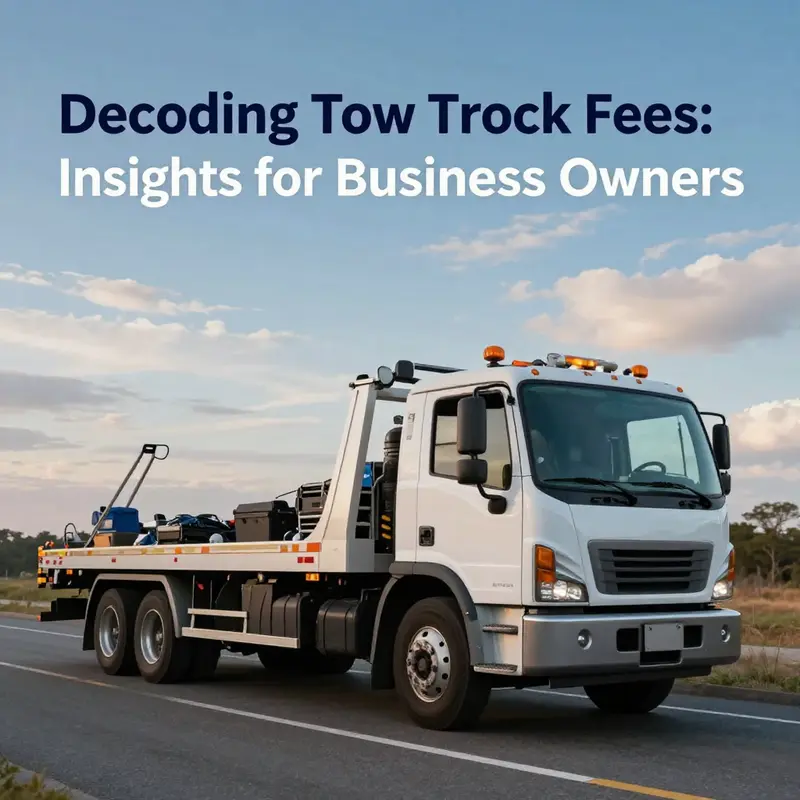
Tow truck fees can be a significant and sometimes unexpected expense for businesses, especially when vehicles break down or require towing services. These fees are influenced by various factors, including the distance traveled, vehicle type, and additional services provided. Understanding these aspects is crucial for business owners, as it allows for better budgeting and planning for unforeseen events. This guide delves into how tow truck fees are calculated based on distance and the myriad of factors that impact overall costs, giving business owners essential insights to navigate this often opaque industry.
Tow Toll by the Mile: How Distance Steers Tow Truck Fees—and What That Means for You
When a vehicle breaks down or winds up stuck, the first question many drivers ask is not how soon help will arrive, but how much it will cost. And in the world of towing, distance travels with a heavy footprint. The distance a tow truck must cover to reach you and then deliver your car to a destination is the clearest, most consistently observed driver of price. It is the factor that shapes the entire bill from first contact to final drop, and it acts as the compass around which other charges orbit. From the moment a dispatcher quotes a base hookup to the last mile of road, the math of towing leans heavily on miles, not moods or miracles. In practical terms, the base rate is what you pay to unlock the tow, and the per-mile rate is the currency you spend to travel with your vehicle to its next stop. A short tow often lands in a relatively approachable price band because the distance is contained within a handful of miles. A longer haul, by contrast, can balloon quickly as the miles accumulate and the work time stretches. For many people, this reality is the quiet, honest truth behind tow bills: distance is the dominant variable, and everything else is a layer of complexity built on top of that core cost.
To understand how that core cost is built, imagine the typical structure most towing companies use. There is a base rate that covers the first leg of the journey—a fixed hookup price that gets the tow rig attached and the vehicle secured. Depending on the company and region, that base can be roughly in the range of 75 dollars for the initial several miles. After the base, there is a per-mile charge that accrues for every mile beyond the initial distance. The per-mile rate itself is not uniform; it varies by region, service level, and company policy, but it commonly sits somewhere in a band of two to five dollars per mile. Those miles add up quickly, especially when roads twist through urban canyons or stretch over remote countryside where fuel, time, and labor all become more expensive for the provider. In some shops, you will encounter a “hook and roll” model—an upfront hook-up fee plus a separate per-mile price. In others, the price is cast as a flat rate per mile, with a modest base still present to cover the essential mobilization and dispatch costs. The bottom line, distilled, is straightforward: distance traveled is the most significant price driver, and the math is designed so the closer your tow ends up, the lower the total ends up being.
Yet distance, while dominant, does not stand alone. The type and weight of the vehicle being towed add a meaningful, if secondary, layer of cost. A compact car sits on a standard tow platform and can generally be moved with a smaller heavier-duty rig, often at a price near the base plus a modest per-mile rate. A larger vehicle—a full-size SUV, a pickup with a heavy payload, or a commercial van—requires heavier equipment, more fuel, and perhaps specialized methods to protect wheel contact and drivetrain integrity. This translates to higher base hookup costs and a higher per-mile charge, all else being equal. It’s not merely about weight for weight’s sake; heavier loads demand different equipment, more labor, and greater power, all of which get folded into the final number presented to you. In some situations, the additional equipment needs and the increased risk to the vehicle being towed also lead to elevated rates even for the same distance. Think of it as a two-step lift: distance sets the stage, and the vehicle’s size or weight determines how many props and how much muscle the tow crew must deploy to complete the task without damage.
Time of day and location further color the price landscape. Emergency or after-hours towing is a reality that each driver will face at some point, and it rarely comes without a premium. Nighttime calls, weekend work, and holiday service can trigger higher rates due to staffing, shift differentials, and the need to respond to urgent situations under less favorable conditions. The same distance traveled, viewed through the lens of a late-night call, can morph into a noticeably higher bill. Urban settings compound the equation in a complementary way: traffic conditions, idling time, and the challenge of maneuvering larger tow trucks through crowded streets can push labor time upward, translating into higher hourly charges in addition to the base fee and per-mile costs. Rural routes tell a different but equally valid story: longer travel distances to reach the vehicle often extend the tow time, increase fuel consumption, and may require operators to maintain a longer stamina commitment. In both urban and rural contexts, time is money, and the clock is always ticking once the tow truck leaves the yard.
Then there are the chances of additional services that creep into the final bill. Lockout assistance, jump-starts, fuel delivery, winching out of mud or ditch, and even minor roadside inspection tasks can be tacked on as separate line items. Each of these services has its own price ladder, frequently adding tens to hundreds of dollars to the total depending on the nature of the service and the difficulty of the job. The same call that results in a quick hookup can, a few minutes later, evolve into a larger bill once the tow crew discovers the extra steps needed to secure the vehicle safely, protect its delicate components, and bring it to a place where repairs can begin. The best way to keep the surprise contained is simple and practical: ask for an estimated total before the tow begins, including every potential add-on you might reasonably expect. This means requesting a written estimate that breaks down base rate, per-mile charges, and any anticipated ancillary services. A transparent estimate gives you a map of where your money goes and makes it easier to compare options if you’re faced with multiple providers.
The question of what constitutes a long-distance tow helps anchor expectations in real-world numbers. Short-distance tows of zero to ten miles commonly settle in the neighborhood of roughly one hundred dollars to two hundred dollars, reflecting the small radius and the minimal deployment time. Medium-distance hauling in the ten- to thirty-mile range generally lands in a broader band, around one hundred fifty to three hundred fifty dollars, depending on regional pricing and the vehicle’s characteristics. Long-distance tows, moving beyond thirty miles and especially past the fifty- to one-hundred-mile marks, push the total into the two hundred fifty to six hundred-dollar territory, and sometimes higher if the situation forces rapid response, very challenging terrain, or multi-stop delivery. The presence of an emergency or after-hours circumstance tends to tilt these figures upwards by a meaningful margin, often in the range of a twenty to fifty percent surcharge, though the exact percentage will depend on the provider and the call’s specifics. For specialized jobs involving RVs or heavy equipment, the price ladder climbs even higher due to the need for larger fleets, more complex equipment, and specialized drivers. In such cases, a long-distance tow may enter the three-hundred-dollar to eight-hundred-dollar span or beyond, a reflection of the resources and risk management required for these distinct tasks.
It is not just a matter of theoretical pricing; real-world decisions often hinge on the practicalities of the scenario. For instance, transporting a car that has been damaged in an accident might justify a higher price if a flatbed is recommended to minimize further damage during transport. A routine roadside assist scenario, on the other hand, could be well managed by a standard tow that keeps the bill more predictable. The consumer’s choice—whether to opt for a flatbed, a standard tow, or a specialized recovery operation—depends on the vehicle’s condition, its value, and the potential risk of additional harm from the transport method. Each choice has a price implication and a liability consideration that can influence the final decision beyond the raw miles.
As you move through the decision-making process, it helps to equip yourself with a few practical touchpoints. First, always request an upfront estimate. If possible, ask for the estimate to be itemized so you can see how much is allocated to the base hookup, how many miles are billed, what the per-mile rate is, and what potential add-ons could apply. Second, when it makes sense, compare a couple of options. If you have time, call around or use a trusted network to obtain a couple of quotes for the same service corridor and vehicle type. This kind of comparison can clarify what a reasonable range looks like in your area and reduce the likelihood of sticker shock when the vehicle finally arrives at a shop. Third, consider the vehicle’s specific needs. If you own a low-clearance or all-wheel-drive vehicle, a flatbed may be worth the extra cost for its lower risk of damage and its protective approach to loading. If your aim is speed and convenience for a routine tow, a standard truck may suffice, but you should still ensure the basic protections are in place and the vehicle is properly secured before transport begins. These are not abstract choices; they translate directly into the quality of care your vehicle receives and into how much you pay for the journey.
To illustrate how this knowledge translates into real guidance, consider a practical reference point from a nearby provider. For a clearer sense of how a local operator frames pricing and service, you can explore the information on the mikes-roadside-service page, which presents an example of how a nearby shop communicates basic costs and services to customers. This kind of local insight can help you calibrate expectations when you need help on a highway shoulder or at a distant outpost. You can examine such an example here: mikes-roadside-service. The goal is not to replace a formal quote but to anchor your understanding in a concrete, nearby context so you can recognize fair pricing when the call comes in.
Beyond the immediate numbers, it is worth noting that regulations and market conditions can influence how a tow company sets its pricing. Some states regulate particular aspects of towing rates, especially in scenarios involving law enforcement, impounded vehicles, or municipal parking enforcement. In these cases, being aware of local rules can help you determine whether a quote is within the expected range or if you should seek an alternative option. The central message remains constant: distance dominates the cost picture, but the other layers—vehicle type, time of day, location, and optional services—shape the final amount in meaningful ways. The wise consumer learns to read the bill as a map, not a single price tag, and to seek clarity before the tow begins.
For readers who want to deepen their understanding of the broader pricing framework, there is external guidance that aggregates the factors and explains how they interact to produce a price tag that can sometimes feel opaque when you are stranded and anxious. A well-regarded external resource outlines the key drivers of towing costs, including base rates, per-mile charges, emergency surcharges, and the special cases that examiners and insurers often discuss. This broader perspective can help you navigate conversations with providers, insurance adjusters, or roadside assistance networks with greater confidence. External resource: https://www.tow.com/understanding-car-towing-costs-what-factors-affect-how-much-youll-pay. In combination with the real-world details above, it offers a useful framework for evaluating quotes and understanding where your money is going as you move from the roadside to the repair shop.
In the end, the price of a tow is not a mysterious toll exacted from a moment of misfortune. It is a structured charge that reflects distance as the core driver, layered with the realities of vehicle size, time, location, and any extra needs. Understanding that framework gives you the leverage to ask precise questions, request clear estimates, and make informed choices that protect both your vehicle and your wallet. The miles matter, but so does your preparation and your willingness to seek clarity before the tow begins. With a sense of the terrain, you can navigate the bill with greater calm and confidence when the road hands you an unexpected stop.
Tow Truck Fees Demystified: What Really Drives the Price
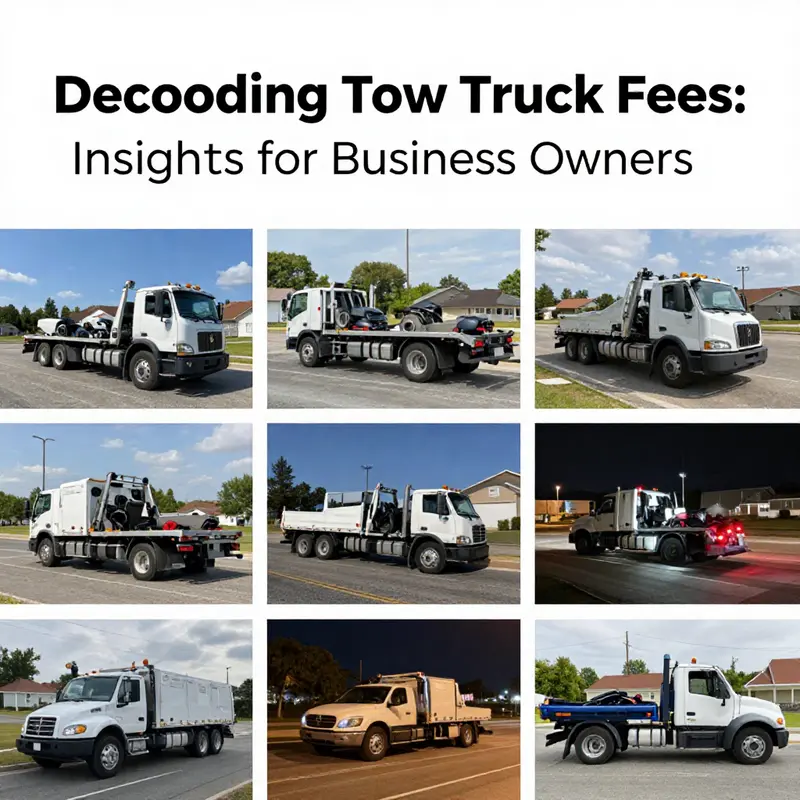
When your car breaks down and you call for help, the price tag that follows can feel opaque. Tow fees are not a single line on a receipt; they are the result of several moving parts that work together to get your vehicle from point A to point B. Understanding the key determinants helps you anticipate costs, compare quotes, and avoid sticker shock when the bill arrives. At a high level, the total you pay reflects distance, the type and weight of the vehicle, when you request service, where you are, the complexity of the job, and any extra services that you might need along the way.
Distance is often the primary driver. Most tow companies charge a base hook-up fee plus a per-mile rate. Short tows stay near the bottom of the range, while longer tows accumulate more miles and push the total higher. In many markets you might see a base around 50 to 100 dollars with per-mile charges of a few dollars each, though actual numbers vary by region and provider.
Vehicle size and weight matter because heavier or larger vehicles require bigger trucks, more fuel, and sometimes specialized equipment. A compact car towed with a standard light-duty wrecker will typically cost less for the same distance than a large SUV, pickup with heavy payload, or commercial van, which can move the price into a higher band.
Time of day and location can tilt the price as well. Emergency or after-hours service, weekends, and holidays often carry surcharges to cover the availability and safety risks. Urban areas with higher labor costs and more traffic can also see elevated rates compared with rural settings.
Job complexity and any extra services add to the bill. Simple roadside recoveries are usually cheaper than complex operations that require winching, multiple tow units, or rotator trucks. Add-ons such as lockouts, jump-starts, fuel delivery, or storage can push the final total higher, especially if several services are bundled into one call.
To avoid surprises, ask for a written estimate that itemizes the base fee, the mileage, any surcharges, and each optional service before the tow begins. If you belong to a roadside program, check what discounts apply. A little upfront diligence makes a big difference when the clock is ticking and you just want to get back on the road.
Final thoughts
In conclusion, understanding how much tow truck fees cost is crucial for business owners who need to anticipate potential expenses. By recognizing the primary factors that influence these fees, such as distance traveled and vehicle type, businesses can make informed decisions that minimize unexpected costs. Staying informed and proactive can lead to smarter budgeting and enhanced financial health in the face of vehicular emergencies.