
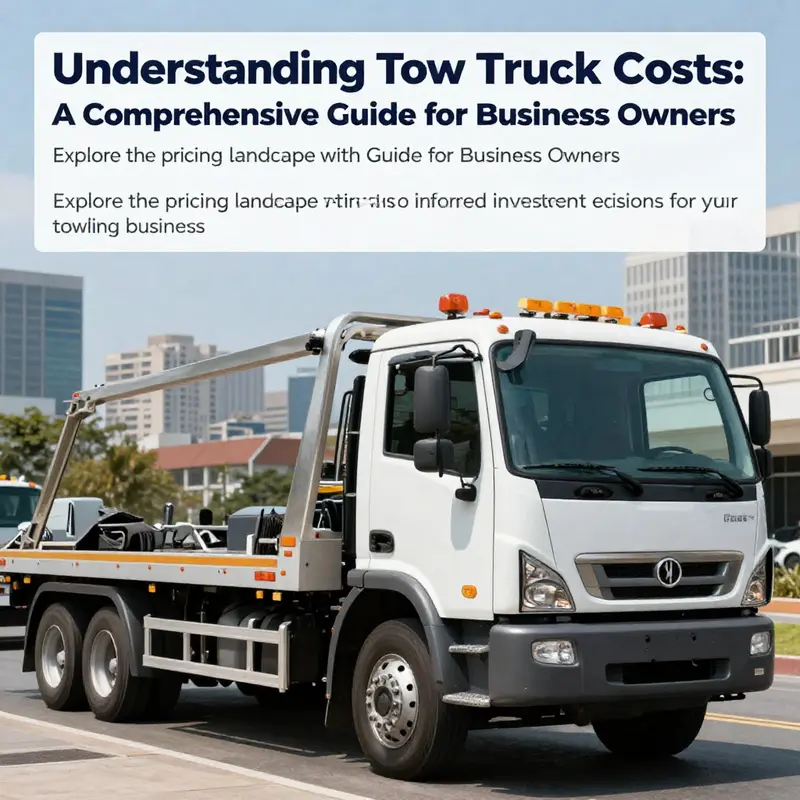
For business owners in the towing industry, understanding the cost of a tow truck is critical to ensuring financial success and operational efficiency. The price of tow trucks often varies widely depending on their type, size, and features. As you contemplate investing in this essential equipment, it’s crucial to grasp the factors that impact pricing. In this guide, we will analyze the costs associated with the various types of tow trucks, ranging from rotator tow trucks to flatbeds, and standard wreckers. Each chapter will provide crucial insights that will empower you to make informed decisions about purchasing and owning tow trucks, setting the stage for your business’s success.
Tow Truck Economics: A Deep Dive into the Cost Breakdown Across Rollbacks, Flatbeds, and Rotators
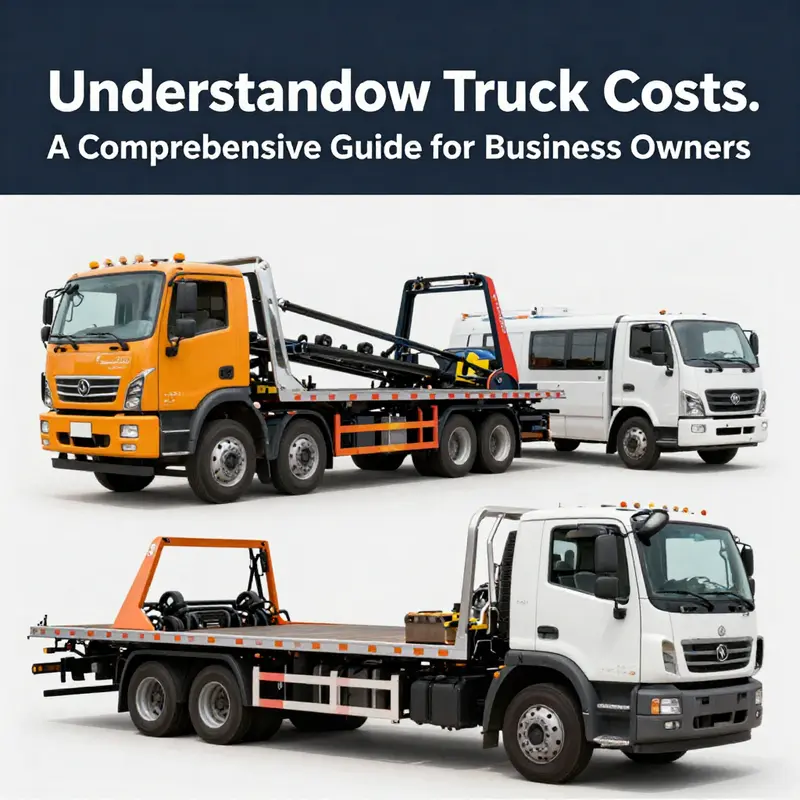
Every commercial towing operation starts with a fundamental question that shadows every other decision: what will this equipment cost, and what return will it generate? The answer is not a single number, but a spectrum that expands with the type of tow truck, the level of technology, and the kind of work that fills the schedule. When you strip away marketing claims and one-size-fits-all pricing, the price tag on a tow truck becomes a map of the tasks most fleets actually perform. In this chapter, we move through the cost landscape with care, linking the numbers to real-world use cases, maintenance realities, and the hidden costs that follow a truck off the lot. The goal is not to advocate for a specific model, but to illuminate how a buyer reads the price tag and what the figures imply for budgeting, profitability, and service quality over the life of the asset.
To begin, it helps to categorize the chief players in the field. Rollback tow trucks, rotator tow trucks, and flatbed tow trucks each serve different recovery and transport needs, and each carries a distinct cost profile. Rollbacks are typically the most affordable entry point. They employ a tilting flatbed that allows straightforward loading and unloading, minimizing the risk of damage to customers’ vehicles and reducing the chance of mishaps during winching. This simplicity translates into lower upfront costs and a broader appeal for smaller fleets or independent operators who handle a mix of light- to mid-duty jobs. While exact sticker prices vary by region and spec, the general rule is that a rollback remains the economical option in the family, often starting at a price range that sits well below the other categories and moving up with improvements in material quality, bed length, and hydraulic performance. The affordability of rollbacks doesn’t just depend on the bed; it reflects fewer moving parts, simpler electronics, and a lower maintenance footprint. For fleets watching every dime, the rollback is a sensible first choice when the job mix skews toward standard to light recoveries, parking lot calls, and routine transports.
Flatbed tow trucks occupy the middle ground in both capability and cost. They are prized for their ability to protect the vehicle’s frame and undercarriage, especially for low-clearance cars, all-wheel-drive models, or luxury units that demand careful handling. The cost premium for flatbeds arises from more robust engineering, a heavier bed, and the precision controls required to tilt and slide a vehicle securely onto the platform. As a result, a new flatbed typically carries a higher price tag than a rollback, reflecting not only the bed mechanism but the broader range of accessories and safety features that accompany modern hydraulic systems. Variations in transmission type, upgrades in load capacity, and enhancements in wheel-lift or winching equipment can nudge the price further, but the core message remains: if protecting delicate frames and minimizing damage during transport is non-negotiable, flatbeds justify their cost premium as a long-term savings in risk management and customer satisfaction.
Rotator tow trucks sit at the far end of the price spectrum. The rotating hydraulic crane is a specialized tool designed to lift and stabilize vehicles in complex, often perilous recovery scenarios—overturned trucks, multi-vehicle incidents, or tight spaces where traditional winches falter. The effectiveness of a rotator in the field can dramatically shorten on-scene time and broaden the range of recoveries a fleet can handle. That capability comes at a price: the initial investment for a rotator is substantially higher, and operating one requires more training, more fuel, and a larger vehicle footprint. For agencies answering to municipal contracts or responding to high-stakes accident scenes, the rotator’s value is measured in reliability, versatility, and the ability to take on work that other trucks cannot. In practice, the decision to purchase a rotator hinges on job mix, call volume, and the willingness to invest in higher maintenance and higher training costs that accompany this specialized gear.
Beyond the big three, there is a broader economics of capacity and use that colors every purchase decision. A standard five-ton class wrecker, for instance, offers a practical balance of lifting power and maneuverability for everyday towing and light-to-mid-duty recoveries. These units typically sit in a price corridor that reflects their utility in a fleet, with variations driven by chassis choice, hydraulic systems, and attention to ergonomics for the operator. It is common to see a five-ton platform wrecker priced in a range that makes it accessible to mid-sized operators while still delivering enough capability to handle a sizable portion of daily work. The exact numbers fluctuate based on sourcing and market dynamics, but the principle holds: enterprise buyers weigh a model’s rated capacity, reliability, and ease of maintenance alongside the upfront price, because those elements influence ongoing expenses as much as the initial checkout.
The economics are not just about the sticker price. A crucial part of the cost story concerns the total cost of ownership over the life of the truck. New trucks come with the comfort of warranties, improved fuel efficiency, and the latest safety features. These benefits can translate into lower maintenance surprises and less downtime, which, in turn, preserves revenue when the clock is ticking. Conversely, used tow trucks, especially in the rollback category, offer a lower entry price that can be appealing to start-up operators or fleets expanding capacity without a large capital outlay. The caveat is that a used unit carries higher risk in maintenance, potential compliance issues, and shorter remaining warranty periods. The cost math, therefore, is not simply price vs. price; it is price today against the reliability, service costs, and downtime risk expected over the next several years.
If one looks beneath the surface, much of the price spread across these categories comes down to materials, technology, and efficiency. The flatbed’s bed and tilting mechanism demand heavy-duty construction and precision engineering. The rotator’s rotating crane demands hydraulics that operate under high load and awkward angles, along with control systems to synchronize motion safely. Rollbacks trade some of those complexities for a lighter design, but they still require robust hydraulic components and control systems. Even within a category, choices around transmission systems—manual versus automatic, enhanced fuel economy modes, or more sophisticated stabilization mechanisms—alter not just the upfront price but the ongoing daily operating costs. In practical terms, that translates to a multi-year budgeting exercise rather than a simple one-time purchase decision. Fleet managers who model scenarios with duty cycles—how many hours per week the truck runs, the typical payload, and how many miles it covers between jobs—often arrive at a more nuanced total cost of ownership that clarifies whether the extra investment now will yield tangible savings later.
To that end, the choice between new and used equipment becomes a strategic lens, not a single data point. New trucks tend to maintain better resale value and come with longer warranties, letting buyers plan for predictable maintenance and depreciation. They may also bring advanced safety and fuel-efficiency features that reduce operating costs over time. In contrast, used units can offer a faster path to scale and a lower initial burden, but they require careful due diligence: a thorough maintenance history, recent inspections to ensure hydraulic integrity, and a realistic appraisal of remaining life. A careful buyer will weigh the risk of hidden wear against the potential savings, and will often pursue a staged approach—adding a trusted used unit to test a market or to support a surge period, while keeping a portion of capital reserved for maintenance or eventual replacement. The net effect is a more resilient financial plan that can adapt to fluctuations in demand without forcing a premature disposal of capital.
Of course, location and logistics shape the price picture as well. Taxes, shipping, and warranty coverage can tilt the final numbers in subtle but meaningful ways. A buyer in one region may pay more for a flatbed due to regional demand or higher compliance costs, while another market may offer favorable financing or shorter lead times that reduce carrying costs. Insurance requirements also vary by jurisdiction and truck type; a rotator, given its specialized role and higher on-site risk, commonly commands higher liability coverage, which translates into ongoing expense. Training costs are another critical layer. A rotator requires advanced operator certification and ongoing recertification, which accumulate as annual expenses but also bolster safety and on-scene efficiency—two factors that indirectly improve return on investment by reducing incidents and downtime.
All these considerations point to a simple truth: price is a starting point, not a conclusion. When a fleet evaluates options, the decision hinges on aligning the equipment’s capabilities with the typical job mix, the expected call volume, and the operator’s capability to manage maintenance and training. A rollback might offer the best entry point for daily recovery, a flatbed can be the right choice for preserving customer assets during transport, and a rotator, for the right service area, can unlock a broader, higher-margin set of recovery opportunities. In many cases, operators adopt a mixed fleet that leverages the strengths of each type, pairing a reliable rollback for routine tasks with a flatbed for sensitive transports and reserving a rotator for complex recoveries when the work justifies it. The economics then become not a single price tag, but a coordinated strategy where the fleet can surge capacity in response to demand while keeping operating costs in balance.
For readers who want to explore practical pricing examples, a few market snapshots illustrate the range without locking anyone into a fixed path. New five-ton wreckers might sit in a broad band that reflects chassis choice, hydraulic upgrades, and safety features, typically higher than rollbacks but lower than the rotator. Flatbeds tend to cluster around the mid-to-upper end of that range, with the bed mechanism and control systems pushing the total just above medium-cost options. Rotators, as noted, demand a premium, but the volume of recoveries they can enable often justifies the premium for operators who regularly face high-stakes scenes. Sensible budgeting, then, starts with a clear picture of anticipated duties, a realistic maintenance plan, and a staged approach to expanding capacity as demand evolves.
For readers looking to quantify more specific costs, the market is dynamic and regionally nuanced. In any region, a practical initial step is to collect quotes from multiple suppliers and weigh them against the anticipated service mix, financing options, and the warranty packages available. This due diligence helps ensure that the final decision translates into predictable costs and dependable performance on the road. If you want a quick window into budget-friendly options while still maintaining service reliability, you can explore affordable towing services in nearby markets, which can provide a baseline understanding of what customers expect at different price points. For example, cheap towing service in Houston offers a benchmark for what customers perceive as value, helping fleets calibrate their own pricing and service levels accordingly.
As you map out the cost landscape, remember that the numbers tell a story about risk, capability, and opportunity. The cheapest option today might force more frequent replacements or higher maintenance tomorrow. The most capable machine today might carry a premium that isn’t fully offset by the additional revenue it enables if the workload doesn’t align with its strengths. The most successful fleets manage this tension through disciplined budgeting, careful job-mix analysis, and strategic investment in equipment that harmonizes with their core operations. In the end, the price you pay is less a one-time event and more a long-running chapter in a business that depends on uptime, safety, and the steady flow of reliable service to customers in need.
Internal link note: for readers exploring budget-conscious options in certain markets, a helpful comparative resource is cheap-towing-service-houston-tx designed to illustrate how price sensitivity plays out in a dense urban environment. This context can aid in calibrating expectations when negotiating with dealers or evaluating used units. External references that expand on how these costs evolve in the field can be found in broader industry guides.
External resource: https://www.example.com/rollback-tow-truck-guide
Final thoughts
In summary, while the cost of tow trucks can vary significantly based on the type and features, understanding this pricing landscape is essential for business owners. Whether you opt for an advanced rotator or a standard wrecker, the right tow truck will depend on your specific operational needs and budget. By equipping yourself with this knowledge, you can make strategic decisions that will ultimately enhance your towing service’s efficiency and profitability. Remember, investing in a tow truck is a commitment that should align with your long-term business goals.