
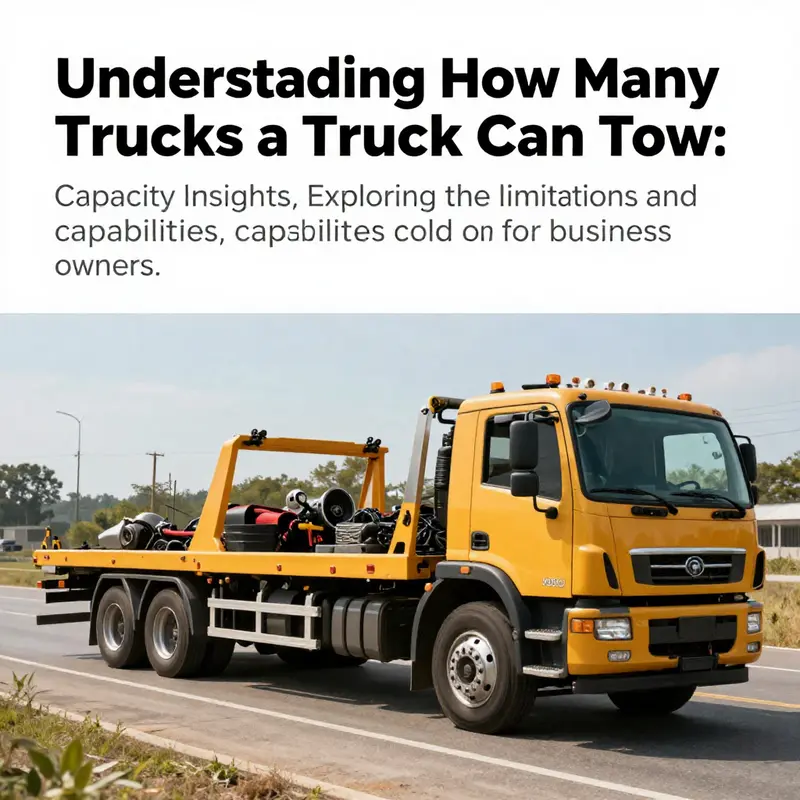
For business owners relying on towing services, understanding the towing capacity of tow trucks is essential for operational efficiency. This comprehensive guide delves into how many trucks a tow truck can tow, segmented into three vital chapters. We will explore light-duty and heavy-duty tow trucks, discussing their respective towing limits, and analyze various operational scenarios that may influence these capacities. By the end of this article, you’ll have a clearer understanding of towing capabilities that will assist you in making informed decisions for your business needs.
null
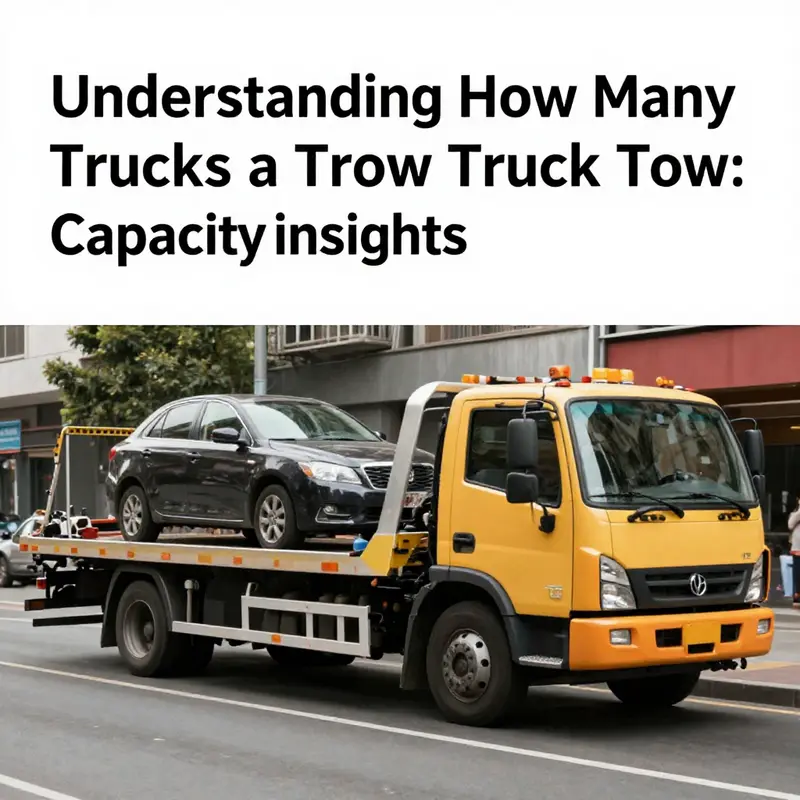
null
Tow Giants on the Road: Revealing How Heavy-Duty Wreckers Move Other Trucks
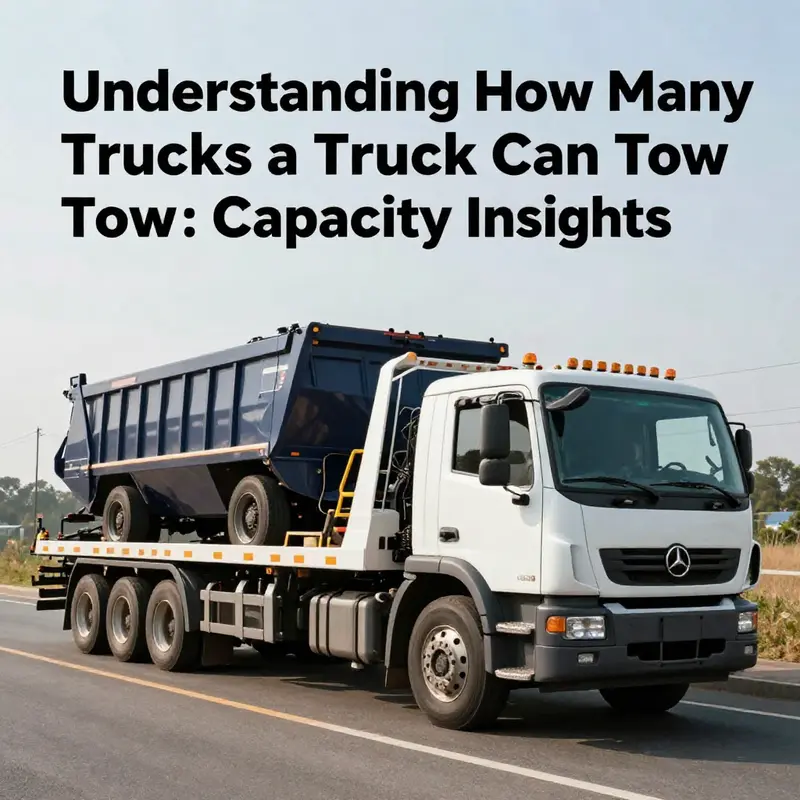
Heavy-duty tow trucks stand as the stubborn workhorses of roadside rescue and industrial recovery. When standard wreckers meet their match, these machines step in with raw power, built to lift, pivot, and haul loads that would overwhelm ordinary equipment. The question ‘how many trucks can one tow truck move’ collapses under the weight of real-world constraints. Capacity is not a single number but a balance between lifting capacity—the weight the crane or winch can raise—and towing capacity—the weight it can pull along a surface. The two metrics work in tandem, and both must be understood to predict what a given heavy-duty wrecker can or cannot accomplish.
On paper, the most capable heavy-duty wreckers belong to the 40-ton class. In this category, lifting capacities are described as exceeding 40,000 pounds, roughly 20 tons. Take that as a benchmark for the upper end of recovery tasks: a vehicle in distress, a heavy-duty truck, or a large bus can be stabilized and moved with the proper setup. It’s important to remember that lifting a vehicle and pulling it are different tasks, and each demands specific attachments, leverage points, and safety margins. The actual towing capacity—how much weight can be pulled while the unit remains controllable over distance—may be lower than the theoretical lift limit, depending on wheel contact, ground conditions, and the dynamic forces generated during recovery.
To translate those numbers into workable operations, designers emphasize a few key features. Hydraulically operated tilting flatbeds let a vehicle be driven or winched onto a deck, with the bed tilting to secure the load off the ground. That arrangement protects delicate components and mitigates further damage during transport. The ability to position ballast, whether internally or integrated into the chassis, also matters. On slick or steep surfaces, proper weight distribution and traction are what keep a heavy-duty wrecker from losing control as it moves an extraordinary load. The result is a machine that can perform not only the lifting and righting of a vehicle but also the precise sequencing of steps required to place it on a carrier, fast and safely. In practical terms, operators often choreograph the operation to minimize swing, reduce torque on the hitch, and keep the center of gravity within safe bounds.
Operational realities frame those capacities. Even with robust hydraulics and advanced controls, these trucks demand specialized training. Operators must understand winch dynamics, anchor selection, and the subtleties of bed geometry as loads change during the drive. Setup times might be longer than for lighter equipment, especially when cranes, stabilizers, or angle booms are deployed. And while a single heavy-duty unit can tackle truly massive loads, the safety and legal considerations prevent multitasking the way one might imagine in a cartoon depiction of a chain of trucks being dragged in a single pass. The rules, weight limits, and road regulations vary by jurisdiction, and the safest practice is to treat heavy-duty recovery as a coordinated effort rather than a solo marathon. Even when a flatbed or a specialized transport configuration is used, it is still performing a controlled transfer rather than a true, simultaneous multi-vehicle tow.
That brings us back to the central question of how many trucks a single heavy-duty tow truck can move at once. In ordinary operations, the answer is one: a single vehicle is towed behind the unit, with the winch line or tow bar providing the connection. In more complex recoveries—where multiple vehicles might be involved at the scene—teams of trucks work together in a coordinated plan to recover and relocate several units. A single unit seldom, if ever, tows multiple trucks simultaneously in a legally compliant, safe manner. Yet there are edge cases: some setups allow a heavy-duty platform to carry another tow truck or other equipment, but this is typically a transport arrangement rather than a traditional tow. And the distinction matters because the term ‘tow’ generally refers to pulling a vehicle behind the truck, not carrying it aboard, and the safety margins shift dramatically when you change that definition.
From a market perspective, purchasers looking at heavy-duty tow trucks must weigh more than raw capacity. Reliability, ease of maintenance, operator training, and compatibility with existing fleets count just as much as the published lift and tow figures. The industry recognizes a spectrum of configurations and options, each designed to suit particular recovery contexts—urban corridors, industrial sites, or long-haul relocation tasks. Price points reflect this diversity, with a wide range tied to powertrain robustness, hydraulic systems, and chassis design, plus the long-term value of service and warranty. The takeaway is simple: investing in a heavy-duty wrecker is less about chasing a single number and more about matching the machine to the operational footprint it must serve. The operator’s ability to safely manage hooks, chains, anchors, and outriggers under diverse weather and terrain conditions will ultimately determine success as much as the advertised payload range.
For practitioners who want to connect with local heavy-duty capabilities, there are practical resources and service pages that illustrate how communities access high-capacity support in real-time. For example, a nearby provider’s page dedicated to locating a tow truck near you can guide drivers to the right unit when seconds count. See tow-truck near me in Houston.
External reference: For deeper technical specifications, grades, and practical applications of recovery trucks with crane variants, consult the external resource that surveys these systems and their engineering rationales: https://www.recoverytruck.com/technical-specifications-grades-practical-applications/.
Tow Capacity in Real Life: How Scenarios Determine How Many Trucks a Tow Truck Can Tow
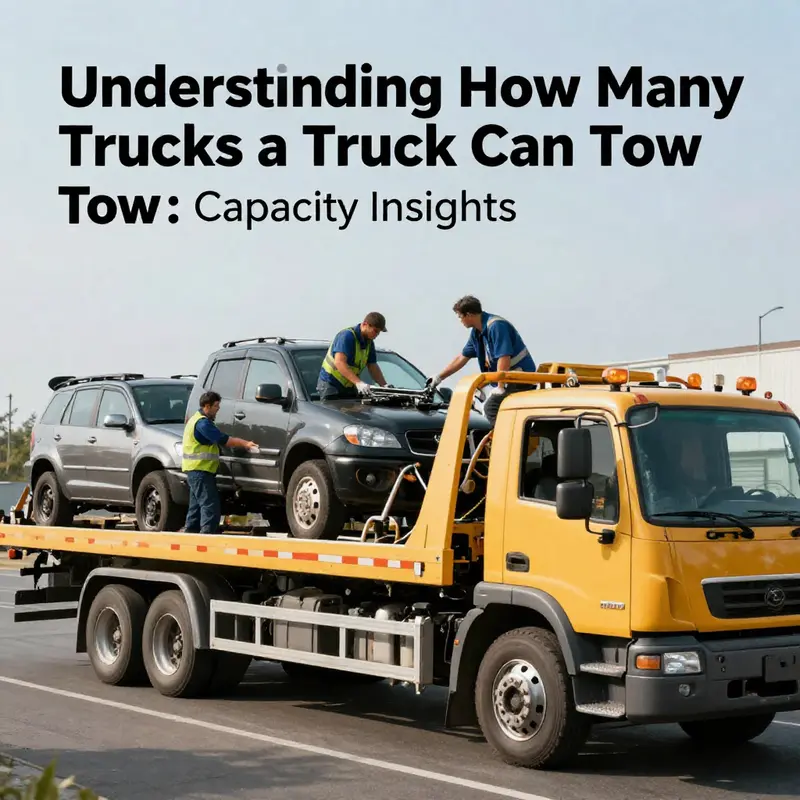
The question of how many trucks a tow truck can tow does not have a single universal answer. Real-world operations reveal a landscape where capacity is as much a function of the job at hand as of the machine pulling it. A tow truck is a purpose-built tool, and its power, traction, and attachment points are tuned for certain tasks. When the operation shifts—from a roadside incident in an urban artery to a mud-choked recovery in a distant field—the limits of one vehicle often become the limits of what can be accomplished at that moment. In the everyday sense, a light-duty tow truck, commonly classified for urban roadside assistance, is designed to pull a single vehicle at a time. It might cradle a passenger car or a compact SUV with a single winch line, a hitch setup, and a flat recovery plan that keeps weight, balance, and steering under control. While a single unit can be resourceful and quick, it is not built to multiply its own pulling power by directly towing several vehicles in one sweep. The reality is that even in dense city traffic, safety, road laws, and the risk of damage to the towed vehicle, the tow truck, and the towing crew keep the operation to one unit per pull in most cases. This is not to diminish the utility of light-duty equipment, but to acknowledge that it is optimized for speed, maneuverability, and minimal disruption rather than scale across multiple targets in one go. The scene shifts dramatically as the configuration moves toward heavy-duty work. A heavy-duty tow truck, particularly one with a 6×6 drive arrangement, is designed for traction and ruggedness rather than sheer multi-vehicle throughput. In off-road recovery and military operations, where terrain is unforgiving and recoveries must be reliable under stress, these six-wheeled giants are deployed because they maintain grip when ordinary tires spin uselessly. In such contexts, even if several tow trucks are present on the scene, the operation often relies on a single 6×6 unit to perform the critical heavy pulling. The reason is simple: the most challenging pulls require a single, consistently controlled tension, a clear line, and robust articulation that can be compromised if multiple rigs are attempting to coordinate a simultaneous, multi-point drag. The physics of weight distribution, attachment geometry, and dynamic load during a recovery means that the capacity to move more than one vehicle at once is not merely a question of power on paper. It asks for specialized tandem or multi-vehicle towing systems, carefully engineered to avoid dangerous angles, uneven tension, or sudden snatches that could snap mounts or injure personnel. In urban or highway contexts, the same principle of controlled, single-target pulling holds, but there is room for coordination and cooperation when incidents involve multiple vehicles. Lighter 6×4 configurations, with two powered axles, provide a balance of traction and weight that makes routine towing on paved surfaces practical. In large-scale incidents—multi-vehicle collisions or staged disaster responses—several tow trucks can be brought into the operation. They may work in concert to transport a cluster of towed vehicles, but even here the count of actively towed units on any one line often remains limited. Each truck usually handles one vehicle, with the others positioned to maintain safety corridors, support stability, and manage traffic flow. Access limitations, such as street size, parking arrangements, and the availability of proper anchoring points, can prevent the simultaneous towing of multiple vehicles by a single rig, even if several are present. The logistics extend beyond the tow line. Consider the road surface, tire wear, and the potential for axle misalignment during long hauls. The need to avoid over-stressing a single recovery line means that long-distance tows on highways may favor shorter segments with multiple truck changes, or a plan that assigns separate vehicles to separate loads. In construction sites or remote areas, the calculus shifts again. Heavier loads—the kind associated with semi-trucks or specialized heavy equipment—may call for a 6×6 or similarly capable machine to muster enough traction and leverage to pry a vehicle from mud, sand, or uneven ground. Yet, even here, the possibility of chaining or linking multiple tow rigs into a single tandem recovery does not automatically translate into more than one vehicle being towed at once. It requires a purpose-built multi-vehicle towing system, strict engineering compliance, and the kind of risk assessment that prioritizes safety over expediency. In the end, the operational scenario is the most influential factor. A single tow truck may safely and legally tow one vehicle in most ordinary settings. When the task escalates into more complex recoveries or coordinated fleet operations, teams often utilize multiple trucks to manage several vehicles, but the act of toting remains a series of discrete, safety-conscious pulls rather than a wholesale multivehicle drag behind one unit. This nuance—distinguishing the act of towing from simply moving a vehicle behind a tow truck—helps explain why the everyday answer is still “one at a time,” while also acknowledging the reality that skilled responders can orchestrate multi-vehicle movements with careful planning and specialized equipment. Those seeking deeper technical grounding on configurations and their uses in engineering will find formal materials and standards that illuminate why certain designs are chosen for particular jobs. For a broader operational context from a practical angle, consider how a local service might address complex roadside incidents through coordinated, but individually executed, pulls. If you’re looking for more about local towing capabilities and service options, a practical point of reference is tow service in Houston, TX. It illustrates how professionals balance capacity, safety, and the constraints of a given scene to decide how many units are required and how many vehicles can be moved at a time. External technical context can deepen this understanding. For a broader engineering perspective on tow-truck configurations and material standards, see Understanding Tow Truck For Sale Philippines: Material Properties, Technical Standards, and Uses in Engineering.
Final thoughts
In conclusion, the towing capacity of a tow truck significantly varies based on its type and design. Light-duty tow trucks primarily cater to single vehicle tows, while heavy-duty trucks offer robust solutions for larger vehicles and complex recoveries. Furthermore, various operational scenarios can affect how many trucks can be managed at once, often necessitating a fleet approach. Understanding these factors will enable business owners to make better-informed decisions, ensuring they meet their towing needs efficiently and effectively.