
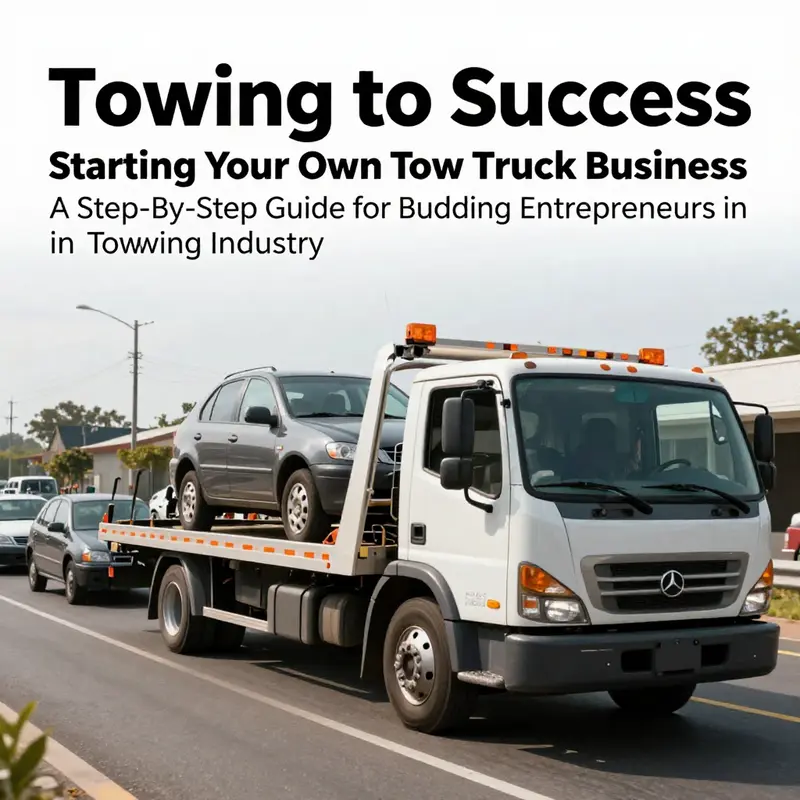
Launching a tow truck business can be a lucrative venture for those equipped with the right knowledge and resources. The towing industry plays a crucial role in vehicle recovery and roadside assistance, serving both residential and commercial needs. As demand fluctuates based on regional needs, understanding the market landscape becomes paramount. This article delves into critical components necessary for starting a successful tow truck business. We will explore the importance of conducting thorough market research, the legal obligations involved in establishing your operation, and the essential equipment needs to ensure effective service delivery. Each chapter aims to provide a comprehensive overview, equipping business owners with the tools required to navigate this industry with confidence.
Tow-Truck Market Insight: Charting Demand, Fleet Fit, and a Strategic Path to Launch
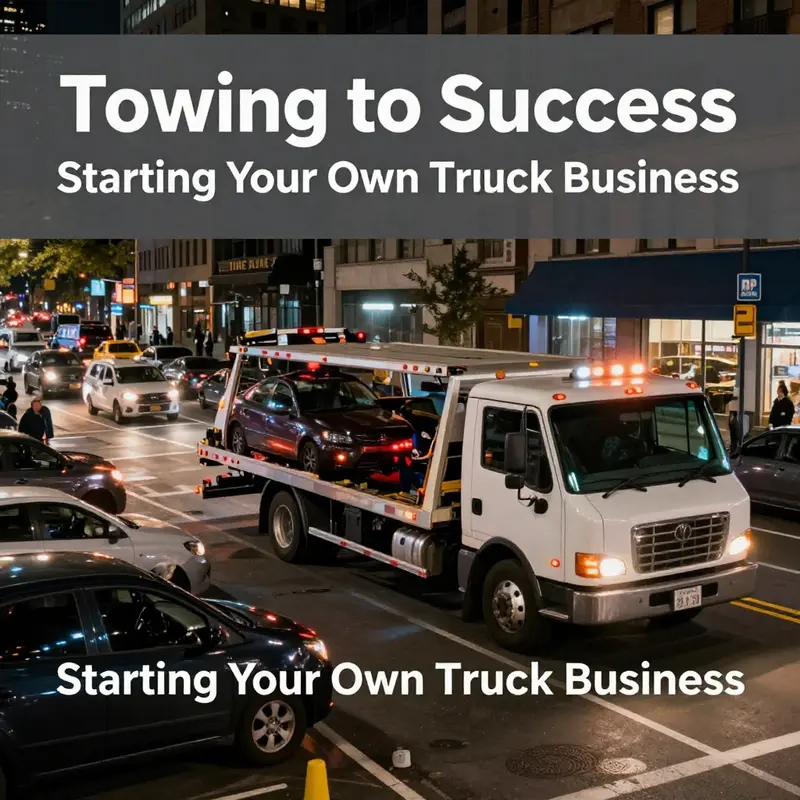
Market research for a tow truck startup is not a guessing game about trends. It is a discipline of reading the roads you intend to serve and translating signals into a practical business blueprint. Start with a clear boundary: your service area, the client segments you will target, and the hours that matter most to people stranded, stalled, or involved in accidents. Treat the city as a mosaic of neighborhoods, businesses, and regulations rather than a single monolith. Collect local signals from vehicle counts, accident hotspots, parking patterns, and the cadence of break downs at different times. The aim is to turn scattered observations into a reliable forecast of where demand will come from and when your fleet needs to be ready. This mindset keeps planning grounded in real conditions rather than in abstract hopes, and it lays the groundwork for every operational decision that follows.
Industry forecasts point to a market that rewards speed, reliability, and professional handling. The Global Tow Truck Market Size is expected to grow from USD 2.5 Billion in 2023 to USD 4.3 Billion by 2033, a CAGR of 5.57%. This trajectory reflects more vehicles on the road, a widening array of roadside services, and a push toward safer, faster recoveries in both dense urban cores and expansive regional corridors. Demand tends to concentrate where traffic density, vehicle age, and incident frequency align, but steady streams also arise from fleets that require regular maintenance, incident response, and repossession services. The practical effect is that a thoughtful entrant can capture multiple revenue channels—residential towing, commercial fleet support, 24/7 roadside assistance, and damage-free accident recovery—by aligning service capabilities with the needs that show up most often in the local landscape.
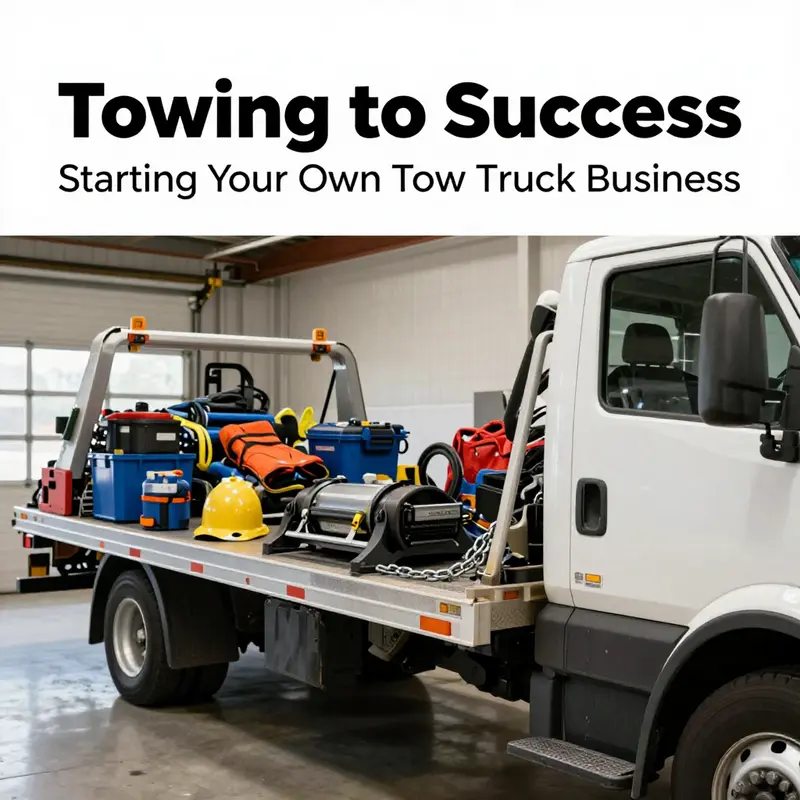
To translate market momentum into a viable enterprise, you must map service needs to the right equipment and staffing. Flatbed tow trucks are widely favored for safety and versatility, enabling vehicles to be loaded without ground contact and reducing the risk of damage during transport. Wheel-lift units excel in tight spaces and for lighter vehicles, where quick on-scene operations matter. Rotator tow trucks, while more expensive, provide the reach and hydraulic power required for heavy-duty recoveries, complex scenes, and incidents in challenging terrain. The fleet mix you choose should reflect your intended service portfolio: residential calls, commercial fleet support, roadside assistance, and high-stakes accident recoveries each demand different capabilities. A small, around-the-clock operation in a busy suburb might operate best with a hybrid of flatbeds and wheel-lifts, accompanied by technicians trained in safe loading, on-scene safety, and efficient dispatch. In a region with larger industrial facilities or longer response expectations, a rotator could become a strategic asset. Beyond the truck itself, invest in recovery gear, winches, safety chains, wheel dollies, and robust safety protocols so that every job is managed with professionalism and care.
Seeing a real-world example of diversified roadside readiness helps illustrate how service breadth translates into demand. Mikes Roadside Service offers a condensed picture of how a fleet can scale its coverage and stay responsive across a range of emergencies. Mikes Roadside Service.
Cost realities shape every startup’s plan. New tow trucks vary widely in price based on type and features. Flatbeds and wheel-lift models commonly range from roughly $75,000 to $150,000 per unit, while high-end rotator trucks can exceed $300,000. Those figures underscore the value of staged investment, choosing reliable, well-maintained equipment, and building a path to growth as demand proves itself. Some operators look to international suppliers to stretch upfront capital, but price must be weighed against parts availability, service networks, and regulatory compliance. A bargain price that masks reliability issues translates into downtime, missed calls, and eroded trust—outcomes no business can sustain.
Regional differences and regulatory landscapes further shape feasibility. Some markets prize advanced equipment and rapid-response capabilities, while others emphasize cost containment and simpler fleets. In many developed economies, high-capacity recovery trucks are increasingly common, reflecting the trend toward safer, faster on-scene management of incidents. The Philippines, as referenced in market analyses, signals a shift away from older, less specialized models toward more capable gear as professional standards mature. This pattern shows how fleet strategy must align with local infrastructure, licensing, and permit regimes to ensure smooth operation and compliance.
The competitive landscape reveals both pressures and opportunities. In addition to price, customers expect reliability, transparent communication, honest pricing, and accurate estimates of arrival times. A strong market entry blends licensing and insurance clarity with a track record of safe handling and professional interactions. Building referral networks with collision repair shops, rental fleets, and local businesses can provide a steady stream of work, especially when you commit to dependable 24/7 coverage and fast, accurate dispatch. The most successful entrants view market research as a continuous loop: watch incidents, collect feedback, refine routes, and adjust the service mix to address real needs rather than presumed ones.
Operationally, market insight informs every facet of your startup, from dispatch software selection to technician training. When you design early operations, document typical call patterns, peak hours, and common trouble spots. Then pilot a limited service area, measure response times, and establish benchmarks for safety, efficiency, and customer satisfaction. The objective is to convert market intelligence into a repeatable service design that can scale with growth while maintaining quality and accountability.
External resource context on broader market dynamics can be found here: https://www.globalsources.com/industry/tow-truck-market-size-share-trends-growth-forecasts-to-2033/
Legal Groundwork for a Tow Truck Start: Licensing, Insurance, and Local Compliance
Starting a tow truck business hinges as much on sound legal footing as on reliable equipment and solid service. The regulatory landscape isn’t a single hurdle but a landscape of requirements that protect the public, define fair competition, and keep crews safe on busy roads. A smooth launch begins with a practical understanding that compliance supports every other decision you make—from the type of services you offer to the way you price and dispatch. The first pillar is licensing, not as a one-time checkbox but as an ongoing discipline. Most regions require a business license to operate legally, often tied to your local jurisdiction or state. This means registering your enterprise, choosing an appropriate business structure, and renewing credentials as laws evolve. Without this foundation, subsequent steps—equipment acquisition, hiring, and marketing—may be stalled by penalties or operational shutdowns. The next layer concerns the driver who will pilot the rig. A commercial driver’s license, typically with Class B or C classifications depending on vehicle weight, is usually required for tow trucks. Some jurisdictions demand additional endorsements or specific training for towing operations, such as secure load handling or vehicle recovery techniques. It’s not unusual for a single operator to carry both a CDL and a separate tow-specific certification to demonstrate proficiency and reduce insurance costs. Vehicle registration follows, with the tow truck itself registered as a commercial vehicle. The process, managed through your state’s DMV, confirms that your fleet meets roadworthiness standards and that you’re properly tracked for tax and regulatory purposes. Insurance is the third cornerstone, and it is crucial to your viability. Liability coverage protects against bodily injury or property damage arising from your operations; cargo insurance can cover vehicles or goods being towed; uninsured/underinsured motorist coverage provides a safety net if an accident involves another party with insufficient coverage. If you intend to hire employees, workers’ compensation becomes a legal obligation in many states. Failing to secure the right mix of insurance can lead to fines, suspension of licenses, or more severe penalties, and it can jeopardize customer trust long before you gain it. As your business grows, state-specific regulations will shape your day-to-day practices. For example, some states require a dedicated “Tow Truck Operator License” or designate certain operators for certain kinds of towing tasks. Others regulate dispatching, record-keeping, and roadside procedures to prevent unsafe practices in high-pressure moments. The exact rules vary widely, so you must verify requirements with the state department that licenses and regulates motor carriers, as well as the local authority that issues business and operating permits. Local regulations add another layer of complexity. Cities and counties often impose extra permits, zoning restrictions, employee hours, and even rules about where you can park, stage, or operate after a breakdown or accident. The practical upshot is simple: before you purchase a single truck or sign a lease, map out a regulatory checklist that covers licenses, driver qualifications, vehicle registration, insurance, and any local ordinances. Create a system to track renewals, inspections, and training so you’re never caught out by a missed deadline or a missing endorsement. In practical terms, this means building relationships with the right public offices and enlisting advisers who understand the industry’s unique risks. You’ll want to consult the DMV or equivalent body in your state, your secretary of state or business registrar, and your local city clerks to confirm exactly which licenses apply to your planned operations. Keeping thorough records—licenses, accident reports, maintenance logs, insurance certificates, and employee training certificates—will support audits and pro-grade customer service, because clients often look for evidence that their property is handled within a tested compliance framework. The emphasis, then, is not merely to comply but to integrate compliance into everyday operations: document retention, proactive renewals, and a culture that treats safety and legality as part of the service you provide. In the microcosm of Houston, for instance, a local operator’s presence illustrates how licensing, branding, and dispatch practices intertwine. To see how a real-world page discusses fleet standards and service area within a compliant framework, visit the Mikes Towing hub focused on tow trucks in Houston. tow trucks in Houston This real-world example underscores that regulatory readiness and transparent communication go hand in hand with professional presentation and reliable response times. For readers seeking a broader roadmap beyond jurisdictional specifics, a foundational resource on legal structure and launch considerations is available: SBA Legal Structure Guide. In sum, the most enduring competitive advantage in tow operations isn’t just speed or price; it’s the confidence customers feel knowing the business operates within a solid legal framework, maintains current credentials, and treats safety as a core value alongside service and speed.
null
null
Final thoughts
Starting a tow truck business requires a strong foundation built on comprehensive market research, adherence to legal requirements, and investment in the necessary equipment. By focusing on these key areas, business owners can position themselves for success in a competitive market. Whether you’re addressing the needs of individual drivers in distress or providing services to commercial clients, leveraging insights from this guide will equip you for the challenges ahead. Emphasizing efficient operations and a commitment to customer service can set your business apart, leading to a rewarding venture in the towing industry.