

In the towing industry, understanding the legal requirements for operating tow trucks is essential for business owners looking to maintain compliance and ensure safety. A Commercial Driver’s License (CDL) can be necessary depending on several factors, such as vehicle specifications, state regulations, and the types of towing operations conducted. This article unpacks each of these elements to provide a comprehensive guide for business owners, ensuring you have the knowledge needed to navigate the complexities of towing regulations effectively.
Weight Thresholds, Combined Loads, and the CDL: Do Tow Trucks Trigger a Commercial Driver’s License?

Determining whether a tow truck requires a CDL begins with the fact that licensing follows the vehicle, not the job title. In the United States, the key threshold is weight, not whether the vehicle is actively towing. The FMCSA sets CDL rules based on gross vehicle weight rating (GVWR) and how the vehicle is used on the road. For many heavy duty tow trucks used in professional recoveries, a GVWR of 26,001 pounds or more generally requires a CDL for the driver. The combined weight of the tow vehicle and the towed vehicle can also push into CDL territory, for example a medium duty wrecker with an 18,000 lb GVWR and a 10,000 lb towed SUV could trigger CDL requirements. Beyond weight, crane or winch equipment, passenger transport configurations, and HazMat responsibilities can add licensing or endorsement needs. Light duty tow trucks under 26,001 pounds with no passenger or HazMat duties are often exempt, though state rules vary. The safest approach is to evaluate GVWR, potential combined weight, lifting or passenger features, and the likelihood of hazardous materials, then check the state DMV for current interpretations. Businesses should align training, insurance, and licensing with the heaviest equipment operated, even if some crews work with lighter units. For authoritative guidance, refer to FMCSA CDL eligibility resources and your state regulations.
When the Weight Labels the Duty: Navigating State CDL Rules for Tow Truck Operators

Tow work sits at a practical intersection of safety, regulation, and the daily realities of roadside service. The central question—do tow truck drivers need a CDL?—cannot be answered with a single yes or no, because the answer hinges on the vehicle’s weight and the specific state laws that govern who can operate it. At the federal level, the baseline is clear: a Commercial Driver’s License is required for operating a vehicle with a gross vehicle weight rating (GVWR) of 26,001 pounds or more, and also for any vehicle designed to carry more than eight passengers, including the driver. This broad rule covers a great deal of the heavy equipment used in towing, especially the larger wreckers and heavy-duty rollback trucks that move a disabled car while remaining under the umbrella of commercial operation. But those numbers do not tell the whole story, because the actual practice of towing is deeply regional and state-specific. In many markets, the weight threshold is the determining factor, yet some states have added layers of nuance, applying their own minimums, exemptions, or endorsements that can shift a job from CDL-required to non-CDL-friendly. The result is a landscape where the same wrecker might trigger a CDL in one state and not in another, depending on how the vehicle is classified and what duties it performs beyond merely hauling a car.
That state-by-state variability matters for operators who run fleets across county lines or who switch between municipal, private, and emergency services. Most states align with the federal threshold for heavier wreckers, so trucks over 26,001 pounds generally demand a CDL and the corresponding endorsements. However, several states make room for exceptions or alternate licensing structures when a tow operation stays within certain weight brackets or serves in a defined context. For example, some jurisdictions might allow a non-CDL license for tow trucks that stay under a specific weight, yet still require a CDL for vehicles used in more demanding operations or when additional passengers are carried beyond the driver. Others carve out exemptions for emergency or public-safety towing, where towing duties are performed as part of a response to incidents and under specific regulatory or departmental authority. In practice, that means a dispatcher or operator who delivers a breakdown-recovery service on a highway may find themselves subject to a different licensing requirement than a shop that focuses on local vehicle repossession or private property towing.
The most consequential reality for drivers and shop managers is the need to confirm, not assume, state requirements before licensing, hiring, or deploying a tow fleet. The federal standard sets a baseline, but the actual license class—whether Class A, Class B, or some state-specific designation—depends on the GVWR and on how the vehicle is used. Even within the same state, a single vehicle can move from one licensing category to another if its configuration changes or if its operational role expands. For people entering the profession or expanding a fleet, the regulatory puzzle translates into practical actions: determine each vehicle’s GVWR, map the intended duties, verify whether any exemptions apply, and pursue the correct license and endorsements before putting a tow truck into service. The more complex the fleet, the more essential it becomes to keep a current, compliant licensing framework in place, both to meet legal obligations and to safeguard the company’s operating authority, insurance coverage, and workforce safety standards.
This complexity is especially evident in busy markets where fleets operate across city and state lines. It is not unusual for a large Houston-area operation to encounter a spectrum of licensing demands as it moves from one jurisdiction to the next, or as it alternates between emergency response and routine towing. In such environments, a driver who can competently handle a 26,000-plus-pound wrecker in one county may need a higher-grade CDL to operate a heavier rig in another. Operators should maintain a living checklist: verify GVWR, confirm whether the wrecker’s design or usage triggers passenger-capacity rules, review any state exemptions for emergencies or public service roles, and check with the state DMV or motor carrier authority to confirm the current requirements. This due diligence not only keeps the business compliant but also aligns training, staffing, and fleet deployment with safety-focused standards and insurance expectations. For local context, look to the city and state regulations in your area and consider how your operation fits within that framework. For instance, in markets that rely heavily on regional service, it can be instructive to explore how local fleets approach licensing and training, including how they reflect state guidance in routine driver onboarding and ongoing compliance. In practice, the path to compliance is shaped by where you operate and which type of tow truck you drive, with the strongest rule of thumb being to verify your licensing needs directly with the relevant state authority before you roll out any new equipment or service contracts. To learn more about how licensing requirements manifest in specific markets, you can explore related industry discussions here: tow trucks in Houston. For state-specific guidance, consult the official Texas Department of Public Safety page on CDL requirements for tow trucks. External resource: https://www.dps.texas.gov/
CDL Thresholds in Tow Operations: How Weight, Vehicle Type, and Jurisdiction Shape the Need
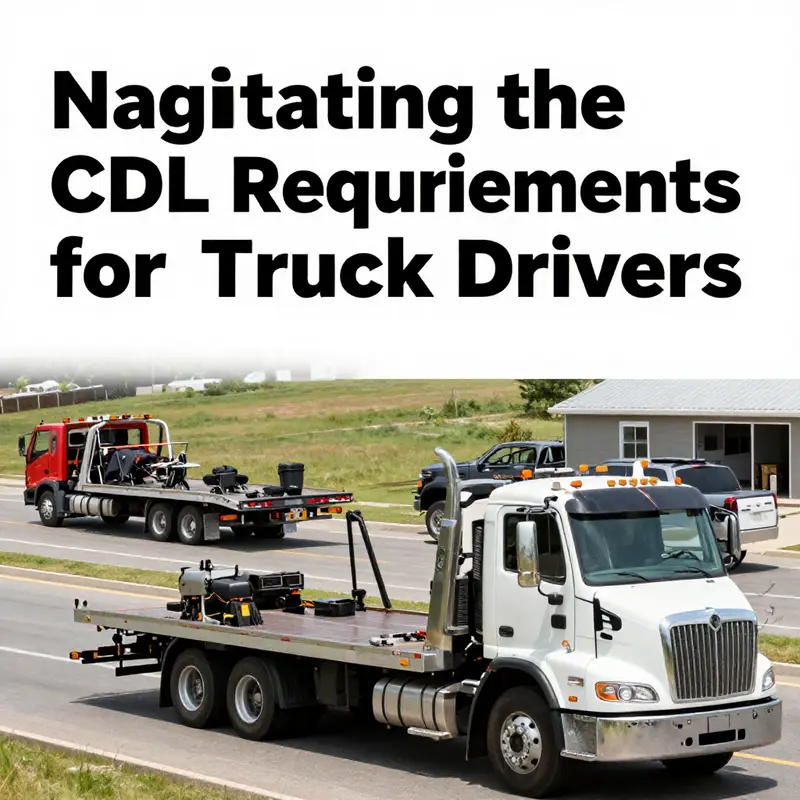
Tow work sits at the crossroads of rapid response, vehicle handling, and legal compliance. The central question—do tow truck drivers need a CDL—has no one-size-fits-all answer. Instead, it hinges on the specifics of the equipment, the weight involved, and the rules that apply where the job happens. The Federal Motor Carrier Safety Administration lays out a clear framework: when the tow vehicle and the towed load push the GCWR beyond 26,001 pounds, or when the towed vehicle itself weighs more than 10,000 pounds, a Commercial Driver’s License is required. This standard is not limited to traditional freight haulers; it captures the act of towing heavy vehicles as a regulated, professional operation. The logic is simple on paper but consequential in the field. A wrecker designed to haul a large disabled car or a heavy truck can become a licensed operation by the arithmetic of weight, even if the truck isn’t carrying cargo in the ordinary sense. In practice, this means many heavy-duty tow trucks used by reputable towing companies are CDL operations, not niche exceptions. State regulations add another layer of nuance. Some states maintain stricter thresholds or additional endorsements for certain towing activities. California, for example, has a rule where a GCWR above 26,000 pounds triggers CDL requirements, regardless of whether the vehicle is towing a disabled car or moving one for other purposes. New York follows a similar logic for weight thresholds when the operation involves heavier towed vehicles. For lighter, local, non-commercial towing, a CDL may not be legally required if the task involves pulling passenger cars under 10,000 pounds and the GCWR stays below 26,001 pounds. Yet the landscape is far from uniform. Local DMV interpretations, city ordinances, and specific company policies can tilt the balance toward CDL necessity even in what seems on the surface to be a small-tow scenario. This complexity is more than a paperwork concern. It affects driver training, insurance, liability, and the ability to operate across jurisdictional lines. Even when a CDL isn’t mandated by weight, many operators opt into licensing because it signals a standard of training and safety. The licensing process often brings endorsements that align with towing realities. The “N” endorsement can be relevant for certain tank-related configurations, while the “P” endorsement may apply in unique setups that touch on passenger considerations. Beyond endorsements, the gamut of training matters. Heavy towing involves precise load securement, dynamic driving for keep-clearances, and specialized equipment handling. A driver who handles a heavy wreckers setup or a long-run rollback often benefits from formal CDL training that covers hours of service rules, logbook discipline, and safety protocols, reducing risk for the operator and the public. For shop managers and fleet owners, the decision tree tends to revolve around GCWR and the weight of the towed load. If the combined rating climbs above 26,001 pounds or the towed vehicle exceeds 10,000 pounds, the CDL path becomes the most practical road to compliance. When these thresholds aren’t met, the focus shifts to state-specific guidelines and the nature of the service offered. Local regulations may still impose licensing norms for particular tasks, such as high-risk tows, bridge-tender operations, or certain equipment configurations. In any case, the prudent approach is to verify with the state’s DMV and consult FMCSA resources for the latest rules, since enforcement and interpretations can evolve. For a real-world sense of how these rules play out in a towing operation, consider how a shop might describe its fleet and service profile; a practitioner would weigh the weight profiles, service areas, and the required endorsements before a truck hits the road. A practical reference that captures the day-to-day realities of towing is available in industry resources and case studies, such as mikes-towing, which reflects how weight classifications and licensing considerations translate to actual work scenarios. mikes-towing offers a snapshot of how a tow operation aligns with weight-based licensing expectations. When law and practice converge, the emphasis remains on safety, accountability, and the ability to operate across jurisdictions without interruption. The bottom line is that CDL requirements for tow operators are not a blanket rule but a conditional standard anchored in GCWR and the weight of towed loads. Operators, fleet managers, and drivers should approach licensing as part of a complete compliance strategy, not a mere checkbox. Regularly consulting the DMV guidelines for their state and reviewing FMCSA’s official regulations helps ensure the fleet remains within legal bounds while preserving the flexibility needed to serve emergency calls and routine recoveries alike. External resource: https://www.fmcsa.dot.gov/regulations/vehicle-requirements/commercial-driver-license-requirements
Final thoughts
Understanding the CDL requirements for tow truck drivers is crucial for business owners within the towing industry. Key factors like vehicle specifications, state regulations, and specific towing operations must be considered to make informed decisions. By ensuring compliance with these guidelines, you not only enhance operational safety but also protect your business from legal ramifications. Stay informed and proactive in maintaining a thorough understanding of these requirements.