
Navigating the world of towing services can be daunting for business owners in Houston, Texas. Especially when financial churns and tight budgets are in play, securing the most affordable towing options without compromising service quality becomes essential. This article highlights several towing companies renowned for their economical services, making it easier for business owners to make informed decisions. Subsequently, we’ll delve into the unique features that set these services apart, ensuring you not only save money but enjoy a seamless towing experience.
Smart, Score-Driven Towing in Houston: A Practical Guide to Finding Value Without Sacrificing Reliability
Houston sits at the crossroads of speed, weather, and sprawling road networks, a city where a roadside mishap can happen anywhere—from a crowded beltway to a quiet suburban street. In such a sprawling urban landscape, chasing the cheapest tow can feel like navigating a maze. Yet price is only part of the equation. The real challenge is balancing cost with reliability, response time, and the ability to get your vehicle to a shop that can actually fix it. This chapter looks beyond simple price tags and into the practical, everyday realities that shape what a “cheap tow” means in Houston. It draws on observed patterns from consumer feedback and the city’s geography to outline how to approach the search with clarity and discipline, so you don’t trade savings for a delay that compounds your troubles.
Price in this field follows a few predictable threads. Most tow operations attach a base call-out or service-fee, a per-mile charge, and sometimes an additional charge for certain conditions—time of day, location accessibility, or the vehicle’s weight and type. A car typically costs less to tow than a pickup or an SUV, which means the final bill can swing by hundreds of dollars depending on what your vehicle requires and where you are. In Houston, the distance from the tow company’s depot to your location makes a big difference. If you’re stranded near a major corridor like Westheimer or I-610, you might see different pricing dynamics than if you’re tucked away in a pocket of the northwest suburbs or near the bayous on Houston’s southern edge. And then there are after-hours factors. A late-night call-out on a weekday or a weekend morning often carries a premium for rapid response, dispatch logistics, and the need to maintain operations when most shops are closed. When you’re standing on a shoulder, the last thing you want is ambiguity about pricing; you want a clear picture of what you’ll pay, every mile, every minute, every added fee.
To navigate this terrain effectively, treat price as a piece of a larger package. It’s not simply about finding the lowest number; it’s about understanding how the number is built and how the service will unfold. A genuine budget-friendly option is not the same as a provider that hides fees behind a minimal upfront quote or a quoted rate that balloons once the truck arrives. The practical approach is to request a quote that breaks down the components: base fee, per-mile rate, any after-hours surcharge, possible storage or extra wait time, and whether there’s a minimum charge if the driver finishes the job quickly. In Houston, where distances can be deceptive due to highway geometry and exit ramps, those per-mile charges can accumulate quickly if your car needs to be towed to a distant shop.
An essential step is to prepare ahead of time, even before trouble strikes. If you own a vehicle with a common profile—sedan, compact, or mid-size SUV—your options expand a bit, because the logistics of moving a lighter vehicle differ from those for a large van or cargo truck. If you’re in a location that can be safely accessed by a standard tow truck rather than a flatbed, you might see a lower price and a faster turnaround. Yet some situations simply require a heavier service, and it’s better to know this up front than to discover it in the middle of an emergency. When you call a provider, describe the situation with specificity: your exact location, the nearest cross streets, whether you’re on a shoulder or ramp, your vehicle’s make and model, and whether there are any hazards around you (wind, rain, traffic). This level of detail helps the dispatcher estimate distance, time, and the right equipment without needing to send a second truck or a second driver.
From the consumer-research perspective, Houston’s market contains several budget-conscious options that consistently surface in local reviews as affordable and responsive. These providers typically balance price and dependability well for standard towing needs, like a roadside recovery to a nearby repair shop or a tow back to a driveway. Importantly, many of these budget players emphasize value without compromising on safety and compliance. They aim to arrive promptly enough to minimize your wait and to transport your vehicle to a destination that’s suitable for immediate inspection. The practical takeaway is simple: when you’re looking for cheap towing, focus on those providers who offer transparent quotes and a track record of quick response, not only those who promise the lowest possible fare.
If you want a clearer sense of the landscape without wading through dozens of listings, consider exploring local service information and consumer discussions online. A well-rounded approach is to check a few sources, request quotes from multiple providers, and compare the results side by side. The goal is to identify who reliably delivers within your price range while also meeting your expectations for timing and care. In the Houston area, it helps to know where most poor-fitting or last-minute surcharges tend to appear. For example, some quotes may appear low because they assume a short distance, but when you factor in the actual pickup location, the rate climbs due to traffic patterns, road restrictions, or the need to access a difficult spot where a standard tow truck cannot easily operate. A good calculator for this is your own assessment: how far would the tow need to go, what route would the driver likely take, and what potential parking or access issues could slow the process? These aren’t minor considerations: in practice they determine whether a quote remains affordable or balloons after dispatch.
In this city, a practical path to cost control begins with a calm, structured conversation. Start by asking for a written quote that includes a breakdown of all fees. If the dispatcher cannot provide a clear breakdown, or if the price seems to hinge on uncertain variables, you should press for specifics. Ask whether the quoted price includes the base fee, the per-mile cost, any after-hours surcharge, and whether there are additional charges for things like storage time or waiting time when the driver encounters delays due to traffic or a difficult access point. If you’re on a major arterial road, the dispatcher should be able to offer a rough ETA and a sense of how the route will be planned. The more you know at the outset, the easier it is to determine whether you’re looking at a truly affordable option or a price that could quickly escalate once on scene.
One practical strategy is to broaden your frame of reference beyond the first quote. In Houston, you can increase your chances of landing a favorable rate by calling several providers in the same window. This is not about playing providers off each other; it’s about data collection. When you collect multiple estimates, you start to notice patterns: which companies consistently quote lower base fees but higher per-mile rates, which ones offer flat-rate packages for short to mid-range tows, and which providers appear to blend speed and reasonable pricing with careful handling of your vehicle. The goal is not simply to pick the cheapest option, but to choose a provider who will arrive promptly, handle your vehicle with care, and deliver you to a repair facility or safe location without surprise charges. If you want to explore more about local service options and how they stack up, take a look at the broader picture of Towing Services in Houston.
To connect these ideas to your immediate face-to-face decision, imagine you’re stranded on a busy Houston street late at night. You’d likely prefer a company that can dispatch quickly, provide a ballpark figure over the phone, and then confirm the exact price once the driver is en route. In this moment, your best friend is a transparent, itemized quote. It’s worth noting that the cheapest option on a listing may still fail your needs if the driver arrives late, cannot access your location, or cannot load your vehicle due to a restrictive gate or an unsafe loading zone. A reliable budget option should clearly define its limits: what is included in the price, what would trigger an additional charge, and how storage and after-hours practices are managed. The human element matters here as well—the dispatcher’s willingness to stay in communication, the driver’s attentiveness to safety, and the company’s policy on after-service follow-up. These factors, while less tangible than the sticker price, determine whether you experience true value over the duration of the encounter.
In the broader sense, planning for affordability means thinking ahead about the end-to-end process. If you can anticipate where you’ll need to go, you can discuss with the dispatcher the most efficient route and the equipment most suitable for your vehicle. In many cases, a standard tow with a conventional truck will suffice and keep costs down. In others, especially with heavier vehicles or limited access on a highway shoulder, a flatbed may be the safer and more efficient option, even if it costs a little more initially. The important thing is to understand how these choices impact the final bill and to make a decision that aligns with both safety and savings. Being educated about the differences between towing gear and the typical price implications helps you avoid the trap of assuming the cheapest option is always best. It often means choosing a provider whose speed and reliability ensure the fewest complications, which in turn keeps your total cost lower in the long run by reducing delays and the risk of secondary tow charges.
For those who want to broaden their knowledge of local options while staying anchored to a clear decision framework, it is worthwhile to look at how local service providers present themselves online. A well-constructed profile often mentions response times, coverage areas, and the types of vehicles they tow. They may also provide guidance on what information you should have ready when you call, which helps the dispatcher give a precise quote and reduces the chance of a surprise fee. When you’re navigating the city’s road network, a concise mental checklist can be your compass: location accuracy, vehicle type, time of day, distance, access constraints, and the likelihood of an after-hours surcharge. By internalizing these elements, you empower yourself to secure the best possible deal without compromising the service you rely on.
If you’re curious to explore more about local options in a structured way, you can consult the broader set of local listings and discussions that frequently surface on consumer-review platforms. For a practical starting point, see Towing Services in Houston. This resource offers a consolidated view of how providers position themselves in the market and the kinds of pricing strategies that tend to emerge in day-to-day operations. The goal is to ensure your choice remains grounded in reliability and value, not just the lowest initial quote. As you move forward, remember that the cheapest tow is not a singular destination but a balance between price, speed, safety, and proper care for your vehicle.
To keep this narrative anchored in real-world steps, let’s walk through a concise decision sequence you can apply the next time you face a tow need in Houston. First, call multiple providers and request a detailed quote that includes base fee, per-mile rate, and any surcharges. Second, describe the exact location and access constraints to ensure the quote reflects the true pickup difficulty. Third, compare the quotes not only by price but by the clarity of the breakdown and the estimated arrival time. Fourth, ask about the equipment to be used and any potential risks for your vehicle. Fifth, confirm what happens if your vehicle cannot be loaded promptly or requires storage at a lot—these are common hidden costs that can surprise you if you don’t ask ahead. Finally, choose the option that gives you the best combination of price transparency, expected response time, and confidence in safe handling. In practice, these steps empower you to navigate Houston’s towing market with a decisive, informed approach rather than a reactive, last-minute choice.
For a practical nudge toward more local context, you can explore additional resources on demand. If you want to connect this guidance with broader coverage of local services, see the resource on Towing Services in Houston. This link provides a longer view of how providers present themselves and how customers evaluate value on the ground. It’s not a substitute for your own quotes, but it offers a backdrop that helps you interpret the numbers you receive and the service you expect when you call in a hurry. In the end, the goal is straightforward: to secure reliable towing at a fair price, so you can get back on the road with minimum disruption and maximum confidence.
External resource for broader consumer guidance on towing services: http://www.houstontowingservice.com
Speed, Transparency, and the Real Cost of Getting Help: A Close Look at Houston’s Cheapest Towing Landscape
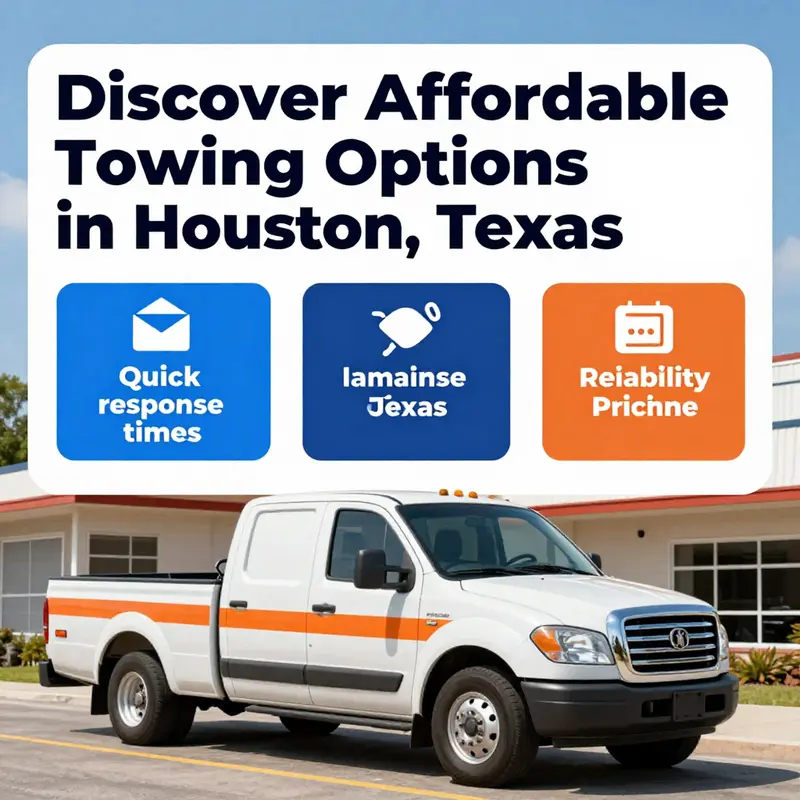
When a vehicle breaks down or a roadside snag hits, price often becomes the first worry in a long list of concerns. In Houston, where traffic is relentless and the heat can turn a minor delay into a major inconvenience, the appeal of cheap towing is powerful. Yet cheap towing is not just about a low fare. It is about the bundle of services that arrives with that fare: how quickly a tow is dispatched, what exactly is included in the quote, and whether the provider can stand behind its promises when the clock is ticking. The cheapest options in Houston typically win trust through a straightforward combination of transparency, speed, and breadth of service, all delivered with an eye toward reliability. To understand why these particular values matter, it helps to follow the path a distressed driver takes from the moment they pick up the phone to the moment the vehicle is safely off the road and on the way to a shop or a preferred destination.
First, there is pricing transparency. In a market where every mile and every minute seems charged, the most affordable options are those that spell out costs before service begins. A reliable budget-oriented tow operator will provide a clear quote for the base dispatch, the per-mile rate, and any potential add-ons, such as winching, specialty transportation, or extra labor. The goal is not secrecy but clarity: a customer should know the expected total before the tow truck pulls away. In practice, this means written or spoken estimates that account for common contingencies—flat tires, battery issues, or a need for fuel delivery. The best budget providers present this information with a calm confidence, inviting questions and offering to walk through the estimate line by line. When a driver asks, “How much will this cost?” they should receive a number and a brief explanation that leaves little room for surprise charges later on.
Speed follows close behind. In Houston, where the day can grow hot and the roads can turn into a maze of lanes and interchanges, a quick reply is as valuable as a low rate. The most dependable low-cost Towing services advertise dispatch times in the neighborhood of a half-hour in many parts of the city, with faster arrivals in more centralized areas. Arriving promptly matters not only for comfort but for safety. A vehicle stranded on a shoulder, a dark street, or a broken-down worksite demands urgent attention. The quick response promise is a signal that a company values its customers’ time and understands the friction points that accompany a roadside emergency. It is not enough to have a car on a tow bed if it takes two hours to reach the scene; speed must be paired with predictability, so drivers can plan the rest of their day with fewer disruptions.
But speed and price do not stand alone. A comprehensive, budget-friendly towing option supports a broad range of needs. The typical landscape in Houston includes services that extend beyond simple vehicle transport. Tow providers that keep prices low while covering a wide set of tasks tend to win long-term loyalty: tire assistance, jump-starts for dead batteries, fuel delivery when a driver miscalculates fuel, lockout help, and, of course, standard towing for breakdowns or accidents. Each of these services, when offered affordably, reduces the need to call multiple vendors and keeps a driver moving toward a solution rather than spending precious minutes negotiating alternatives. A single call should yield a plan that can address a flat tire on a busy street, a battery that refuses to cooperate, or a vehicle that simply won’t start. In many cases, budget-friendly providers are the ones that train their dispatchers to ask the right questions on the first contact, quickly assessing location, vehicle type, and the most efficient route to reach the customer.
This breadth of service is especially important in a city as diverse as Houston. The roads wind through neighborhoods with different traffic patterns, parking challenges, and accessibility constraints. A budget-friendly operator who can adapt to these realities—arriving with the right equipment, knowing how to maneuver a car from a tight driveway, or understanding how to secure a vehicle on a flatbed—presents practical value that goes beyond the sticker price. The aim is not to win a race to the cheapest ticket but to deliver dependable aid when the driver most needs it. In that sense, affordability carries a responsibility: the provider should be able to justify the price with performance, safety, and professional conduct.
A useful way to visualize what makes the cheapest towing options work is to imagine the full journey of a call. It begins with a calm, focused phone conversation, where the dispatcher confirms the location, vehicle details, and the nature of the roadside problem. The quote is given, with any potential extra charges laid out in plain terms. The driver is asked to share pertinent information—whether the car is in gear or in park, if there are passengers, or if the location is a busy thoroughfare or a quiet residential street. From there, a technician is dispatched, and the customer is kept informed of progress. The moment the tow truck arrives, there is a quick, respectful, and safe assessment of the situation. A winch may be used to load the car, doors and windows will be secured, and the path to the final destination will be mapped with the fewest possible interruptions. At the end, the customer is given a receipt or digital confirmation of the charges, and the service narrative becomes a reference for future needs.
This narrative is not about a single company or a single neighborhood within Houston. It is about a model that many budget-conscious providers share: transparent pricing, rapid dispatch, and a robust array of services that address the most common roadside scenarios. It is a model that recognizes the real constraints of a busy city and the varied circumstances of its drivers. The appeal of the cheapest option, then, is not merely a lower price tag. It is a promise that help will arrive when it is needed, with costs laid out in advance and a team equipped to handle the practical realities of the road. To someone stranded on a hot Houston afternoon, that combination can feel like a lifeline rather than a gamble.
For readers seeking a concrete starting point, a practical approach is to explore local options with a focus on clear, upfront quotes and a track record of reliability. A well-regarded moving through this market may emphasize a few cardinal practices: (1) publishing upfront price ranges on the phone or website, (2) confirming the exact services included in the stated price, (3) offering 24/7 dispatch with transparent expectations, and (4) building a reputation through consistent, fair treatment of customers. The presence of these traits in a budget-friendly provider is often the strongest signal that the offer will hold steady under pressure and deliver true value when a person most needs help.
In this sense, the cheapest towing options in Houston are best understood as value-driven responses rather than simplistic price-cutting. They blend practical efficiency with a customer-centric approach that anticipates common points of friction. They recognize that a caller does not simply want to save a few dollars; they want certainty, speed, and a sense that the provider has their back when the clock is ticking. That is where price, speed, and service converge to form a reliable, affordable solution. Readers who want to explore a practical path forward can start by examining how a local provider communicates, what kinds of services they bundle in a basic quote, and how flexible they are in accommodating emergency needs.
If you are curious to see how this model is enacted in real-world terms, you can begin with practical resources that catalog budget-friendly options in the Houston area. A reliable directory and review platform can illuminate which operators consistently meet the three pillars described above: transparent pricing, quick response times, and comprehensive service coverage. This does not mean accepting the first quote you receive. It means using it as a baseline, then asking a few targeted questions to verify what is included, what is excluded, and how potential surcharges are addressed. A thoughtful comparison can reveal a provider who delivers not just a low price, but a reliable path to getting back on the road with minimal stress.
In addition to the core triad of price, speed, and service, the practicalities of payment and access can influence the overall value of a budget-friendly option. Some drivers appreciate straightforward payment methods, the option of online quotes, and post-service digital receipts that clearly itemize charges. Others value the degree of coordination a dispatcher offers when the driver is in a high-pressure moment, such as a late-night breakdown near a busy corridor or a roadside incident that requires a careful, methodical approach to loading and transport. The best-budget providers understand that these factors—payment ease, clear documentation, and professional demeanor—often separate a satisfactory experience from a frustrating one. They train their teams to communicate calmly, set accurate expectations, and follow through with the services promised.
For those who want a practical, action-oriented takeaway, the guidance is simple: when you call a budget-friendly tow service in Houston, ask for the full quote upfront, confirm what it covers, and request a clear ETA. If the response feels smooth and transparent, you likely have a provider that aligns with the three core pillars described above. If a quote arrives with vague language or hidden fees, it may be a sign to compare with another option or to ask for a more detailed breakdown. In essence, the cheapest solution is not merely the one with the lowest dollar figure; it is the option that consistently aligns price with performance, comfort, and reliability across a wide range of roadside scenarios.
To those who want to dig deeper into how different customers experience these services, the broader conversation on customer reviews offers helpful perspective. Platforms that compile real-world feedback can reveal recurring themes—praise for quick arrivals, concerns about extra charges not clearly disclosed, or appreciation for a provider that offers a fair, no-surprises estimate. In Houston, where the market is crowded and competition is intense, such reviews often serve as a compass for discerning which budget-friendly options deliver steady value rather than transient bargains. A careful reader will notice patterns: the most dependable cheap tow services often earn credibility not through marketing gloss but through consistent follow-through, fair pricing, and respectful treatment during stressful moments.
As you traverse the Houston area in search of affordable towing, you can optimize your chances of a favorable outcome by building a little preemptive readiness into your routine. Keep a few things in your car that make a tow smoother and cheaper in the long run: have the vehicle’s location pinned on a map, note nearby landmarks for the dispatcher, and keep a wallet-friendly payment method readily accessible. If you are open to it, create a short, prepared script for the initial call: the exact location, the make and model of the car, the nature of the problem, whether there are passengers, and any safety concerns. A well-prepared caller helps the dispatcher quote accurately and dispatch promptly, which in turn can shave minutes off the response time and prevent miscommunication from derailing the process. In turn, these small steps can translate into tangible savings without sacrificing the quality of assistance.
For readers who want a concrete starting point in the local market, engaging with a resource that compiles options and consumer impressions can be a practical next step. A good resource will present a spectrum of providers, clearly distinguishing those that offer upfront pricing from those who rely on after-the-fact charges. It will also recognize that the cheapest option is often the one that combines a quick dispatch with a reliable network of drivers ready to handle a broad range of scenarios. In short, Houston’s affordable towing scene thrives on a delicate balance: price that respects the customer, speed that mitigates risk, and service breadth that meets the realities on the road. This balance is not fanciful; it is the practical outcome of a market that has learned to listen to drivers in distress and respond decisively, with a transparent plan and a fair price.
If readers wish to explore further and see how these principles translate into real-world options, they can start with a practical guide to Houston tow services that emphasizes the nuances of pricing and dispatch. For an accessible overview of local options and how they stack up in customer reviews, one can explore a dedicated resource such as a broader directory that aggregates feedback and price points. This can help verify whether a given provider consistently delivers on price, speed, and service in the way that matters most when a tow is needed. In the end, the goal is not merely to find the cheapest tow, but to find the most reliable combination of price, promptness, and professional care when every minute counts.
For readers seeking a practical action step, consider starting with a focused resource that compiles local options and highlights essential questions to ask during a call. This approach helps ensure that the initial quote you receive reflects the full scope of your needs and reduces the chance of later surprises. And as you gather quotes, keep in mind the broader picture: the most economical choice in Houston is often the one that earns your trust through clear communication, consistent delivery, and a straightforward, respectful approach to the challenges of the roadside. When those elements align, the savings you enjoy are not just a number on a screen but a tangible relief at the moment you need it most.
For quick access to a practical starting point on this topic, you can explore Tow service in Houston, TX. It provides a concise look at how these budget-minded providers present themselves and what you can expect when you call. While no single article can capture every local nuance, the core principles—transparency, speed, and breadth—remain reliable guides. Finally, to gain broader context about customer sentiment and typical pricing dynamics across the city, a broader consumer review perspective can be informative. See Yelp for an assortment of experiences and opinions from real customers here: https://www.yelp.com/search?finddesc=Towing+Service&findloc=Houston%2C+TX
Final thoughts
In conclusion, locating affordable towing services in Houston, Texas, is beneficial for business owners looking to manage costs efficiently. With companies such as Amine Towing, Quick And Cheap Towing, and others standing out for both their quality and pricing, a smart choice is just a call away. By prioritizing a blend of affordability and reliability, your business can ensure a smoother operation even in tough circumstances, keeping interruptions at bay and aligning with budgetary constraints. Don’t miss the opportunity to safeguard your assets with the right towing partner.