
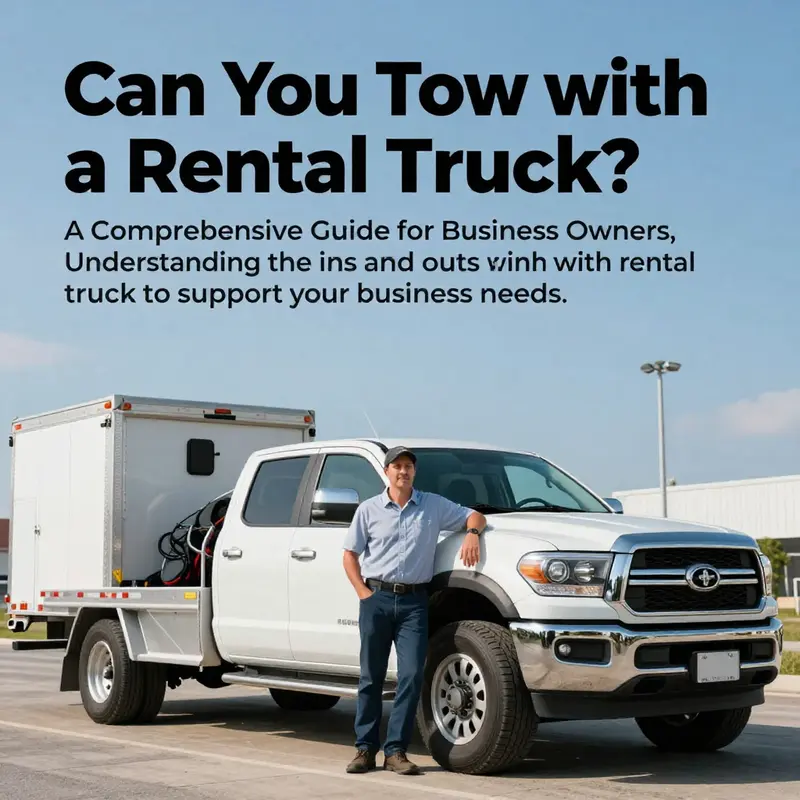
For business owners, having access to reliable transportation is crucial, especially when it comes to moving equipment or hauling goods. Understanding the capabilities of rental trucks when it comes to towing is vital for making informed decisions. Towing with a rental truck can be a feasible option, but it requires careful consideration of the truck’s specifications and the terms outlined in rental agreements. This guide will delve into the crucial aspects of towing capabilities of rental trucks and the specifics to look for in rental agreements, ensuring that you can confidently choose the right solution for your towing needs.
Tow Ready? Navigating the Realities of Towing with a Rental Truck
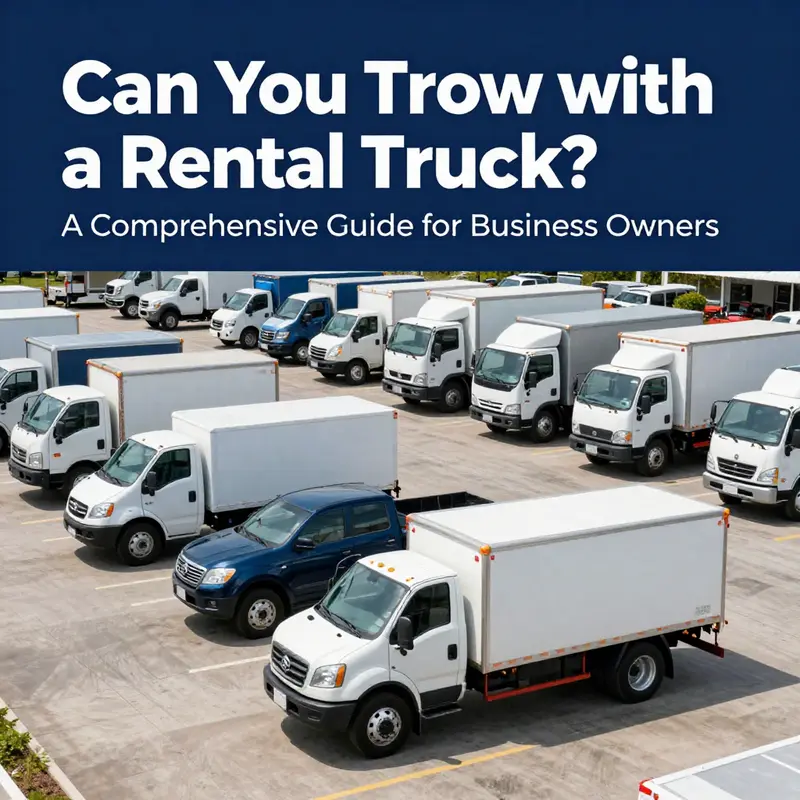
Can you tow with a rental truck? The question comes up often when people face a move, a project, or a temporary hauling need. The honest answer is nuanced: some rental trucks can tow, but many cannot, or should not, be used to pull a trailer or another vehicle. The entire decision hinges on the exact vehicle you rent, the equipment it actually includes, and the terms of the rental agreement. This isn’t a topic to guess about. It’s about understanding the limits of the machine you’re behind, respecting safe loading practices, and avoiding gaps in insurance or liability.
A lot of the everyday rental fleet includes cargo vans and box trucks that are excellent for moving boxes, appliances, and equipment. These vehicles are engineered for payload and storage efficiency, not for the stress of towing. A hitch, if present at all, may be an afterthought, or it might be a simple accessory with limited capacity. The chassis and suspension are designed to handle the weight of cargo within the declared payload range, not the dynamic loads that come from towing a trailer—think road irregularities, crosswinds, and the sway that can develop behind a trailer. In practical terms, this means many standard rentals are not designed to pull a trailer, and attempting to do so can damage the vehicle and complicate insurance coverage if something goes wrong.
What changes the equation is when a rental vehicle is specifically configured or marketed for towing. Some rental programs do offer trucks that are built for towing, particularly pickup-style vehicles or larger vans equipped with a towing package. These configurations typically include a properly rated hitch receiver, trailer wiring that powers the lights correctly, and a documented towing capacity. The presence of a towing package signals intent and capability, but even then the story is not automatically simple. The actual towing limit depends on the exact model, engine choice, and transmission setup, as well as the vehicle’s hardware. It’s easy to assume a hitch equals a safe, universal pulling capability, yet the safest approach is to verify the manufacturer’s rating and to confirm with the rental agent which components are actually installed on the unit you’re about to drive away with.
Before you reserve or sign any rental agreement with the plan to tow, there are concrete steps to take that protect both you and your load. First, review the rental agreement carefully to confirm towing is allowed and under what conditions. Some agreements explicitly prohibit towing unless a specific vehicle with the necessary equipment is rented, while others may limit the weight you’re permitted to pull or the types of trailers you can tow. If towing is allowed, the next critical piece is the vehicle’s stated towing capacity. This rating is usually listed in the owner’s manual or may appear on a door jamb sticker. It’s essential to rely on the manufacturer’s specified capacity rather than the hitch’s potential rating, because the total towing ability is limited by the weakest link in the system—hitch, bumper, tires, transmission, and even brake setup all play a role. If the manual presents a GTW (gross trailer weight) limit, and you’re calculating tongue weight, keep in mind tongue weight is typically around 10 to 15 percent of the trailer’s gross weight. Exceeding these limits can push components beyond their design envelopes, leading to overheating, steering instability, or disastrous failures.
Many renters assume that a hitch proves universal towing capability. The reality, however, is more complicated. Even when a hitch is present, you may be staring at a lower real-world capacity than the hitch alone implies. A smaller engine or lower torque, an older transmission, or the absence of a robust cooling system can all truncate the practical towing limit. This is not a flaw in the vehicle, but a reminder that towing distributes weight in a way the vehicle was not always engineered to handle, particularly under dynamic road conditions. That’s why the guidance often returned by manufacturers and rental providers is clear: consult the manual, verify the specific vehicle’s towing capacity, and never exceed the lowest rating among the critical components—hitch, tires, brakes, and frame. The worst scenario is not just a damaged vehicle; it’s a compromised safety situation for you and others on the road.
Practical preparation matters as much as the rating. If you’re planning to tow, you should verify that the trailer wiring is fully functional before you leave the lot. Lights, turn signals, and brake lights are not optional when you’re sharing the road with other motorists. A proper wiring setup reduces the risk of miscommunication with other drivers and helps you stay compliant with traffic laws regarding trailer lighting. You’ll also want to inspect the overall hitch setup: the hitch receiver should be secure, the hitch ball or receptor should be correctly sized for your trailer, and the connection should be physically tested to ensure there’s no play. Weight distribution is critical, especially with larger trailers or those carrying heavy equipment. If you’re pulling something that has its own braking system, you’ll want to ensure it engages with your tow vehicle’s braking system in a synchronized way. The goal is simple: a stable, predictable, and controllable towing experience.
Another layer of responsibility involves the trailer itself. The combination of a rental truck and a trailer means you’re managing more than one vehicle’s dynamics. The trailer’s axle load, its own tires, and the condition of its brakes need to be aligned with the truck’s capabilities. Tires on both the truck and the trailer must be suitable for the load and the expected travel distance. A tire that’s already near the end of its life on the truck or trailer should not be pressed into service when you’re towing. Likewise, the trailer should be loaded so that the tongue weight sits within the recommended range. Poor weight distribution can cause trailer sway, which is not just uncomfortable but dangerous, particularly at highway speeds or in gusty conditions.
The variability across rental locations adds another layer of caution. Not every location guarantees a hitch, and even when a hitch is present, the actual towing capacity can differ wildly from unit to unit. The make, model, engine, and gearbox all influence towing limits. A truck with a smaller engine, or one mated to a transmission with a restricted torque band, may offer far less towing capacity than the hitch rating would suggest. That inconsistency is why you should never rely on a single sticker or a single number. You should cross-check the towing capacity with the owner’s manual and, if possible, with the rental agent who can confirm the exact configuration of the vehicle you’re about to rent. If the agent confirms that towing is permitted but cannot guarantee a specific capacity, you should clearly document the agreed limits in writing and plan a load well within those limits.
If the plan is to tow more than a light-duty trailer or if you’re unsure about the trailer’s weight, consider alternatives. A rental pickup with a proven towing package can be a more reliable option than a standard cargo van or box truck. Some people find it worth the extra cost to rent a vehicle designed for towing rather than attempting to push a non-towing-capable truck beyond its comfort zone. If you’re moving a vehicle or heavy equipment, professional towing services can also offer a safer and more predictable outcome than a DIY tow with a rental truck. It’s not just about getting from point A to point B; it’s about ensuring that the load arrives in one piece, and that neither the truck nor the trailer experiences preventable damage.
What about the practical steps you should follow the moment you’re ready to hit the road? First, confirm with the rental agent the exact conditions and limitations. Then, perform a pre-trip inspection of both the vehicle and the trailer—check lights, brakes, tires, and the hitch. Verify the trailer’s weight at the scales if possible, to ensure you’re within the stated capacity. If you’re unsure about anything, ask for a pro to assist or to run you through the setup to confirm every critical element operates within safe limits. If you do plan to tow, never attempt to exceed the stated capacity at any point in the journey. The safest trajectory is to stay well within limits and to drive in a manner that anticipates the slower acceleration, longer stopping distances, and possible sway that can accompany a trailer.
There’s also a human element in this equation. The model you choose may be well-equipped for light towing, but your own experience matters. If you’re new to towing, a conservative approach is prudent: practice in a low-traffic area, practice backing up with a trailer attached, and maintain a comfortable following distance. Your goal is to develop muscle memory that prevents overcorrection and keeps your momentum steady. That translates into safer lanes and less stress for everyone around you. If any doubt remains, consider a different approach. A rental or moving company can provide equipment that’s purpose-built for the job, or you can arrange professional assistance for the heavy lifting and transport. In this landscape, safety and preparedness aren’t a luxury; they’re a requirement.
For those who want a concise anchor to care and maintenance in the moment, think of towing as a two-part system: the truck’s capability and the trailer’s own reliability. Respect the limits of both. If the load implies exceeding any capacity or if the unit you’ve rented lacks essential features like a proper hitch or wired lights, do not proceed. A rental truck that’s not equipped for towing is a tool for moving, not for pulling. When in doubt, seek a tow-focused alternative or call in a professional tow service. If you need moving assistance or towing expertise, you can reach out to a local service provider for support—for instance, you can explore options through mikes-towing to ensure you have a reliable partner for the job. Having a safety plan in place is the difference between a successful move and a stressful, potentially dangerous outing on the road.
For readers who want to cross-check the numbers and get a broader sense of official guidance, manufacturer resources provide a useful baseline for capacity calculations. Towing capacity is highly specific to the vehicle, and the cautions above remain valid across brands and configurations. If you need a reference point, consult the official towing capacity resources available from major manufacturers online, which outline how to interpret GTW, tongue weight, and the critical role of braking and suspension in safe towing. For a broader, manufacturer-centered reference that complements the guidance above, you can review how towing capacity is presented and calculated at the following external resource: Ram Trucks Towing Capacity. This resource helps illuminate the mechanics behind the numbers you’ll encounter on the rental lot and in the manual. https://www.ramtrucks.com/truck-towing-capacity.html
In the end, the decision to tow with a rental truck should be made with clear information, thorough preparation, and a conservative mindset about weight and dynamics. The rental landscape presents a spectrum—from non-towing-capable trucks to purpose-built towing vehicles. Your best move is to align the vehicle with the load, confirm the exact capacity, ensure the hitch and wiring are correct, and proceed only when the math adds up and the road ahead is calm. If you decide to tow, document the agreed-upon limits in writing, perform a meticulous pre-trip check, and maintain steady, cautious driving throughout the journey. And if you feel even the slightest hesitation, that hesitation is your signal to pivot toward a safer option. Tow readiness isn’t a marketing promise; it’s a practical assessment of equipment, weight, and road conditions working in harmony to keep you secure and compliant as you move from one destination to the next.
Tow Ready or Not: A Practical Guide to Hauling with Rental Trucks
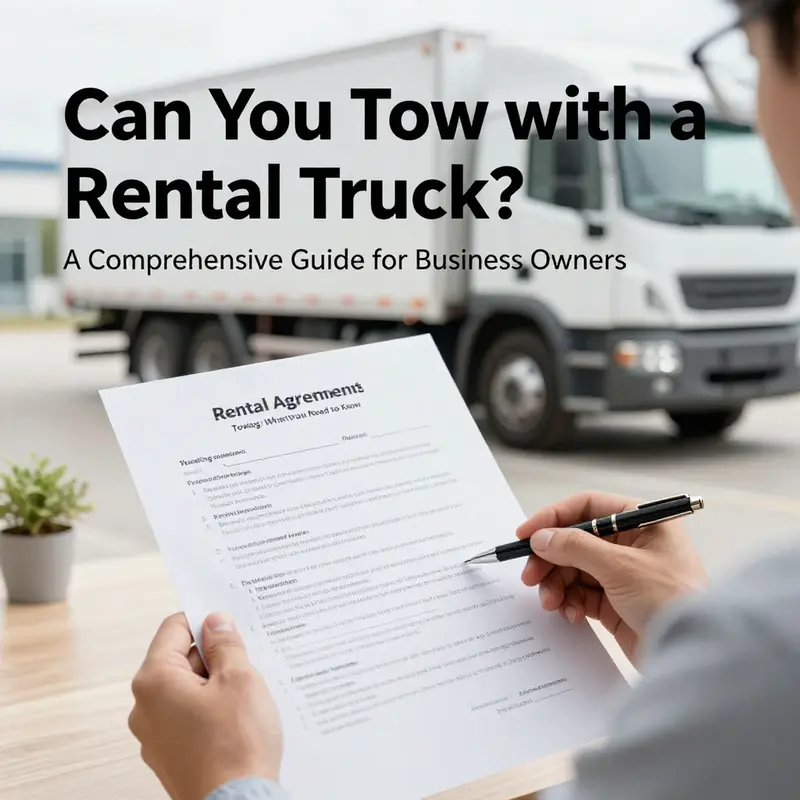
Tow ready or not—that question comes up whenever a move or a big haul requires something more than a few suitcases and a dolly. For many, renting a truck seems like the simplest path to transport gear, furniture, or a trailer of supplies. But towing with a rental truck is not a blanket option. It hinges on the vehicle you choose, the towing setup you plan to use, and the exact terms of the rental agreement. The landscape shifts from truck to truck, and a careless assumption can leave you stranded, with a damaged vehicle, steep fees, or gaps in coverage that you didn’t anticipate. The rule of thumb is straightforward: towing is possible with some rental fleets, but not all, and only with the right equipment, licensing, and disclosures in place. Understanding these boundaries before you reserve a truck can help you steer clear of surprise costs and unsafe towing situations.
In the most common rental scenarios, the type of truck matters a great deal. Standard cargo vans and most box trucks are designed primarily for hauling cargo, not for pulling trailers or other vehicles. Their chassis, hitch points, and braking systems often aren’t engineered to handle the extra load, sway forces, and longer stopping distances that come with towing. These vehicles typically lack a proper hitch receiver, the right electrical wiring for trailer lights and brakes, or the structural reinforcement that towing demands. Attempting to force a tow on a non‑towing‑capable vehicle can stress the frame, void insurance coverage, and create a risk of accident or breakdown that derails a move. In other words, if you’re eyeing a standard moving van for a trailer, you should stop and re-evaluate before you commit to the plan.
There are, however, rental options explicitly built or equipped for towing. Pickup trucks that are commonly available for rent, along with larger cargo vans that come with tow packages, are the most dependable paths to towing capability in a rental fleet. A towing‑ready pickup will typically feature a proper hitch receiver, a clearly stated towing capacity in the vehicle documentation, and wiring that’s set up to power trailer lights. These features aren’t cosmetic add‑ons; they’re the core components that make towing feasible and safer. The hitch type matters too. Many towing‑ready pickups use a class III or class IV hitch, designed to handle heavier tongue weights and trailer rigs. Wiring harnesses may be four‑ or seven‑pin configurations, with the more robust setups supporting electric brakes and synchronized lighting. If you’re tracking weight or distance, those details translate into practical limits you must respect on the road.
Before you place a rental, you should treat the agreement and the vehicle as one decision rather than two separate steps. Start with the rental agreement itself. Some agreements allow towing, while others classify it as an activity that voids insurance or violates terms. Read the fine print about who is allowed to tow, what kinds of trailers are permitted, and what happens if you exceed stated limits. Then examine the vehicle you’re considering in detail. Look for the towing capacity rating—this is typically listed in the owner’s manual or on a door‑jamb sticker. Check whether a hitch is included or if you must rent or install one separately. Confirm the electrical wiring is appropriate for trailer lights and brakes, which reduces the risk of a lighting or braking failure that could lead to an accident. And don’t overlook insurance. Some rental contracts include towing coverage as part of a broader policy, while others exclude it or require an add‑on. The difference can be the critical factor between a straightforward move and a costly afterthought.
If you’re curious about which fleets commonly offer towing‑capable rentals, you’ll find that many major rental providers offer pickup trucks suitable for towing—an obvious fit for moving heavy equipment or hauling a trailer with minimal fuss. The practical implication is simple: if you need to tow, ask explicitly for a truck with a towing package, verify the hitch and wiring, and confirm the vehicle’s rating before you accept the keys. This proactive approach isn’t just about avoiding a technical mismatch; it’s about aligning your plan with the vehicle’s capabilities so you don’t compromise safety. With the right on‑paper assurances, you can experience towing that’s as straightforward as possible within a rental framework. And if a tow is essential to your plans, you may find this path more efficient than arranging a separate tow service or borrowing a vehicle that isn’t intended for towing.
To put the decision into practical terms, imagine you’re moving a small trailer full of lawn equipment and you need to borrow a truck for the day. You’d begin by selecting a truck from the rental pool that explicitly advertises towing capability. Next, you’d verify that the hitch, wiring, and engine specification meet the trailer’s requirements. You’d confirm the trailer’s weight, tongue weight, and braking needs align with what the truck and hitch can safely handle. Then you’d read the rental terms to ensure towing won’t trigger unexpected charges or gaps in coverage. Finally, you’d inspect the trailer’s lights, reflectors, and brake system to ensure everything communicates effectively with the truck’s electrical system. This step‑by‑step approach helps you avoid the kind of misalignment that leads to unsafe towing and expensive mistakes later on.
A critical element of planning is understanding the limits you’re up against. Towing adds leverage to the vehicle’s dynamics, which translates into longer stopping distances, increased wear on components, and greater demand on tires and suspension. Tongue weight—the downward force a trailer exerts on the hitch—must fall within the truck’s design envelope. If you surpass tongue weight, you can overload the hitch, distort steering control, and strain the drivetrain. If the load is too light or distributed incorrectly, trailer sway becomes more likely, threatening the stability of both vehicles at highway speeds. The safety math isn’t a vague guideline; it’s a precise calculation you should perform based on the trailer’s weight, the trailer’s own weight distribution, and the truck’s official towing rating. When in doubt, err on the side of a lower load and a shorter partnership between the truck and trailer. It’s far easier to upgrade to a heavier vehicle before you haul than to compensate for an overburdened rig on the road.
Along with mechanical and weight considerations, legal and insurance factors deserve careful attention. In many places, towing with a rental truck is not just a mechanical decision but a legal one as well. If a rental contract forbids towing or requires specific equipment, attempting a tow anyway could put you in breach of contract and leave you without recourse if something goes wrong. Insurance policy language varies as well; some policies extend to towing operations only when the vehicle is equipped with the appropriate hitch and trailer wiring and when the towing activity follows the rental company’s guidelines. Without those conditions met, you might be on the hook for repairs, medical costs, and liability, even if the accident was not entirely your fault. This is not a hypothetical risk. The path to a safe, lawful tow begins with clear confirmation from the rental provider that towing is allowed for the exact vehicle you’re renting, and with a documented understanding of the coverage that applies.
If you decide to proceed with a towing plan, the practical steps are straightforward but important. First, choose a rental vehicle that explicitly supports towing, and verify its rating in writing. Second, inspect the hitch and wiring yourself or have the rental agent demonstrate the setup, then test the trailer lights and brakes in a safe, controlled area. Third, calculate the load in advance: trailer weight, cargo weight, the ratio of weight distribution, and the tongue weight. Fourth, ensure you have proper safety equipment on hand—brake controllers if needed, reliable safety chains, and proper lighting for the trailer. Fifth, review the route for any height or weight restrictions and consider the added stopping distance when planning your trip. Sixth, confirm that the trailer’s braking system works in concert with the truck’s braking, especially on long downhill sections. Seventh, document the vehicle’s condition before you depart and secure a confirmation that towing did not violate the rental terms. Eighth, drive with increased caution, respecting wider turning radii and longer stopping distances. These steps aren’t burdensome when you see them as the path to a smooth, predictable towing experience rather than as barriers to your plan.
As you navigate these considerations, a practical mindset helps. For many, the most reliable choice is to rent a pickup truck or a larger van that explicitly includes a towing package. This approach minimizes uncertainty and aligns the rental experience with the realities of towing. If your needs are modest, a small trailer and a capable truck can be handled comfortably within a day’s work. If you’re moving heavy equipment or planning a longer, more demanding tow, even a towing‑capable rental has limits. In those cases, evaluating alternatives—such as hiring a tow service for the trailer or renting a full‑size truck with a professional driver—may be wiser than pushing a rental truck beyond its intended use. The core takeaway is simple: towing with a rental vehicle is possible, but only under the right conditions, with the right vehicle, and with a clear contract that supports the plan.
For readers who want a deeper look into towing policies and to explore real‑world guidance, you can explore industry resources that discuss rental terms and towing practices. A practical starting point is to consult a towing service resource that contextualizes both the vehicle and the contractual framework involved in towing operations. This kind of resource can help you translate general advice into concrete steps aligned with your location and situation. If you’d like to read more about towing approaches in the context of service providers, the following resource can offer additional perspectives and practical considerations: mikes-towing.
In the end, the question isn’t simply whether you can tow with a rental truck. It’s whether you can tow safely, legally, and within the terms of your rental agreement. That combination requires careful vehicle selection, transparent confirmation from the rental agency, precise weight and load calculations, and a disciplined approach to driving. When these elements come together, towing with a rental truck can be a practical solution for a specific move or haul, delivered with a level of convenience and efficiency that would be hard to match with alternative arrangements. If you treat towing as a collaborative task between you, the rental company, and the trailer’s specifications, you’ll find that the path from plan to tow becomes a manageable, even predictable, part of your logistics toolkit.
External resource: https://www.aaa.com
Final thoughts
Understanding whether you can tow with a rental truck is essential for business owners who frequently need to transport equipment or cargo. By grasping the capabilities of different rental trucks and carefully reviewing the rental agreements, you can make informed decisions that align with your business demands. This knowledge allows you to utilize rental trucks effectively, ensuring that you select the right vehicle for your towing needs while complying with all necessary guidelines.