
Understanding the intricacies of driving a tow truck often begins with a key question: Can a regular driver’s license suffice? For many business owners venturing into the towing industry, clarifying this point is crucial. This article explores licensing regulations, the diverse types of tow trucks, and employment factors that influence a driver’s qualification. By delving into these chapters, business owners can equip themselves with the knowledge necessary for compliance and operational success in towing.
Tow Truck Licensing Demystified: When a Regular License Isn’t Enough
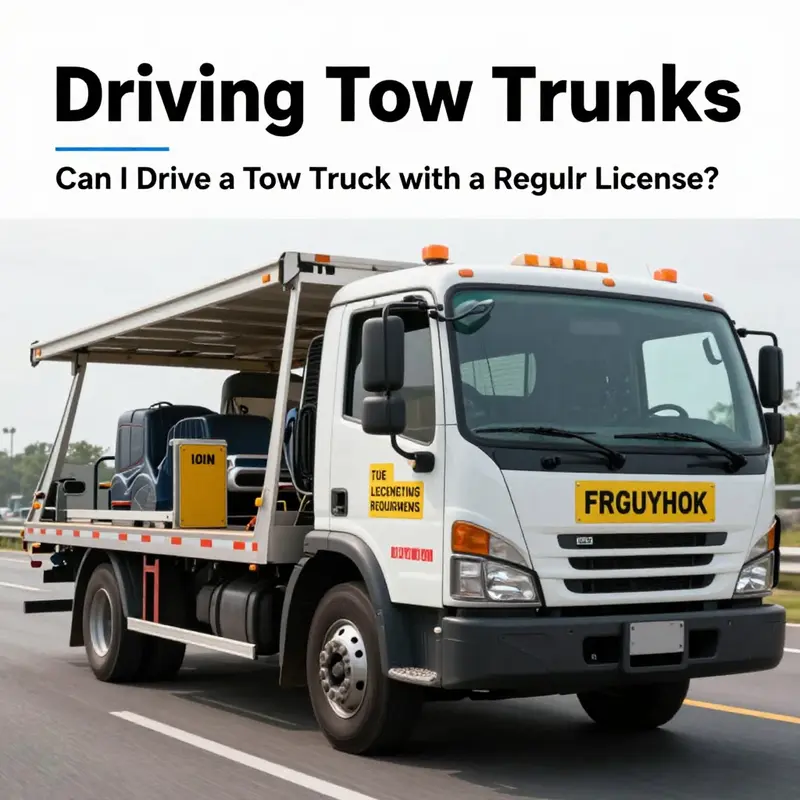
Tow trucks ride in a gray zone between everyday driving and commercial operation. Many drivers assume that a standard, state issued license covers everything they might tow or recover. In practice, the powers and limits of a regular license depend on the vehicle’s weight, its intended use, and the laws of the state where you operate. The simplest rule to remember is that weight often drives the requirement, but the story is more nuanced than a single number. A tow truck is not just a larger vehicle; it is a service vehicle designed to move other vehicles, sometimes under time pressure and in potentially hazardous situations. That combination tends to push regulatory scrutiny toward commercial driving standards, even for operators who perform a routine roadside return or recovery job.
In the United States, the federal framework through the FMCSA sets the broad conditions for commercial vehicle operation, but the exact licensing thresholds are carried out at the state level. The common benchmark is GVWR, or gross vehicle weight rating. When a tow truck has a GVWR of more than 26,001 pounds, it falls squarely into commercial vehicle territory. In these cases, a Commercial Driver’s License CDL is not just recommended—it’s typically required. Specifically, many jurisdictions require a Class B CDL with a T endorsement for towing a vehicle, reflecting the vehicle’s purpose and the additional training involved. The logic is straightforward: heavier equipment, more complex handling, and greater potential for harm in accidents or emergencies demand more rigorous testing, medical clearance, and ongoing qualification.
Yet the line is not always drawn at that single weight threshold. Even below 26,001 pounds, a tow truck used in a business context may trigger state-specific requirements such as a tow-truck endorsement, a special permit, or a separate operator license. Some states separate the licensing from the vehicle’s weight entirely and require an additional endorsement for anyone who uses a tow truck as part of a business. This can include mandatory training in vehicle recovery, winching safety, chain and hook usage, and scene safety protocols. Employers, too, frequently seek clean driving records, professional endorsements, and background checks as conditions of hire. A past history of violations or accidents can limit job opportunities or lead to additional oversight.
The practical takeaway is clear: before assuming that a regular license suffices, verify the precise requirements with your state’s DMV or transportation authority. The process begins with identifying the GVWR of the tow truck you plan to drive and then checking whether a state-level endorsement or license is required for business use. If the vehicle is heavy or used commercially, you should anticipate the possibility of needing a CDL, likely Class B, paired with a towing endorsement. The licensing journey does not end at the test; many states also require medical certification, periodic renewals, and ongoing compliance with federal and state regulations governing commercial driving and towing operations.
The complexity of the rules invites a careful, case-by-case approach. A driver in one state may be told that a standard license will suffice for a light tow truck, while a neighboring state could insist on a special endorsement for even lighter equipment if it is used in a professional context. This is why the most reliable path is to consult your local DMV and, if possible, speak to employers in the towing sector who understand the practical implications of the state-by-state variations. It also helps to map out the potential career trajectory: starting with a lighter tow apparatus that fits under a standard license can be a sensible apprenticeship, followed by incremental steps earning a CDL, securing the appropriate endorsement, and pursuing formal training in safety procedures, vehicle recovery methods, and regulatory compliance. These steps can significantly improve not only employability but also safety for you, your teammates, and the public.
For readers exploring jurisdictional specifics, it can be enlightening to look at how licensing plays out in real-world settings. A case in point: a broad overview of tow-truck licensing practices highlights that while California, like many states, regulates heavy tow operations through CDL requirements and endorsements, other states may emphasize separate operator licenses or business endorsements. The key is to anchor your plan in your own locale and then cross-check with authoritative sources. If you’re researching local options, you might come across resources discussing tow services in your area, such as a dedicated page on Houston-area towing operations, which can offer practical context about how licensing translates into day-to-day work and discipline requirements. See, for instance, a resource focusing on Houston’s tow-truck landscape to better understand how licensing interacts with local regulations and employment expectations: https://mikes1towing.com/tow-trucks-in-houston/.
In short, a regular license may cover some light towing duties, but heavier or commercially oriented tow operations almost always demand more. Understanding the GVWR, recognizing when a state endorsement is required, and pursuing the appropriate CDL and training constitute the prudent path. This disciplined approach protects you legally and financially while ensuring you can perform towing work with professional competence and safety.
External resource for further context on state-by-state licensing specifics is available through California’s licensing framework, which illustrates how a tow-truck licensing regime can operate within a large, regulated state system: https://www.dmv.org/us/ca/vehicles/tow-truck-licensing.php. For those seeking added insights and real-world perspectives on tow services, these considerations tie directly back to core questions about whether a regular license is sufficient, and they emphasize the importance of checking with the local DMV before stepping into the driver’s seat of any tow operation.
Tow Truck Licensing Demystified: How Far a Regular License Will Take You and What Often Checks In
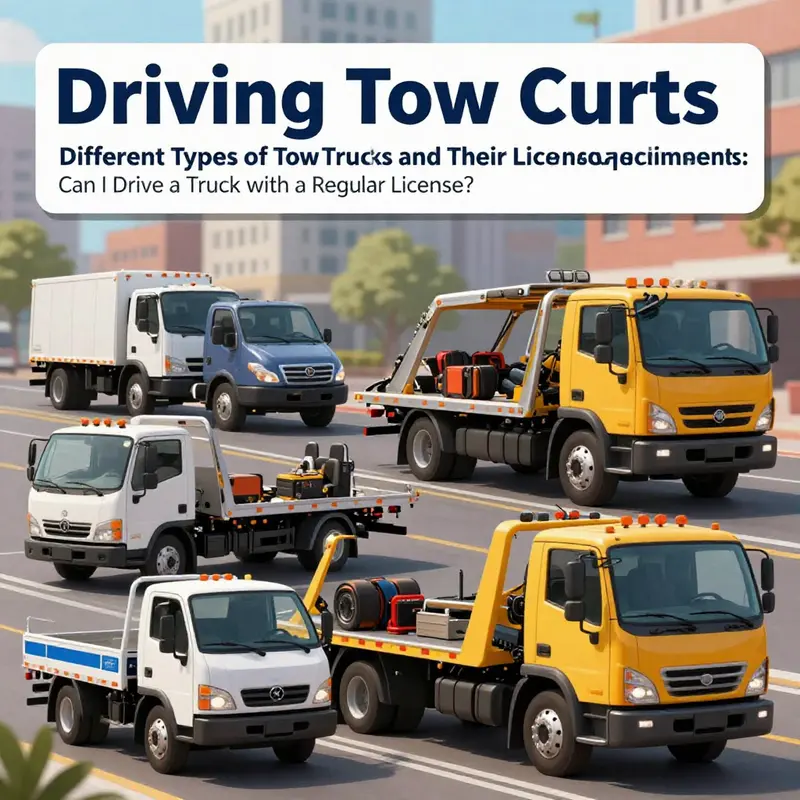
The question many aspiring tow operators ask begins with a simple license check, but the answer is anything but simple. A regular driver’s license can work for some light-duty towing tasks, but most operations sit at the crossroads of weight, equipment, and local rules. The truth is that the world of tow trucks is a spectrum: flatbeds that cradle an entire car, wreckers with a hydraulic boom, wheel-lift systems that grab from the wheels, and integrated units that blend features. Each type is engineered for a different purpose, and each carries its own licensing requirements. The simplest rule of thumb is that the heavier the vehicle you’re driving or the heavier the load you’re hauling, the more likely you will need a commercial credential. And even within light-duty work, some states require a specific endorsement or a separate tow-truck permit, regardless of the license class you hold. This isn’t a matter of option but of compliance, safety, and professional responsibility. The path you take starts with understanding your vehicle’s weight and the jurisdiction you’ll operate in, because these two pieces determine whether a standard license is enough or if a commercial endorsement is essential.
When you examine the types of tow trucks, you can see why weight and configuration matter so much. Flatbed tow trucks, often praised for transporting vehicles without wheel contact, can still push into heavier territory if the towed vehicle is large or the operation involves complex securement. Wrecker or boom trucks, by contrast, rely on a hydraulic arm to lift and load, which can demand greater operator training and stricter adherence to safety protocols. Wheel-lift units introduce another dynamic: they secure a vehicle by its wheels, offering speed and efficiency but elevating the risk of damage if handling isn’t precise. Integrated tow units, combining multiple technologies, certainly require more specialized knowledge and, frequently, a license that reflects their broader capabilities. In short, the same rule applies across all types: the more sophisticated the tow method and the heavier the load, the greater the likelihood that a standard license won’t suffice. For many operations, a standard Class C or equivalent may be adequate for light-duty roadside work, but once you move into heavier tows or commercial contracts, a Commercial Driver’s License (CDL) becomes not just helpful but essential.
Jurisdictional nuance is the other half of the equation. Some places treat tow-truck work as a specialized trade that sits outside ordinary car privileges. In Western Australia, for instance, guidelines explicitly require heavy-vehicle accreditation for tow-truck operators, underscoring that a mere car license does not unlock the full range of towing tasks. The nuance isn’t limited to distant regions. In many states across the U.S., the threshold is often tied to the vehicle’s gross vehicle weight rating (GVWR). A common tipping point is 26,000 pounds; above that, a CDL is typically required, especially if you’re moving vehicles on a flatbed or using winches that elevate the risk profile of the operation. But there are always exceptions: some jurisdictions impose a tow-truck operator permit or an endorsement regardless of the basic license class, and employers may conduct rigorous background checks or require a spotless driving record. The bottom line is simple and practical—before you climb into any tow truck, verify the licensing requirements with the local DMV or transportation authority. Your region’s rules will shape what class of license you need, whether you must pursue a specialty endorsement, and what kind of training or certification is expected.
The real-world implications of these rules stretch beyond paperwork. They affect safety on the street, the protection of your equipment, and your ability to secure contracts or be hired in a professional towing operation. Training becomes a central piece of the puzzle, not just to pass a test but to master the weight distribution, load securement, and traffic-transaction realities that define the job. Employers often look for more than a license; they seek demonstrated competence, a clean driving history, and a commitment to safety protocols. If you’re curious about how this landscape plays out in your area, you can explore the practical side of tow services in a nearby hub to see how licensing translates into daily workflows: tow trucks in Houston.
For anyone plotting a responsible path into this field, the takeaway is clear. A regular driver’s license is a starting point for certain light-duty tasks, but it rarely marks the end of the road. The combination of vehicle weight, tow-truck type, and local statutes will determine whether additional licensing, endorsements, or accreditations are necessary. In many places, you’ll need to pursue a CDL or a specialized tow-truck operator permit to work commercially, with training that covers securing and transporting heavy loads, safe use of winches, and the critical considerations of weight distribution along public roadways. The goal is not merely compliance but safety, professionalism, and reliability in every tow. As you contemplate your next steps, consult your state DMV or equivalent authority to map out the exact requirements for your intended scope of work. And remember that the license you choose should align with the truck you plan to drive and the jobs you want to pursue. For authoritative guidance on federal CDL frameworks, broader driver-safety standards, and practical steps toward certification, consider a formal resource from a national transportation agency to anchor your plan.
External resource: https://www.fmcsa.dot.gov/.
Tow Truck Licensing Demystified: CDL Thresholds, Endorsements, and What You Need to Tow Legally
Navigating tow truck licensing begins with understanding how the law defines a tow truck and what it allows you to do. For everyday driving, a regular license is often sufficient, but tow operations introduce commercial driving rules and higher safety standards. The most important factor is the vehicle’s Gross Vehicle Weight Rating (GVWR). Once the GVWR exceeds 26,001 pounds, many jurisdictions require a Commercial Driver’s License (CDL).
If the tow truck itself weighs over the threshold, you will likely need at least a Class B CDL to operate a single heavy vehicle. If you work with a combination of vehicles or equipment that carries heavy tows, a Class A CDL may be required. In addition to the core license, endorsements such as winching, hazardous materials, or passenger endorsements may apply depending on the job and payload.
Weight is a key factor, but some states also require a dedicated tow operator license or a specialized endorsement separate from the CDL framework. Employers often require a clean driving record and a background check because the job involves roadside work, securing loads, and performing recovery operations safely.
Practical steps: check the GVWR of the vehicle you plan to drive, consult the state DMV for the exact licensing path, and plan CDL training and endorsements before operating heavy tows. Some light-duty wreckers can be operated with a regular license plus a small endorsement in certain jurisdictions, but crossing the weight boundary or handling heavier loads usually moves you into CDL territory.
Regulatory rules vary by locality. Speak with the state DMV and prospective employers to get the most up-to-date guidance for your area. For a real-world perspective, explore resources from local tow services to see how licensing shapes the work.
Bottom line: map your duties to the correct license class, pursue the required endorsements, and build a plan that keeps you compliant and marketable.
Final thoughts
Navigating the towing industry requires a solid understanding of licensing and operational regulations. As outlined, while many towing tasks can be conducted with a standard driver’s license, specific scenarios demand a Commercial Driver’s License (CDL) or special endorsements. For business owners, it’s not only about meeting legal requirements but also ensuring safety and reliability in their services. Investing time in understanding these factors can significantly enhance your towing business’s credibility and operational efficiency.