
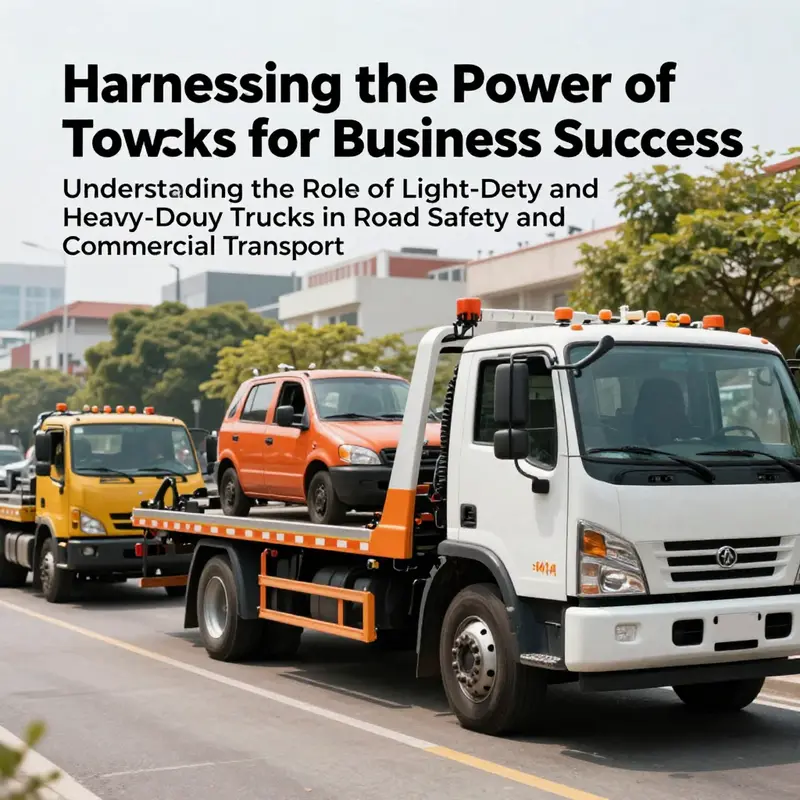
Towing trucks are integral to maintaining road safety and ensuring effective vehicle recovery, particularly for businesses that rely on reliable transport. These vehicles, equipped with advanced technology and diverse functionalities, cater to various towing needs, from everyday light-duty tasks to the complexities of heavy-duty vehicle recovery. As a business owner, understanding the distinct capabilities of light-duty and heavy-duty towing trucks can significantly influence your operational efficiency and safety protocols. This guide explores the vital role that both light-duty and heavy-duty towing trucks play in enhancing road safety and facilitating efficient commercial transportation, providing insights into how each can be strategically utilized for optimal results.
The Quiet Edge of Highway Safety: How Light-Duty Tow Trucks Restore Flow and Protect the Road
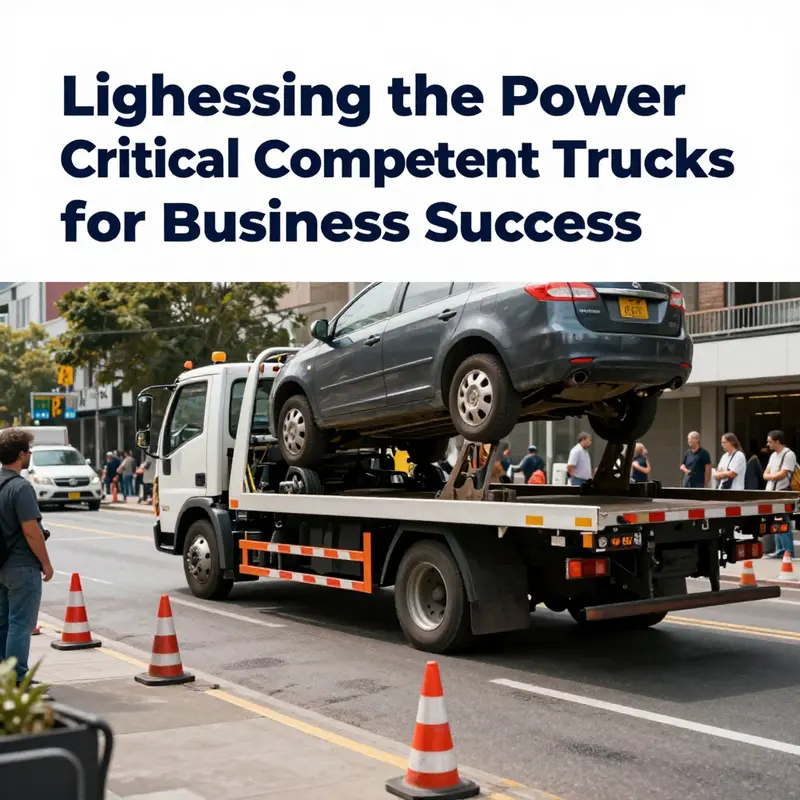
In the ecosystem of road safety, light-duty tow trucks operate at a steady hum, often unnoticed by the daily traveler yet indispensable to every successful highway incident response. These compact, agile machines are designed to reach the scene quickly, neutrally assess a breakdown or minor collision, and restore the bottleneck of traffic without turning one momentary mishap into a knot of congestion. Their presence represents more than a service; it is a deliberate commitment to keeping urban streets and rural lanes safe, accessible, and operational. When a driver stalls on a shoulder, a tire goes flat in a congested offramp, or a small fender-bender leaves a car immobile, the light-duty tow truck arrives with the tools and training needed to secure the scene, protect bystanders, and minimize risk for everyone on the roadway. The rapid response is not merely about towing a vehicle; it is about preserving momentum in a transportation system that relies on steady, predictable traffic flow. In that sense, these trucks are a critical component of road safety and recovery that quietly underpins the larger mission of emergency response and everyday mobility.
From the vantage point of design, light-duty tow trucks emphasize versatility over sheer mass. They are engineered to handle passenger cars, light vans, and compact SUVs—vehicles that represent the vast majority of road traffic. The payload and lifting mechanisms are scaled to manage these loads with confidence, ensuring a secure lift without compromising the vehicle’s structural integrity. The core tools—powerful winches, hydraulic lifts, and dependable tie-downs—work in concert to provide options for access and recovery in a variety of situations. A winch might be used to yank a car from a ditch where the body is intact but the wheels have lost purchase; a hydraulic lift can gently raise the vehicle onto a bed for transport; and a wheel-lift or frame-lift setup may be employed when a vehicle must be moved with minimal contact to the body structure. These configurations are selected based on the scene, the vehicle type, and the safety parameters required to prevent additional damage during recovery.
The operational reality of light-duty towing is as much about timing and judgment as it is about hardware. Roadside assistance networks rely on dispatch efficiency, precise situational assessment, and the ability to adapt to rapidly changing conditions. On a busy highway, seconds matter. A quick, controlled deployment reduces the likelihood of secondary collisions and limits the time a lane remains blocked. On a quiet street at night, the same crew must balance visibility, worker safety, and careful handling of the vehicle against a backdrop of limited space and elevated risk factors. This is where training and protocol become as important as the crane and cable. Operators are trained to approach with caution, establish secure working zones, and communicate clearly with other responders and with the vehicle owner. They must also be prepared to improvise with the equipment at hand, selecting a lifting method that preserves the integrity of the car while ensuring safe ingress and egress for the operator and the bystanders nearby. The result is a coordinated, patient process that minimizes further exposure to risk for both the people involved and the traveling public.
In the field, the work of a light-duty tow truck goes beyond pulling a car onto a flatbed. It is about managing a delicate balance of torque, leverage, and restraint. The hardware is designed to handle the physics of a dynamic recovery: the weight distribution of the disabled vehicle, the angle of approach to a curb or shoulder, and the friction of tires on slick pavement. The operator must be attuned to subtle shifts in load as winches take weight and as the vehicle is repositioned for transport. The choice between a flatbed and a wheel-lift approach reflects both the specific scenario and the condition of the vehicle. A flatbed offers the advantage of transporting a vehicle entirely off its wheels, which reduces additional contact points and potential damage. A wheel-lift, by contrast, facilitates rapid recovery and is often ideal when there is limited access or when the vehicle is otherwise undamaged but immobilized. Each method has its place, and the best practice is to deploy the option that minimizes risk while maximizing safety for the vehicle occupants and the tow crew.
The societal value of light-duty tow trucks emerges most clearly in their integration with broader road safety strategies. They serve not only as responders but also as gatekeepers who help maintain orderly traffic patterns and reduce the probability of secondary incidents that follow a breakdown. In regions with robust roadside assistance networks, a dispatch can route the closest, most appropriate unit to the scene, balancing speed with reliability. The result is a smoother flow of traffic and a reduced likelihood that a single incident will snowball into a longer, more hazardous disruption. This is especially evident on urban corridors where the density of vehicles and the complexity of street geometry demand swift action. The operators must negotiate with other drivers who may slow to rubberneck or who may not yet recognize the need to yield. The ability of the tow team to project calm, communicate clearly, and work methodically under pressure directly affects how quickly a lane can be reopened and how quickly the public regains a sense of normalcy.
A recurring theme in the life of light-duty tow trucks is the emphasis on safety and reliability through standards and practical know-how. Diesel-powered units in this category are often highlighted for their efficiency, reliability, and torque characteristics that suit urban pull-outs and short-haul recoveries. The referenced guide on diesel light-duty tow truck standards and mechanical performance sketches a framework for evaluating these vehicles not merely by horsepower and load rating, but by the congruence of design with real-world tasks. What matters is how a truck behaves under load, how quietly and predictably the winch operates, and how the system protects both the operator and the vehicle being recovered. A well-designed light-duty tow truck remains balanced between brute capability and careful restraint, a combination crucial to extending the life of both the tow fleet and the vehicles it serves.
The human dimension of this work deserves equal emphasis. Unlike heavy-duty recovery, which may involve complex machinery and high-stakes maneuvering around large equipment, light-duty operations are often performed by technicians who combine mechanical skill with a strong sense of situational awareness. The best operators approach each call with a quiet confidence, planning several steps ahead: where to park, how to stage lighting for night work, which slings or hooks are appropriate for the load, and how to communicate with a dispatcher and, when necessary, with local law enforcement or traffic managers. This blend of craft and judgment creates a service that feels both swift and careful to the vehicle owner. It is the humane side of recovery—the reassurance that help has arrived and that the situation can be managed with care—paired with the practical prowess required to complete the job efficiently.
The relationship between the community and light-duty towing is also shaped by reputation and reliability. A local tow service that demonstrates consistent response times, transparent pricing, and respectful handling of vehicles earns the trust of drivers and municipalities alike. For individuals who have never needed roadside support, the peace of mind that comes from knowing a trusted crew is just a phone call away can be a profound reassurance. In turn, that trust fuels more efficient traffic management and fosters a sense of safety across neighborhoods and commercial districts. As part of that confidence, a well-run light-duty fleet often maintains a balance between candid communication and discretion. When a vehicle is retrieved, the process is explained, the vehicle is secured with care, and the owner is guided through the next steps for transport or repair. This attentiveness to the human experience helps transform a stressful moment into a manageable, dignified interaction rather than a confrontation or miscommunication.
For readers seeking more practical, location-specific details, regional providers frequently point toward a networked approach to roadside assistance. In many communities, the preferred pathway is to contact a local service that can rapidly dispatch a light-duty unit to the scene and coordinate with the broader emergency response framework. The interplay between private fleets and public safety channels is a defining feature of modern road safety. It ensures that help arrives with efficiency and professionalism, that the roadway is cleared with minimal disruption, and that every recovery preserves as much of the original vehicle as possible for the owner’s later use. The underlying philosophy is simple: the quickest, safest, most respectful recovery is the one that keeps people moving and preserves trust in the road system itself. To learn more about a regional option that emphasizes roadside assistance, you can explore Mikey’s Roadside Service, which exemplifies the quick-response approach reflected in many urban and suburban contexts. Mikey’s Roadside Service
The conversation surrounding light-duty tow trucks also benefits from ongoing technical education. The field continues to evolve with improvements in hydraulics, braking stability, and computerized controls that empower operators to assess loads more accurately, adjust settings for weather conditions, and communicate precise pickup and drop-off parameters. These advancements, while incremental, accumulate into measurable gains in safety and efficiency. They underscore the value of continuing professional development for tow operators and the importance of maintenance regimes that prevent unexpected failures on the shoulder or at the roadside. A disciplined approach to maintenance—checking winches, ensuring proper lubrication, testing hydraulic systems, and verifying lighting—translates into fewer hazards for crews and shorter disruption times for motorists. In this light, a light-duty tow truck is not a single tool but a small, adaptable fleet that travels with a trained team prepared to respond with judgment, care, and reliability.
In reflecting on the broader significance of light-duty towing, it becomes clear that these vehicles perform a foundational service that supports the entire transportation system. They bridge the gap between momentary breakdowns and steady recovery, enabling a return to normal traffic patterns with minimal delay and risk. Their work demonstrates how engineering, procedure, and human diligence converge to protect lives, reduce economic losses from traffic disruptions, and maintain public confidence in the safety of travel. When the next emergency call comes in, a light-duty tow truck will be ready to answer with the balance of strength and restraint that defines true road safety. External reference: for a deeper dive into the standards and performance benchmarks that guide these machines, see the detailed framework at Madison Hill’s overview of diesel light-duty tow truck standards, grades, and mechanical performance.
External resource: https://www.madisonhill.com/diesel-light-duty-tow-truck-standards-grades-performance
Powerful, Integrated Giants: The Architecture and Impact of Heavy-Duty Tow Trucks in Commercial Recovery and Transport
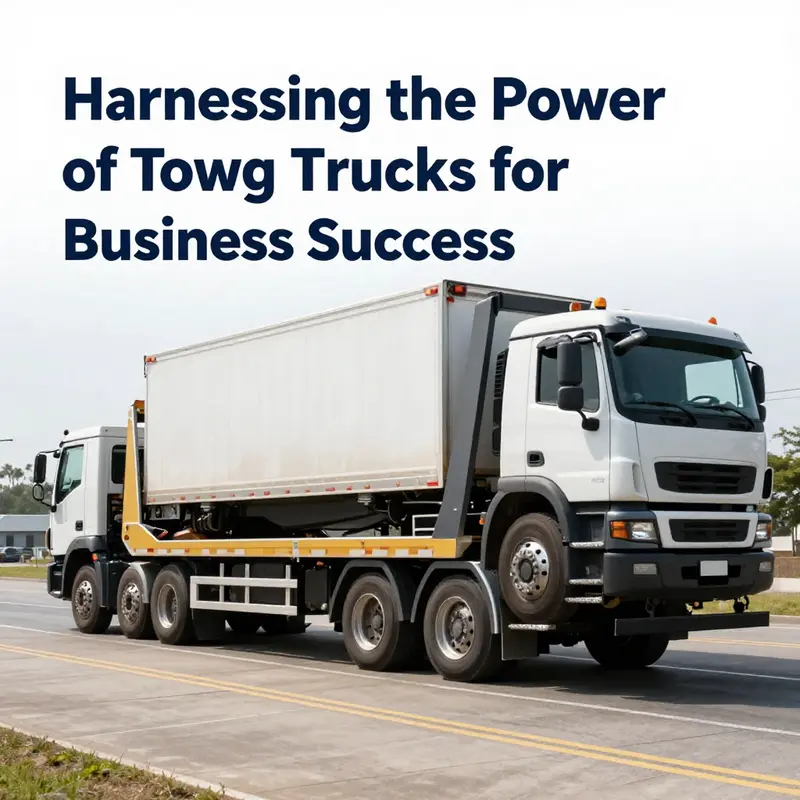
In the world where fleets move goods, time is money and road safety is a non-negotiable standard. Heavy-duty tow trucks occupy a pivotal position in this ecosystem, acting as both responders and enablers. They are not merely larger versions of everyday tow vehicles; they embody a concentrated set of design philosophies that fuse strength, precision, and reliability into a single moving platform. The purpose behind their sheer mass is straightforward—pull, lift, and transport vehicles that weigh far more than what a standard pickup can handle. Yet the true value of these machines emerges not just from raw power but from how that power is harnessed through integrated engineering. When the winch, the boom, and the deck are built as a cohesive section of the chassis, the result is a system that behaves like a single, deliberate instrument rather than a collection of disparate tools lashed together for the moment of need. This integration improves structural rigidity, enables better weight distribution, and delivers a stability profile that matters as soon as the truck engages in recovery work or begins a long-haul transport of a damaged vehicle. Consider the magnitude of this improvement in practical terms: a 40-ton class heavy-duty wrecker is not only lifting capacity; it is a carefully tuned balance of leverage, traction, and control that can keep a vehicle and its load safe across highway speeds and uneven surfaces. The difference between this integrated approach and a more modular, add-on setup is not cosmetic. It is measurable in the smoothness of the lift, the predictability of the motion, and the margin of safety for operators and bystanders alike. One can feel the difference when the steel of the boom sits flush with the frame rather than hovering as a separate appendage. In the critical moments when roadways become work zones, the feeling translates into tangible outcomes: fewer dynamic instabilities, steadier repositions of a trapped truck, and more precise alignment of anchor points that reduce the chance of secondary damage. The engineering philosophy behind these systems is straightforward but exacting. The key components—boom, winch, and deck—are not independently bolted on; they are integrated parts of a single load path. This means every lift, every hook, every winch pull travels along a continuous, reinforced contour of steel and hydraulics rather than across a patchwork of joints. The benefit is multi-layered. First, weight distribution is predictably managed, lowering the risk of tire blowouts or chassis flex during dynamic operations. Second, the overall rigidity of the chassis under heavy loading reduces flexural stress, which can otherwise fatigue components over time and shorten service life. Third, the integrated design tends to minimize the vibration and erratic motions that can occur when the load is uncertain or the surface is uneven. In practice, these advantages translate to faster recoveries and safer long-distance transports. A heavy-duty machine designed with true integration demonstrates its value when a large vehicle requires not just hoisting but controlled positioning onto a flatbed or into a hold for transport across state lines. The load path remains coherent through each stage of the operation, reducing the chance that the vehicle will shift or release unpredictably during transit. This is especially important when the vehicle being recovered has sustained structural damage. In such scenarios, the ability to rotate the load, reposition the damaged vehicle, and guide it into a safe, stable stance becomes a critical capability. Rotator trucks—machines equipped with a rotating upper structure that can pivot a load while attached to a truck chassis—embody this advantage in a very concrete way. They can lift and then rotate, reorienting a misaligned vehicle so that it can be rolled onto a deck or onto a trailer with maximum control. The operational benefits of rotation are substantial: operators can reduce the amount of additional damage caused by awkward handling, avoid the need for multiple separate lifts, and shorten downtime on site. Yet this capability, while powerful, comes with trade-offs that must be acknowledged. Rotators demand specialized training. The dynamics of a rotating load introduce complex torque and counterweight considerations, and even small miscalculations can lead to hazardous outcomes. Setup times tend to be longer than those for more straightforward towing configurations, so the business case for rotators rests on the scale and complexity of the recovery operation. Fleet managers weigh these factors carefully. The decision to deploy a rotator is not about chasing the flashiest feature; it is about matching the right tool to the right job while maintaining the highest safety standards. Beyond rotation, the spectrum of heavy-duty configurations includes options such as flatbeds, standard wheel-lift systems, and frame-lift arrangements. Each configuration offers distinct advantages depending on the scenario. A flatbed can spread load support more evenly and minimize contact with the vehicle’s underside, which is especially desirable for certain types of accidents or for delicate transport. Wheel-lift systems, meanwhile, can quickly lift the vehicle from one end and place it onto a trailer with minimal handling. Frame-lift arrangements provide strong anchorage points for secure lifting and trailing through challenging terrain or along variable road grades. The common thread across these configurations is that today’s heavy-duty tow trucks are purpose-built machines, designed to function under the most demanding conditions with a clear emphasis on safe, repeatable outcomes. These machines are typically deployed in high-stakes contexts: highway recoveries, multi-vehicle incidents, and industrial site clearances where the balance between speed and safety is critical. The operational reality is that roadside incidents occur in unpredictable environments. Weather, traffic, lighting, and road geometry all influence the approach. In some cases, the operator must negotiate tight shoulders, steep ramps, or uneven ground while maintaining steady control of a heavy load. In others, the challenge is to secure and transport a vehicle through an urban corridor without imposing excessive disruption on other road users. In all cases, the strength of a heavy-duty tow truck lies not only in its horsepower but in its capacity to manage a controlled, measured sequence of actions that keeps human risk low and outcomes predictable. From a fleet management perspective, investing in robust heavy-duty towing capabilities is a strategic decision that reverberates through safety metrics, uptime, and service quality. A well-chosen heavy-duty unit can dramatically shorten response times, reduce the incidence of secondary damage, and improve the overall reliability of the recovery chain. It can also enable a fleet to support broader logistical objectives, including the coordination of large-vehicle movements, cross-docking of damaged assets, and rapid reallocation of assets to meet demand in peak periods. The economic argument rests on the repeatable, scalable value of a single tool that can perform multiple critical functions: high-capacity lifting, precise positioning, secure loading, and efficient transport across substantial distances. Because these operations often involve hazardous environments, safety engineering remains a central pillar of design and practice. Operators receive rigorous training to understand load dynamics, rigging standards, and the nuanced choreography of a complex lift. Safety systems—such as redundant braking for heavy loads, controlled hook setups, and chain and strap management—are not afterthoughts but core features. Regular maintenance routines—from hydraulic integrity checks to winch drum wear assessments—keep these machines dependable under pressure. The cumulative effect is a renewal of confidence among drivers, fleet managers, and customers alike: a sense that when a heavy-duty tow truck arrives, the job will be done with discipline, dignity, and a clear path to completion. For those following the broader arc of road-service provision or industrial recovery, this integrated, capable class of vehicles underpins a reliable, responsive network. It is the difference between a recovery that merely removes a vehicle from a roadway and one that restores a complex scenario to a safe, transport-ready state with minimal downtime. If the chapter were to telescope into a single sentence, it would emphasize that heavy-duty tow trucks are not one trick ponies. They are carefully engineered platforms where load path, stabilization, and control converge. They can execute nuanced moves in the most challenging conditions, and they do so in a way that protects people, assets, and the continuity of supply chains. Those qualities are why fleets invest in these machines as essential infrastructure, not merely as tools of excused downtime. The practical impact of this philosophy is visible in the day-to-day operations of recovery crews and the long arc of fleet performance: faster response, safer handling, and a network that remains productive even when the road throws its toughest tests. For further context on regional service considerations, see how local capabilities converge with national or international standards in tow operations, such as those discussed in regional industry resources like tow trucks in Houston. This example illustrates how the same design principles travel across markets, adapting to local road conditions, regulations, and service expectations. In that sense, the trajectory of heavy-duty towing is not about isolated machines but about the disciplined extension of a core capability into every corner of the road network. External resource: https://www.britishtrucking.com/
Final thoughts
In conclusion, understanding the roles and capabilities of both light-duty and heavy-duty towing trucks is essential for business owners aiming to enhance road safety and streamline operations. These vehicles not only facilitate effective vehicle recovery but also play a critical role in minimizing downtime in commercial transport. By investing in the appropriate towing solutions, businesses can ensure the safety of their vehicles and assets, foster efficient recovery operations, and maintain smooth transport logistics. Prioritizing the acquisition of reliable towing trucks will ultimately bolster your operational resilience and contribute to the overall success of your business.