
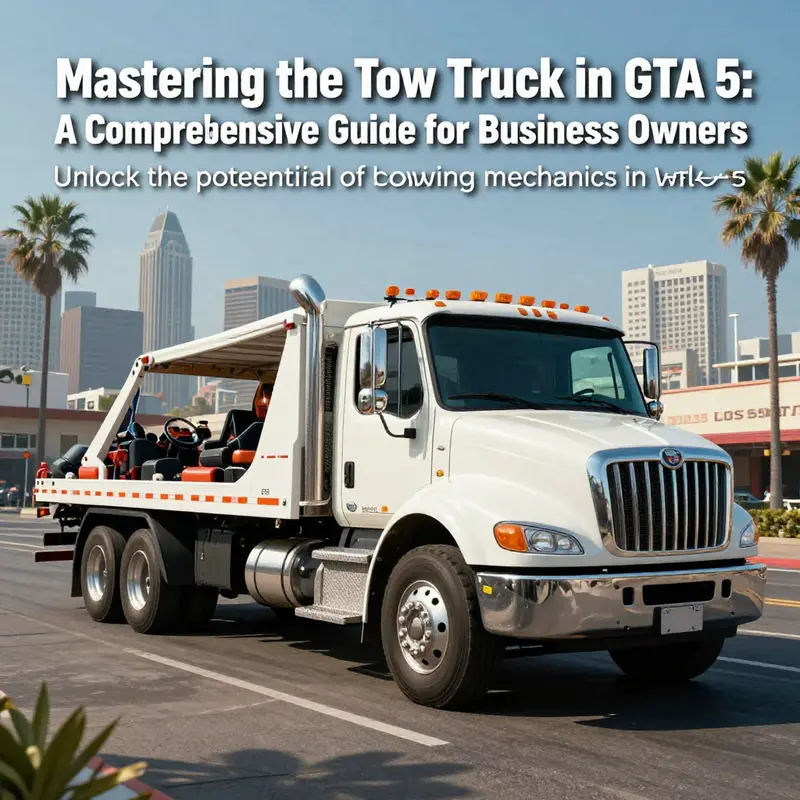
In the multifaceted world of Grand Theft Auto V (GTA 5), mastering the use of a tow truck can significantly enhance your gameplay experience, especially for business owners looking to optimize their operations. This guide dissects the entire process of effectively utilizing a tow truck, from finding the right vehicle to efficiently managing towing tasks. The skills acquired here not only serve individual players but can also contribute to business strategies, ensuring smooth operations and customer satisfaction in-game. Each chapter builds upon the last, providing a seamless transition into the nuances that can elevate your gameplay and in-game business practices.
From Street Corners to the Towed Line: Finding and Accessing a Tow Truck in GTA 5
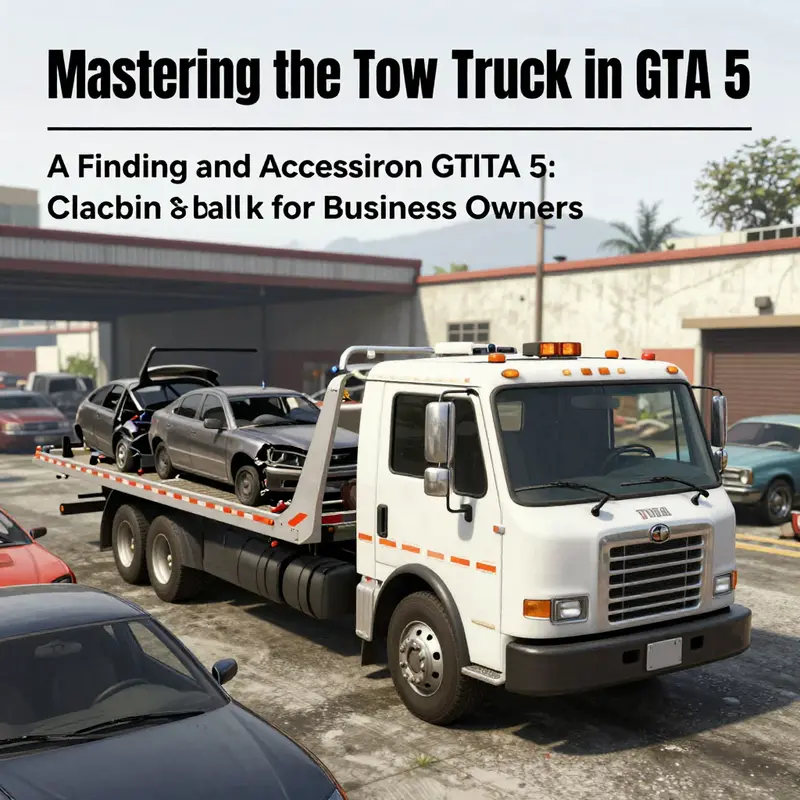
Tow trucks in GTA 5 are more than just a mechanical utility; they are a strategic tool that can reshape how you approach missions, escapes, and even the open world’s clutter of abandoned cars. The moment you realize you can pair a sturdy tow arm with a nimble, workmanlike chassis, you start seeing the city as a project in motion rather than a random scatter of obstacles. The core idea is simple: locate a tow vehicle, gain access, and position yourself so the hook can latch onto the target. From there, the road opens up to new possibilities, whether you are chasing a mission clock, extracting a car from a tight space, or simply reorganizing the chaos that fills Los Santos and Blaine County. What makes this tool effective is not just the mechanical process but the way it reframes how you think about space, speed, and control within the game’s sprawling map.
To begin, you’ll want to know where tow trucks tend to appear and how you can access them quickly when a timer is ticking or a target vehicle needs recovery. Tow trucks are dispersed across several practical locales. Auto salvage yards—think the industrial pockets near Paleto Bay and similar back-alleys—often host a ready-made workhorse. You’ll also spot them around police stations, garages, and industrial zones where heavy vehicles cluster. If you prefer a more direct approach, you can call one through the Vehicle menu on your phone in Story Mode or GTA Online, selecting the Tow Truck option to request a vehicle that will come to your location. In practice, this means you can either drive to a known yard to hop aboard a Mule or Pounder, or you can summon one if your timing requires a rapid deployment. In the online environment, there are even dealership routes and purchase options that give you reliable access to a tow vehicle when you need it most. This flexibility helps you plan your approach to any job, from casual car recovery to more complex mission logistics.
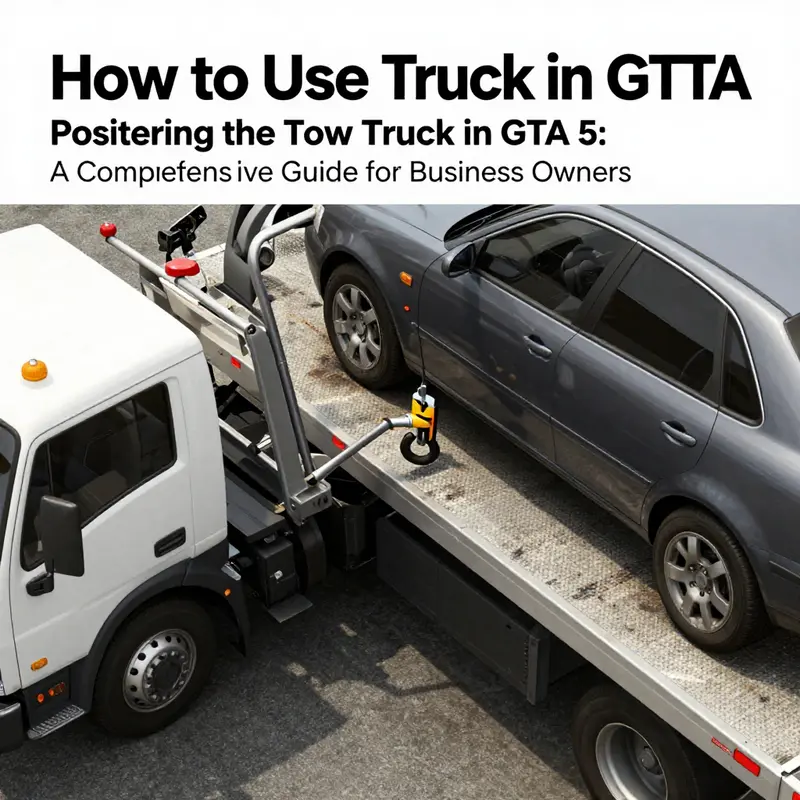
When you finally take seat behind the wheel, the next step is to position the tow truck correctly. The alignment is crucial. Drive behind your target car and ease into a line where the tow hook will connect to the vehicle’s rear bumper. The angle matters because a poor alignment can result in the hook missing or the towed car detaching mid-move. If the angle isn’t right, a careful reverse or a slight adjustment forward will bring the hooks into perfect range. This is where patience pays off; a brief pause to ensure the tow arm and the vehicle are in sync saves time and avoids the frustration of a late detachment in a busy street.
Acquiring the tow arm is the next practical moment. On PC, you’ll typically lower the tow arm with the Ctrl key and raise it with Shift, then adjust the arm height so the hook lines up with the vehicle’s towing point. In the console versions, the action mirrors this with the appropriate button, but the essence is the same: you are synchronizing your vehicle’s mechanical tool with the target’s intended connection point. Once you feel the alignment is solid, you’ll engage the hook. On PC, that’s commonly the Left Mouse Button; on consoles, you’ll press the corresponding shoulder button or trigger as indicated by your control scheme. When the hook latches, the game will provide an audible cue and a visible indicator that confirms a solid connection. This moment can feel almost ceremonial—the point at which the vehicle drops into a steady, controlled tow and you realize you’re no longer just driving a car but managing a small, working system on the road.
With the target secured, you’re free to drive and transport. The towed car will trail behind you, so you’ll want to keep a steady hand on the wheel. A careful, measured pace is essential; excessive speed increases the risk of damage to the hooked vehicle or detachment. Sharp turns and abrupt stops are the enemy of a smooth tow, so you’ll want to anticipate corners as if you were piloting a trailer. The tow truck’s handling—combined with the weight and drag of a second car—forces you to adapt your driving style, using smooth accelerator inputs and deliberate steering to maintain control. If the mission or route requires you to work in tighter spaces, lowering the tow ramp or adjusting your speed to fit the environment makes the task viable rather than risking a messy mishap.
Releasing the towed vehicle at the destination is your final critical move. Stop safely, then release the hook. On PC, you’ll use the designated release command, and on consoles, the equivalent button will disengage the tow arm. It’s wise to drop the car gently on the ground and move away before re-entering your vehicle. A moment of caution here helps prevent the towed car from sliding or colliding with nearby obstacles as you depart. The takeaway is simple: secure the tow, transport with care, and release with precision. As a practical rule, always ensure the hook is cleared before you exit the tow truck to avoid inadvertently leaving the car behind or damaging it in transit.
The real value of mastering tow trucks lies in the wider options they unlock. In more mission-focused contexts—whether you’re coordinating a pickup during a high-speed chase, shuttling vehicles for a heist, or simply cleaning up the streets to reduce police attention—the ability to move another car efficiently expands your tactical toolkit. In online play, enhancements like upgraded tow setups and more stable towing dynamics can further improve reliability and speed, allowing you to execute complex routes with confidence. To deepen your understanding of towing strategies, you can explore practical guides and community tips that translate real-world towing concepts into the game’s mechanics. For a broader sense of how players approach towing in GTA 5, this external guide offers detailed breakdowns and scenarios that complement the in-game practice you’re building here: https://www.ign.com/wikis/gta-5/HowtoTowaCarinGTA_5.
For players looking to connect this skill to practical gaming references outside the main GTA universe, consider a local perspective on vehicle handling in the real world as a way to sharpen instincts for towing dynamics. A useful internal resource to frame your in-game approach is one of the community-driven hubs that collects practical towing tips and experiences across varied playstyles. You can read through their guidance on how teams manage tow operations in expansive maps and how to think about space, leverage, and timing in complex settings at this internal link: tow trucks in Houston. The page, though rooted in real-world towing, offers a language of logistics—hook timing, load stability, and route planning—that resonates with the GTA 5 approach to tow operations and helps you translate a real-world mindset into the game’s workflow.
As you develop familiarity with the tow truck’s capabilities, you’ll notice that the driving dynamic changes the way you move through Los Santos. The hook introduces a new cadence to your routes, and the ability to plan around tow points—whether for a mission, a quick fetch, or a stealth-driven relocation—gives you a sharper sense of space and timing. The chapter you’ve just read is not only about the exact button presses and positions; it’s about cultivating a mode of play in which a tow truck becomes a steady partner rather than a mere asset. With practice, you’ll find that the towed vehicle becomes another tool in your kit—one that can be deployed to steady a chaotic street scene, help finish a mission on time, or simply demonstrate a patient, methodical care for the cars around you in the vast world of GTA 5.
null
null
Tow Truck Mastery in GTA 5: Driving, Hooking, Deliveries, and Mission Smarts
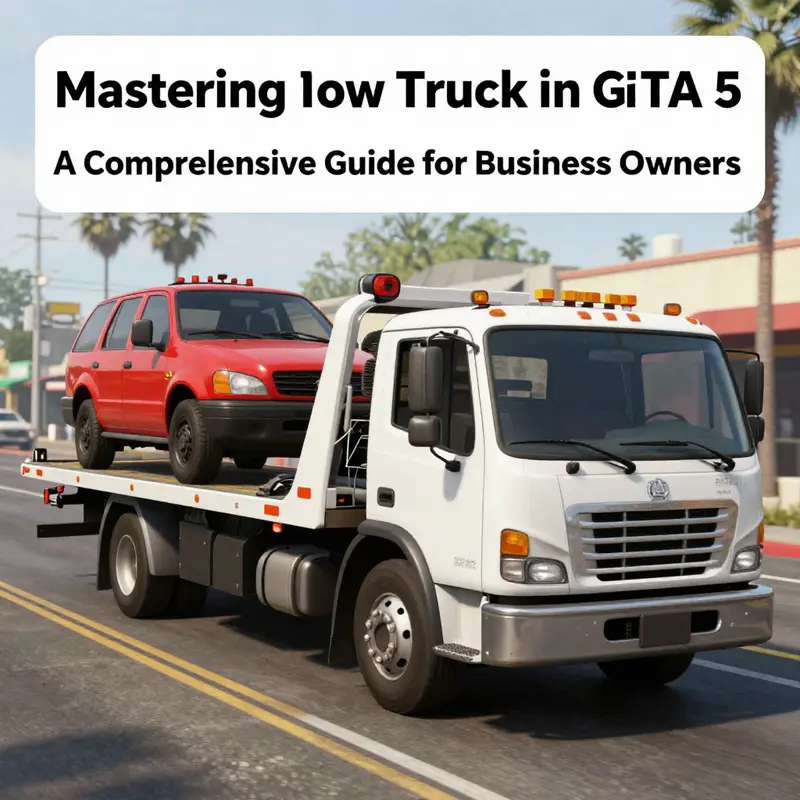
In Los Santos, the tow truck isn’t just a utility vehicle; it’s a tool that open doors to new ways of playing. The Wrecker, the archetypal tow vehicle in standard GTA 5 gameplay, becomes an extension of your decision-making on the street. Mastery comes from paying attention to how the hook, the vehicle, and the road work together. When you’re driving with a towed car, you’re not just moving a second object; you’re orchestrating weight, momentum, and spacing so that the haul holds steady through turns, escapes, or sudden stumbles of proximity traffic. The choreography is simple at its core: approach with purpose, connect with precision, transport with care, and release without drama. Yet every step demands a calm rhythm. The more you treat the hook like a delicate tool rather than a blunt instrument, the faster you’ll move through missions or quick-resolve everyday tasks with fewer setbacks and less risk of losing the towed vehicle to a miscalculated turn or a guardrail the moment you twist the wheel.
Locating a tow vehicle is the quiet start to this craft. Tow trucks appear in several places around Los Santos and Blaine County, including spots near auto salvage yards, garages, or industrial zones. In practice, many players also call a tow truck through the in-game phone menu when a direct nod to a random tow or a mission requirement surfaces. The Wrecker’s role is central because it’s built around a front-mounted hook, a feature you’ll come to respect as you learn the geometry of towing. Once you spot a Wrecker rolling by or parked in a lot, step into the driver’s seat and settle into a steady pace. The moment you slide behind the wheel, you begin a small, almost surgical task: align the hook with the target’s towing point, then draw the two vehicles into a secure kiss of metal and chain.
Positioning matters more than speed at this moment. The trick is to approach from behind and control your approach so the hook lines up with the target vehicle’s closest towing point. In many cases, you’ll want the front axle to be the anchor point. The Wrecker’s hook sits on the front bumper, so the alignment must be exact. If the angle feels off, ease off the throttle and back up a touch to adjust the line. The slower you go, the better you can visually judge the distance and the arc of the hook toward the axle. It’s a small, almost intimate moment of alignment that pays huge dividends once you commit to the tow. When you’re ready, lower the hook with the control you’ve learned. The control that lowers then raises the hook is the hinge that turns a potential drag into a controlled drag. Lower to meet the vehicle’s front axle, then raise only if you need more clearance for a clean hookup. When you feel the two pieces connect, you’ll hear a confirmatory cue and see a visual signal that tells you the job is locked in. Press the action button to complete the hook, and the towed vehicle will begin its reluctant dance behind you. From here, you’re managing more than a car; you’re controlling an extension of your own vehicle, with its own momentum and balance to be preserved.
Driving with a towed vehicle demands a prudent style. The towed car behaves like a heavy trailer, and the physics of that weight require restraint. Keep your speed moderate, especially in unfamiliar routes where the terrain could surprise you with sudden curves or bumps. Sharp turns or abrupt braking can yank the hooked car loose or disturb it to the point of tipping or fishtailing. Your mirrors, if you imagine them, become your listening devices for feedback—any odd tug, wobble, or misalignment is a signal to adjust tempo or angle. The tow line isn’t a rope you yank; it’s a tether that rewards smooth, deliberate action. If you need to take a detour, plan gradual curves, anticipate the need to slow well before intersections, and anticipate the moment when you’ll begin to decouple the driving rhythm from the towed weight. Those choices directly affect how soon you can reach a destination without incident.
Releasing the vehicle at your destination is the moment of quiet success. When you’ve reached your target location, bring the tow truck to a safe stop, and execute the release command with the same calm precision you used to connect. The hook lowers, the chain loosens, and the towed car settles onto the ground. It’s a relief not just because the mission progresses, but because you preserved the integrity of the vehicle you moved. A common pitfall is failing to release before you exit; the car can be left behind or suffer damage if you depart with the hook engaged. The ease of release makes this a practical, repeatable skill: align, connect, drive, release, and repeat. In time, you’ll find yourself using tow operations as a reliable method to complete missions that require moving cars to specific points, or simply to clear the way for more ambitious routes through the city’s labyrinth of streets.
Beyond the basics lies the tactical layer. In certain story missions the towing mechanic becomes a tool of timing, requiring you to move a target car within a tight window while maintaining the vehicle’s condition. In such moments, your attention to smooth acceleration and a measured approach to turns is what transforms a near-miss into a clean drop-off. In online play, players often explore more aggressive or enhanced towing setups, which involve careful selection of routes, pacing, and distance. Even when you’re not chasing a mission clock, storing a Wrecker in a secure garage makes sense; it protects your asset between jobs and prevents unwanted disruptions. If you want a practical example of how others think about towing in the wider community, you can explore how different players leverage their Wrecker to optimize routes and reduce downtime between pickups, exported into a broader practice of efficient mission execution. For a quick practical reference, you can check out a dedicated resource that covers towing specifics and field tips in more detail, such as the Mikes Wrecker page, which you can visit for general guidance on heavy towing practices. Mikes Wrecker
If you’re curious about additional insights or verification of the core mechanics, the official guidance from the game’s creator offers a concise summary of the controls and the intended workflow: find a tow truck, position and hook, drive, and release. This guidance confirms the essential steps and emphasizes the reliability of the hook mechanism when aligned correctly. It’s a reassuring reminder that, with practice, towing becomes not just a means to an end but a reliable craft within the larger toolkit of GTA 5. For players seeking more external validation or a broader technical overview, the official support resource provides current details and troubleshooting tips that keep pace with updates and patches to the game. See the Rockstar Games Support page for the most accurate guidance on how to use the tow truck in GTA 5. https://support.rockstargames.com/hc/en-us/articles/360048795872-GTA-5-Tow-Truck-How-to-Use
Final thoughts
Mastering the art of towing in GTA 5 is not just about maneuvering a truck; it speaks volumes about strategic planning and execution—especially for business owners. As you apply the knowledge gained through this guide, remember that each step from locating and accessing a tow truck to positioning it correctly and handling subsequent missions enhances your in-game reputation and operational efficiency. Embrace these techniques, and you will not only bring greater success to your gameplay but also enjoy navigating the thrilling world of GTA 5 with confidence and purpose.