
For business owners in the towing and recovery sector, understanding the costs associated with tow trucks is crucial. As this industry grows, so do the complexities of financing the right equipment. An informed choice can greatly affect profitability and operational efficiency. In the chapters that follow, we will delve into the diverse price ranges of various types of tow trucks, emphasizing how features and specifications contribute to their costs. Additionally, we’ll explore the key factors impacting tow truck prices, including brand preferences, towing capacities, and other expenses involved, providing a holistic view to aid your decision-making.
Tow Trucks Under the Microscope: A Practical Cost Guide for Heavy-Duty Recovery
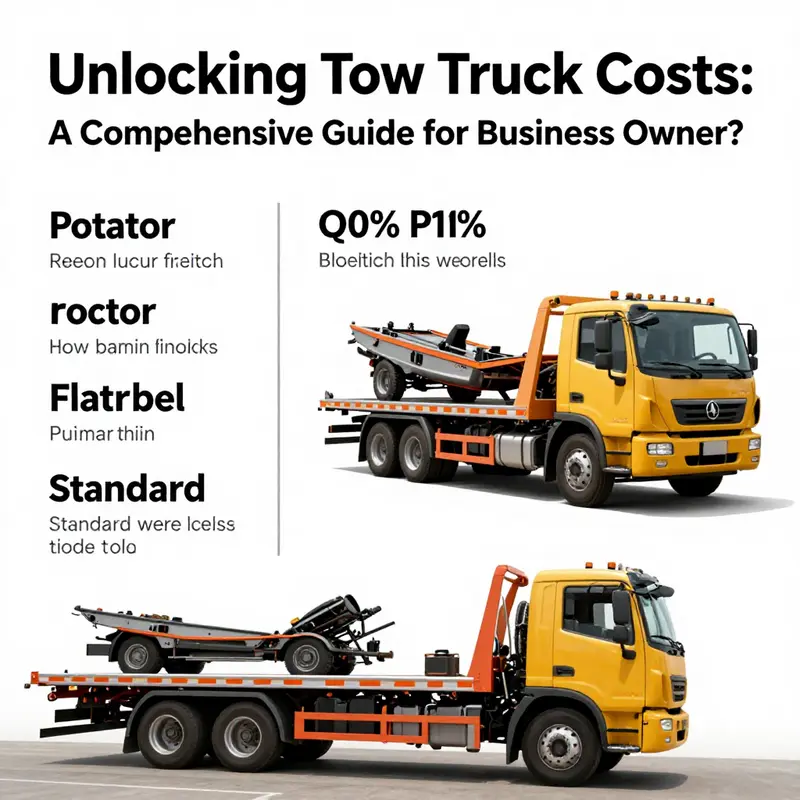
Pricing for tow trucks varies by configuration, payload, and features, and total cost of ownership matters as much as the sticker price. Rotators sit at the high end due to lifting power, hydraulics, and operator training, often with six-figure price tags. Flatbeds offer broad vehicle compatibility with typically lower upfront costs, depending on bed length, winch capacity, and configuration. Conventional wreckers sit between these extremes, with pricing driven by winch strength, chassis rating, and added options. Beyond base price, buyers should consider maintenance, insurance, fuel use, and how well a truck integrates with dispatch and fleet systems. A practical approach is to select a configuration that matches the expected workload, request quotes that break out base price, equipment specs, shipping, warranty terms, and after-sales support, and compare apples to apples across models. In local markets, price signals reflect service networks and parts availability, so include total cost of ownership in your decision.
Beyond the Sticker: Reading the Real Cost of Tow Trucks Across Types, Gear, and Maintenance
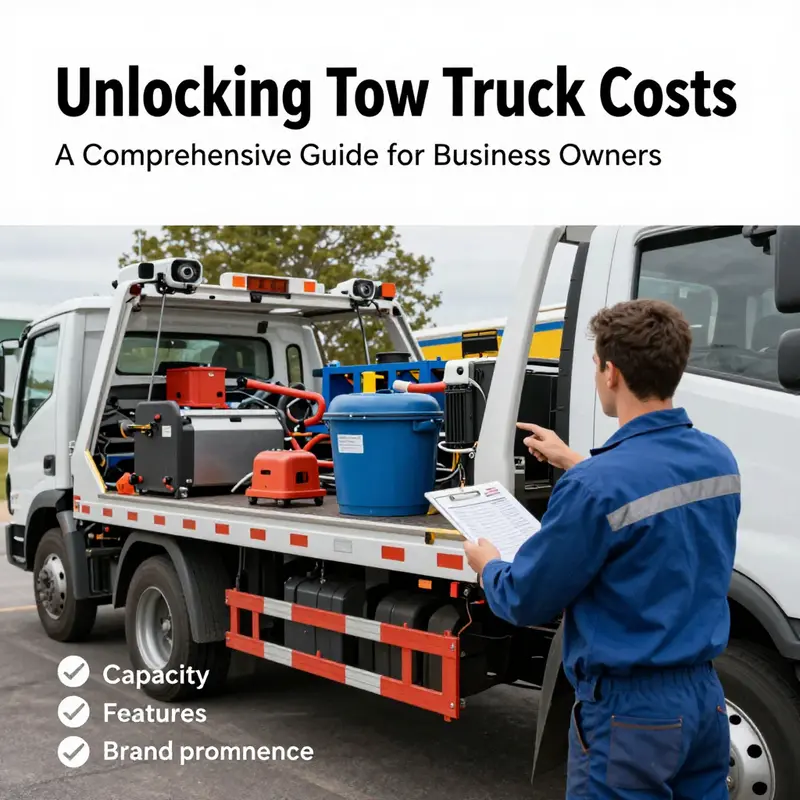
A tow truck is not just a vehicle; it is a compact, purpose-built system that blends hydraulics, motors, electronics, and safety systems into a mobile repair shop on wheels. When prospective buyers or fleet managers ask, “How much does a tow truck cost?” the instinct is to name a price tag. Yet the sticker price is only the opening chapter in a longer story. The true cost emerges from a convergence of vehicle type, the gear loaded onto the chassis, and the ongoing expenses that keep a tow operation reliable and compliant. The first reality is that different jobs demand different machines. A flatbed tow truck, with a hydraulically tilting bed, is priced lower than a specialized rig but excels at moving vehicles with minimal risk of damage. It is the workhorse for cars with low clearance or those that have been damaged in an accident. The flatbed’s cost range generally sits in a broad middle ground, roughly from seventy thousand dollars up to about one hundred fifty thousand, depending on bed length, winch capacity, and ancillary options. By contrast, a traditional wrecker, often equipped with a robust front boom and a set of stabilizers, carries more complexity. These units are designed to pull and tow larger vehicles, and their initial price reflects that capability. The spectrum here can be surprisingly wide. In many markets, a standard heavy-duty wrecker begins well above forty thousand dollars and can rise quickly with heavy-duty hydraulics, electronics packages, and enhanced recovery tools. Then there is the rotator—arguably the apex of towing technology in the field. A rotator’s 360-degree rotating boom, a feature that allows operators to upright and reorient overturned or hard-to-reach vehicles on scene, commands a premium. The price tag for rotators can begin around one hundred fifty thousand dollars and climb past two hundred thousand, sometimes well beyond three hundred thousand for high-end, highway-critical configurations. The practical takeaway is simple: the more complex the maneuvering demands, the higher the upfront investment. Yet even these numbers only frame the purchase. The long view of cost includes equipment life, maintenance, fuel, insurance, and parts availability. For a fleet, the expense ledger must consider uptime. A unit that sits idle waiting on a failed winch or a dead hydraulic pump costs more in lost service than a modestly more expensive machine with dependable parts and solid service support. Maintenance costs, especially for specialized components like booms and rotators, can be higher than those of a standard flatbed. Parts availability matters too. In global supply chains, a common motor or hydraulic component may be readily swapped, while a specialized rotator cylinder or a unique wiring harness could stretch repair times and budgets. The origin of the chassis and equipment also plays a role. Chinese brands, among others, offer a spectrum of options with competitive factory prices. A basic flatbed wrecker built to standard specs might originate in markets where pricing starts at surprisingly approachable levels. While these lower-priced options can be attractive, buyers must weigh long-term reliability, dealer support, and the availability of spare parts in their region. It is not merely the purchase price that shapes total ownership costs. Ongoing expenses often exceed the initial outlay over the life of the vehicle. Maintenance is a constant companion in this line of work. Hydraulic booms, winches, and outriggers demand routine inspection and timely lubrication. Wear parts like cables, straps, and hydraulic seals contribute to recurring costs that add up over time. Fuel economy also matters, especially for operators with large fleets or long daily routes. Heavier machines with more powerful engines deliver brute recovery capability but consume more fuel, a cost that must be factored into every shift. Insurance is another variable. The more capable a machine, the higher the premium to cover its use in traffic, on the highway, and within potentially hazardous recovery scenes. Age and mileage can push premiums higher, even for well-maintained rigs. Repair costs are a related concern. The availability of parts—whether from a global supplier or a regional dealer—can determine how quickly a failed component is replaced and how expensive the fix is. Advanced equipment, while delivering value on the road, often requires specialized service centers and trained technicians. For operators building a business case, this means calculating a maintenance budget that accounts for periodic overhaul of the hydraulic system, replacement of worn cables, and the potential need for calibration of electronic control modules. The decision to purchase new versus used further shapes the cost narrative. A new unit offers the latest safety features, the longest expected life, and the strongest warranties. A used unit may present a lower upfront price, but it can come with higher maintenance demands and the risk of hidden wear. For many buyers, a balance is found in mid-life equipment, where the price is more palatable while reliability remains high enough to sustain an aggressive service schedule. It is also essential to consider the value of upgrades and customization. Operators frequently add safety gear—cones, vests, flares, highway boards—and invest in communication systems, light bars, and dispatch integration. Each accessory has a price tag, but it also yields tangible gains in on-scene efficiency and safety. The cumulative effect of these enhancements can push a unit’s total cost well beyond the base price, yet the incremental gains in uptime and payload protection can yield favorable returns over time. In evaluating costs, buyers should not overlook currency and logistics. For international buyers, freight, customs, and delivery timelines can alter the bottom line substantially. A small flatbed ordered from a distant supplier must include transportation and potential import duties in its true cost. Even within domestic markets, regional taxes, registration fees, and licensing requirements contribute to the fiscal picture. For readers seeking to anchor their estimates in real-world pricing, a practical approach is to gather multiple quotes that break out the base price, equipment specs, and shipping or delivery terms. Platforms that connect buyers with verified suppliers can help, but diligence remains essential. A detailed quote should itemize base price, equipment configuration, winch capacity, bed length, rotator features (if included), safety gear, lights, communications, and the exact terms of delivery. As a rule of thumb, the most cost-effective path is to align the machine’s capabilities with the expected workload. A fleet that tackles mostly car-to-car recoveries may fare better with a durable flatbed and thoughtful safety gear, while a high-volume lot that regularly handles wrecks on busy highways may justify the premium rotator for faster, safer recoveries and reduced scene time. When exploring options, it is worth a moment to consider how a manufacturer’s or dealer’s support network will influence lifecycle costs. Proximity to service centers, availability of spare parts, and the willingness of a supplier to offer maintenance plans can translate into real dollars saved or spent. For readers who want a tangible starting point in budgeting, there are practical steps. Define the average daily workload, the typical recovery scenarios, and the vehicle mix most often encountered. Translate that into required winch capacity, bed length, and engine power. Then build a two-column cost model: one for the upfront purchase and one for ongoing operations. This approach illuminates how a seemingly modest difference in chassis design or equipment package can cascade into meaningful differences in annual expenses. In closing, the cost of a tow truck reflects a blend of capability, reliability, and long-term care. The sticker price is the first chapter; the rest unfolds in maintenance, fuel, insurance, and the ability to keep the fleet on the road. For readers seeking a quick, budget-conscious touchpoint, an option to consider is a cheaper towing service in Houston TX, which can be explored here: cheap towing service in Houston TX. For those aiming to deepen their understanding of ownership costs and how they compound over time, a thorough external resource provides a comprehensive guide: https://www.towtrucks.com/ownership-costs-guide
Final thoughts
Acquiring a tow truck necessitates a thorough evaluation of both direct costs and the multifaceted factors affecting pricing. By understanding the different price categories for various types of tow trucks and the underlying reasons for these costs, business owners can make strategic decisions that align with their operational goals. This knowledge empowers you to invest wisely, ensuring your towing service can meet customer demands effectively and maintain a competitive edge in the market.