
For business owners, understanding the nuances of service-related interactions can significantly impact customer satisfaction and operational efficiency. Among the myriad services frequently employed by companies, tow truck services often encounter confusion regarding tipping etiquette. While tipping is not a common norm for towing in the United States, knowing when and how to tip a tow truck driver can reflect positively on your business reputation. This article explores the fundamental considerations of tipping a tow truck driver and the various factors that influence this decision. The first chapter will provide a clear framework for determining whether a tip is warranted, while the second chapter discusses the specifics that may merit a tip, thereby enabling you to make informed decisions in stressful situations.
To Tip or Not to Tip: Navigating Gratitude When a Tow Truck Arrives
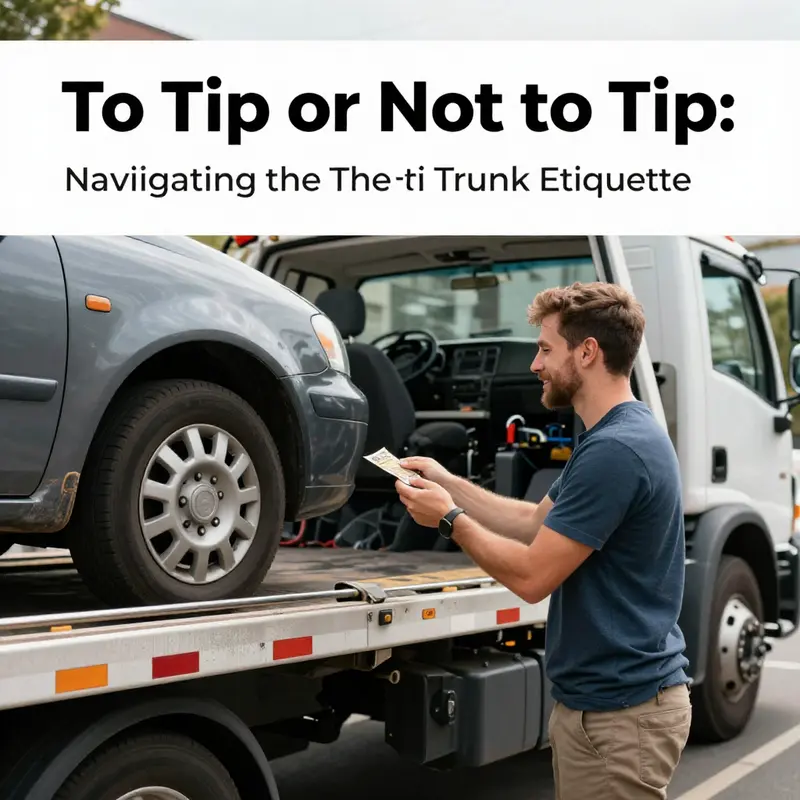
When a tow truck rolls into view on a frayed stretch of highway or a rain-slick street, the scene carries a charged mix of urgency, fatigue, and relief. You’re not just handing over payment for a service; you’re acknowledging someone who appears at your most exposed moment, when time feels thin and options feel limited. In these moments, many people wonder whether tipping is required, appropriate, or even possible. The practical answer is straightforward: tipping is not expected for standard towing jobs in most parts of the United States, because the driver’s labor is included in the job price and the company’s compensation structure already accounts for the work. Yet the human element of the encounter can invite a gesture of appreciation when the service feels exceptional. The car might be in a precarious position, the weather uncooperative, or the driver might go the extra mile in a way that changes the quality of the experience. In such cases, a small tip is not only acceptable but a meaningful way to signal gratitude for a job well done. The question, then, becomes how to read the moment and act with both generosity and discernment, without turning a routine rescue into a social minefield on the roadside.
The broader context matters here. Tow operators are professionals who run a business and must balance safety, efficiency, and customer care. Most companies price a tow to cover the cost of the tow and the driver’s time, experience, and equipment wear. In other words, a standard tow already carries compensation for the service delivered. There is no universal rule mandating a tip, and several factors can shift the expectation in practice. Local customs vary, and company policies may shape what customers feel free to do. Some regions have expressed discouragement about tipping due to insurance or liability concerns, while others view a tip as a straightforward and welcome token of appreciation for assistance that reduces stress and accelerates resolution. The reality is nuanced: tipping is optional, situational, and deeply personal, dependent on how the encounter unfolds and how it aligns with your values about generosity and fairness.
When the moment calls for extra appreciation, it’s useful to anchor your judgment in concrete observations about the service. Did the driver arrive promptly, especially after you describe an emergency or a hazardous location? Did they handle the vehicle with care, avoiding further damage or risk to nearby people and property? Perhaps they offered practical help beyond the minimum, such as checking fluids, inspecting tires for safety concerns, or providing clear, calm guidance about what comes next. Maybe they went out of their way to reassure you in a tense moment, explaining the towing process in plain terms, or helping you contact your insurance company or a trusted mechanic. These are the kinds of actions that elevate the experience from routine to commendable. In such cases, a tip becomes less about obligation and more about recognizing an earned effort—a sign that you noticed extra care and wanted to express gratitude beyond a thank-you note that disappears in traffic noise.
If you decide to tip, the amount commonly suggested in everyday practice is modest: typically between five and twenty dollars. The precise figure should reflect your satisfaction with the service and the particular circumstances of the call. A straightforward tow under normal conditions might justify a smaller amount, while a complex situation could merit more. Consider distance traveled, time spent, and whether the job required unusual effort in difficult conditions. Lengthy distances, towing through heavy rain or snow, or a scenario that involved specialized handling to avoid damage or injury can justify a higher tip. More important than the exact sum is the sense that the driver’s extra effort is acknowledged. A tip within the five-to-twenty-dollar range can communicate thanks without burdening you beyond what your budget allows, and it can be delivered discreetly so the driver does not feel pressured to perform a performance of gratitude in return.
There is also a practical framework to guide decisions about tipping: check local customs and, importantly, review any company policy before you hand over cash. Some firms have explicit guidelines that discourage tipping because of insurance or internal compensation structures. Even when tipping is allowed, a driver may refrain from accepting a cash tip or request that tips be given to the company instead. In these situations, you can still express appreciation through non-monetary means. A sincere, respectful thank-you in the moment can be followed by sharing positive feedback with the company via a review, a social media post, or a formal compliment. A thoughtful note about the driver’s professionalism or the way they explained the process can resonate longer than a single cash exchange, reinforcing a service culture that values care as well as speed. If you’re curious about prevailing norms in your region or a specific company, a quick call to the dispatcher or a look at the firm’s site can clarify whether tipping is welcome, discouraged, or restricted by policy. The goal is to arrive at a conclusion that respects both your values and the business rules that govern the service you received.
In integrating this approach into everyday life, consider how you want to treat the delivery of aid in moments when fear and frustration are high. The social dynamics of tipping can become complicated when a driver arrives in the middle of personal chaos—a car that won’t start, a child in the backseat, or an incident that has left you shaken. In such moments, a tip should feel like a personal choice, not a performance designed to elicit a certain response. It should reflect the reality of the assistance provided rather than a sense of obligation embedded in a social script. If you are simply grateful for the driver’s efficiency or for minimizing the potential damage to your vehicle, a modest tip can be a natural extension of that gratitude. On the other hand, if the service was timely, respectful, and thorough but still within standard expectations, a heartfelt thank-you and a well-placed review may be the more appropriate forms of acknowledgment.
The way you bridge generosity with practicality matters too. If a tip is not possible—for budgetary reasons, policy constraints, or a driver who explicitly declines tips—there are still meaningful ways to show appreciation. Verbal thanks delivered with calm sincerity can go a long way, especially when delivered in a respectful and nonpublic manner. A driver who recalls a client’s courtesy, patience, or clear communication long after the tow is completed may be more positively inclined toward future recommendations in a local network, which benefits everyone in the long run. Another impactful option is to provide constructive feedback through the company’s official channels. A well-crafted review highlighting the driver’s professionalism can influence future clients and help the company understand what succeeds in real-world scenarios. If you want to orient your gratitude around local service norms, you might look into how nearby providers approach tipping and what generic etiquette looks like in your area, as well as how discussions with friends or neighbors shape expectations.
For those who want a sense of how local practice might diverge from broader norms, it can be useful to consider a regional perspective. In some urban centers, where tow operations are frequent and highly standardized, tipping remains a straightforward gesture of appreciation for exceptional service. In smaller towns with fewer service options, drivers may be more accustomed to informal gratitude and may respond positively to a discreet, polite gesture or a short note left with the dispatcher. Regardless of locale, the overarching principle remains clear: tipping is not mandatory, but it can be a courteous acknowledgment when the service exceeds ordinary expectations. If you’re curious about how this plays out in a specific market, you can explore a local provider’s page to understand their policies and to get a sense of what clients in that area typically do. For instance, those seeking local context can read about the broader approach to roadside assistance and towing on a nearby provider’s site, which offers a practical lens on how communities consider tipping in real-world situations.
As you reflect on the moment and decide how to respond, there is also value in recognizing the broader function of tipping as a cultural practice. It is not merely a monetary transaction; it is a form of social signaling that signals appreciation, trust, and solidarity with someone who has taken on risk to help you. The person behind the wheel is often balancing safety, efficiency, and customer communication while navigating the hazards of an emergency. A tip, when given, should feel proportional to the care shown and the alignment with your needs at that moment. If you feel unsure, you can rely on a simple rule of thumb: tip only when you genuinely feel that someone has exceeded the baseline service, and keep in mind that the absence of a tip does not reflect a personal failure on the part of the driver. It simply means the service met your expectations without extra indulgence, and that is a fair assessment in many ordinary towing interactions. The key is to avoid creating awkwardness or pressure. A calm, respectful interaction—whether a tip is given or not—conveys the idea that gratitude is about the quality of the service, not about performing a social ritual on the roadside.
For readers who want a concise reference point as they navigate future incidents, remember that tipping remains a discretionary gesture. It is best used when the service demonstrates outstanding care, when the call was particularly stressful or difficult, or when the driver invested extra time to ensure your safety and peace of mind. The choice should align with your personal budget, the company’s policy, and the broader local etiquette you observe in your community. If you want to explore local perspectives on towing services and related roadside assistance, you can consult resources that reflect the regional norms and practices in your area. When a long drive and careful handling intersect, a tip can feel like a natural language that says, “I value your careful service.” But when the service is solid and straightforward, a sincere thank-you and a brief positive note can be equally powerful.
In the spirit of anchored understanding and practical guidance, this chapter connects with broader conversations about how we express gratitude in everyday service encounters. It invites readers to balance courtesy with policy, to read a scene with empathy and judgment, and to recognize that the right gesture—whether monetary or verbal—depends on the specific dynamics of the moment. If you want a sense of how these norms play out in your region, consider the local landscape of towing services and their documented experiences with customer expectations. The road to a respectful resolution often runs through clear communication, thoughtful timing, and small acts of appreciation that reinforce trust between driver and client. As you prepare for the next roadside moment, carry with you a flexible approach: tip when warranted, thank openly when possible, and remember that the core aim is to acknowledge help in a world where many hands arrive just when they are needed most. For more information on towing practices and customer expectations, you can refer to the official guide from the American Automobile Association (AAA): https://www.aaa.com/autorepair/towing-services. Additionally, if you want to explore a local perspective on towing services and roadside assistance in your area, you can look into resources related to towing services in Houston.
Gratitude in Motion: Navigating When and How Much to Tip a Tow Truck Driver
When a car breaks down and a tow truck pulls into view, the moment shifts from uncertainty to a decision about gratitude. Tipping is not universally expected, and it is rarely built into the quoted price for a tow. Yet the gesture remains an accessible way to acknowledge a driver who has steadied a tense situation, protected your vehicle, and helped you regain a sense of control. This chapter explores how to navigate that gesture with fairness, clarity, and a touch of personal judgment, all while staying grounded in real world practice rather than abstract idealism. The core idea is simple: tipping should reflect the service you received, not the service you were promised to receive, and you should always consider the local custom, the company’s policy, and your own budget before you decide how much, if anything, to give.
Most standard towing services price the job to reflect labor, fuel, equipment, and time. In many places, a driver is paid a flat rate or an hourly wage by the company, regardless of whether the tow is a quick pull onto a flatbed or a longer haul to a shop. In that sense, tipping is not required, and many drivers do not expect it. That said, the service you receive can vary widely from one call to the next. When a driver arrives promptly in an otherwise jammed weekday scene, when they handle a tightly constrained recovery with calm precision, or when they volunteer practical help—like offering a lane change suggestion to keep traffic flowing or confirming a safe way to unlock the vehicle’s doors—the human element becomes a meaningful part of the experience. In such moments, a tip can feel like a natural extension of appreciation rather than an obligation carried by debt or guilt.
The mechanics of tipping, however, are more nuanced than a simple rule. One guiding principle is to base the amount on the level of service. Exceptional behavior deserves special recognition. A driver who communicates clearly, stays patient under stress, and maintains a courteous demeanor earns extra goodwill, even if the tow itself was routine. This is not about inflating a bill for a job that you already paid to have completed; it is about acknowledging a standout level of care within the limits of your own finances. The range of $5 to $20 is a common rule of thumb in many parts of the United States for such gestures. In tighter spots or more challenging conditions, a higher tip may be appropriate if the driver went beyond the call of duty. For example, if the vehicle was wedged in a tight space or on a steep incline and the driver took extra care to avoid damage, many people feel a greater obligation to show gratitude. Similarly, if the incident occurred in harsh weather, or if the driver spent additional time to help locate a nearby repair option, the value of your appreciation can rise in tandem with the effort involved.
Beyond the immediate service level, the length and complexity of the tow can shape tipping decisions. A short, straightforward tow that takes twenty minutes might justify a modest tip, while a longer, more complex haul—perhaps involving a vehicle from a precarious position or one that requires multiple hookups and careful maneuvering—can justify a more generous gesture. The thought here is proportionality. When the job consumes more of the driver’s time and skill, a larger token of thanks is a reasonable expression of gratitude. Yet even in longer tows, you should keep in mind your own limits and the fact that the payment for the service has already been settled in the contract or by the insurer in the case of an accident, if applicable. A tip is a personal addition to an already compensated service, not a substitute for fair pay.
Regional norms also play a decisive role. Tipping customs vary by area, reflecting local cultures, traffic patterns, and the prevalence of roadside services. In some communities, tipping tow drivers is routine and widely expected as a sign of appreciation; in others, it is less common and sometimes discouraged by company policies or insurance frameworks. Reading the room at the scene matters as much as the bank account does. If you are in a region where tipping is customary, a tip can be a meaningful acknowledgment even for a good standard job. If you are in a place where tipping is rare, acknowledge the driver with direct thanks and focus on other forms of appreciation if you cannot or do not wish to tip. The guiding rule remains: do what feels sincere and appropriate given the circumstances, not what you think should be done according to a universal script.
Personal judgment is the final variable in the tipping equation. The decision to tip is not a moral test you pass or fail based on a single action; it is a reflection of gratitude for the person you encountered and the situation you faced. If a driver demonstrates warmth, patience, and respect during a tense moment, your sense of appreciation may be heightened. Conversely, if the encounter feels rushed, dismissive, or unsafe, your instinct might be to withhold a tip or to offer feedback through the company’s formal channels rather than risk rewarding poor conduct. In practice, most people use tipping as a way to say thank you—an optional, human gesture that sits on top of a service that is already paid for. The result is not a hard rule but a spectrum of possible responses, calibrated to the moment and the wallet.
Another practical layer involves the policy realities of the company you engage. Some organizations explicitly prohibit tips due to internal policy, insurance, or conflict of interest considerations. Others encourage gratuities as a way to recognize extra effort. If you are unsure about a company’s policy, a quick, respectful inquiry at the outset can prevent awkwardness later. This is particularly important in emergency scenarios—where a driver arrives during a high-stress moment or when there is a power outage of a kind on a dark highway. In those situations, a driver may go above and beyond with the same efficiency you expect from any professional service. If you discover a policy that discourages tipping, you can still express appreciation through a public review, a thank-you note to the dispatcher, or a direct compliment to the supervisor. Appreciation can travel in many directions and shapes, and a well-timed compliment can help improve service quality for others in the future.
The practical act of tipping itself has its own etiquette. Cash remains the most direct and universally accepted form of gratuity, especially when you have finalized the payment on the spot. If you choose to tip, place the money discreetly in the driver’s hand or in a small envelope, with a brief note if you wish to convey specific thanks. In some cases, a tip can be given after the job is complete, once you have had a moment to reflect on the service and confirm that no damage occurred. This timing respects both the driver’s effort and your own sense of closure after a stressful incident. It also preserves the impression that the tip is earned, not expected, which aligns with the broader ethics of service gratuity. If cash is uncomfortable, some drivers will accept a tip via digital payment, provided the company permits it and the driver agrees. In any case, a clear expression of thanks often means as much as the tip itself.
For readers who want to explore how local providers frame their offerings in real time, consider how a nearby tow service presents its approach to roadside assistance. If you want a sense of regional service options, you can explore a practical example through our Houston area page that highlights how local teams present their capabilities and respond to the community needs. This link offers context for how to compare experiences across providers while staying focused on the tipping question itself: towing service in Houston.
Ultimately, the choice to tip a tow truck driver rests on a balance of service quality, job difficulty, regional norms, and personal values. Tipping is not a requirement, but it is a simple, human gesture that can reinforce positive interactions and support fair compensation for a driver who has helped you move forward when you needed it most. The most important takeaway is this: approach tipping with fairness, awareness of policy, and an honest read of the moment. In the end, your gratitude is a personal message—delivered in cash, in words, or in a review—that honors the effort someone invested to help you regain your footing after a roadside setback.
For readers seeking a broader framework on towing etiquette and best practices, the American Automobile Association provides a comprehensive guide on towing tips that can help frame your expectations and decisions in a practical, reputable context. This external resource serves as a helpful reference as you decide how to respond to future roadside needs. https://www.aaa.com/automotive/towing-tips
Final thoughts
As a business owner, cultivating great relationships extends to all service providers, including tow truck drivers. While tipping may not be mandatory, taking a moment to evaluate the service received can foster goodwill, enhancing your brand’s reputation. When in doubt, consider the quality of service provided and the specific circumstances of your situation. Therefore, maintaining a flexible approach ensures you and your business are seen as appreciative and supportive, ultimately resonating positively with your customers and partners alike.