
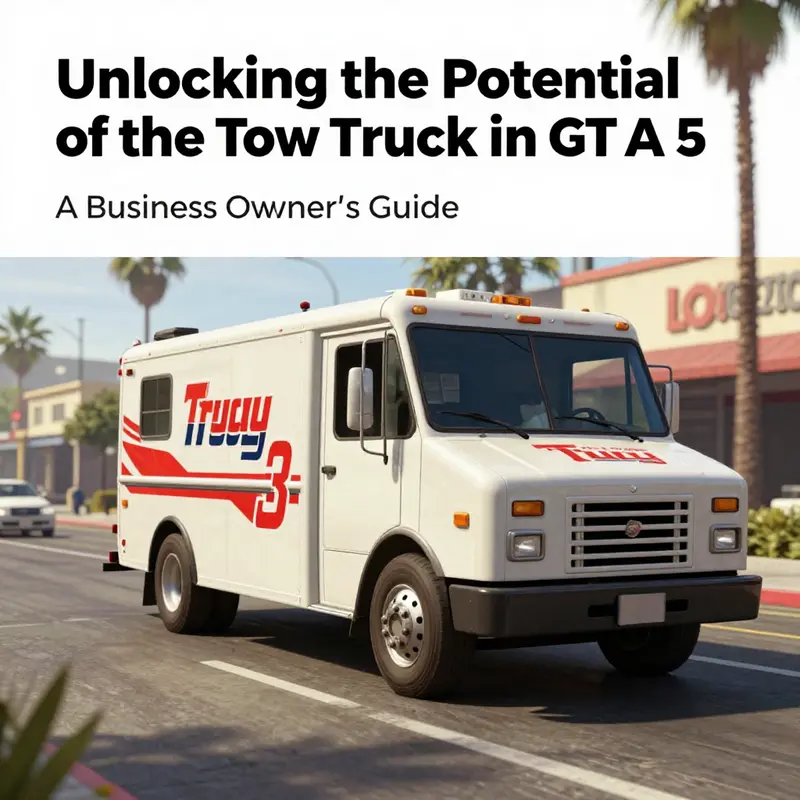
In the bustling world of GTA 5, where business owners often require reliable transportation and heavy-duty hauling capabilities, the Tow Truck stands as a vital asset. This article dispenses essential insights into locating this valuable vehicle within the game and explores its multifaceted usage for business needs. As we delve into each chapter, readers will uncover the best strategies for finding the Tow Truck in Los Santos and the optimal modifications to enhance its performance, ensuring that players can effectively manage missions and maximize their potential profits.
Tow Lines Across Los Santos: Locating and Accessing GTA 5’s Tow Truck
In the sprawling urban sprawl of GTA 5, the tow truck emerges as more than a bulky utility vehicle. It’s a dependable workhorse that balances practicality with quiet efficiency. Players quickly learn that this machine isn’t just about clearing wreckage or hauling cars; it’s a tool that can streamline transport, support cargo runs, and steady the pace of missions when speed and reliability matter most. The way you locate and deploy a tow truck changes with the mode you’re playing. In the single-player world, the tow truck has a fixed, almost strategic residence in the city’s fabric, while in GTA Online, the same vehicle becomes a function of roles, menus, and the larger economy that governs your business empire. This shared thread—that the tow truck is both a vehicle and a service option—anchors understanding across the chapter and keeps the focus squarely on how to access it when you need it, where you need it, and with the minimum friction possible.
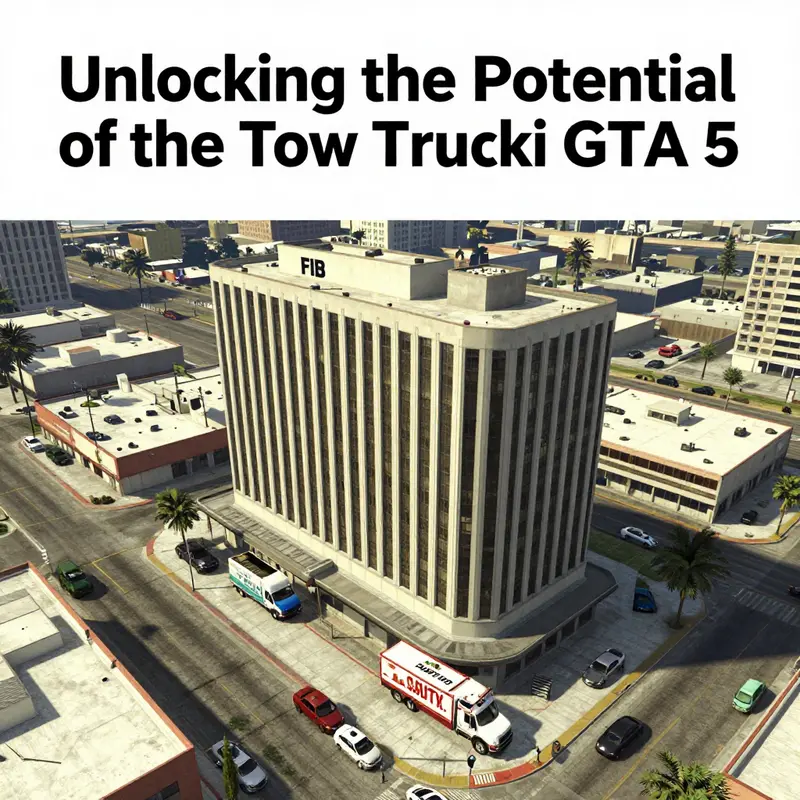
Finding the tow truck in the heart of Los Santos is a practical exercise in mapping the city’s key landmarks to the utilities you want. The most reliable, straightforward sighting for players who are exploring the world is the FIB building in downtown Los Santos. This is not a random encounter or a rare spawn; the tow truck is parked outside the main entrance, typically near the front steps or along the adjacent curb. The building sits at a busy crossroads, near the intersection of Lone Pine Boulevard and West Wall Street, a spot that underscores the vehicle’s purpose: a ready-to-go hauler that can be summoned or wheeled into service as soon as you arrive. The scene is not glamorous, but it is functional. The truck’s presence outside a government complex also adds a layer of realism to the game’s economy of work and response, a reminder that Los Santos rewards efficiency and preparedness as much as it rewards daring driving.
Beyond the map’s geography, what makes the tow truck genuinely useful is its core capability. In both modes of play, it offers a steadfast towing capacity and a durable frame that can stand up to the rigors of quick pickups and heavy loads. In the single-player context, that translates into a dependable option for quick transport when your itinerary requires hauling a vehicle from one corner of the city to another or repositioning a car for a mission brief. It’s the sort of everyday tool you come to rely on when nothing else feels quite as sturdy. In GTA Online, the truck’s practical edge is magnified by the role-based permissions players can earn through business management. The tow truck becomes a credible choice for freight contracts and cargo runs, especially when you tune it with performance upgrades—turbocharging, enhanced suspension, and other enhancements that shift it from a straightforward hauler to a versatile workhorse capable of meeting the demands of fast-paced, logistics-heavy tasks. The beauty of this setup is that the vehicle’s utility remains intact across modes: you gain efficiency in both your free-roam adventures and your carefully scripted business operations.
A practical tip emerges quickly as you move between the world’s two primary modes: time matters. For players pursuing time-sensitive missions such as Freight Cargo contracts, there is a tangible advantage to using hillside shortcuts to reach the freeway after grabbing the tow truck. The city’s topography offers a few routes that cut travel time and keep you out of the densest traffic, enabling you to reach drop-off points with a minimum of delays. This is not just about speed; it’s about maintaining momentum. A well-chosen route can be the difference between a contract that pays out smoothly and one that drags on, where delays become costly in both money and reputation. The hill shortcut approach is a small but meaningful reminder that strategy in GTA 5 often comes down to choosing the most efficient path through an otherwise sprawling and chaotic cityscape.
Turning from the fixed geography of the single-player map to the streamlined mechanics of GTA Online reveals a different kind of accessibility. Here, the tow truck can be summoned directly through the game’s Interaction Menu, but only under specific conditions. If you are a CEO or an MC President, you can access the menu and navigate to Vehicle > Service Vehicle > Tow Truck. The game will then spawn a tow truck near your current location, effectively removing the need to search the open world for a parked unit. This instant-spawn feature is especially valuable for players who juggle multiple business ventures, contracts, and client demands. It allows for rapid deployment—the essence of efficient operations in a busy online environment. The quick spawn capability is a tool of control, letting you respond to changing circumstances and deadlines with minimal downtime. It’s a practical accommodation for players who have invested in organizational structures and leadership within the game’s economy.
However, this streamlined spawning comes with clear boundaries. For players who do not hold the roles of CEO or MC President, the tow truck remains less accessible and not freely available for open-world spawning. It is framed as a service vehicle tied to business management rather than a standard purchase or spontaneous spawn. This design mirrors the broader architecture of GTA Online, where accessibility is as much about progression as it is about possession. The tow truck’s role-based availability reinforces the sense that your in-game status—your business, your contracts, your leadership—shapes what tools you have at your disposal and when you can call them into service. In practice, this means planning your career path in the game can influence how quickly you can field a tow truck when it becomes necessary for a freight run, a recovery operation, or a time-critical mission.
The practical upshot of these modes is simple: you can count on the tow truck as a reliable, versatile option, whether you are moving through the city on your own terms or managing a fleet of services online. In single-player, your access hinges on physical proximity and the vehicle’s presence near the FIB building, with the added wisdom of using local shortcuts to save precious seconds. In GTA Online, your access hinges on your position within the game’s business hierarchy, with the Interaction Menu offering a fast, direct pathway to deploy a tow truck wherever you are. This dual approach reinforces a central theme of the chapter: the tow truck is not merely a vehicle; it is a tool whose value grows with your knowledge of how to summon it and where to deploy it for maximum effect.
For players who want to verify the exact mechanics or stay updated on any changes to spawning rules, there is official documentation that clarifies role-based access and the conditions under which service vehicles can be summoned. The guidance is straightforward: access depends on your leadership within a business structure, and spawning is enabled through the right menu path when your role permits it. The page confirms the core idea that your access to the tow truck is tied to your in-game occupation and the assets you control, rather than to a simple wander through the city’s streets. This alignment between narrative, gameplay balance, and practical utility helps players plan their moves with confidence and efficiency.
In the end, whether you are navigating Los Santos in a solitary path or coordinating large-scale operations with others, the tow truck remains a dependable option. Its fixed presence outside the FIB building offers a tangible, local anchor in the city’s bustle, while its role-based online spawning provides a flexible, on-demand tool for those who have earned the right to call it in. The combination of a straightforward physical location and a streamlined online mechanic ensures that the Tow Truck can be both a reliable workhorse in everyday play and a strategic asset in high-stakes freight scenarios. As you chart the next leg of your journey through the city or through the online marketplace, remember that the simplest choice—grab the truck from its downtown post or summon it with a few taps—can keep your mission momentum running smoothly. For official details on vehicle spawning mechanics in GTA Online, refer to the Rockstar Games Support page: https://support.rockstargames.com/hc/en-us/articles/360042981771-GTA-Online-How-to-Spawn-Vehicles-as-a-CEO-or-MC-President
Tow Truck Trails: Locating GTA 5’s Hauler, Harnessing Its Use, and Tuning for the Road Ahead
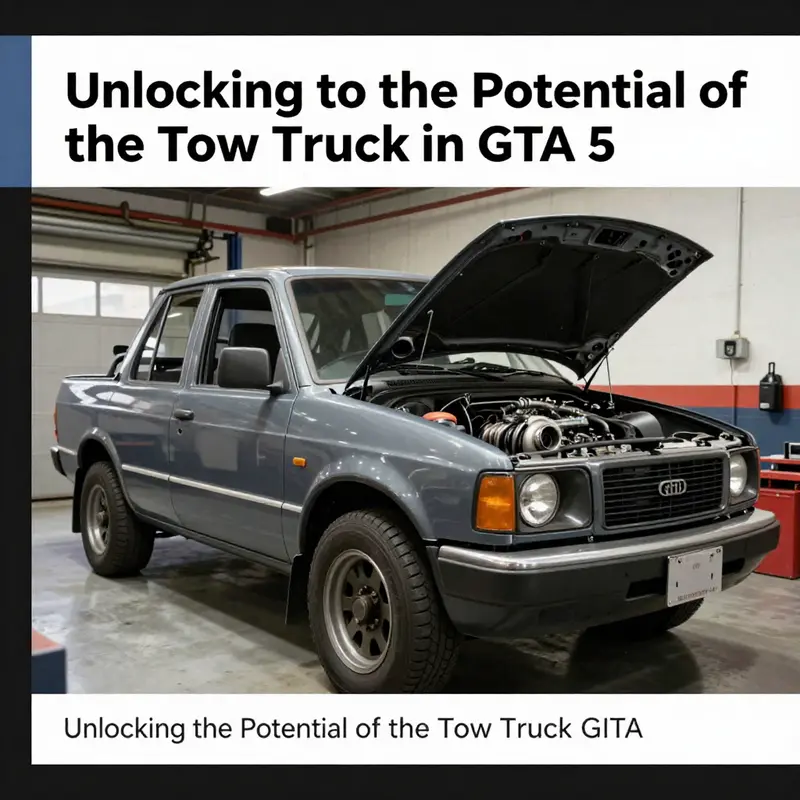
The tow truck in GTA 5 is more than a blunt utility. It’s a patient, steady platform that can ferry damaged rides, salvage sites, and lootable vehicles with a calm efficiency that suits Los Santos’ chaotic rhythm. Whether you’re threading through mission corridors in story mode or lining up a sequence of freight tasks in GTA Online, the tow truck offers a distinctive blend of heft, purpose, and potential that makes it worth knowing well beyond its first appearance. The vehicle’s practicality is born from its core design: a sturdy chassis, a robust tow apparatus, and a ground feel that invites a deliberate, unhurried approach to tasks that might otherwise rely on faster, flashier wheels. This makes it a compelling choice for players who want reliability as a baseline, and then curiosity as a side pursuit. In practice, that means learning where it hides, how to reach it swiftly, and what upgrades can push its already solid performance into a new realm of usefulness during both missions and exploratory play.
The most familiar route to the tow truck in the single-player landscape is its appearance near the FIB building in downtown Los Santos. The location sits at the intersection of Lone Pine Boulevard and West Wall Street, a part of the city where security fencing and glass-paneled facades frame the street scenes that define this section of the map. The tow truck can be spotted parked just outside the main entrance, typically near the front steps or along the adjacent curb. It isn’t guaranteed to be exactly in the same spot every time you roll by, but the layout is consistent enough that a careful scan of the entrance zone and the nearby street will usually yield the target vehicle without a long search. The positioning is functional: easy access from the front door, a straight pull onto the road without having to thread through narrow alleys, and the option to cut across traffic with minimal maneuvering when time matters in a mission window.
Navigating to the vehicle efficiently matters as much as finding it. A useful tip—especially for players chasing quick detours or time-sensitive tasks like Freight Cargo contracts—is to exploit a nearby hill shortcut that can drop you onto the freeway with minimal delay after you’ve claimed the tow truck. It’s a simple route, but one that rewards familiarity with how Los Santos’ street network behaves at different times of day and under varying traffic conditions. The road layout around the FIB complex is urban and busy, but the hill shortcut provides a pragmatic escape path that lets you transition from a close-quarters find into a confident, highway-level pursuit. In the broader rhythm of the game, such micro-optimizations accumulate into meaningful advantages, turning a routine vehicle grab into a smoother transition into the next objective.
In the context of GTA Online, the tow truck takes on a slightly different life. It becomes a purchasable asset through Los Santos Customs, where you can add it to your personal garage for a price that reflects its utility and durability. Acquiring it online means you can deploy it at will for various logistical tasks, including vehicle retrievals and controlled transports that align with a player’s business or contract work. The online version of the tow truck is not just a static tool; it becomes a living part of your garage, something you can tune, customize, and deploy in the same way you would with any other long-haul vehicle. Its towing capacity translates into practical advantages for certain contracts where moving a line of vehicles without inviting an avalanche of attention can mean the difference between success and the next failure. Its role becomes especially pronounced when you need to move a car from a tight or noisy location—an operation that benefits from the stability and deliberate pace the tow truck offers rather than a sprint with a sportier vehicle.
Beyond its core transport function, the tow truck’s versatility shines in scenarios where discreet movement matters. Its capacity to tow other cars makes it a natural fit for recovering vehicles from challenging spots or repositioning a high-value ride with minimal fuss. In cooperative play, this ability enables creative mission play: you or your crew can stage a quiet vehicle disposition, then slip away as a team with the rest of the loot in tow. The vehicle’s utility is not just practical; it also invites experimentation. For players who enjoy structuring their runs around a theme—whether it’s a stealthy recovery operation or a convoy-style cargo mission—the tow truck gives a reliable backbone to those plans, a base platform on which to layer strategy and coordination.
Modifications are the next frontier of the tow truck’s story. When you head to Los Santos Customs, you can tailor the look and the performance to align with your playstyle. Cosmetic choices—paint schemes, unique rims, and other visual touches—let you craft a distinctive profile that matches your crew or your personal taste. Performance upgrades are equally available, with options to tune the engine, suspension, Brakes, and handling. These mechanical shifts translate to tangible changes on the road: a more responsive tow hook, improved weight balance during towing, and steadier handling when dragging a vehicle across uneven pavement or around sharp corners. The combination of aesthetics and mechanics means you can transform a plain workhorse into a specialized tool that better suits what you intend to do, whether that’s smooth, controlled towing for a mission or a heavier, more resilient chassis designed to withstand rough transport conditions during an all-out cargo run.
Handling the tow truck on the open map also speaks to the broader feel of GTA 5’s vehicle ecosystem. The truck’s weight imparts a sense of momentum that rewards patient driving and deliberate planning. It isn’t the fastest choice, nor is it the most nimble in tight urban corridors, but it thrives where steady progression and reliability matter more than speed. That characteristic makes it a potent choice for players who enjoy the gameplay loop of locating a critical asset, setting a strategic course, and then executing a sequence of steps with precision. The tow truck’s slower acceleration and longer stopping distance demand a calm, methodical approach—an experience that stands in satisfying contrast to the high-octane thrills of sprinting burnout runs and musty warehouse chases. In a game world that thrives on contrast, the tow truck is a reminder that different tools suit different tasks, and that patience can unlock efficiencies that pure speed cannot.
For readers seeking a broader view of the vehicle’s place in the GTA universe, it helps to consider how the tow truck interlocks with other mission types and transport needs. Within heists, for example, the ability to tow a car from a remote location and bring it to a staging point reduces the risk of exposure. In property management or business-style ventures in GTA Online, the tow truck can support various logistics tasks that require moving vehicles without drawing too much attention. In exploration, it becomes a sturdy partner for regional scavenging, enabling you to haul recovered machinery or parked automobiles back to a personal garage for inspection and reallocation. The practical value of the tow truck grows with your willingness to think through the flow of a mission: how you approach the pickup, how you secure the vehicle, and how you manage the tow itself across the map’s varied terrain.
To ground these ideas in a practical sense, consider a simple workflow that leverages the tow truck’s strengths. You locate the vehicle near the FIB building, approach with a plan to secure the tow mechanism, and then decide whether to drag a target car to a staging area or simply transport it to a safe location for later use. If speed is critical, you deploy the hill shortcut and merge onto the freeway to minimize exposure while moving a vehicle from the downtown core toward your next objective. When building your load-out for a job, you decide which upgrades will best support your intended use—cosmetic tweaks to reflect your crew’s identity, or mechanical upgrades that improve towing stability and road-handling. The result is a cohesive, patient approach to vehicle handling that respects the tow truck’s strengths while acknowledging its limitations.
For those who want a touch more context beyond the game itself, you can explore related real-world discussions of vehicle readiness and serviceability, such as practical towing guides available online. For a practical reference from the real world, see mikes-towing. This kind of cross-pollination can deepen your appreciation for how equipment behaves under load, how optimization choices translate into tangible outcomes on the road, and how similar principles apply whether you are playing in a virtual city or managing a fleet in the real world. And for a structured, in-depth look at GTA V’s tow truck mechanics and role within the game’s broader vehicle ecosystem, the IG N guide provides a detailed resource that aligns well with the methodical approach this chapter espouses. External resources like IGN’s Tow Truck guide offer structured breakdowns of how the tow truck functions across modes, its tuning options, and scenarios where it shines, helping you refine your own play style with clarity and purpose.
In the end, locating and tuning the GTA 5 tow truck is less about chasing a single moment and more about building a reliable, adaptable tool that can support a wide range of play styles. Whether you encounter it tucked near the FIB building in Los Santos or acquire it through GTA Online as a customizable asset, the tow truck invites you to approach transportation as a practiced craft. It rewards planning, steady hands, and a willingness to adjust your loadout to meet the mission’s needs. As long as you remember to respect its pace and leverage its strength, the tow truck becomes more than a means to an end. It becomes a trusted partner in the long, winding road through Los Santos’s many heists, jobs, and explorations.
External resource: https://www.ign.com/wikis/gta-5/Tow_Truck
Final thoughts
Finding the Tow Truck in GTA 5 is crucial for business owners eager to optimize their gameplay experience. By locating it outside the FIB building, players gain access to a vehicle that not only serves as reliable transport but also possesses extensive towing capabilities. The modifications available for the Tow Truck further enhance its value, allowing it to excel in various missions and cargo runs. Overall, understanding how to effectively locate and utilize this vehicle can significantly contribute to the success of your ventures within the game.