
For towing business owners, understanding insurance costs is crucial to ensuring company stability and compliance. Tow truck insurance, often a significant operational expense, varies widely in price based on numerous factors, which this article breaks down into key influences and average costs. By the end, business owners will gain not only insights into the complex world of insurance premiums but also practical knowledge on how to navigate their insurance needs effectively.
Tow Truck Insurance on a Monthly Meter: Reading the True Cost Behind Every Tow
When a tow company forecasts cash flow, the monthly price tag of insurance sits near the line between profits and risk. It’s not a single number, but a moving target shaped by the equipment you operate, the people behind the wheel, and the jobs you perform.
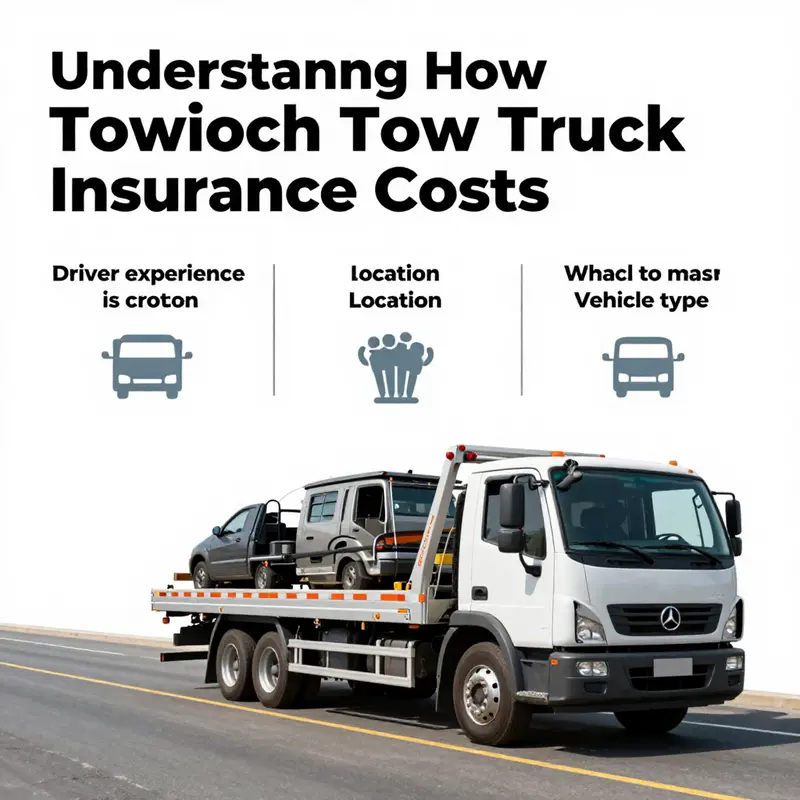
The vehicle is central; heavy-duty wreckers have higher risk and higher premiums, while lighter trucks tend to cost less. The make, model, year and mileage refine that risk picture because older equipment can be more prone to breakdowns.
The driver’s experience and driving history influence the bottom line. Clean records and professional training can lower rates; accidents or violations tend to push premiums up. Insurers may reward ongoing safety programs and the use of telematics to monitor driving behavior.
Coverage structure adds to monthly cost: liability, physical damage, and cargo, plus optional endorsements like roadside assistance or equipment protection. Higher liability limits raise the price, and endorsements add to the premium but increase protection.
Geography matters: urban areas with higher traffic and more claims often have higher premiums; rural settings can be cheaper. The nature of work, such as frequent high-risk scenes, also shifts the price.
Other factors: policy deductibles; bundling lines can yield discounts; fleet size; loss history; maintenance discipline; safety training.
A practical takeaway: compare quotes from multiple providers, model different coverage combinations, and align deductibles to cash flow and risk tolerance.
To illustrate, a local operator with one heavy-duty wrecker and one light-duty unit may see the heavy truck driving up the premium, while the lighter unit provides some offset. Bundled coverages can reduce overall cost relative to separate policies.
For more granular understanding, operators should request quotes and use benchmarks, recognizing individual risk profiles will differ.
Ultimately, the monthly cost is a function of shape and choices; treat insurance as a strategic partner rather than a fixed expense.
Tow Truck Insurance by the Month: Navigating Costs, Coverage, and Real-World Quotes
Tow truck insurance is not a one-size-fits-all expense; it’s a ledger that grows or shrinks with the realities of a business’s operations. For many operators, the monthly premiums settle somewhere in a broad band, typically around $150 to $400 for comprehensive protection. But that range is a starting point rather than a hard ceiling. The actual number hinges on a blend of factors: the kind of tow truck in service, the driver roster, how the business uses its vehicles, and the extent of coverage the policyholder chooses. A light-duty tow truck deployed for roadside assistance in a suburban corridor may hover near the lower end, while a heavy-duty wrecker charged with recovering vehicles across cul-de-sacs, highways, or industrial districts can push the monthly cost higher. The simple truth is that the price per month mirrors the risk profile a insurer assigns to the operation and the protections the operator elects to buy. In practical terms, if you are evaluating your monthly budget for tow truck coverage, you are looking at a moving target rather than a fixed line item, and the best approach is to understand the levers that move the dial and how to balance them to fit the business model.
At the core of these calculations is the vehicle itself. Vehicle type matters because heavier, more valuable equipment carries more exposure in an accident, during a theft attempt, or in a highly technical recovery operation. A heavy-duty wrecker used to hoist and transport large vehicles across city streets and rural stretches will typically require higher liability limits and more extensive physical damage coverage than a compact, lighter towing unit. This is not simply about the sticker price of the tow truck; it’s about the cost to repair or replace the asset and the potential liability that can arise from a tow in progress. Insurers translate that into premium dollars, and the effect compounds when combined with other risk factors.
Experience and driving history are the next big variables. An operator with a clean driving record and a stable employment history is viewed as a lower risk, which can translate into savings on the monthly bill. Conversely, a history punctuated by accidents or violations often triggers higher premiums, reflective of the increased likelihood of future claims. When a business runs a fleet, the premium calculus becomes more complex. Fleets present a wider spread of risk because they involve more drivers and more vehicle types. Insurers look at factors such as the number of vehicles, maintenance practices, and the consistency of driver training programs. The more organized and proactive a company is about safety, the more it can mitigate risk in the eyes of underwriters.
Coverage choices also shape the monthly number. Liability insurance is typically mandatory in many states and forms the foundation of any policy. It covers damages or injuries to others when the tow operator is at fault. Physical damage coverage, including collision and comprehensive protections, adds a layer of protection for the tow truck itself—crucial when a vehicle is damaged in a roadside operation or during a repossession, strike, or recovery. Beyond the basics, many operators opt for add-ons that can raise the monthly amount but deliver essential protection for specific scenarios. Hired auto liability covers non-owned vehicles the business uses on the job. Roadside assistance coverage can be a practical inclusion, ensuring a crew member can be supported if a truck breaks down during a shift. Cargo insurance protects any goods being transported in the tow truck, which becomes particularly relevant for operators who also handle vehicle storage or transport services.
Location also matters in meaningful ways. premium levels tend to drift upward in urban centers with congested traffic and higher claim frequencies, while rural routes may yield lower premiums, assuming other factors align. The legal and regulatory environment in a state can influence how much insurers charge, again tied to expected claim costs and the administrative complexity of coverage. A business operating in a state with strict safety laws or higher recorded claim activity should anticipate premiums that reflect those realities. It is not simply a matter of geography; it is about the risk climate where the business operates most often and the times of day when service is demanded—late nights and weekends often carry more risk and can affect pricing.
For operators considering how much they should budget, a practical approach is to translate the annual premium into a monthly figure after obtaining quotes from multiple insurers. The average annual costs cited by industry benchmarks frequently translate to roughly $1,800 to $4,800 for a comprehensive policy—that is, about $150 to $400 per month on average. But it’s essential to remember that this is a general framework. A small, single-vehicle operation in a low-crime area with a clean driving record could land closer to the $150 per month end, especially if the operator leverages higher deductibles or fewer add-ons. On the other hand, a bustling fleet with heavy-duty equipment operating in a major metropolitan corridor at night, with several drivers and high miles, may very well exceed $400 per month. The exact premium is where the art of insurance meets the science: it’s the result of a careful dialogue between risk assessment, coverage appetite, and the business’s demonstrated commitment to risk management.
To navigate toward a fair and accurate monthly estimate, most operators are advised to seek quotes from multiple insurers who specialize in commercial auto policies. A direct comparison helps identify not only price differences but also how each insurer handles deductibles, per-claim versus aggregate limits, and the precise language of coverage. The decision often hinges on more than cost alone; it depends on the certainty that the policy will respond when a claim arises. This is where a policy’s exclusions, endorsements, and the reliability of the insurer matter as much as the premium itself. A comprehensive policy can prevent a single accident from turning into a devastating financial setback, especially for smaller operators or single-vehicle shops that may not have deep reserves.
As part of a broader risk-management strategy, operators should consider the ancillary protections that influence both safety and price. Investing in driver training, maintaining equipment to high standards, and implementing telematics or other monitoring systems can demonstrate to underwriters a proactive stance on reducing risk. A well-documented safety program, coupled with regular maintenance and timely repairs, can translate into tangible premium relief over time, even if the immediate monthly payment remains within the upper range for a period. Such measures also improve operational reliability, which has intrinsic value for customer service and revenue continuity.
The path to a concrete monthly figure often involves not only technical details but also the operational narrative a business presents to underwriters. How many vehicles are in service, what services are performed, what hours are your peak times, and how many drivers are on the road daily—all of these contribute to the overall risk profile. In practice, a careful business plan that maps risk rather than avoiding it can yield more favorable terms. If you want to ground your expectations in a relatable example, imagine a mid-sized towing operation with a light- to medium-duty mix, a handful of drivers with clean records, and a formal maintenance schedule. Even with a robust liability and physical damage package, the monthly premium could land in the middle of the spectrum, perhaps around $250 to $350, especially if the business has invested in safety programs and proactive fleet management. This is precisely the kind of realism that helps a shop set aside the right amount each month without sacrificing the protection a policy provides.
For readers seeking practical steps, a straightforward approach works: gather current mileage, fleet composition, and driver histories. Then request tailored quotes that reflect actual operating patterns rather than generic price estimates. When insurers present their numbers, scrutinize the coverage language side by side. Ask about deductibles, claim handling procedures, and any restrictions on operations—such as coverage limits for night-time tows or high-risk environments. If a fleet is involved, request a fleet rating or a scheduled credits program that rewards safe operation and low incident rates. Such credits can meaningfully reshape monthly premiums over time, especially for operators who commit to ongoing driver training and meticulous maintenance.
Within the broader conversation about monthly costs, it is also helpful to consider the value of additional resources and guidance as you build your policy. A reputable source for pricing benchmarks and coverage options across the industry is the National Association of Insurance Commissioners (NAIC). While numbers will vary by insurer and state, the NAIC provides a framework for evaluating pricing trends, policy forms, and consumer protections that can empower a business owner to compare quotes with greater confidence. For readers seeking a point of reference or for those who want to explore the broader landscape of commercial auto insurance, the NAIC is a solid external benchmark to consult.
If you are exploring options and curious about how others navigate the landscape, you may also find value in reading practical narratives from operators who have confronted similar decisions. For instance, some shop owners discover that a well-chosen policy not only cushions the impact of a single incident but also improves cash flow by stabilizing monthly expenses and reducing the fear of unpredictable spikes in premium due to market volatility. In these cases, the month-to-month cost becomes a manageable line item rather than an anxiety trigger. To anchor this exploration in real-world experience, you can look at practical case studies and service insights that discuss the practical implications of coverage decisions and how they align with business goals. For a practical starting point and to see how a real service operation discusses insurance in their broader portfolio, you can visit a partner site focused on towing services and roadside assistance: mikes-towing.
In summary, tow truck insurance per month is best understood as a calculated response to risk, asset value, and coverage ambition. While the ballpark figures provide a useful frame, the true monthly cost is what you arrive at after a structured comparison of quotes, a clear statement of needs, and a demonstration of proactive risk management. The most stable path to predictability—especially for small fleets or solo operators—is a combination of shopping across reputable carriers, negotiating terms that reflect the actual operating profile, and investing in measures that steady risk over time. With a thoughtful approach, a business can secure robust protection without overpaying, ensuring that the monthly premium aligns with the value of service delivered and the resilience of the operation.
External resource: For industry-wide pricing context and consumer protections, see the NAIC resource at NAIC.
Final thoughts
Navigating the intricacies of tow truck insurance can be overwhelming, but understanding the factors and average costs can empower towing business owners. By considering essential elements such as vehicle type, driver experience, and coverage options, businesses can make informed decisions that not only protect their assets but also contribute to their growth and success in the industry.