
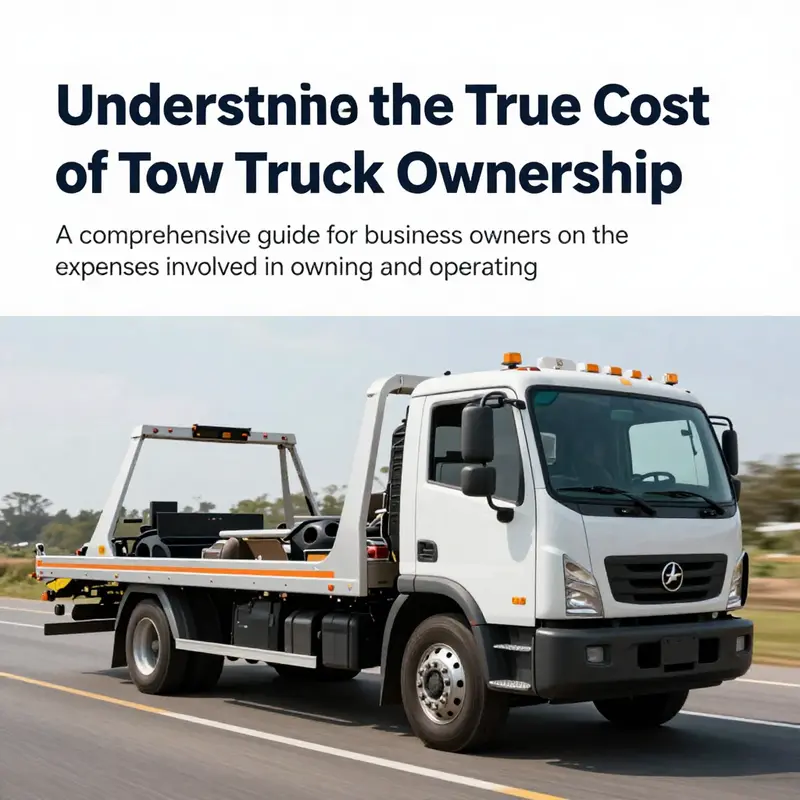
Towards establishing a towing operation, understanding the financial commitment involved in owning and operating a tow truck is crucial. The initial purchase price of the truck is just the tip of the iceberg for business owners. This article dives deep into the dual facets of tow truck ownership costs: a detailed breakdown of the purchase price and a thorough examination of ongoing expenses. By understanding these elements, you’ll be well-equipped to make an informed investment that suits your business objectives.
From Sticker Price to Daily Profits: A Practical Measure of Tow Truck Ownership
Owning a tow truck is rarely a straightforward calculation based solely on the purchase price. The real question is not what you pay upfront, but what owning the machine costs you over its useful life and how those costs influence profitability. When people ask, “How much does a tow truck cost to own?” they encounter a menu of variables that stretch across the spectrum from the initial investment to ongoing maintenance, insurance, training, and administrative overhead. A complete answer requires stepping through each layer with care, because the total cost of ownership (TCO) shapes the decisions that determine whether a tow business is sustainable, scalable, and capable of delivering steady service in a competitive market. The overarching message is simple: the more you optimize utilization, maintenance planning, and safety compliance, the more you guard your margins, even if the sticker price on a rotator or a flatbed seems daunting at first glance.\n\nTo begin, the market itself makes the cost story inherently variable. The rotator tow truck sits at the high end of the price spectrum. Its rotating, extendable boom can recover vehicles from almost any position, including overturned or high-clearance situations, and it excels in highway emergencies. But that capability comes with a hefty price tag. New rotators typically range from about 150,000 dollars to well over 300,000 dollars. The versatility they offer is matched by fuel use, maintenance demands, and a larger footprint on the road and in the yard. Not every operator needs a rotator, and many find a flatbed a better fit for daily operations that emphasize secure transport and broad compatibility with modern, low-clearance vehicles.\n\nFlatbed tow trucks present a different path into ownership. The hydraulically operated bed can tilt and slide to load a vehicle without wheels touching the ground, which translates into safer transport for a wide range of cars. The typical price range for a new flatbed sits around 80,000 to 150,000 dollars, depending on size, hydraulic power, and additional equipment. Flatbeds are admired for their relative simplicity and lower risk of incidental damage to the towed vehicle, but they do require skilled drivers and dependable hydraulics to operate smoothly under diverse conditions. In practical terms, the choice between a rotator and a flatbed is often a question of expected job mix, client expectations, and the markets you serve.\n\nBeyond the purchase price, ongoing operating expenses shape daily economics. Fuel consumption is a major factor, driven by heavy engines and the demanding work profiles common to towing operations. Insurance premiums for tow trucks are notably higher than for standard commercial vehicles because the business carries elevated risk. The cost of licensing and registration is not trivial either; staying compliant adds to recurring outlays. In aggregate, these operational costs can rival or exceed a portion of the upfront price within a few years if not managed carefully.\n\nMaintenance costs deserve careful forecasting, because they accrue as invoices and downtime. Tow trucks endure heavy wear from lifting heavy loads, negotiating uneven surfaces, and operating in adverse weather. Regular servicing of hydraulics, winches, tires, and diagnostics keeps the fleet reliable but also compounds the monthly budget. Down time exacts a financial toll through lost calls and reduced revenue per hour. A robust maintenance program can pay for itself by shortening response times, increasing uptime, and extending component life.\n\nThe chapter of additional costs adds further texture to the ownership ledger. Training emerges as a nontrivial investment, because safe and efficient operation hinges on well-prepared drivers who understand hydraulic controls, safety protocols, and the legalities of roadside assistance. Compliance with safety and environmental rules can entail inspections and certifications that become essential as the business scales. Administrative overhead—payroll, dispatch software, bookkeeping, and customer management—also contributes to the monthly cost structure. In a growing business, spreading these duties across a capable team helps stabilize service levels and supports expansion without sacrificing reliability.\n\nA practical view shows that the upfront price is only the opening line of a broader balance sheet. Industry data suggest that successful tow operators combine careful asset selection with disciplined cost control and intelligent utilization. A proactive maintenance program reduces downtime; smart routing and scheduling maximize paid minutes per day; and a diverse service mix can cushion demand fluctuations. The math becomes a balance: the higher the asset’s price, the more discipline you need around utilization, uptime, and pricing to recover the investment. In tight markets, reliability and fast response times can justify slightly higher rates, but only if service quality remains consistently delivered. This is where administration intersects with service delivery; back-office efficiency translates into leaner dispatch and steadier cash flow.\n\nIn practice, ownership is a portfolio decision. A well-kept rotator offers expanded capabilities and potentially higher per-call revenue, but only if you sustain training, maintenance, and fuel costs. A flatbed offers steadier predictability for standard recoveries and secure transport. For new entrants, starting with a cost-effective flatbed or smaller wrecker can establish presence, then expanding into rotator capacity as demand and cash reserves grow. A mixed fleet can balance risk and reward—two or three reliable flatbeds for day-to-day work with one rotator for specialized calls, deployed when the market calls for it. The real key is alignment: what your fleet can reliably perform today, what it can scale to tomorrow, and how operational discipline translates into consistent profitability.\n\nFor readers seeking concrete context, real-world snapshots emphasize uptime, client retention, and predictable maintenance costs. Local regulations and market demand will tilt the economics in subtle ways. Price competition and the density of incidents shape whether owning a rotator or a flatbed makes sense in a given region. As you decide, examine the volume of work you anticipate and how quickly your fleet can respond to calls without sacrificing safety or compliance. This connects back to the broader cost-to-own topic: the sticker price matters, but the daily rhythm of work, maintenance cadence, and client base determine the return on investment.\n\nIf you want further references, a practical guide on ownership costs provides a structured breakdown of standards and applications. Compare local experiences with broader guidance, and look at real-world fleet management approaches to budgeting, maintenance planning, and service pricing. A local operator’s perspective can translate theory into daily practice. For a broader external reference, see published guides on tow truck ownership costs.
Beyond the Sticker Price: The Steady, Hidden Costs of Owning a Tow Truck
The moment a tow fleet owner signs the papers, the sticker price of the truck is only the opening bid in a longer, more complex conversation about cost. Owning a tow truck is less a single purchase than a continuous investment in equipment, people, and systems that keep a business moving through changing markets and shifting demand. The numbers that truly define ownership are the recurring expenses that accumulate long after the initial debt is incurred and the truck rolls onto the pavement. In practical terms, the ongoing costs shape profitability just as surely as the initial price tag, and they vary with the kind of truck chosen, the intensity of service, and the geographic reach of the operation. A rotator, for instance, delivers capabilities that exceed most fleets’ needs but comes with a burden of higher fuel burn, greater wear, and more demanding maintenance routines. A flatbed, by contrast, offers secure transport for a wide range of vehicles and tends to present lower ongoing maintenance demands, even though it requires a careful approach to load securement and bed hydraulics. The decision between these paths echoes through every line of a business plan, because it translates into different expectations for fuel, insurance, and the everyday wear that keeps a tow truck on the road.
Fuel costs are the most visible of the ongoing expenses, yet they are also among the least predictable. The volume of calls, the length of each tow, and the type of terrain all drive fuel consumption. An urban fleet that spends most of its time in stop-and-go traffic will see a different consumption pattern than a rural or highway-heavy operation where long-distance recoveries are common. Fuel pricing itself adds another layer of complexity. Even a well-maintained truck can swing from week to week as fuel prices fluctuate and drivers encounter traffic patterns that alter idling time and engine load. Savvy owners build fuel budgeting into monthly forecasts and implement routings and dispatch practices that reduce empty miles. They also monitor fuel efficiency metrics as closely as they track tire tread wear, treating fuel economy as a leading indicator of overall operational health.
Maintenance and repairs form the second major axis of ongoing costs. Routine maintenance—oil changes, filter replacements, brake inspections, tire rotations, and hydraulic system servicing—keeps a truck dependable and extends its life. But breakdowns happen, and when they do, the cost can be steep, especially for heavy-duty rotators whose hydraulic systems and rotating booms demand specialized service expertise. Maintenance planning becomes a balancing act: schedule proactive care in a way that minimizes downtime while avoiding the cash flow shock of major overhauls. A well-run maintenance program also guards against cascading failures. A faulty hydraulic hose, for example, might not only halt a recovery operation but could also damage other components or compromise safety, leading to more costly repairs and increased downtime. Even the most disciplined fleets set aside a reserve for unplanned maintenance so that a surprised wallet doesn’t derail a busy week.
Insurance is another steady, non-negotiable cost—and one that grows with risk exposure and fleet size. Liability coverage, vehicle insurance, and cargo protection all come with premiums that reflect the truck type, the driver’s history, and the geographic area of operation. A rotator’s higher value and the potential severity of a recovery incident can push premiums upward. An emerging driver with limited experience may inflate costs further, unless the fleet implements rigorous training and safety protocols that reduce risk. The premium landscape is rarely monotone; it responds to claims history, regulatory changes, and even broader market conditions. Because insurance sits as a fixed monthly or annual line item, many operators negotiate annual renewals with a clear understanding of how changes in fleet mix, utilization, or equipment upgrades will alter the quote.
Licensing, registration, and compliance form a quieter but persistent obligation. Local, state, and sometimes federal requirements demand periodic payments for permits, inspections, and regulatory compliance. These costs aren’t tied to miles driven or time on the road in the same way as fuel or maintenance, but they are essential to staying legally operable. In some jurisdictions, new rules can shift the cost landscape quickly; wise owners monitor regulatory developments and adjust budgets preemptively to avoid penalties and workflow interruptions.
Equipping the fleet with the right specialized hardware is a recurring investment in its own right. Winches, straps, wheel lifts, towing dollies, axle pads, light bars, sirens, radios, and communications gear all require periodic replacement or upgrade as wear accumulates, technology advances, or standards change. Heavy-duty equipment endures but not indefinitely; components degrade under repeated strains, exposure to the elements, and the demanding torque generated during heavy recoveries. A proactive replacement schedule helps prevent sudden outages that stall operations during peak demand. It also supports safety, which, in the towing business, is not just a moral concern but a practical one: well-maintained gear reduces the probability of accidents and claims, which in turn stabilizes insurance costs and uptime.
Downtime is the invisible yet real enemy of profitability. Mechanical issues, routine maintenance windows, and unexpected repairs translate into lost revenue for every hour the truck sits idle. The cost of downtime goes beyond the immediate loss of a service call. It can ripple through the day’s schedule, delaying subsequent jobs, jeopardizing contractual commitments, and forcing the dispatcher to reallocate resources at a premium. Fleet owners who minimize downtime through preventive maintenance and rapid access to skilled technicians often find the long-run economics tilt in their favor. This is where partnerships with reliable service networks matter. A reliable roadside or on-call support framework can dramatically reduce recovery time, helping to keep the rolling inventory of a fleet healthy.
Financing and depreciation round out the steady expenses that quietly shape the bottom line. If a truck is financed, interest and principal payments gradually chip away at cash flow. Depreciation, while non-cash, affects tax positions and the perception of fleet value; it informs when to refresh equipment and how to budget for replacement cycles. Fleet managers who model depreciation accurately in tax planning and capital budgeting tend to weather market cycles with more resilience. They often pair depreciation strategies with a disciplined approach to equipment refresh, aligning capital expenditures with anticipated demand rather than reacting to crises when a truck finally falters.
The sum of these ongoing costs scales with the size and scope of an operation. A small independent driver with a single flatbed faces a different cost rhythm than a mid-sized fleet running rotators across multiple counties. The rotator’s deeper capacity to recover overturned vehicles and access precarious loads is balanced by higher fuel burn, greater maintenance complexity, and more intensive operator training. A flatbed offers broad versatility and generally steadier maintenance demands but requires careful attention to load stability, bed hydraulics, and wheel-lift rental or wear. The financial decision is not simply which truck costs less to purchase; it is which combination of capabilities, upkeep, and risk the operator can sustain over years of service. In practice, a robust ownership model blends realistic maintenance calendars with conservative fuel budgets, disciplined insurance procurement, and predictable licensing costs. It also embeds a sourcing strategy for essential components and replacement parts that keeps repair times reasonable and costs transparent.
Strategic budgeting for ownership then becomes a holistic discipline. It starts with a clear understanding of the expected operating pattern: how many calls per day, average tow distance, typical terrain, and the mix of jobs—repos, roadside assistance, or long-haul recoveries. Those inputs feed the maintenance and fuel models, which in turn determine the quarterly and annual liquidity needs. It helps to build a contingency fund for unexpected repairs and to negotiate favorable terms with suppliers for bulk purchases of common parts. An efficient fleet also relies on data-driven decision-making: tracking maintenance intervals, analyzing downtime causes, and adjusting asset allocation to align with demand. In some cases, a mixed fleet—combining a robust flatbed with one or two smaller rotators for specialized work—can optimize coverage while containing the most volatile cost drivers. The key is to translate every dollar of purchase price into a rehearsed plan for its ongoing performance, ensuring that the vehicle continues to generate revenue and stay compliant with safety and regulatory standards.
For practitioners seeking a practical anchor, consider how service networks influence uptime and cost structures. A well-integrated roadside support ecosystem can shave hours off response times, reduce the risk of improper recoveries, and streamline parts access. In this light, the ownership question expands from a simple ledger entry to a decision about reliability, serviceability, and long-term capacity to meet customer expectations. When planning, it helps to map out the lifecycle costs of the chosen truck type—delivery, maintenance windows, parts replacement, insurance, and licensing—over a typical ownership horizon. This mapping clarifies the real, all-in economics beyond the initial outlay and supports prudent pricing strategies for the services offered. It also serves as a guide for conversations with lenders, insurers, and vendors who want to understand not just what the truck costs to acquire, but what it costs to keep it earning revenue year after year.
In short, owning a tow truck is as much about prudent stewardship of every subsystem as it is about the vehicle itself. The true price of ownership is revealed in the steady drumbeat of fuel, maintenance, insurance, licensing, and equipment replacement, compounded by the unpredictability of downtime and the strategic choice of acquisition type. A thoughtful operator treats those recurring costs as a portfolio, balancing risk and performance with careful budgeting, ongoing staff training, and a forward-looking view of future demand. The result is not merely a fleet that can mobilize on a moment’s notice, but a business that sustains profitability through fluctuating markets, regulatory shifts, and the ever-present demand for dependable, safe, and timely towing services.
Internal linking note: For a practical look at how service networks support ongoing uptime and cost control, some readers may find value in a fleet support resource such as Mikes Roadside Service, which provides the kind of on-call assistance that can minimize downtime and extend the productive life of a tow fleet. Mikes Roadside Service
External reference for broader context: industry assessments of ownership costs offer structured frameworks for budgeting and forecasting. See the detailed external guide on tow truck ownership costs for prospective owners at https://www.towtruckowners.com/ownership-costs-guide-2026.
Final thoughts
Understanding the cost of owning a tow truck is vital for any business owner aspiring to venture into the towing industry. With an initial investment that varies significantly based on the type and model of the tow truck, coupled with substantial ongoing operational expenses, it is essential to have a comprehensive view of both aspects. By thoroughly analyzing these costs, you can ensure that your business remains financially viable and equipped to serve its clientele effectively.