
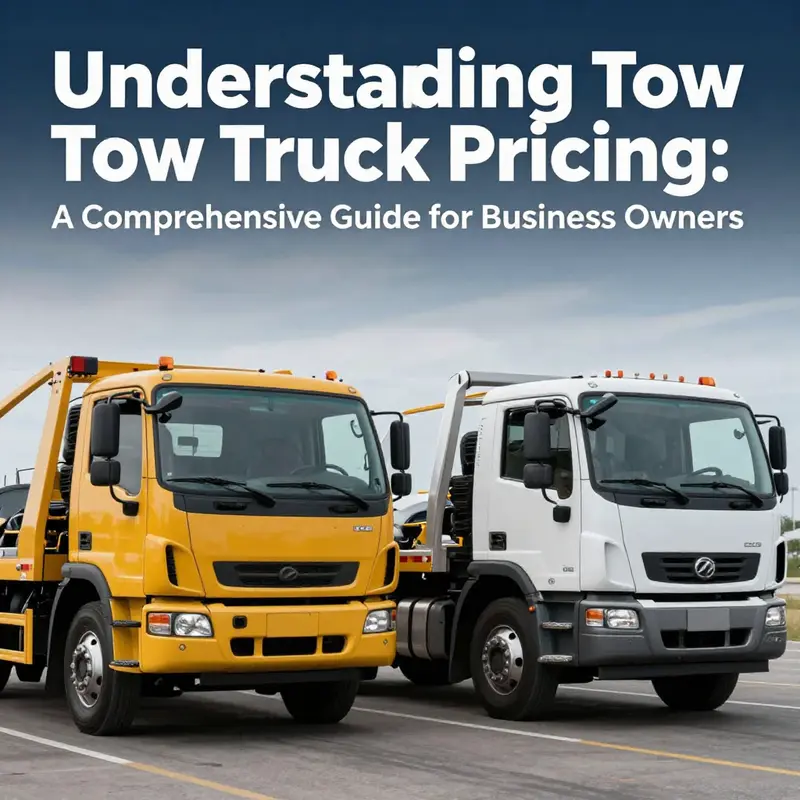
Tow trucks play a crucial role in the automotive service industry, providing essential recovery and transport solutions for a range of vehicles. For business owners, understanding the pricing landscape of tow trucks is vital for making informed purchasing decisions. With options ranging from light-duty trucks ideal for small vehicle recovery to heavy-duty units designed for major recovery operations, knowing the costs associated with each category can significantly impact your business’s profitability and operational efficiency. This article will explore the pricing of light-duty and heavy-duty tow trucks, providing you with a thorough understanding of what to expect in the current market.
Tiny Titans on the Road: The Price Reality of Light-Duty Tow Trucks for Small-Vehicle Recovery
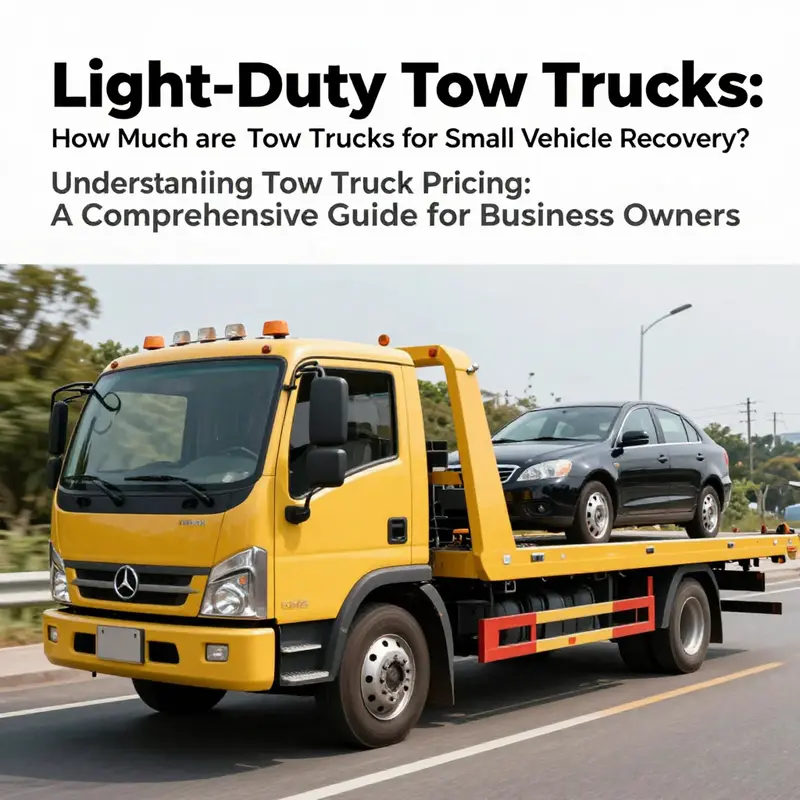
Light-duty tow trucks sit at a curious crossroads in the towing world. They are small in size yet mighty in function, built to recover cars, small vans, and light trucks with a reliability that underpins roadside assistance and quick on-scene recoveries. In practical terms, these compact wreckers typically carry a towing capacity around 4.5 tons, a threshold that encompasses most everyday incidents on urban streets and suburban corridors. The appeal of this tier lies not only in their maneuverability but also in their price brackets, which make professional recovery capabilities accessible to independent operators, small businesses, and municipal fleets alike. The economics of light-duty wreckers hinge on choosing between two broad configurations: an under-lift flatbed and a standard flatbed wrecker. Each design serves a slightly different set of needs, and each enters the market with its own price range that reflects build quality, componentry, and purposeful simplicity. For the under-lift flatbed, buyers typically see a price range roughly between thirteen thousand and fifteen thousand dollars for new units. This category is especially attractive for road rescue work because the under-lift mechanism minimizes bed loading height and can reduce ground clearance challenges when pulling cars from curbs or shoulder lanes. The other main option is the flatbed wrecker, where the bed itself carries the vehicle, and the lashing and winching systems are designed to secure the load with steadier control. These flatbed wreckers commonly price from about fourteen thousand up to twenty thousand dollars for new configurations, depending on the strength of the winch, the length of the bed, and the robustness of the hydraulic or electric systems that power their operation. These ranges reflect early-2026 market conditions and are broadly applicable to models designed for everyday roadside tasks rather than heavy-duty highway rescues. Beyond the base price, prospective buyers should understand that the total investment usually includes more than the bare chassis and bed. The price tag grows with features such as powered winches, hydraulic tilt mechanisms, wheel-lift options, bed length, and the quality and response time of hydraulic circuits. A compact wrecker with a longer bed and a faster, more resilient winch will command a higher price than a leaner, simpler setup. Likewise, a unit with integrated emergency lighting, a robust toolbox, and dependable electrical systems—elements essential to daily field use—will push costs upward but deliver long-term value through reduced downtime and easier maintenance. In this space, the decision often comes down to balancing upfront cost against longer-term reliability and serviceability. The under-lift flatbed configuration tends to favor users who frequently encounter tight parking spaces or uneven ground where the vehicle can be drawn onto the bed with minimal ramp height. The flatbed wrecker, by contrast, offers the advantage of loading without driving the recovered vehicle onto a separate platform, a feature that can reduce slip risk and damage during the recovery, especially on soft shoulders or wet pavement. Price is a useful compass, but it is not a sole determinant. Operator requirements—such as daily recovery cycles, average vehicle size, and typical road conditions—shape the choice between under-lift versus full-bed recovery. The markets also reflect regional demand, lead times, and dealer programs, so it is common to see similar models priced slightly differently across suppliers. For anyone evaluating a purchase, it helps to gather multiple quotes and to factor in the total cost of ownership, not just the sticker price. Warranty terms, service network coverage, and the availability of spare parts influence ongoing costs and downtime. A unit that comes with a more comprehensive warranty and a wider dealer-support footprint can end up saving money over its lifecycle, even if the initial outlay is modestly higher. In many cases, a single unit can be sufficient for a small outfit, while slightly larger operations might layer in a second light-duty wrecker to cover peak periods or to serve a broader geographic area. Minimum order quantities typically start at one unit, which matters for independent operators who want to minimize risk and avoid tying up capital in inventory. For readers weighing their options, it is useful to look beyond the numbers and consider how a given chassis and bed configuration aligns with work patterns. If a shop’s daily routine includes frequent short-haul recoveries from crowded streets or parking lots, the under-lift flatbed’s lower entry and improved accessibility can reduce wear on the vehicle and on the recovered cars. If the focus is on robust, all-weather performance where vehicles may have to be hoisted over larger obstacles or across uneven surfaces, a flatbed wrecker with a heavier duty winch could deliver a smoother, more controlled recovery. Cost is relative to risk; higher reliability often translates to fewer call-backs and less downtime, which translates to real savings over months and years of operation. It is also worth noting that the pricing landscape is shaped by where a buyer sources the equipment. Platforms that connect buyers with manufacturers and distributors, or RFQ-driven channels, can yield favorable terms through competitive bidding. For instance, a new under-lift flatbed unit might be accessible through a direct supplier channel with a one-unit minimum order, while a flatbed wrecker could present broader options and slightly different price points depending on regional supply chains. In this context, the decision becomes less about chasing the lowest price and more about selecting a configuration that supports reliable, efficient service. A well-chosen light-duty wrecker becomes a partner in the business, enabling quicker turnarounds, a safer work environment, and a reputation for dependable roadside support. When evaluating options, many operators also examine what a given unit implies about learning curves and training needs for drivers. The more straightforward the controls and the more standardized the maintenance requirements, the easier it is to onboard technicians and to maintain high service levels with limited downtime. For those curious about practical sourcing and real-world procurement experiences, you can explore further through a familiar roadside service provider resource that discusses the kinds of equipment commonly used in daily operations. Mikes Roadside Service provides context on how compact recovery trucks fit into broader service offerings and fleet strategies. As with any investment in public-safety-ready equipment, due diligence is essential. Verification of compliance with local safety standards, operator training programs, and the availability of certified technicians for inspections will help secure a sound purchase. While prices for light-duty units offer a friendly entry point, buyers should still budget for ancillary costs such as installation of custom lighting, radio equipment, and wheel-lift accessories, as well as periodic maintenance—oil changes, hydraulic fluid checks, and winch service—that ensure the unit remains ready for action when a call comes in. The goal is a balance: a unit priced at the edge of a budget, but with parts readily available and a service network that can respond quickly. In the end, the chapter on light-duty tow trucks underscores a straightforward truth: small, capable machines deliver meaningful value when used consistently, and their price is a gateway to broader service capacity rather than a gatekeeper to opportunity. External resource: https://www.alibaba.com/product-detail/Foton-Light-Duty-Tow-Truck-Under_1600498767243.html
Power, Price, and Precision: The True Cost of Heavy-Duty Tow Trucks for Major Recoveries
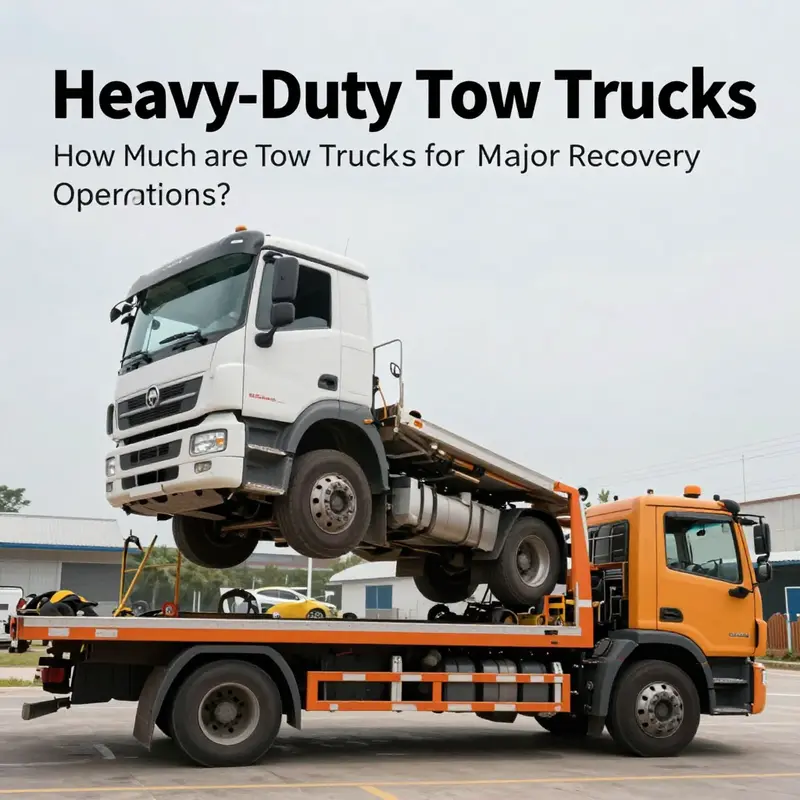
Heavy-duty tow trucks are not just larger versions of everyday wreckers; they are engineered tools designed to rescue, recover, and stabilize large vehicles in challenging environments. When fleets evaluate what a heavy-duty unit costs, they weigh more than sticker price. They weigh the value of a rotator crane that can lift tens of tons, the resilience of an all-wheel-drive chassis, and the reliability needed to operate in disaster zones where every minute counts. As market data shows, prices for 20-25 ton rotator-equipped units typically fall between USD 41,500 and 82,500, and a minimum order quantity of one unit makes this range accessible to smaller operators testing the capacity of their fleets. For larger demands, the landscape expands. A 50-ton class recovery truck often sits in a similar price bracket, reflecting a base cost that can be driven up by drivetrain options, hydraulic systems, and the quality of the control systems. When the need climbs to about 60 tons, price bands widen further, frequently landing between USD 95,000 and 155,000 per unit, with many buyers considering one-off orders or small batches that can tailor the machine to particular recovery environments and regulatory requirements.
Behind these numbers lies a bundle of features that convert capability into practical value. A hydraulically operated tilting flatbed is not a luxury; it is a critical feature that allows the disabled vehicle to be secured completely off the ground. That level of stability reduces the risk of damage during transport and eliminates an entire class of on-scene adjustments that slow operations. An all-wheel-drive chassis, especially in off-road or wintry conditions, can be the difference between completing a recovery quickly and being stuck for hours. The configuration choice between a 6×4 and a 6×6 setup encapsulates a broader tradeoff: 6×6 offers superior traction and stability in adverse terrain or steep grades, but it draws more fuel, demands more maintenance, and adds to the upfront cost. For clients operating in coastal flood zones, mountain passes, or remote inland corridors, those extra wheels are worth the investment; for urban depots and paved-only tasks, the lighter 6×4 remains a more economical baseline. These considerations ripple through the purchasing process, shaping not only the sticker price but the life cycle costs that fleets must budget for over a machine’s working life.
Manufacturers and buyers alike increasingly turn to major production hubs that offer scale, supply chains, and after-sales support. While the market is global, China has established itself as a dominant manufacturing hub for heavy towing and recovery equipment, supported by mature supplier networks and engineering ecosystems. Buyers often source through online marketplaces and verified listings that connect them directly with manufacturers, brokers, and service centers. The path from inquiry to delivery involves not only the machine itself but a suite of services—engine tuning, hydraulic system certification, spare parts access, and operator training programs. In practice, the best deals combine competitive base prices with robust after-sales packages, predictable lead times, and accessible warranty terms. When a fleet manager compares options, the alignment of a machine’s capabilities with the expected recovery scenarios drives decisions about purchase, lease, or retrofit projects.
Decisions about heavy-duty tow trucks often center on anticipated workload and exposure to risk. A 50-ton unit may be the right match for a regional operator that frequently handles heavy trucks and coaches, while 60-ton configurations align more with nationwide fleet support, disaster response, and high-value salvage operations. The price delta between 50-ton and 60-ton models reflects not only raw lifting power but the surrounding equipment, like rotators, telescoping booms, and the precision controls needed to coordinate multiple lines, stabilizers, and outriggers safely. It is also a reminder that the most sophisticated machines arrive with higher maintenance expectations, longer downtime for service, and more complex fuel systems. Buyers should consider total cost of ownership: maintenance cycles, spare parts availability, operator training, insurance premiums, and residual value. In some cases, a late-model used unit with a proven maintenance history can offer an attractive compromise between cost and capability, particularly for fleets expanding capacity in phases.
For operators negotiating these purchases, the practical path often begins with a candid assessment of the recovery scenarios most likely to unfold. Do the jobs require maximal height and reach, or is steady ground clearance and straightforward transport the priority? What are the typical road conditions, climate, and access constraints at common incident sites? The answers guide not only the machine’s configuration but also the training regime for drivers and on-site crew. Rotator and ultra-heavy lifts demand disciplined operation. Training often covers crane signaling, load securement, winch control, and safe positioning around disabled vehicles, with emphasis on redundancy and risk mitigation. In this way, price becomes a byproduct of planning rather than a sole determinant. As operations evolve and fleets scale, the conversation shifts toward modular buys, upgrade paths, and the possibility of adding accessories like additional winches, load testing equipment, or specialized stabilizers. The result is a fleet that can respond to the most demanding recoveries without compromising safety or reliability.
For readers curious about how pricing data translates into real-world procurement, the landscape is continually shifting as manufacturers expand capabilities and buyers seek better value. If you want to explore current market listings and supplier options in detail, one route is the extensive catalog of heavy towing and recovery trucks available through major platforms that connect buyers with verified suppliers. Example pages exist that curate the best options for rotator-equipped heavy-duty tow trucks, offering an accessible entry point for price comparisons and technical specifications. Additionally, for broader context on global sourcing, industry databases show that price bands are influenced by engine power, axle configurations, and the inclusion of ancillary equipment such as tilt-bed systems and rotators. A helpful resource for verified information on pricing and supplier options is a leading industry listing that aggregates data for heavy towing gear across regions, including details on 60-ton classes.
On the topic of practical pricing research, readers can also consult external directories that present current market data and supplier networks. For comprehensive data and direct supplier access, see Made-in-China.com’s Heavy Towing & Recovery Trucks listings. This external reference helps illuminate how manufacturers package price, configuration, and service in a global market.
Within the broader arc of the article, this chapter confirms that heavy-duty tow trucks command substantial investment, but the size of the investment is closely tied to the job. It also highlights how the market values power, balance, and safety in different ways, and how buyers can navigate that mix through careful analysis of use-case, total cost of ownership, and available support. For readers seeking practical examples or regional guidance, local operator resources often offer case studies and procurement case notes that relate directly to their climate, terrain, and regulatory environment. If you want to learn more about how these machines are deployed in specific markets, see Tow Trucks in Houston. The interplay of price, performance, and support remains the central thread, guiding fleets from the initial inquiry through financing, delivery, and ultimately reliable daily operation on roads and in disaster zones.
External reference: https://www.made-in-china.com/products-search/hotproducts/HeavyTowingRecoveryTrucks.html
Final thoughts
In summary, the costs associated with tow trucks vary significantly based on size, capacity, and features. For business owners, understanding the price range of both light-duty tow trucks, suitable for small vehicle recovery, and heavy-duty models intended for more demanding jobs is essential in making informed purchasing choices. With prices ranging from as low as $11,000 to over $70,000, evaluating your specific business needs and budget will guide you in selecting the right tow truck for your operations.