
Tipping practices can often be perplexing, especially for business owners who find themselves in need of towing services. While tipping may not be customary for every profession, understanding the intricacies of tipping your tow truck driver can enhance your service interactions and potentially reflect positively on your business. This article delves into the question of whether you should tip a tow truck driver, considering various factors including situational nuances and local customs. The forthcoming chapters will expand upon general tipping expectations and highlight exceptional circumstances wherein a tip might be merited, equipping you with the knowledge necessary to navigate this often-overlooked aspect of towing services.
null
null
Beyond the Call: A Deliberate Exploration of When to Tip the Tow Truck Driver
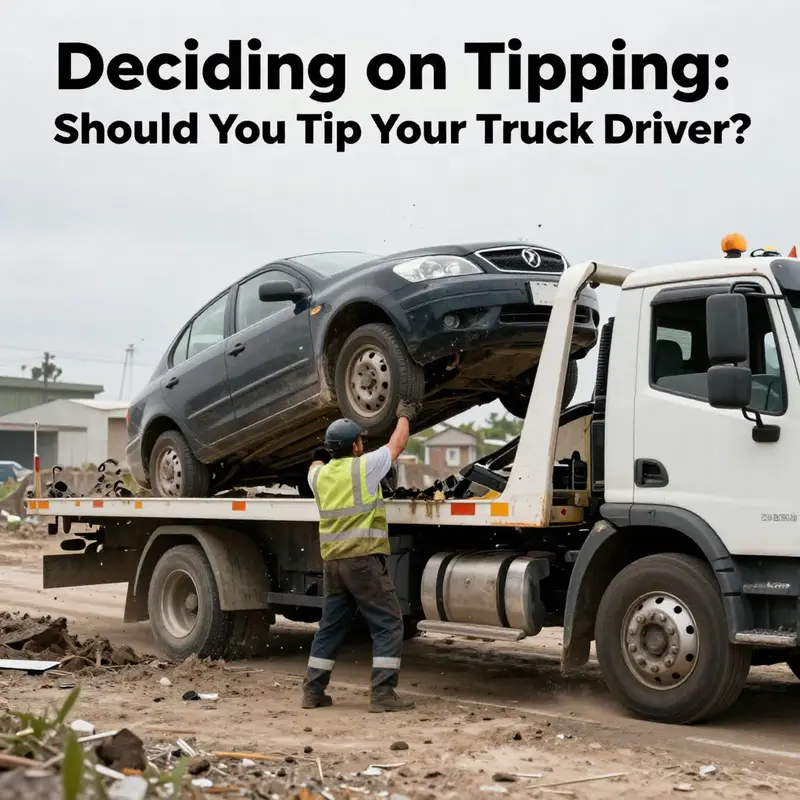
Towing is one of those services you rarely plan for, and when it happens, time seems to stretch in odd directions. The car is immobile, the landscape may be unwelcoming, and the urgent need for help collides with the practical reality of whether tipping is appropriate. In many places, tipping a tow truck driver is not an expectation baked into the fee you already pay for the tow. The service is professional, the price is often agreed in advance, and the driver’s compensation is built into that arrangement. Yet human moments of grace can still surface in the most practical of exchanges. A driver who arrives in the middle of a storm, or who handles a difficult recovery with patience and care, can leave you grateful enough to offer a small gesture. The key is to read the moment clearly and to understand that tipping is optional, not obligatory, and sometimes not permitted by company policy or local law.
Consider the typical scenario: your vehicle breaks down, you call for a tow, and a crew arrives. The invoice may list a service charge, a mileage fee, and a standard tow. In most cases, the driver’s job description ends at hooking, securing, and transporting your vehicle to a destination you designate. The driver, in fulfilling that duty, is performing a routine professional service. Under ordinary circumstances, there is no expectation of a tip. That clarity matters because it prevents awkwardness and aligns with the practical realities of a service industry that often relies on standardized pricing.
However, the chapter you are reading is about exceptional circumstances—moments when the performance rises above the ordinary, and a quiet, discretionary expression of thanks can feel both appropriate and meaningful. The first of these moments is urgency. When danger or discomfort is involved, promptness and safety protocols take center stage. Imagine a breakdown on a remote stretch of highway at night, or a broken-down vehicle in a storm where visibility is poor and the road surface is slick. In such moments, the driver’s calm demeanor, clear communication, and willingness to explain what will happen next can reduce a passenger’s anxiety dramatically. If the driver goes beyond the call of duty by providing extra safety measures—adding reflective gear, setting up cones, offering a blanket or water in severely cold conditions, or advising on immediate next steps—the gesture of tipping can become a tangible acknowledgment of risk and care. A range of $20 to $50 is often cited for these high-effort emergency responses, reflecting not only gratitude but the real value of added safety in challenging circumstances.
The second exceptional circumstance involves ancillary tasks performed by the driver that lie outside a straightforward tow. There are times when the driver does more than the minimum, and those acts deserve recognition. For instance, after a winter storm or heavy snowfall, a driver might clear a path around the car to prevent further damage or to facilitate a safe departure, disconnect a battery to avoid a short or a problematic jump start, or help with coordinating additional assistance, whether that’s arranging a follow-up tow, a mechanic appointment, or roadside help from a tire service. In such cases, a tip signals that the extra effort is noticed and appreciated. The value of these add-on services may be modest, but the appreciation is meaningful; a tip in the range of $5 to $20 can be a sensible gesture that does not overstep professional boundaries or policy constraints. The important nuance here is that the driver has demonstrated an investment in your immediate safety and long-term vehicle condition, not simply performed a transactional transfer from point A to point B.
The third exceptional circumstance centers on professionalism and courtesy. A tow driver who consistently communicates clearly, arrives promptly despite traffic or weather obstacles, and treats the situation with courtesy and respect embodies the best of the trade. In these instances, a tip is less about compensating for one event and more about reinforcing positive performance. It signals that reliable, ethical conduct—often the backbone of service industries—does not go unnoticed. The gesture can reinforce a standard of excellence in an industry where public perception can hinge on a single interaction under pressure. When a driver’s professionalism feels durable and dependable, a modest tip helps to acknowledge that consistency.
With these exceptional scenarios in mind, however, the practical framework remains grounded in thoughtful judgment rather than automatic habit. Tipping should be considered after you have evaluated the level of effort, the safety measures taken, and the personal attention provided by the driver. It is not an entitlement, nor is it a contract obligation binding every future encounter. In many regions and under many company policies, tipping is not expected and may even be restricted. It is always wise to consult the service provider or their written policy if you have any doubt about whether tipping is permitted or appropriate. The resulting approach is one of flexible generosity, guided by circumstance and your own financial situation at the moment of service.
Context matters, too. Local customs can vary widely, and what seems customary in one city or state may be unusual in another. The same driver might encounter different expectations on different days, depending on the local weather, the availability of other emergency services, or the general climate of tipping in nearby communities. And there is a broader cultural question: tipping is a social signal of appreciation that can help sustain excellent service within a field, yet it is not a mechanism for guaranteeing better treatment. The prudent choice is to reserve tipping for moments when the driver has demonstrated a clear extra mile—when the kindness and competence go beyond the basic safety and transport function—and to accept that no tip remains due if the service remains within the bounds of standard practice.
For anyone facing a breakdown and weighing the options, a simple, practical framework can help. First, confirm whether tipping is allowed by the company policy. If it is not, or if you are unsure, opt for a respectful expression of thanks without tipping, perhaps with a polite compliment noted to the dispatcher or included in a customer review later. If tipping is allowed, consider the level of extra effort and the degree of risk or inconvenience faced by the driver. In emergency situations where safety took precedence and the driver’s actions significantly reduced your risk, a higher tip might be justified. If the driver simply completed the expected tasks efficiently and courteously, a lighter gesture—perhaps in the range of $5 to $15—often suffices. When the driver’s service clearly went beyond the call of duty, a more substantial tip could be appropriate, falling somewhere between $20 and $50 depending on the conditions and the outcomes achieved.
Cash remains the most universally accepted form of tipping in roadside services, particularly when the driver is in a position to hand you a receipt or a card reader is not readily accessible. That said, some drivers and companies accept digital tips via apps or portable readers, and in regions where cash handling is less normative, those alternatives can be perfectly acceptable. The delivery method matters less than the sentiment and the context: the goal is to acknowledge extraordinary effort with a discreet and respectful gesture. In all cases, avoid tipping in a way that might feel transactional or obstructive; patience and discretion go a long way toward maintaining a sense of mutual respect during a stressful episode.
As you reflect on whether to tip, it is also useful to consider the broader customer expectations landscape. A growing body of guidance from road-service associations and consumer groups emphasizes two core points: tipping is optional, and the quality of service should be judged independently of any gratuity. When you feel drawn to a tip, it is usually because the driver has demonstrated care that you believe warrants special recognition. It is not because you interpret the service as lacking otherwise. In this light, a tip becomes a personal, human thank-you rather than a monetary debt owed to a professional. If you are curious about how industry standards frame these moments, reputable roadside guidance and consumer advocacy resources discuss tipping as a flexible, situational practice rather than a rigid rule. For more on overall towing service expectations, you can consult consumer guides and policy resources that address the nuances of this work.
In bridging the practical and the personal, it is worth acknowledging that some drivers or agencies may explicitly prohibit tips as part of their policy or legal framework. If you encounter such a stance, honoring it is part of fair and respectful interaction. You can still express your appreciation in non-monetary ways, such as writing a favorable review, sharing the driver’s name with the dispatcher, or offering a gentle compliment to show that you valued the experience. The strongest takeaway is that tipping is a discretionary choice, anchored in exceptional service and genuine gratitude, not an automatic add-on to the bill. In this sense, your decision to tip—or not to tip—should reflect both your experience and the broader norms that guide the industry in your area.
If you want to read more about established guidance around towing and customer expectations, the American Automobile Association (AAA) offers resources on towing services that emphasize service quality, safety, and consumer rights. Their guidance helps frame tipping within a wider discussion of what customers can reasonably expect, what constitutes fair pricing, and how to navigate the realities of roadside assistance in emergencies. AAA Towing Services.
For readers seeking practical connections to the local service landscape, consider exploring nearby roadside options for quick reference. If you want to see how local providers present themselves and what kinds of service add-ons they offer, you can explore regional resources and company profiles that describe availability, safety practices, and customer communication standards. For instance, a local provider’s online profile may outline how they handle snow removal around a vehicle, battery disconnection protocols, or coordination with insurance or repair shops after a tow. These details can help you form a sense of what to expect and how to recognize exceptional assistance when it occurs. If you’re curious about a local roadside option, you can learn more at mikes-roadside-service. Specifically, the page mikes-roadside-service provides a window into the kind of support a tow or roadside team can offer beyond a standard tow.
In the end, the question of tipping a tow truck driver isn’t simply about money. It is about recognizing moments when service exceeds the routine, about safeguarding your own sense of safety and dignity in a stressful moment, and about reinforcing professional standards that rely on human generosity as a supplement to fair compensation. The next time you find yourself facing a tow, let your judgment be guided by three simple checks: Was there added effort that clearly went beyond the call of duty? Did the driver prioritize safety and clear communication in a situation that could easily spiral into chaos? And did their conduct leave you with a sense of gratitude that you want to acknowledge? If the answer to these questions is yes, a tip—appropriate in amount and manner—can be a meaningful expression of thanks while still respecting company policies and local norms. If the answer is no, you have still benefited from professional service and can choose to express thanks in non-monetary ways that support ongoing quality service.
Final thoughts
In conclusion, the decision to tip a tow truck driver generally hinges on the nature of the service received. While tipping is not mandated within the towing industry, recognizing exceptional service—such as swift response during an emergency or additional support provided by the driver—may warrant a small token of appreciation. Being mindful of local customs and company policies can also guide your decision-making process. By equipping yourself with these insights, you will not only foster goodwill but also contribute to elevating the service standards within the towing community.