
Understanding the costs associated with tow trucks is vital for business owners seeking to optimize their operations. Both service costs for end users and purchasing costs for operators can significantly impact profitability. This article explores three crucial aspects: consumer towing service costs, the economic implications of purchasing tow trucks, and the various factors influencing overall tow truck expenses. Each chapter delves deeper into these topics, equipping you with the knowledge to better manage towing operations and make strategic financial decisions in this essential industry.
Tow Costs Demystified: What Drives the Price of a Tow Ride
When a vehicle breaks down or is stuck in an inconvenient spot, the arrival of a tow truck is more than a roadside helper — it’s a live read on how pricing works in a business that blends logistics, labor, and specialized equipment. People often notice the moment a truck pulls up and think only about the final number. Yet behind that number lies a chain of decisions about distance, vehicle weight, time, and the tools needed to move a car from one place to another without causing further damage. Understanding these threads helps anyone facing a tow not only budget more accurately but also negotiate more confidently and avoid sticker shock when the driver talks through the estimate. The price you’re shown is rarely a single flat line; it’s a composite of several discreet charges that come together to reflect the specifics of your situation.
Distance sits at the top of that list for most consumers. It is the single largest cost driver in most towing scenarios. Companies commonly structure pricing with a base fee plus a per-mile charge, while others use a fixed hook and roll fee that covers the contact and on scene time before the actual transportation begins. The practical upshot is straightforward: a short tow—say five miles—tends to be around seventy five dollars, give or take a little depending on the region and the provider’s current demand. A longer journey, spanning fifty miles or more, can creep well past three hundred dollars and is not unusual when the ride passes into long-distance territory or crosses state lines. In some markets, long hauls push toward four to six hundred dollars or more, especially if the destination is far from repair shops or if the driver must secure the vehicle for a recovery that requires extra equipment. Those figures aren’t random; they reflect the reality that fuel, time, and the depreciation of aging equipment accumulate quickly with distance.
The type and weight of the vehicle being towed also shape the price in meaningful ways. A compact car demands less equipment, lighter labor, and smaller tires to support the tow operation. Heavier vehicles—full-size SUVs, pickup trucks, vans, or commercial fleets—require larger tow rigs, specialized rigs for lift and traction, and sometimes additional crew. The heavier the load, the more fuel is burned, the more complex the hook-up, and the greater the risk that a routine tow could become a meticulous operation to avoid damage. In other words, weight isn’t just a factor of the car’s mass; it’s a predictor of the resources the tow operator must deploy. This is also why some notices you’ll see during emergencies include a premium for the extra manpower or the need to bring higher-capacity equipment to the scene.
Time and location add their share as well. After-hours and weekend service regularly comes with higher rates, reflecting the premium for labor availability when demand is high and the pool of technicians is smaller. Rural areas often present a different kind of math: the sheer distance to reach a roadside incident can boost the price, even when the hourly rate is similar to urban benchmarks, because fuel and travel time mount quickly. Conversely, urban settings can carry premium charges tied to parking restrictions, traffic delays, and the higher cost of doing business in dense markets. City regulations, local caps, and nonstandard requirements all can influence final numbers, making it prudent to ask for a complete breakdown before you commit.
Beyond distance and weight, the equipment used to perform the tow matters. Flatbed tow trucks and basic wheel-lift setups are common, but the other end of the spectrum includes specialized rotator units capable of recovering vehicles from precarious angles or overturns. Rotators come with a premium, reflecting their advanced engineering and the risk management they provide on highways and mid- to high-speed recovery scenarios. Those high-end machines can cost tens of thousands to operate daily and drastically alter the operator’s price structure when a call requires their use. Even within standard tows, the choice of equipment changes the risk profile of the job and, in turn, the price. A flatbed is widely regarded as the gentler option for many vehicles—especially those with all-wheel drive, low ground clearance, or a delicate undercarriage—yet it still entails a cost associated with maintenance, fuel use, and the labor required to load and secure the load safely.
For consumers, a typical snapshot of pricing in recent markets places the average tow around a hundred dollars, with a wide spread between low and high ends depending on the factors discussed. Local tows under ten miles commonly fall in the range of eighty to one hundred fifty dollars. Mid-range, ten to fifty miles, often lands between one hundred fifty and three hundred dollars. Long-distance tows, those over fifty miles, can reach three hundred dollars and beyond, as the need for sustained travel, extra equipment, and sometimes overnight storage fees compounds the final charge. These figures reflect a snapshot from consumer market data that keeps evolving as factors shift with oil prices, labor costs, and regional regulatory landscapes. The central message remains consistent: distance tends to drive the most significant portion of the bill, followed by the weight of the vehicle and the time the service is needed.
To manage the price, the simplest and most effective steps are practical and proactive. Always request a cost breakdown before the tow begins, and ask explicitly whether the written quote includes every potential fee—mileage, after-hours charges, and any storage or administrative surcharges. If possible, compare a couple of quotes from different providers; the variability in regional pricing can be surprisingly wide. It’s also worth checking whether your auto insurance policy or roadside assistance plan covers towing, and if so, what limits apply. These steps turn a potentially opaque price into a clearer forecast and reduce the chance of shocks when the bill arrives.
From a planning perspective, recognizing how the price signals are constructed helps you decide what you can do near the scene to control costs. If your vehicle is drivable but unsafe to operate, asking for a tow that minimizes distance and uses the most appropriate equipment can save time and money. If the destination is a repair shop within a reasonable radius, choosing a local tow rather than a long-distance one may yield substantial savings. If a vehicle is in a remote location, it may be worthwhile to coordinate with your insurer or roadside assistance to locate the most efficient option available, balancing speed and expense. For readers who want a practical anchor as they read future sections, you can explore a roadside-service focused resource that delves into the nuts and bolts of preparation and pricing in real-world scenarios. It provides a practical frame for planning and price comparison.
In the same vein, the broader market data reminds us that while the average price point is informative, it is the specific combination of distance, vehicle type, timing, and equipment that determines your final number. A recent industry snapshot shows a nationwide picture where the average is around a mid-range figure, with a spread that climbs quickly as the variables move from local, short-haul to long-distance or heavy-duty operations. This isn’t to imply a fixed ceiling or floor; rather, it underscores the need to compare, confirm, and prepare. The variability across urban versus rural markets, the presence of municipal restrictions, and the differences in acute incidents—like a vehicle stuck in ice, mud, or on a shoulder—make each tow a unique calculation rather than a one-size-fits-all fee.
For readers seeking an external frame of reference, a thorough consumer-focused overview published in early 2026 consolidates the key drivers and the typical price ladder while highlighting how distance, vehicle weight, and service timing converge to shape the final invoice. This broader analysis serves as a solid companion to the local and regional price estimates you’ll encounter in your own market. It also reinforces a practical habit: ask for the full amount up front and verify what is included before approving the work. In an industry where plans and weather can alter the plan in minutes, clarity is a form of preparedness that helps drivers and passengers manage the moment with less anxiety and more confidence.
Counting the Cost of Owning a Tow Fleet: The Full Price of Powering a Towing Business
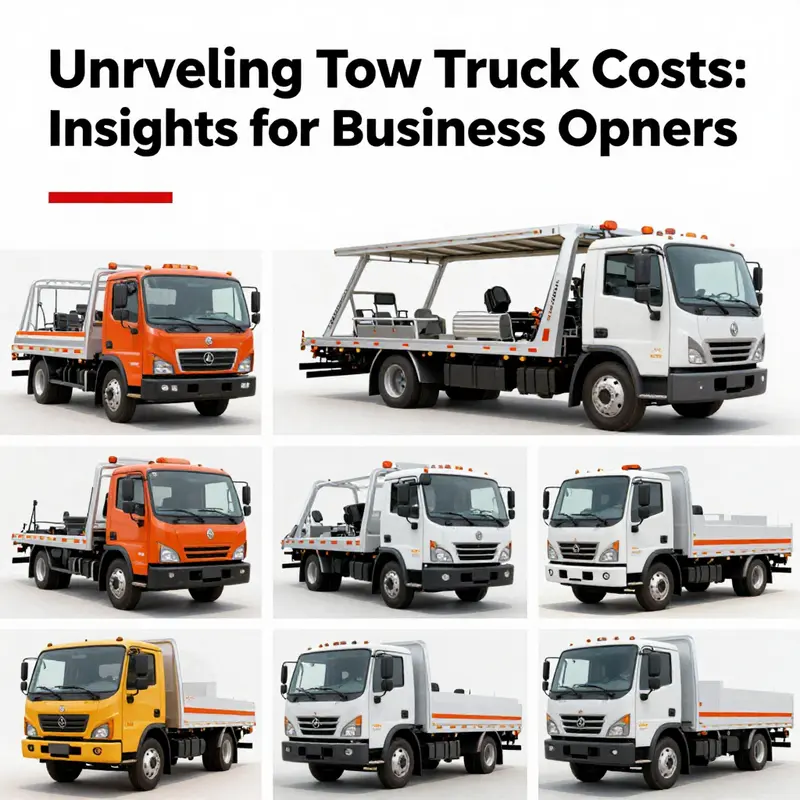
Owning a tow fleet is not a single price tag but a complex calculus that blends upfront investment with ongoing costs and strategic risk. For business owners, the question isn’t only what a tow truck costs at the showroom, but how the vehicle fits into a broader financial plan that covers financing, maintenance, and the unpredictable cycles of demand. In practical terms, the purchase price is only the opening move. The real economic picture includes the equipment that rides alongside, the training that keeps crews safe and efficient, the insurance that guards against liability, and the opportunity cost of capital tied up in assets that must perform daily to keep the doors open. Understanding these layers helps explain why conversations about tow trucks often pivot from sticker price to total cost of ownership and, ultimately, to expected return on investment over the life of the fleet. When a business lines up its needs, the choice between a conventional flatbed, a heavy-duty rotator, or a combination of both hinges on more than the weight rating or the latest tech; it hinges on how the asset translates into faster recoveries, safer operations, and steadier revenue streams.
New trucks bring a wide range of prices, and the variance mirrors the different roles a fleet must play in real-world service. For standard tow trucks designed for everyday recoveries and routine roadside work, the purchase price typically sits between seventy-five thousand and one hundred fifty thousand dollars. In contrast, rotator tow trucks—equipped with rotating booms capable of lifting a vehicle from almost any angle—command substantially higher price tags, often landing in the range of one hundred fifty thousand dollars to three hundred thousand dollars or more. The higher upfront cost reflects the machinery’s versatility, speed, and capability in complex accident scenes where conventional flatbeds may struggle. Even newer flatbed configurations, which are prized for their gentler handling of delicate or low-clearance vehicles and their general all-around safety, tend to be situated within the same broad price bands as other new models, though the exact figure depends on bed length, hydraulic power, and additional stabilization features.
Beyond the sticker price, there is a suite of ancillary investments that quickly accumulate to a substantial total acquisition cost. A modern tow truck is only as capable as its supporting gear: winches robust enough to lift heavy loads, securement gear like heavy-duty straps and wheel lifts, dollies for non-driving axles, and axle pads that protect sensitive components during transport. Safety equipment—high-visibility lighting, audible warning systems, and compliant operator alarms—adds to purchase outlays while also reducing risk on the road. These items can push the initial outlay well beyond the base price of the chassis and body, especially for fleets that aim to meet high safety and regulatory standards. For businesses budgeting from year to year, fleet management requires planning not only for vehicle depreciation but also for ongoing equipment refreshes and replacements as standards evolve and wear takes its toll.
An important, often overlooked dimension is financing and the related cash flow implications. Fleet owners frequently balance the lure of ownership against the benefits of leasing or financing. As a rule of thumb, fleet purchases in early 2026 can be straightforward when cash is available, yet many operators opt for lease or loan structures to preserve liquidity and to shift some risk away from the balance sheet. In addition to the purchase price, lease payments or loan amortization commitments must be weighed against expected utilization, service demand, and the anticipated lifespan of each asset. When leases are considered, annual payments can begin around forty-five thousand dollars, a figure that must be assessed against the projected revenue generation of the asset. This cost must be amortized across service jobs and average ticket sizes to determine if the investment will break even within the typical lifespan of the equipment. Depreciation, tax incentives, and insurance credits can mitigate some of these costs, but the core decision remains a strategic forecast: will the asset generate enough recoveries, efficiencies, and market share to offset its price over time?
Operational costs rock the baseline even further. A tow truck is not a static purchase; it is a working tool that consumes fuel, requires regular maintenance, and depends on skilled personnel to stay productive. Routine maintenance, tire replacements, brake service, hydraulic checks, and periodic overhauls are ongoing expenses that compound over the life of the fleet. The exact cost trajectory will vary by model, workload intensity, and regional factors such as fuel prices and labor rates. Insurance premiums reflect exposure to risk and the potential for costly incidents, further shaping the annual cost of owning and operating a fleet. Training programs elevate crew safety and efficiency, reducing the probability of costly accidents while improving recovery times and customer satisfaction. Compliance with local and state regulations—ranging from weight limits to vehicle markings and operator certifications—adds another layer of recurring cost, albeit often necessary to maintain eligibility for municipal contracts or commercial partnerships.
Budgeting for a tow fleet also demands a careful look at downtime and utilization. A high-availability fleet generates revenue when it is on the road, not idle in a shop. Unplanned downtime due to mechanical failures or parts shortages can erode profitability by delaying service and forcing expensive emergency repairs. Conversely, a well-maintained, properly equipped vehicle can move from call to call with minimal stoppages, maximizing billable hours and per-mile margins. The rotator’s higher price tag can be justified by its ability to manage more demanding scenes with fewer turnovers in the shop, but this comes with increased maintenance complexity and the need for specialized training. In contrast, flatbeds offer reliability, broad vehicle compatibility, and lower risk of damage for sensitive cars, potentially translating into steadier demand from dealerships and private owners. Each configuration carries its own cost-performance profile, and a thoughtful fleet plan often blends models to balance capability, reliability, and total cost of ownership.
The financial logic behind building or expanding a tow fleet also hinges on strategic alignment with service propositions and geographic reach. A single high-capacity unit might cover a large city’s needs, while a mix of flatbeds and rotators could serve both urban highway calls and rural recoveries, where long distances and variable terrain demand different equipment. The decision framework should connect unit cost to anticipated service mix, response times, and market share growth. For business leaders, this means translating price tags into operating metrics: expected revenue per tow, average miles per call, maintenance cycles, and the depreciation schedule that aligns with accounting and tax planning. In practice, an owner might evaluate whether the incremental capability of a rotator justifies its premium over a standard flatbed, especially when demand signals show frequent need for aggressive accident response, highway recovery, or overturn scenarios. Conversely, for a shop that prioritizes lower risk and broad vehicle compatibility, a fleet leaning toward flatbeds might offer the most predictable long-term economics.
For readers looking to deepen the practical implications of these choices, one internal resource can provide a helpful companion view to this chapter’s discussion about ownership costs and fleet management: mikes-roadside-service. It offers a sense of the service landscape and how fleet capabilities translate into real-world coverage, maintenance patterns, and customer expectations that shape annual budgeting. And for a broader pricing snapshot that anchors this chapter in market data, an external reference lays out the latest new-truck price ranges and how they map to different configurations: https://www.towtruck.com/new-tow-truck-prices-overview. This external source reinforces the idea that the economics of purchasing tow trucks are not static; they shift with technology, regulation, and market demand, reaffirming the need for ongoing financial forecasting and strategic scenario planning as part of any fleet-building decision.
Tow Costs Demystified: How Distance, Weight, and Timing Shape the Price
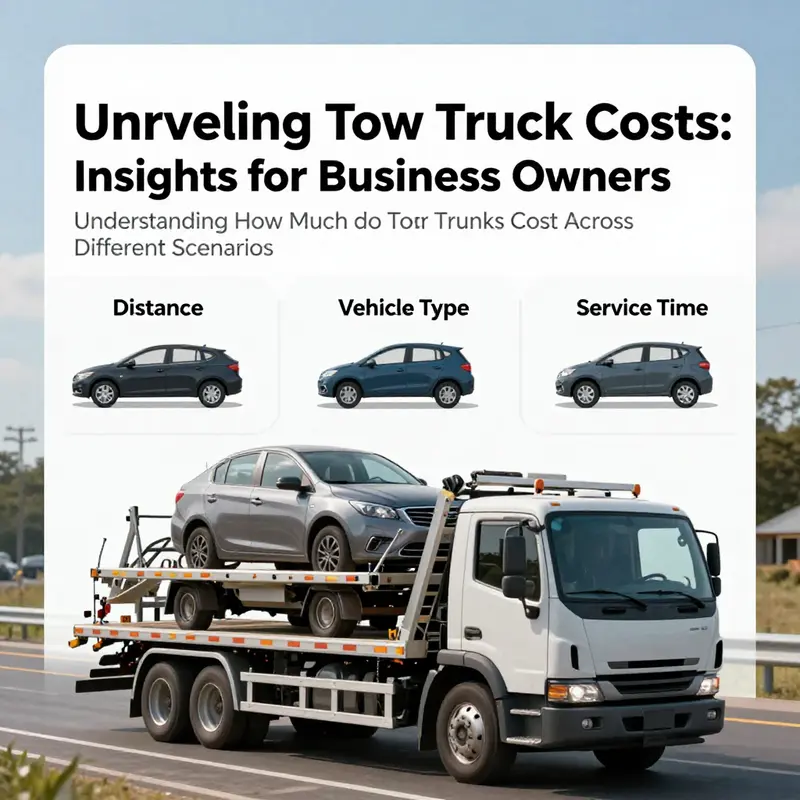
When you call for a tow, the price you are quoted is not a single fixed figure. It is shaped by several factors that together determine the final bill. Think of towing as a logistics task as much as a vehicle operation. The distance to be traveled, the weight and type of the vehicle, the time of day, and the local environment all influence the price. This means the same job can have different prices depending on where you are and when you need help. For most drivers, understanding these factors helps read a quote accurately and avoid surprises at pickup.
Distance remains the biggest driver of cost. Short, local tows are usually the most affordable, often with a base fee plus a per-mile charge. Costs climb quickly as miles add up. A five-mile tow can be in the low hundreds, while a fifty-mile tow often reaches higher ranges. For distances beyond one hundred miles, totals commonly land in the three hundred to eight hundred dollar range, depending on the vehicle and the service. The math isn’t only about fuel; it covers the time the driver spends behind the wheel, crew coordination, and any needed stops along the route for traffic, weather, or legal requirements. In short, longer journeys raise the price.
Weight and vehicle type add another layer. Light cars fit standard tow setups, while heavier vehicles like SUVs, trucks, vans, or motorcycles may require more equipment and manpower. Heavier loads often demand larger tow trucks, more fuel, and sometimes extra handlers. Different securing methods, wheel restraints, or dollies may be needed, and special handling can add time and risk management to the job. Two similar-looking tows can differ in price once the dispatcher assesses how the vehicle must be secured and transported.
Time of day and location also matter. Emergency or after-hours towing – late at night, on weekends, or during holidays – carries a premium for rapid mobilization and irregular hours. Urban areas with high demand and dense traffic can push prices higher than rural areas where travel times and fuel use are still factors but competition is greater. Local regulations and impound rules can add fees as well. These legal and administrative elements may appear as surcharges on the final bill even when the mechanical work is straightforward.
Beyond the basic factors, the tools and technology a company uses contribute to the price. Modern fleets rely on GPS, routing software, and safety gear, which improve efficiency but add overhead. The choice of equipment and maintenance translates into reliability and faster service, and these costs are reflected in labor, equipment use, and the overall job cost. A company’s ability to respond quickly and safely depends on these systems.
For consumers, practical steps help keep costs transparent. When you request service, ask for an itemized estimate that separates base fees, per-mile charges, and any after-hours surcharges. If your vehicle is heavier or requires careful handling, ask the dispatcher to note the need so the crew can prepare the proper equipment. In some areas, you can compare quotes from a couple of providers before you commit. If you are in a large market, you may find pricing guidance from local resources that explain the typical structure. The key idea is simple: distance, weight, time, and equipment all contribute to the final bill. For more context, you can review industry examples of how pricing is set in different regions.
In sum, tow costs are not a single fixed number. They reflect the journey from point A to point B, with every mile, every pound, every hour, and every tool involved contributing to the final price. A small amount of preparation goes a long way: understand the key factors, compare quotes, and seek estimates that clearly show base fees, mileage, and surcharges.
Final thoughts
Understanding the complexities of tow truck costs is essential for business owners in the industry. The examination of consumer service costs, purchasing options, and the factors that influence pricing provides a comprehensive view. By being well-informed, you can make strategic decisions that optimize your business’s towing operations and align with market demands.