
The death of a tow truck driver after a collision on a major highway highlights the dangers faced by roadside assistance personnel. This article examines the incident, the safety protocols in place, and the broader impact on public awareness and regulatory measures. By exploring investigative findings, recommended safety practices, and the role of the public in ensuring safer roadways, we aim to inform business owners, operators, and the traveling public about essential steps to reduce such tragedies.
Tow Lines and Toll of the Road: The Cost of Rescue on Canada’s Highways
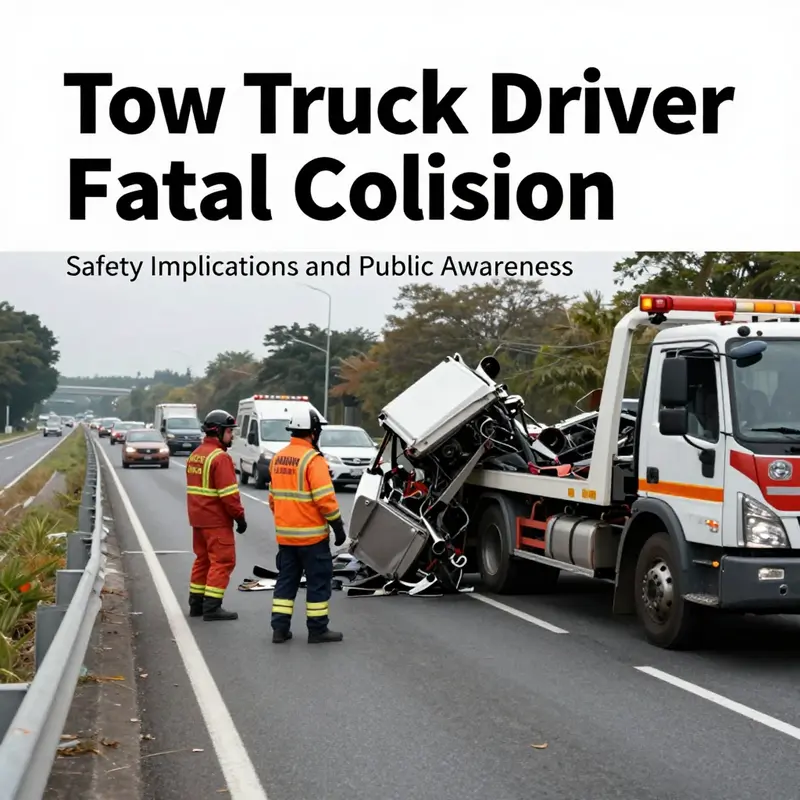
On the shoulder of busy highways, tow crews perform a necessary, dangerous job. Responding to stalled vehicles, crashes, and stranded motorists requires speed and caution in conditions that offer little margin for error. When a collision claims a life, the toll is not only measured in statistics but in families, communities, and the sense of duty that keeps responders moving from shift to shift. The incidents in New Brunswick and Alberta illustrate the risk landscape: a head-on collision on a rural road takes a life, while another driver escapes with minor injuries. These tragedies remind us that the road does not pause for recovery work, and that visibility, traffic, weather, and driver behavior all shape the outcomes. What can be learned to reduce harm? Clear scene setup protocols, better dispatch communication, and standardized safety zones help. Training that emphasizes situational awareness, the use of protective barriers, and proper lighting at recovery sites can tilt the odds toward safety. But the public also plays a role: move over laws, obey speed limits near incident scenes, and stay attentive to the space around responders. Public awareness campaigns can reinforce these norms, encouraging drivers to slow, switch on warning lights when appropriate, and give space to those on the roadside. The goal is to preserve the ability of tow operators to do their work without unnecessary risk while maintaining traffic flow. For readers seeking practical context, industry resources show the realities of roadside work, from on scene safety practices to the coordination required to restore traffic. The stories of responders remind us that every life saved at a recovery site is a tangible payoff for vigilance, training, and a shared commitment to road safety.
After the Collision: Tow Truck Safety Protocols, Regulations, and the Human Duty to Protect Roadside Responders
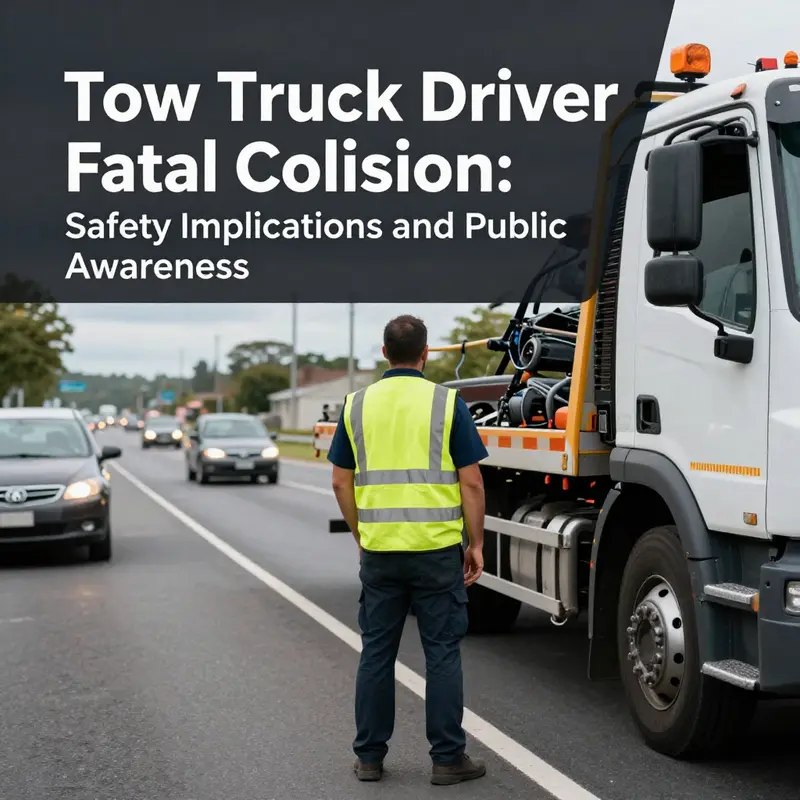
The death of a tow truck driver along the Trans-Canada Highway near Strathmore on April 16, 2025, is a stark reminder of the price paid when the roadside becomes a danger zone. In the immediate aftermath, the attention of families, colleagues, and community members is rightly drawn to the fragility of those who fix what the public relies on in moments of vehicle failure or crash. Yet this tragedy also confronts the broader road-using public with a harder truth: the work of tow operators often unfolds in the most perilous corners of busy highways, under variable light, weather, and traffic patterns, and too frequently with drivers who fail to slow, or to move over when required. The chapter that follows does not seek to celebrate hazard; it seeks to illuminate why safety protocols exist in the first place and how they are designed to be reinforced by clear regulations, consistent training, and a culture that treats every roadside emergency as a moment when lives are at stake beyond the vehicle involved in the incident. In this moment of collective mourning, it remains essential to translate sorrow into safer practice for every responder and every motorist who shares the road.
The core of effective roadside safety lies in a disciplined sequence of actions that begins the moment a scene is identified and ends, ideally, with all actors leaving the highway with their dignity and their lives intact. Securing the scene is the first imperative. Warning devices—triangles or flares placed at a safe distance to alert oncoming traffic—provide the necessary buffer against rear-end collisions and errant passes. In low-visibility conditions or on high-speed stretches, those buffers become lifelines; they are not optional accessories but core components of risk management. The choice of placement distances, the timing of deployment, and the coordination between the driver and any passengers or clients waiting nearby hinge on a clear, practiced understanding of how quickly traffic moves and how drivers will respond to changing conditions. Visibility requirements echo this emphasis. Tow operators wear high-visibility vests that meet recognized standards and activate flashing beacons or other lighting to ensure the vehicle and personnel are conspicuous from a distance. The goal is not to dazzle or protest traffic but to invite predictable behavior from approaching drivers and to reduce the cognitive load required to navigate past a roadside scene. These steps—scene control and visibility—are the nondiscretionary foundations of safety; they are the baseline that allows subsequent actions to be taken with confidence rather than fear.
Yet safety is not a matter of mere optics. It extends into the precise physical management of the vehicle involved in the incident and the apparatus used to effect a tow. A careful assessment of stability is indispensable before any lifting or immobilization begins. The tow truck must be positioned to avoid further shifting of the damaged vehicle; wheel blocks or chocks may be necessary to prevent rolling while chains and hooks are attached, and the operator must evaluate the ground, slope, and traffic angle to anticipate any unplanned motion. Even seemingly small missteps can amplify risk, particularly when a vehicle is perched on a shoulder or partially on the travel lane. The procedural discipline here is a practical ethic—check, recheck, and confirm before committing to any mechanical action. Stability checks also extend to a broader logistical awareness: ensuring that the trailer, winching equipment, and any vehicle that might move solidly integrates with the tow job and remains secure as conditions shift around the scene. In the end, everything rests on a quiet, methodical, method-tested mindset that treats caution as a duty rather than a preference.
Regulation and compliance shape how those decisions are made and enforced. Across North America, safety standards for tow operations align with a shared aim: professional qualification, consistent inspection, and dependable maintenance of equipment. While specific transportation rules vary by jurisdiction, the undergirding principles are common: operators must be properly trained, drivers must observe hours-of-service rules and workforce regulations where applicable, and every piece of lifting or securing gear must be maintained to a standard that minimizes the risk of equipment failure at the most critical moment. In the United States, this guidance is reinforced by federal and state-level oversight that tracks qualifications, inspections, and equipment readiness. In Canada, provincial authorities assume the lead in setting and enforcing standards, but the imperative remains uniform: avoid improvisation when lives are at stake, default to established best practices, and seek ongoing education that translates into safer roadside behavior. Readers seeking formal guidance can reference the National Highway Traffic Safety Administration’s guidelines for roadside assistance and tow operations as a baseline for understanding how national standards inform local practice. NHTSA standards offer a structural lens through which to view the steps described here and to recognize that the integrity of a tow operation depends on a chain of regulatory compliance, not merely on personal skill.
The broader cultural shift toward safer highways requires more than procedures. It demands public awareness and a shared sense of responsibility from drivers who encounter a stopped tow truck or a highway assistance vehicle. The admonition to move over for first responders and roadside workers is not a sterile legal requirement but a practical principle born of the reality that seconds can determine whether a person reaches home safely. Media coverage of incidents, community conversations, and ongoing training inside tow companies all contribute to embedding this principle into everyday driving. Tow operators, for their part, must model calm, professional conduct, communicate clearly with other road users, and avoid behaviors that distract or antagonize those who work to restore mobility after a crash. When a driver chooses to slow, yield, and steer away from the hazard, a chain reaction occurs: fewer injuries, fewer fatalities, and a road network that continues to function even as professional responders and recovery crews do their work.
The tragedy on the Trans-Canada Highway invites a sober reflection on how to translate intention into action in everyday practice. It is not enough to preach caution in moral terms; the field demands training done with intention, drills that simulate real roadside pressures, and regular reviews of equipment readiness. It invites managers and policymakers to invest in more robust safety cultures, where the acceptable risk threshold is consistently recalibrated against evolving traffic realities and weather conditions. It invites drivers to see a tow truck not as a nuisance but as a critical part of the safety ecosystem—a signal that every move on the road carries consequences beyond the immediate crash scene. In this light, the chapter becomes less about abstract rules and more about the human logistics of protecting those who stand at the edge of fast-moving traffic to restore normalcy for others. To honor the fallen and to prevent future tragedies, professionals should look to practical, repeatable procedures, reinforced by credible regulation and public accountability, and remember that the road’s safety is only as strong as the weakest link in the chain.
For readers seeking a concrete reminder of the practicalities involved in roadside recovery, a concise resource on the subject is available through a closely related service platform: Mikes Roadside Service. This example underscores how a single, consistent approach to roadside assistance—anchored in visibility, scene control, and proper equipment handling—can be scaled across jurisdictions and teams to reduce risk at every step. As this chapter has argued, the aim is not to deter roadside work but to elevate it—to embed safety into every decision and every action taken between a halted vehicle and a cleared highway.
In sum, the collision that claimed a tow truck driver’s life is not only a memorial to a lost colleague but also a mandate to strengthen the safety fabric surrounding highway assistance. The standards outlined here—secure the scene, maximize visibility, verify stability, comply with regulatory expectations, and cultivate a culture of public responsibility—form a coherent framework that can guide practice in communities across the country. The road demands constant vigilance, but with disciplined adherence to these principles, the work of tow operators can be safer for themselves and for every driver who shares the journey. External references and ongoing training opportunities, such as those published by national safety authorities, remain essential resources as the profession evolves and the highway environment becomes ever more complex.
When the Shoulder Becomes a Scene: Tow Truck Safety, Public Responsibility, and Legal Reckoning After a Fatal Collision
On a quiet stretch of road that should have whispered safety to those traveling through, a tow truck operator lost their life after a collision on the Trans-Canada Highway near Strathmore, Alberta. The incident, reported on April 16, 2025, is more than a tragic local headline; it stands as a stark reminder of the peril that accompanies roadside recovery work. Tow trucks arrive at scenes where danger already gathers—broken lanes, flashing lights, and drivers who may not expect a slowed highway or a sudden obstacle in their path. The worker’s death exposes a fracture line in road safety culture: the essential service of recovery and assistance is carried out under conditions that routinely push close to the limits of what a human body should endure on a busy roadway. This chapter invites the reader to look beyond the immediate sorrow and ask how communities, regulators, and industry leaders can transform known risks into reinforced protections while preserving the public’s right to timely roadside aid. The answer lies at the intersection of public awareness, professional responsibility, and the legal architecture that governs work on high speed corridors.
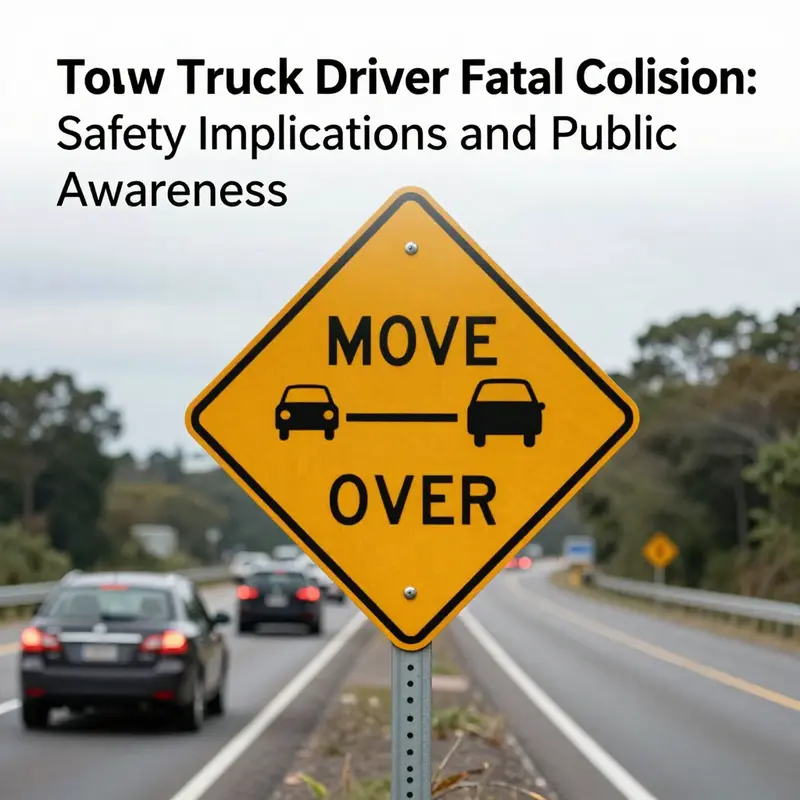
Public awareness is the quiet engine behind every meaningful safety improvement. When motorists understand that tow operators are not intruders on the highway but essential service providers who keep traffic moving after crashes, breakdowns, or stalled vehicles, they tend to adjust their behavior. The hazard is not a diffuse threat but a visible one: a vehicle stopped on the shoulder, hazard lights blinking, a cone line extending into the lane. People behind the wheel must internalize a simple but powerful rule of the road: slow down, create space, and move over when possible. Public education campaigns, media coverage, and community conversations have to translate phrases like move over for emergency and recovery personnel into concrete, memorable actions for drivers in every province and territory. The tragedy on that Alberta highway reveals what happens when such messaging remains abstract rather than embodied in daily driving choices.
The legal implications of a tow truck driver’s death extend beyond blame for a single incident. Investigations commonly examine whether standard safety protocols were followed: the use of warning lights, conspicuous cones or flares, and clear delineation of work zones. Jurisdictions differ, but the underlying principle is common: workplaces that operate on or near live traffic lanes must minimize exposure to risk through comprehensive safety measures and ongoing training. When these measures are found lacking, civil liability often follows, along with potential criminal exposure if negligence can be proven. Insurance claims accrue quickly, and families bear not only the emotional weight of loss but financial repercussions that ripple through generations. The legal discourse surrounding such tragedies underscores a crucial point: safety is not merely a dispatch requirement or a box to check; it is the foundation of credible business practice and public trust.
From a policy perspective, the death signals a need for stronger, more consistent standards across provinces and at the national level. Tow operators face a paradox: they perform indispensable work under conditions that inherently threaten their safety, yet the safety framework that governs their operations can be uneven or underresourced. The responsibility to protect workers rests with multiple actors—employers who ensure reliable equipment and up-to-date training, regulators who enforce clear rules about scene management and traffic control devices, and professional associations that translate broad safety philosophies into practical, day-to-day procedures. The expenditure of time and money on training, maintenance, and compliant equipment is not a cost but an investment in human life and in the capacity of the road system to function during emergencies. A robust regulatory framework would mandate minimum lighting configurations, reflective apparel, and portable traffic control devices that are tested for performance in different weather and lighting conditions. It would also require ongoing refresher training that keeps pace with evolving traffic patterns and technological advances in vehicle safety.
The intimate human consequence of this fatal collision cannot be separated from the broader narrative about accountability. When a life is lost, communities seek answers and, often, reforms. The public discourse tends to shift toward questions of whether drivers were sufficiently aware of the risks near recovery zones and whether they acted with the expected courtesy and care. It also scrutinizes whether the responding agencies and the towing firms had clear protocols for coordinating with law enforcement, fire services, and highway maintenance crews. City, provincial, and national authorities can derive from such events a mandate to strengthen moving over laws, bolster penalties for endangering roadside workers, and accelerate the dissemination of best practices for scene safety. In practice, this means clearer communications at the outset of incidents, more stringent adherence to lane-closure procedures, and investments in portable crash barriers, high-visibility barriers, and more accessible high-visibility gear for crews. The goal is not to criminalize ordinary drivers but to elevate a shared standard that protects every person who touches the road during a disruption.
Within the industry, lessons emerge about the interface between frontline workers and the public. Prompt recognition of hazard, disciplined situational awareness, and a safety culture that rewards proactive risk management are central to preventing a repetition of this tragedy. Some firms prioritize safety training that emphasizes recognizing the speed and unpredictability of traffic, coupling it with disciplined operational routines: deploying warning devices quickly, setting up a protected workspace, and maintaining clear communications with dispatch. Even when resources are constrained, the cost of neglecting safety is measured in lives and the financial and legal consequences that follow. For a reader seeking practical examples of how a service provider can embed safety into its daily operations, consider how a reputable roadside service team communicates with motorists and how the team integrates with responders to ensure that help arrives without exacerbating danger. See for instance the work of providers dedicated to reliable roadside support in a manner that foregrounds safety and accountability, such as Mikes Roadside Service. Mikes Roadside Service.
Public responsibility, then, becomes a shared project. Drivers must slow, scan, and move over when lawful, but they also deserve a road system that makes those decisions safer and clearer. That requires dependable signage, enforced adherence to traffic control zones, and continuous training for those who operate near moving vehicles. It means that employers cultivate a work environment where fatigue management, proper rest, and regular equipment checks are nonnegotiable. It requires regulators to provide consistent standards that withstand political or economic pressures and to enforce those standards without bias toward any one region or company. It also demands a societal shift in how we value and protect those who keep attention on the road during a crisis. The eventual aim is not to assign fault in a single incident but to build a robust safety ecology where loss of life becomes a rare anomaly rather than an accepted risk of the job.
In closing, the tragedy on that Alberta highway represents more than the end of a life. It is a call to action for better public understanding, stricter safety protocols, and a clearer mapping of legal responsibility when roadside work intersects with high speed travel. The road does not exist solely for the convenience of commuters; it is a shared space where updated practices, strong training, and compassionate enforcement can prevent another outcome that no one wants to face. The path forward requires listening to those who do this work, translating cautionary experiences into enforceable standards, and ensuring the public is aware of the fragile balance between speed and safety. The admonition to move over for responders and recovery crews should be as automatic as using turn signals. And as this conversation continues, the light of accountability must illuminate every step we take toward safer roads and stronger protections for the people who stand on the shoulder to keep us moving. For authoritative safety guidance, consult the NHTSA Tow Trucks and Accident Scene Safety guidelines: https://www.nhtsa.gov/road-safety/street-and-roadway-safety/tow-trucks-and-accident-scene-safety
Final thoughts
The death of a tow truck driver is a stark reminder of the hazards faced by roadside workers. It is imperative for business owners and operators to implement robust safety measures, invest in training, and foster a culture of public awareness that supports safer roads. By enhancing protocols and encouraging compliant driving behavior near emergency scenes, we can reduce the likelihood of similar tragedies and protect those who assist others on the road.