
The landscape for tow truck drivers has become increasingly complex, and understanding wage variations is crucial for business owners in the industry. Factors such as location, experience, and demand can significantly impact salaries. This article explores the salary insights for tow truck drivers in Canada, offering detailed information on what drivers can expect to earn across different provinces and cities. Additionally, we’ll provide a comparative analysis of salaries in the United States and other countries, highlighting advantages and trends that may affect your business strategy. By examining these insights, you will gain a deeper understanding of compensation practices within the towing industry, equipping your organization to attract and retain talent in a competitive market.
Tow-Driven Paychecks: A Realistic Look at How Much Canadian Tow Truck Drivers Earn
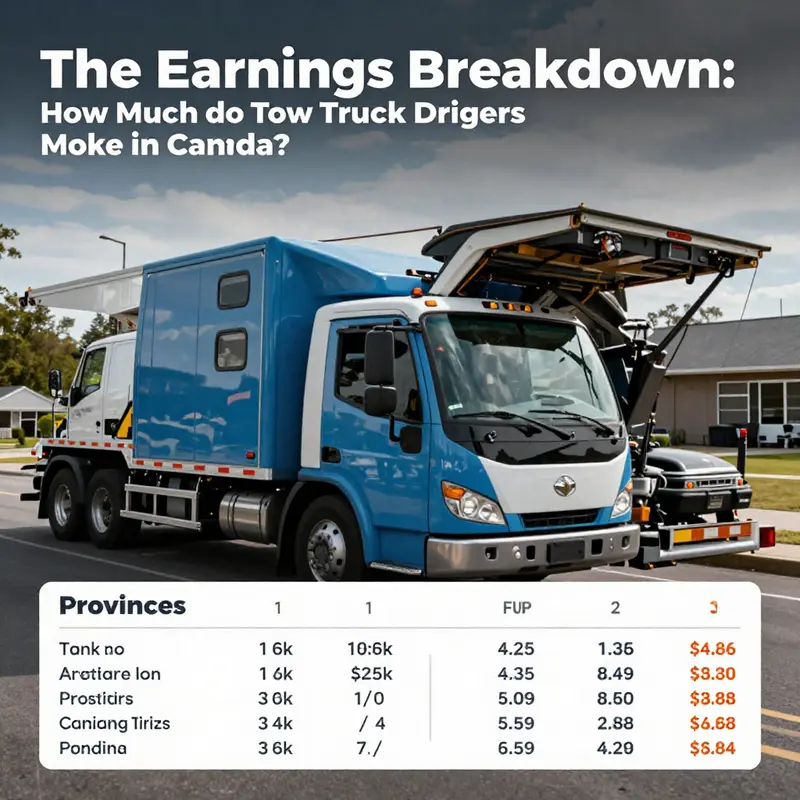
Tow truck driving is a hands-on vocation that keeps cities moving, especially when every minute counts during roadside emergencies or on busy interchanges. It is also a profession where pay varies as widely as the weather across Canada. The most recent salary data, compiled from real postings and reports as of December 2025, shows a national picture shaped by geography, demand, and the specific nature of the work. In Canada, tow truck drivers earn an average base rate of about $17.75 per hour, a figure that sits atop a broad range driven by where you work and who you work for. The national average is useful as a baseline, but it barely hints at the real story behind the numbers. In many parts of the country, especially in provinces with high industrial activity or centers of dense traffic, wages tilt higher. In British Columbia, for example, the typical hourly wage nudges up to around $17.85, a slight bump over the national average that reflects steady demand in urban and suburban markets. Within the province, there are pockets of notably higher pay. In one major city, the rate can approach the mid-twenties per hour for experienced drivers who handle a mix of on-the-spot towing, accident recovery, and on-call assignments. This isn’t a universal rule, but it signals how localized the pay landscape can be. Alberta sits a little closer to the national mean, at about $16.01 per hour, a level that underscores how regional market dynamics—especially in the oilsands towns and the associated service industries—shape wages differently from coastal or prairie markets. The contrast between regions is not merely about dollars per hour. It also reflects the nature of the jobs available. In Calgary or Edmonton, for example, tow operators may blend traditional towing with heavier roadside assistance, light haulage, and high-demand emergency response work. Those roles can yield higher hours and, consequently, higher earnings than more routine, in-shop assistance or routine local calls. The data also highlights a divergence between tow-specific roles and the broader spectrum of trucking work. In Calgary, the general truck driver wage sits around $27.41 per hour, which is notably higher than the tow-specific average. That gap points to the specialized skills, on-call requirements, safety considerations, and sometimes longer hours that can come with towing compared with the broader trucking sector. This distinction matters for anyone weighing a career path in the wider transport industry and helps explain why a general driver in certain markets can earn more even when tow tasks are highly valued locally. The numbers come from Indeed Canada’s salary data, which aggregates real-time compensation information from employees and employers across the country. This approach provides a nuanced snapshot of what people actually report earning, rather than a single, static figure. When we broaden the lens to look at provincial highlights, the story becomes even more instructive. British Columbia’s average of $17.85 per hour reflects a robust demand in a province bursting with urban centers and critical logistics corridors. In practice, that translates to a mix: steady day shifts with predictable calls and a handful of high-intensity nights or weekend allocations, especially in larger metropolitan areas or in communities near busy ports and industrial hubs. Alberta’s average, by contrast, sits at $16.01 per hour, a figure that mirrors quieter periods between peak demand and the fluctuation of the oil sector’s activity. Yet the same province hosts pockets of higher pay in places with strong industrial activity or where the towing market supports longer, more complex response work. Beyond province-wide averages, the data highlights several cities where wages trend higher, often driven by local demand, cost of living, and the intensity of vehicle recovery operations. Thunder Bay and Ottawa often surface as among the higher paying urban centers in the country, with hourly rates that reflect the volume of calls, the complexity of incidents, and the presence of professional fleets that rely on skilled drivers to juggle multiple priorities in real time. An entry into the province of British Columbia shows Richmond peaking in the local market, where the combination of dense traffic, industrial activity, and on-call pressure pushes some drivers toward the upper range of provincial wages. Those who live in or near Vancouver, Surrey, or other large municipalities can encounter similar pay signals in the mid-to-high teens per hour, depending on the employer and the exact nature of the on-call schedule. The broader pattern across Canada is one of a steady baseline with occasional leaps in response to demand shocks, seasonal fluctuations, or large-scale events that drive the need for rapid, reliable on-site service. The chapter would be incomplete without acknowledging the role of job postings in shaping expectations. In Vancouver, a full-time role in a towing operation can advertise monthly compensation in the broad range from about $4,000 to $8,000, a spread that reflects different shifts, overtime opportunities, and how the employer structures benefits and on-call pay. In Ontario, a Whitby posting notes a yearly figure in the vicinity of $50,000 to $80,000, illustrating how annualized pay can extend well beyond a simple hourly wage when overtime and on-call premiums are factored in. In Fort McMurray, AB, a prominent market for energy-related work, drivers may see hourly rates around $40 to $45, a level that signals the market’s willingness to pay a premium for rapid response in more remote or demanding conditions. In Calgary, AB, a specialized heavy towing operation has posted rates around $39 per hour, underscoring how the sector’s most technical or high-risk tasks can command higher compensation. These postings, while not representing every job, provide a practical window into how pay scales are deployed in real-world settings and how quickly they can shift in response to market forces. It is essential to view these ranges with context. The tow trade blends on-call availability, geographic distance to incident sites, vehicle specialization, and fleet size. A driver who covers a broad geographic area, handles complex recoveries, and remains on call through shift rotations may earn more than someone performing a narrower set of tasks in a smaller market. In that sense, the wage landscape is as much about the job’s structure as it is about the raw pay rate. The broader discussion also invites comparisons beyond Canada’s borders. In New South Wales, Australia, drivers earn roughly $29.60 per hour when averaged across a weekly pipeline of assignments, indicating how cross-border differences in labor markets, cost of living, and industrial demand shape compensation. In Singapore, the typical monthly salary sits around $2,726, with top earners approaching $4,000 per month, underscoring how local market conditions influence whether a job is compensated as an hourly or a monthly wage. These international comparisons help illuminate the Canadian scene: pay is highly localized, influenced by the density of calls, the reliability of infrastructure, and how a region’s economy anchors a tow operation. Within Canada, the pay spectrum—from the low teens to the mid- to upper-twenties per hour and beyond—reflects that same local variation. A summary of the broader conclusion is straightforward: tow truck drivers can expect to earn anywhere from roughly $16 to $45 or more per hour, with the upper end reserved for markets experiencing high demand and specialized or high-volume operations. The most compelling takeaway for prospective drivers is that location and employer context matter as much as the base rate. In strong markets, a driver might accumulate more earnings through overtime, on-call premiums, or a broader set of responsibilities that leverage the technician’s skill set. In more modest markets, a steady schedule and reliable base rate can still provide a solid livelihood, especially when paired with favorable benefits, training opportunities, and predictable shifts. For people weighing a career in this field, these figures mean that a move to a different city or province could meaningfully affect take-home pay, just as the choice of employer and the scope of the work can. The data’s practical utility lies in helping align expectations with reality. It encourages job-seekers to scrutinize postings not just for the hourly rate but for the total compensation package, including overtime, on-call allowances, and any shift differentials. It also encourages seasoned professionals to leverage market knowledge when negotiating or considering a move, as the high-demand pockets—whether in a major coastal city or a resource-rich interior town—often offer a meaningful uplift in earnings. For readers plotting a career path, a concrete takeaway emerges: the day-to-day reality of tow work is shaped by the local market’s appetite for rapid response and the operator’s willingness to deploy skilled drivers across longer or more demanding routes. In practical terms, this means connecting with employers who value reliability, safety, and efficiency. It also means understanding that the “average” hides a wide variance—where your pay can climb significantly higher than the baseline if you land in a market that prioritizes on-call flexibility, tactical recovery operations, or heavy-duty towing. Those pursuing this line of work should monitor trusted salary aggregators and official postings in their target regions to calibrate expectations. Indeed Canada and similar platforms compile salary data that reflect real-world earning patterns, but readers should treat any single figure as part of a broader trend rather than a definitive forecast. When evaluated in the context of provincial fluctuations, regional demand, and the specific duties attached to a given role, the Canadian tow truck pay landscape reveals a nuanced but navigable map. For individuals comfortable with shift work, on-call obligations, and the occasional long drive to an incident scene, the payoff can be robust. The most important step is to research local markets, talk to employers about how overtime is structured, and consider the broader package beyond the hourly rate. A practical way to gain perspective is to consult current job postings and salary aggregators that reflect the real market, then cross-check with a few local operators to gauge how the pay scales translate to actual take-home pay after taxes and benefits. If you want a snapshot of a real-world operator’s approach to the trade, you can explore a local towing provider’s service pages and job postings—an accessible, real-world contrast to the generalized figures discussed here. See mikes-towing for a concrete example of a local operator and how a single company positions compensation in today’s market. mikes-towing In sum, the Canadian tow truck pay landscape is regionally braided, with a national average that masks a wide spectrum of wages. High-demand markets—whether coastal, prairie, or central—carry the strongest pay signals, while more rural or economically slower areas tend to hover near the baseline. For anyone weighing a future in tow work, these numbers are a starting point, not a verdict. They encourage strategic choices about location, employer, and the exact mix of duties you’re prepared to take on. As the market continues to evolve with infrastructure projects, fleet expansions, and changing urban dynamics, the way drivers are compensated will undoubtedly reflect those shifts. The key is to stay informed, compare official salary data with live postings, and assess how your own experience and willingness to tackle on-call shifts align with the opportunities available in your region. External data sources, like the salary reports from Indeed Canada, provide a continuously updated yardstick to measure your potential earnings against the broader market. External resource: https://ca.indeed.com/salaries/tow-truck-driver-salary-Canada
Wages on the Road: A Global Perspective on Tow Truck Driver Pay Across Markets
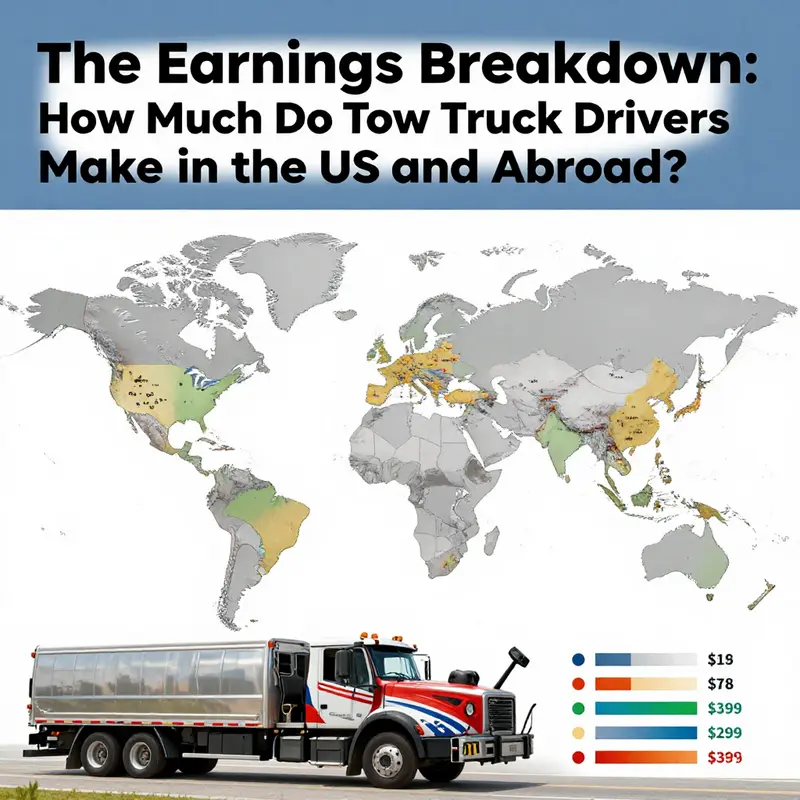
Wages for tow truck drivers are not a single figure that fits every street corner or city line. They ride with the hours, the hazards, and the economic rhythms of places as different as a metropolitan beltway and a remote oil town. When you map what these drivers earn across borders, you quickly see a landscape shaped by local demand, cost of living, and the particular ways companies pay their crews—whether hourly, by mileage, or through some form of commission. In the United States, the baseline story begins with a surprisingly wide spread. A headline number often cited by industry data places the median annual salary for tow truck drivers at about $52,210, with a range from roughly $24,800 on the low end to over $223,000 for top earners in some highly favorable setups. That spectrum reflects the reality that pay is not simply a function of the job title; it is a function of location, of whether the driver works for a large fleet, a small shop, or operates as an independent contractor, and of the pay structure that governs that specific position. The same driver’s income can swing dramatically from one city to the next, and even within a single metro area, depending on the time of day, the season, and the demand for road rescue services. In Canada, the wage picture follows a somewhat different pattern, shaped by currency, provincial regulations, and a more standardized pay framework in many regions. Nationally, the average hourly wage for tow truck drivers sits around CAD 17.75 as of late 2025. That average conceals meaningful pockets of variation: in British Columbia, for instance, the provincial average runs a touch higher at CAD 17.85 per hour, with Richmond reporting a notable peak in some periods at CAD 24.06 per hour. Vancouver and Surrey hover around CAD 17.85 as well, illustrating a cluster of mid-range wages in a major coastal corridor. The city-level extremes tend to drive the impression of a bifurcated market. Thunder Bay and Ottawa, among others, have been highlighted as higher-paying centers in Canada, with Thunder Bay reporting wages around CAD 26.53 per hour and Ottawa at CAD 25.19 per hour; Edmonton in Alberta has also shown relatively elevated rates, near CAD 24.05 per hour. A practical takeaway from these Canadian patterns is that the overall pay level in Canada remains closer to the national average, while the top-end opportunities tend to cluster in specific cities where demand for towing, vehicle recovery after collisions, and heavy-duty wrecker services is consistently high. In both countries, job postings reveal a broad spectrum of compensation possibilities. In Vancouver, a company might advertise a full-time range of CAD 4,000 to CAD 8,000 per month, while other listings in Ontario and Alberta present annual salaries that can scale from CAD 40,000 into the six-figures when the role includes specialized recovery work or remote-site assignments. This layering—regional norms plus employer-specific incentives—helps explain why two drivers in neighboring neighborhoods can report very different take-home pay, even though they hold the same job title. Across the Atlantic and into the Pacific and Indian Ocean time zones, the pay story expands further still with notable contrasts that reflect broader economic structures. In Australia, for example, a tow truck driver in New South Wales earns roughly CAD 1,264 per week when converted into local currency terms, which translates to about CAD 29.60 per hour on a weekly basis in the right mix of shifts and duties. That weekly figure, while seemingly high on a per-hour basis, must be read against the cost of living, the geographic spread of remote assignments, and the requirement to provide rapid emergency service around the clock. In Singapore, the wages lie somewhere in a different orbit entirely, with average monthly salaries around SGD 2,726 and top earners reaching up to about SGD 4,000 per month. These numbers underscore a global reality: the same job can produce markedly different financial outcomes depending on the local economy, the regulatory framework, and the structure of the work itself, including the likelihood of on-call duties, after-hours assignments, and the physical demands of the work. The United States stands out for the diversity of pay structures within a single market. Some drivers are paid hourly and rely on typical shift differentials for nights and weekends, while others are rewarded with mileage-based pay or commissions tied to connected services and on-scene recoveries. This mix often translates into a higher ceiling for earnings in certain roles and regions, particularly where fleets manage large volumes of roadside assistance or heavy-duty towing in dense urban areas or where rapid response is crucial during peak travel seasons. The Canadian model, by contrast, tends to emphasize a more standardized wage framework in many provinces, with less pronounced gaps between entry-level positions and seasoned technicians who operate larger or more specialized fleets. This stability can be attractive for workers who value predictable, steady compensation, but it also means that high-earning outliers often emerge in a subset of metro areas where demand for rapid, skilled recovery work is consistently strong and where the cost of living justifies higher wages. The contrast between markets is not just about raw numbers; it’s also about how those numbers translate into real-life purchasing power and work-life balance. For example, a driver in a city with a strong towing ecosystem and a high demand for after-hours service may enjoy substantial overtime or premium pay that elevates annual income well above the starting figure. A driver in a lower-demand region might have a steadier, more predictable schedule but a slower rate of growth in earnings. It’s also important to recognize that the job itself carries a heavy physical and psychological load. Night shifts, long hours, and the risk of operating in hazardous road conditions can influence compensation through hazard pay or premium rates in certain employment arrangements. This is a variable that statistics alone cannot fully capture. The overall message from the data and the field experience is that tow truck driver earnings are not a single dial you can turn. They respond to where you work, how you work, and who you work for. For a driver weighing options across geographies, a few guiding patterns emerge. High-demand regions with dense traffic networks and robust roadside assistance ecosystems tend to offer higher top-line potential, but those advantages come with longer, less predictable hours and a greater on-call burden. In Canada, significant variation remains tied to city and province, with coastal and oil- and resource-driven markets often delivering stronger hourly wages. In the United States, the breadth of metropolitan markets and the prevalence of varied pay schemes—hourly, mileage, or commissions—create a wider band of outcomes, from entry-level foundations to substantial incomes for those who can capitalize on volume, specialization, and relationship-based business development with fleet partners or municipal contracts. These patterns resonate with what job postings reveal across the globe. The numbers from Vancouver’s towing landscape, where some listings show CAD 4,000 to CAD 8,000 per month for full-time work, align with other urban centers that reward the combination of on-call availability and rapid-response performance. In Fort McMurray, Alberta, where remote locations and upstream demand for recovery work can push hourly rates higher—approximately CAD 40 to CAD 45 per hour in certain postings—the premium reflects the added risk and the need to mobilize in a resource-intensive economy. Meanwhile, Canadian data also points to substantial geographic variation within provinces, where towns and regional hubs offer different ladders of opportunity for advancement and earnings. These intra-country differences are mirrored abroad, where a driver in a high-cost, high-demand urban corridor can earn more than a counterpart in a smaller city with less frequent incidents. Yet even with spread and variance, the core reality remains clear: pay scales in tow truck work serve as a barometer of demand for quick, skilled, and reliable vehicle recovery, often under pressure and under time constraints. It’s a job that blends technical know-how with logistical savvy—knowing how to hook up a vehicle safely, how to navigate congested streets, and how to coordinate with dispatch to minimize downtime and maximize throughput. It’s also a career that can scale upward through experience, specialization, or ownership. A driver might grow into a supervisory role within a larger fleet, move into heavy-duty or specialized recovery work, or transition into management, fleet operations, or even starting an independent towing operation. In each case, compensation is tied not just to the hours worked but to the value delivered—speed, safety, and reliability that keep customers and insurers satisfied, and fleets moving on to the next call. For readers evaluating their own potential, it’s useful to pair the numbers with a sense of local cost of living and the typical shift patterns in your target markets. If you’re weighing a move from a suburban area to a high-demand city, the salary hike may be attractive, but so too may the longer commutes, higher insurance costs, and the more intense on-call schedule. Conversely, a smaller city or remote region might offer steadier hours and a more predictable workflow, translating into a comfortable annual income even if the hourly rate sits closer to the national average. The broader takeaway is not a single number to anchor decisions but a framework for understanding how pay evolves with geography, experience, and the structure of the employer relationship. When you combine the US’s wide pay spectrum with Canada’s regional variations and the selective patterns seen in other countries, you get a nuanced portrait of a profession whose value is built into the road itself: the skill to respond decisively in a moment of need, the reliability to show up again and again, and the independence or collaboration that different employers default to as they build their service networks. For those curious about how these patterns translate to a particular locale, a practical starting point is to look at a local wage snapshot, test the job market’s demand for after-hours service, and compare it with the broader national or regional averages. The landscape is large enough that there is almost always a path to a solid, sustainable income for someone who can couple technical proficiency with the stamina and judgment required by roadside work. As a point of reference, the latest comparative analyses emphasize that the United States generally offers higher earning potential when factoring in the scale of urban markets and the variety of pay structures, while Canada presents a steadier, more standardized earnings environment with meaningful spikes in certain cities. This is not a tale of better or worse; it’s a story of different economic ecosystems, each with its own rhythm and reward for the drivers who keep roads moving, even when the clock seems to stretch into the long night. If you want a real-world glimpse into how local wages align with day-to-day life, consider how a driver in a mid-sized Canadian city or a fast-changing American metro might experience the balance between base pay, overtime, and the on-call flexibility that defines this line of work. And for those exploring career opportunities or contemplating a move, a nearby operator’s experience can illuminate what a particular region values in a tow truck professional. For readers seeking a sense of local job markets and salary structures, a representative operator to explore is Mikes Towing, which maintains a dedicated career page and service footprint that mirrors many regional patterns found in North America. You can review how a mid-market towing operation structures its compensation and duties here: Mikes Towing. While no single number will capture every scenario, the patterns—regional highs in resource-rich or high-demand hubs, and steadier, more uniform pay in other locales—offer a practical framework for planning a career path in this essential service industry. For further detail on current U.S. salary ranges and the evolving job outlook, see Comparably’s national snapshot of tow truck driver pay, which aggregates a broad set of postings to illustrate the spectrum in contemporary markets: https://www.comparably.com/salaries/tow-truck-driver
Final thoughts
In an ever-evolving towing industry, understanding salary dynamics is vital for business owners aiming to attract and retain skilled tow truck drivers. From the national average of $17.75 in Canada to the higher wages found in cities like Thunder Bay and Richmond, as well as the competitive rates in the US and Australia, there are ample opportunities for businesses to optimize their compensation strategies. Keeping abreast of these trends will not only strengthen your workforce but also enhance your company’s reputation in a competitive market. This information can help you ensure that you offer competitive wages, maintain staff morale, and ultimately drive your business forward.