
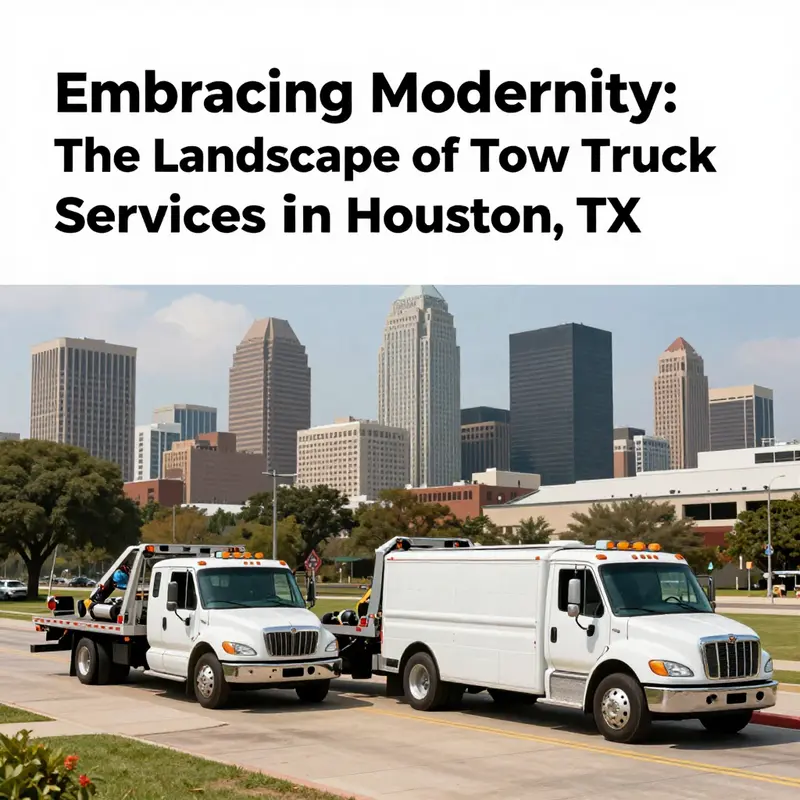
The towing service industry in Houston, TX, is experiencing a dynamic transformation driven by technological advancements, economic shifts, and an unwavering focus on customer satisfaction. As urban expansion and vehicle ownership rise, towing companies are adapting to meet increased demand with smarter, faster services. This article delves into the role of technology in reshaping service delivery, examines economic trends shaping the industry landscape, and highlights the importance of customer satisfaction as a key differentiator for towing companies. By unearthing these interconnected themes, business owners can better navigate this competitive market, ensuring they choose the right towing service to support their operational needs.
Riding the Wire: How Technology Is Redefining Tow Truck Service in Houston, TX
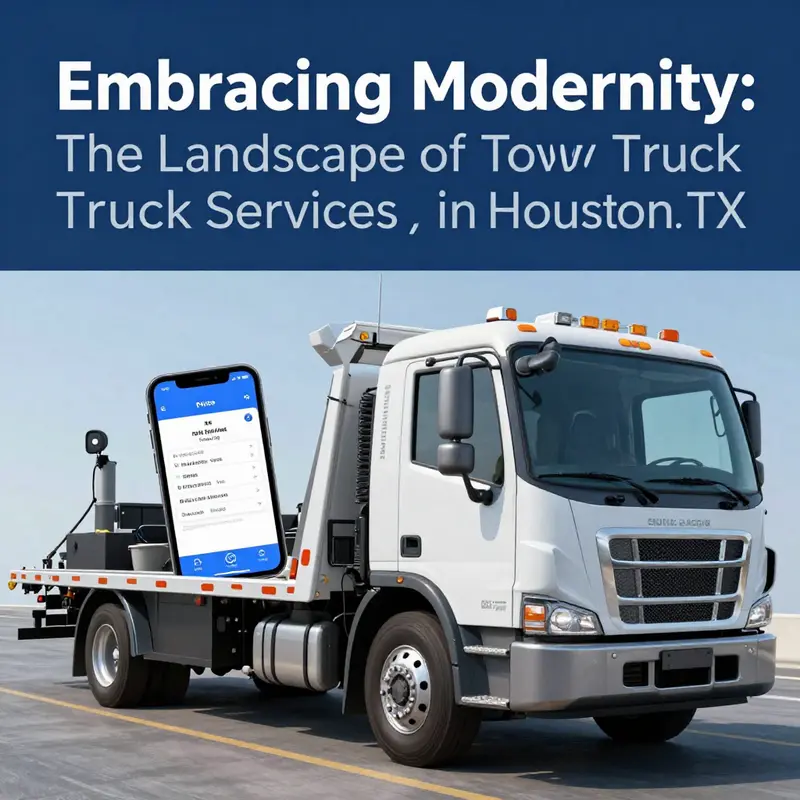
Houston sits at the intersection of rapid growth and constant movement. Its highways weave through dense neighborhoods, industrial corridors, and newly developed districts that sprawl outward as fast as vehicles fill the lanes. In this environment, the demand for tow truck service is less about a single help call and more about a reliable lifeline that arrives quickly, works safely, and keeps customers informed every step of the way. Technology has moved from a helpful add-on to the backbone of how tow services operate here. It isn’t just about pulling a car from a ditch or delivering a vehicle to storage; it’s about orchestrating a complex chain of people, machines, and data to deliver calm in the midst of unexpected disruption. The best operators in Houston have learned that speed and empathy must travel together, and tech is the bridge that makes that possible.
One of the most transformative shifts in recent years is the integration of remote control systems into tow operations. In the tight spaces that often characterize urban scenes—from crowded apartment complexes to narrow driveways behind restaurants—remote control enables a driver to steer and manage the lifting sequence from a safe distance. The operator can guide the tow apparatus with precise, measured movements, reducing the risk of contact with nearby vehicles or obstacles. This is not about replacing human skill; it is about extending it in environments where even a few centimeters matter. In practical terms, remote control helps crews perform delicate maneuvers in congested corridors, service ramps that slope at awkward angles, and parking garages where space is a premium commodity. The payoff is clear: fewer dings, steadier lifts, and faster turnarounds that translate into shorter wait times for stranded drivers.
Yet every technology comes with limits. In Houston’s climate, a robust power source is essential for reliable remote control functionality. When batteries dip or system synchronization falters, the very advantage that seems to reduce risk can become a bottleneck. The initial investment for remote systems is substantial, and compatibility with older fleets requires thoughtful integration planning. Fleet managers balancing cost with capability must weigh whether retrofitting a legacy truck or phasing in new units makes more sense for their operation. Despite these hurdles, the consensus among practitioners is that remote control remains a valuable option for many basic towing tasks and for smaller fleets seeking to elevate safety and precision without a full-scale fleet refresh.
Beyond the cab and chassis, Houston tow operators rely increasingly on GPS tracking and sophisticated fleet management software. Real-time location data, estimated arrival times, and route optimization are not luxuries but standard expectations. When a call comes in, dispatch can plot the quickest, safest route, accounting for current traffic, incidents, and even weather microclimates that can influence a corridor of travel. This visibility isn’t only about speed; it’s about accountability and customer reassurance. A motorist stranded on a busy Beltway or on the approach to a congested interchange receives an accurate ETA, and the dispatch team can adjust plans if a wreck or road closure causes a detour. For the operator, digital routing reduces fuel burn and wear, while elevating safety by foreseeing hazardous sections of road and scheduling additional personnel for complex recoveries. Taken together, these tools turn a potentially chaotic incident into a managed process that respects a caller’s time and the safety of everyone on the road.
As much as the big-picture efficiency matters, the customer experience sits at the heart of the modern Houston tow service. Mobile apps and customer portals have shifted the relationship from one of suspense to one of transparency. A caller can track progress, receive proactive updates, and even manage payments from a smartphone. This immediacy matters in a city where a delay can cascade into missed appointments, late flights, or student commitments. The shift toward digital touchpoints aligns with the broader expectation that services should be accessible, responsive, and straightforward. Transparent pricing, clear communications about contingencies, and easily accessible contact options reduce anxiety and build trust—elements that are especially important when a vehicle is out of service in a busy urban area.
The push toward greener operations is another thread running through Houston’s evolving towing landscape. Operators are exploring hybrid and electric tow trucks as part of long-term strategies to lower emissions and operating costs. In a city whose air quality is closely watched and whose energy grid is constantly evolving, adopting cleaner fleets can enhance corporate responsibility while also delivering savings on maintenance and fuel. Electric or hybrid units offer quieter operation, which can be a meaningful advantage in residential neighborhoods or near schools where noise and emissions are concerns. The environmental benefits resonate with customers who are increasingly mindful of the footprint of the services they use. This trend isn’t about replacing the traditional tow truck overnight; it’s about integrating new propulsion and energy management technologies where they fit best, while maintaining reliability and speed—the twin pillars of Houston’s service expectations.
The technologies described here are not isolated enhancements. They work together to support a more reliable, safer, and more customer-centered service model. When a driver experiences a breakdown near a strip of retail stores, the combination of GPS-informed routing, remote-control precision, and real-time status updates creates a seamless response that reduces stress for the vehicle owner and minimizes disruption for other road users. In addition, the data chassis that underpins these systems—telemetry from the tow unit, maintenance alerts, and driver performance metrics—helps operators refine their practices, ensuring that each call teaches something new that can be applied to future recoveries. The result is a feedback loop: data informs strategy, which in turn informs the deployment of more capable gear, which then feeds back into safer, faster service.
Of course, technology does not replace the human elements that define quality towing. Training remains vital. Skilled operators bring situational judgment, interpersonal calm, and a steady hand to every interaction. Tech simply reframes what it means to respond well in the field. For customers, that means arriving with a professional demeanor, explaining what is happening, and offering options that respect their budget and timeline. The best service providers in Houston strike a balance between the precision and speed that modern tools enable and the empathy that comes from clear communication and dependable support.
When people search for tow service in Houston, TX, they are often seeking more than a roadside fix; they want assurance that help is near, capable, and considerate of their circumstances. The convergence of remote-control systems, GPS-enabled dispatch, and consumer-friendly digital interfaces has transformed that experience from situational relief into a trusted, ongoing relationship. This evolution is driven by competitive pressure, regulatory considerations, and a city that rewards resilience and efficiency. It is also shaped by the expectation that technology should simplify life, not complicate it. Providers who embrace this balance—maintaining rigorous safety standards while leveraging automation, data, and cleaner propulsion—will continue to set the pace in a market where every minute counts.
For readers seeking to explore the broader landscape of options and get a sense of how these innovations translate into everyday service, the Houston area offers a spectrum of choices that can be navigated with confidence. For a practical overview of the range of local offerings and how they adapt to shifting urban realities, you can explore the broader context of towing services in Houston. This internally linked resource provides a useful primer on what to expect from reputable operators in the area, alongside real-world benchmarks for response times, pricing transparency, and the quality of customer interactions.
External resources that deepen the technical understanding of remote-control towing and its applications can further illuminate how these systems perform in the field. For a deeper technical dive into the mechanics, performance, and applications of remote-control tow trucks, see the Tow Truck Remote Control Guide: https://www.towtruckpros.com/remote-control-tow-truck-guide/. This guide offers a comprehensive look at capabilities, limitations, and practical deployment scenarios that align with the realities of Houston traffic, weather, and urban design. It complements the experiential knowledge shared here and provides foundational context for operators seeking to optimize their fleets while maintaining safety and service quality.
In sum, Houston’s tow truck ecosystem stands as a telling example of how technology can elevate a traditional service into a coordinated, customer-centric operation. By combining remote-control capabilities with precise routing, real-time status updates, and cleaner propulsion options, the industry is not just meeting expectations—it is redefining them. The path forward is continuous improvement, grounded in data-driven decision making, skilled human judgment, and a steadfast commitment to keeping Houston moving with clarity, speed, and care. If you want to understand the nuances of how these advances translate into everyday roadside help, consider delving into the broader resource on towing services in Houston and seeing how different operators communicate, price, and perform on a typical day in the city.
Riding the Currents: Economic Trends Shaping Tow Truck Service in Houston, TX
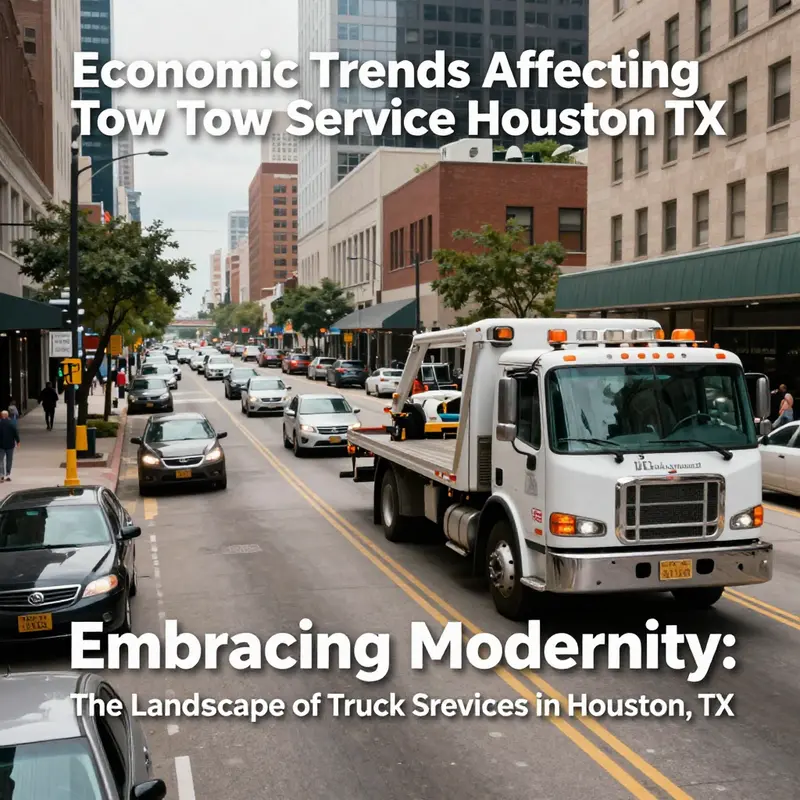
Houston sits at a crossroads of rapid growth, sprawling infrastructure, and vibrant commerce. As the city expands its skyline and stretches its road networks further into suburbs and industrial corridors, the demand for tow truck services follows a parallel arc. The dynamics of population growth, rising vehicle ownership, and shifting driving patterns create a complex backdrop for operators who must balance speed, reliability, and cost. Tow teams in Houston increasingly gauge their success not just by how quickly they respond to a call, but by how effectively they forecast need, optimize routes, and manage resources across a growing urban ecosystem. In this environment, the economic trends at play ripple through every facet of the service—from dispatch philosophy and pricing strategies to fleet composition and customer communication. The result is a market that rewards efficiency and transparency, while also inviting steady adaptation to new technologies and evolving consumer expectations. For residents seeking reliable local options, a clear understanding of these forces helps explain why some providers rise to the top as trustworthy partners in moments of frustration and urgency. See more about local options at towing service in Houston, a reference point for what dependable service can look like in today’s market.
Houston’s ongoing population surge has a direct, practical impact on towing demand. More people means more vehicles, more traffic incidents, and a higher likelihood of breakdowns in dense corridors and during peak commute hours. This reality pushes responders to widen their geographic reach, maintain longer hours, and ensure that equipment is ready for a variety of scenarios—from simple roadside boosts to complex recoveries near construction zones. Yet volume alone does not determine success. The market rewards operators who couple volume with precision—precise ETA estimates, transparent pricing, and courteous, informative interactions that reduce customer anxiety when a vehicle is stranded or impounded. In this sense, the city’s growth acts as a catalyst, accelerating the maturation of a professional standard that values speed without sacrificing accountability. The result is a service landscape where seasoned operators strive to balance quick mobilization with careful planning, ensuring that each tow contributes positively to the broader traffic and safety ecosystem.
Rising vehicle ownership, a hallmark of the region’s economic resilience, further fuels the need for flexible, scalable tow services. With more cars on the road, the pool of assets requiring towing—whether after collisions, mechanical failures, or parking infractions—expands. This increases the importance of diversified fleets that can handle different tasks. Flatbed and wheel-lift capabilities, proper cargo securement, and the ability to store vehicles safely become differentiators in a crowded market. Operators who invest in versatile equipment and well-trained personnel can manage a wider array of assignments, from local transports to longer hauls within county lines. The consequence is a service culture that emphasizes reliability, because customers judge providers by consistency: consistent response times, consistent pricing practices, and consistent communication from the moment the call is placed to the moment the vehicle departs the lot. An informed customer appreciates when a tow operator can explain the next steps, outline potential fees upfront, and provide a realistic timeline for service delivery.
Fuel price fluctuations have long influenced consumer behavior and operator costs, and Houston’s energy market mirrors broader macroeconomic cycles. When fuel prices spike, drivers become more price-sensitive about preventive maintenance and may delay nonessential repairs, increasing the risk of roadside failures. Conversely, lower fuel costs often translate into more miles driven and a higher incidence of traffic incidents simply due to greater exposure. For towing businesses, these cycles are not just about revenue timing; they affect cost structures. Diesel, insurance, maintenance, and equipment depreciation all respond to the same economic winds. To stay profitable, operators increasingly adopt dynamic pricing models and efficiency-driven routing. They also invest in maintenance programs that extend the life of their fleets, ensuring readiness during peak demand periods. The interplay between fuel economics and service delivery underscores the need for adaptive, data-informed planning that can weather upswings and downturns alike without compromising safety or service quality.
Economic downturns, when they occur, test the resilience of essential services differently from nonessential ones. Emergency towing remains a steady, necessity-driven category even in slower economic skies, but ancillary offerings like repossession or large-scale asset recovery may soften during tougher times. Smart operators anticipate this mix and adjust their portfolios accordingly, maintaining leaner but more efficient operations that emphasize core competencies—responsiveness, clear pricing, and accountability. Cost-conscious consumers tend to seek transparent value rather than luxury options, which pushes providers to foreground reliability and fair pricing in their public messaging. In practice, this means hybrid approaches to marketing and service design: a clear, upfront estimate; options for different service levels; and a readiness to propose alternative solutions when the most expensive option is unnecessary. These shifts strengthen the market’s overall health, ensuring that essential towing remains accessible while still enabling operators to pursue sustainable growth.
Infrastructure investment in and around Houston creates both short-term pressures and long-term benefits for tow operations. Construction zones and temporary detours can elevate accident and breakdown rates in the near term, complicating dispatch and route planning. Yet in the long run, investment in roads, bridges, and smarter traffic management can alleviate bottlenecks and improve overall road safety. For tow providers, the implication is twofold. First, they must remain agile, developing contingency plans for volatile traffic patterns and maintaining robust communication channels with customers about delays and alternatives. Second, they can capitalize on safety-driven infrastructure improvements by branding service reliability as a byproduct of a safer, more connected transportation network. The capacity to synchronize real-time location data with evolving road conditions becomes a strategic asset, allowing operators to estimate arrival times with greater accuracy and to coordinate with other emergency responders when needed. In this context, technology becomes not just a convenience but a core enabler of service quality, helping to translate macro-level infrastructure progress into tangible improvements in daily operations.
Within this evolving landscape, the most successful Houston tow teams will be those that knit together technological adoption, operational discipline, and transparent customer engagement. GPS-enabled dispatch, mobile updates, and real-time tracking do more than shorten ETA windows; they reassure customers who are often already stressed by vehicle trouble. A fleet that can publish drive times, identify the closest available unit, and communicate expected delays fosters trust and reduces frustration. These capabilities also support a broader shift toward more sustainable practices. By optimizing routes and reducing idle time, operators can cut fuel consumption and wear on their equipment, translating into lower operating costs and a smaller environmental footprint. While fuel efficiency alone cannot solve every challenge, it does contribute to a more resilient business model that can withstand market cycles without compromising service levels.
The Houston market is also moving toward a more complete service proposition. Beyond simple towing, providers increasingly offer 24/7 roadside assistance, accident management, secure vehicle storage, and repossession support. This breadth supports a wider customer base, including commuters, families, fleet operators, and local businesses that require dependable incident response and ongoing asset management. Differentiation now hinges on speed, transparency, and the quality of the customer experience—elements that are directly influenced by how well a company aligns its resources with the city’s economic rhythms. In practice, this means cultivating a culture of accountability, investing in staff training, and presenting clear, itemized pricing. Customers value predictable costs and straightforward explanations, especially in a landscape where stress levels run high and decisions must be made quickly. The strongest operators harmonize these facets with a calm, professional tone that turns a distressed moment into a manageable, resolved outcome.
For readers exploring the Houston tow service scene, understanding these economic currents helps illuminate why some providers seem to anticipate demand more accurately and respond with greater consistency. The trajectory suggests a market that will continue to reward efficiency, transparency, and adaptability even as external conditions shift. It is a reminder that tow truck service in Houston is not simply about prying vehicles loose from the side of the road; it is about orchestrating a reliable, respectful, and technically proficient response to a city in motion. External insights into market dynamics, including longer-term projections and sector analyses, can be found at https://www.linkedin.com/pulse/insights-tow-truck-market-2026-2033-james-woodward/.
Navigating Satisfaction in Houston Tow Truck Service: Speed, Transparency, and Digital Reputation
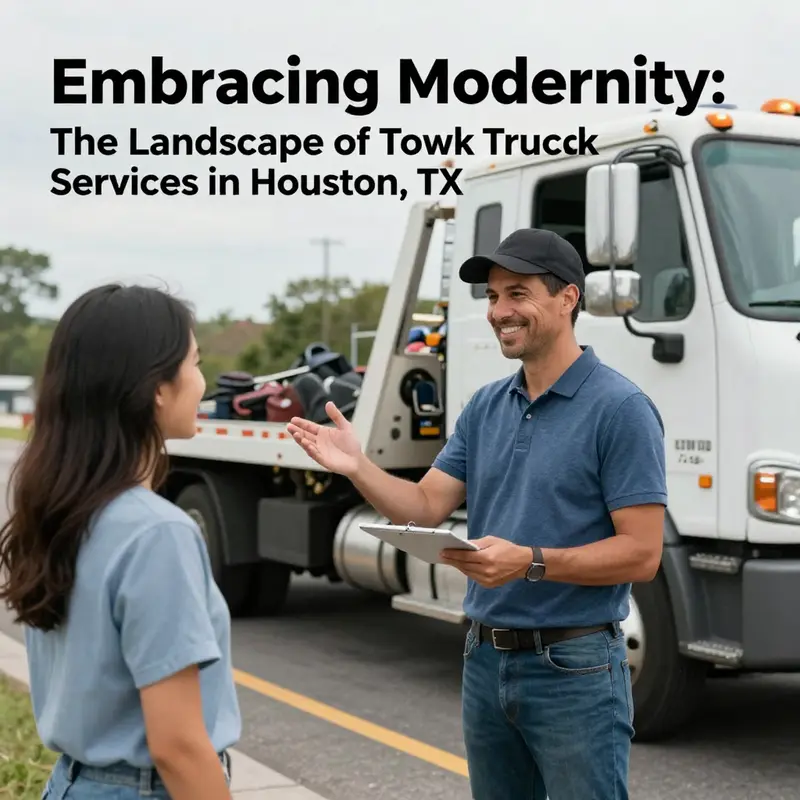
The streets of Houston are as expansive as the expectations of anyone who might need a tow. When a breakdown happens in traffic, or a parked car blocks a lane, the first priority is relief delivered with speed and clarity. In this environment, customer satisfaction is not just about getting a vehicle off the road; it is about a trustworthy, transparent experience that begins the moment a request is made and continues through resolution. The towing service landscape in Houston has evolved beyond simple recovery. It now hinges on rapid response times, dependable equipment, and a digital footprint that confirms reliability. As urban growth accelerates and vehicle ownership climbs, customers increasingly rely on real-time updates, transparent pricing, and accessible support—elements that shape not only the moment of need but the likelihood of repeat service and referrals. The intersection of swift action and open communication is where satisfaction takes root, and in Houston, a city thick with competing providers, those factors can determine which company becomes the obvious choice when a driver pulls over on a busy highway or a repossession becomes necessary in a crowded neighborhood.
Online reputation management has become a central driver of customer decisions and, ultimately, of revenue. Recent data from Houston’s towing sector reveal a stark truth: negative reviews cost services more than twenty thousand dollars each year. That figure underscores something simple and powerful. Prospective customers do not merely read ratings; they interpret the entire story behind them—the quickness of the response, the perceived honesty of pricing, and the demeanor of the technician who arrives on site. Proactive engagement with customers online, including timely responses to both praise and criticism, builds trust and fosters loyalty. A company that replies with empathy to a poor experience demonstrates accountability; one that thanks a satisfied client reinforces positive reinforcement. The result is not only a dent in a bad star rating but a measurable uplift in future inquiries, a steadier stream of returning customers, and a reputation that travels beyond the Houston city lines. In practice, this means a tow operator can protect margins by investing in reputation as a form of value.
Yet reputation is not built on words alone. Operational reliability and transparency form the backbone of enduring satisfaction. A crucial decision lies in equipment choice—especially in a city that blends dense urban corridors with expansive suburbs. The research highlights underlift tow trucks as a strategic option with distinct advantages. They offer a compact footprint, enabling fast deployment in crowded for-hire lanes or tight parking lots. For roadside assistance and repossession tasks in heavily trafficked areas, this equipment can translate into quicker on-scene times and reduced risk to bystanders. However, limitations exist. Underlift units typically carry lower weight capacities and are not ideal for all-wheel-drive or low-clearance vehicles. Those restrictions must be communicated clearly to customers before service begins to prevent misunderstandings that erode trust. The lesson is not to abandon underlifts but to pair transmission of information with careful job matching. A provider that can articulate why a particular piece of equipment is chosen—and what it can and cannot do—transforms potential disappointment into a shared plan and a sense of partnership with the client.
This is where staff training and feedback mechanisms become indispensable. Effective training ensures that every technician understands the service portfolio, the precise capabilities of the equipment, and the expectations of customers who might be anxious, stressed, or in a hurry. When teams are well-versed, they can offer accurate timelines, explain pricing structures without jargon, and demonstrate respect for the customer’s situation. Simultaneously, a robust feedback system—whether through post-service surveys, follow-up calls, or quick digital check-ins—enables providers to identify recurring pain points and resolve them before they escalate into public dissatisfaction. In Houston, where speed and transparency are repeatedly cited as critical satisfaction drivers, coupling trained personnel with real-time feedback loops creates a service culture that consistently rises above the merely adequate.
Technology also plays a meaningful role in shaping satisfaction. Real-time GPS tracking, mobile service updates, and transparent communication channels reduce the sense of uncertainty that often accompanies roadside events. A customer who can watch a tow truck’s progress, receive an ETA adjustment, and have direct access to a live point of contact feels seen and supported. This aligns with the broader industry shift toward integrating eco-conscious practices, such as hybrid or electric tow trucks, which appeal to customers who value sustainable operations and potential long-term cost savings. When technology enables faster, more efficient responses and the environmental footprint is lowered, the overall experience becomes smoother and more reassuring. The result is a holistic service that satisfies practical needs while also aligning with evolving consumer values.
In discussing satisfaction, it is impossible to overlook the range of services that shape the overall experience. Houston providers increasingly bundle 24/7 roadside assistance, accident management, flatbed towing, vehicle storage, and repossession services into cohesive offerings. This breadth allows operators to respond to a wider array of emergencies with a unified, predictable process. Customers who encounter a single, reliable point of contact across different scenarios are less likely to switch providers or delay a decision in the future. A well-integrated service model also supports price transparency; when the scope of work is clearly explained and aligned with a published policy, customers feel empowered to make informed choices. The interplay between service breadth and price clarity often determines whether a first call becomes a long-term relationship.
For the customer, the decision-making calculus in Houston extends beyond the mechanical act of towing. It is a composite impression formed by speed, reliability, price clarity, and the post-service narrative—the response to feedback, the acknowledgment of a tough moment, and the willingness to improve. A robust online reputation, backed by dependable field operations, becomes a protective moat in a competitive market. This is why the most successful providers invest in training, appropriate equipment selection, and a transparent communication strategy as a single, integrated effort rather than as disparate initiatives. The long view is not simply to win a one-off call; it is to cultivate trust that translates into referrals, repeat business, and the confidence that a Houston tow partner will show up with both competence and care when the road feels most uncertain.
Across the city, customers increasingly seek the reassurance that a provider will not only arrive quickly but also handle their vehicle with care, explain what is happening, and stand behind the service with accountability. The path to satisfaction in Houston Tow Truck service is thus a continuous loop: a rapid response creates trust, transparent pricing and clear communication reduce anxiety, and a positive online reputation signals reliability to new customers. It is this virtuous circle, reinforced by both on-site performance and digital presence, that defines the modern landscape. For readers who want to explore the practical dimensions of local offerings in greater depth, a nearby point of reference to consider is the broader ecosystem of Houston-based towing services and their online footprints. See the local options at towing services in Houston for a sense of how several providers present their capabilities, timelines, and care philosophies in a way that aligns with the insights discussed here. While every company has its own unique approach, the shared emphasis on speed, clarity, and accountability remains a consistent predictor of customer satisfaction in this market.
External resource for further technical context: For a deeper understanding of equipment capabilities and performance insights related to underlift configurations, consult the Underlift Tow Truck For Sale Guide: Key Features, Applications, and Performance Insights. https://www.towtruck.com/underlift-tow-truck-guide
Final thoughts
Navigating the towing service landscape in Houston, TX, requires an understanding of the interplay between technology, economic factors, and customer satisfaction. As businesses evolve, embracing technological advancements and addressing economic trends can lead to more effective towing solutions and enhanced customer experiences. By prioritizing responsiveness and transparency, towing companies can not only meet but exceed customer expectations, establishing themselves as leaders in the industry. Business owners must stay informed and proactive in selecting towing services that reflect these values, ensuring their needs are met efficiently and reliably.