
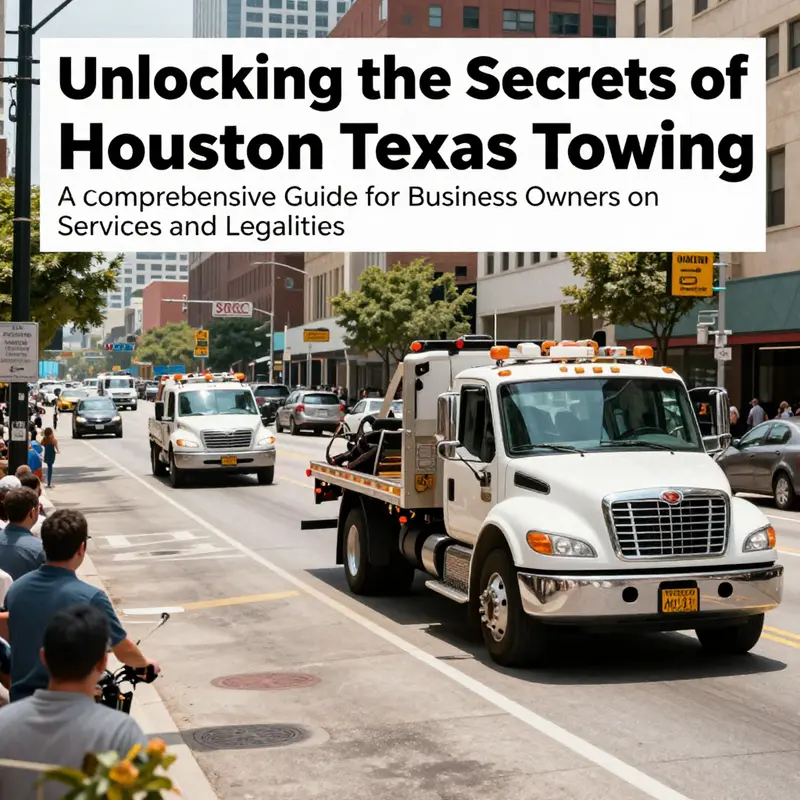
Houston Texas Towing stands as a vital service provider in a bustling city, where efficient vehicle recovery and towing are essential for both businesses and individuals. Understanding the scope of services offered and the legal regulations governing towing companies is crucial for business owners who may find themselves in need of such assistance. This article delves into the various services and operational strategies of Houston Texas Towing, providing insights for business owners on how to navigate this essential industry. Additionally, we will explore the legal landscape and consumer rights associated with towing services, ensuring that businesses can make informed decisions when seeking help. Together, these chapters will equip business owners with the knowledge needed to effectively manage towing situations in Houston.
Lifelines on the Road: The Hidden Architecture of Houston’s Towing Services and Operations
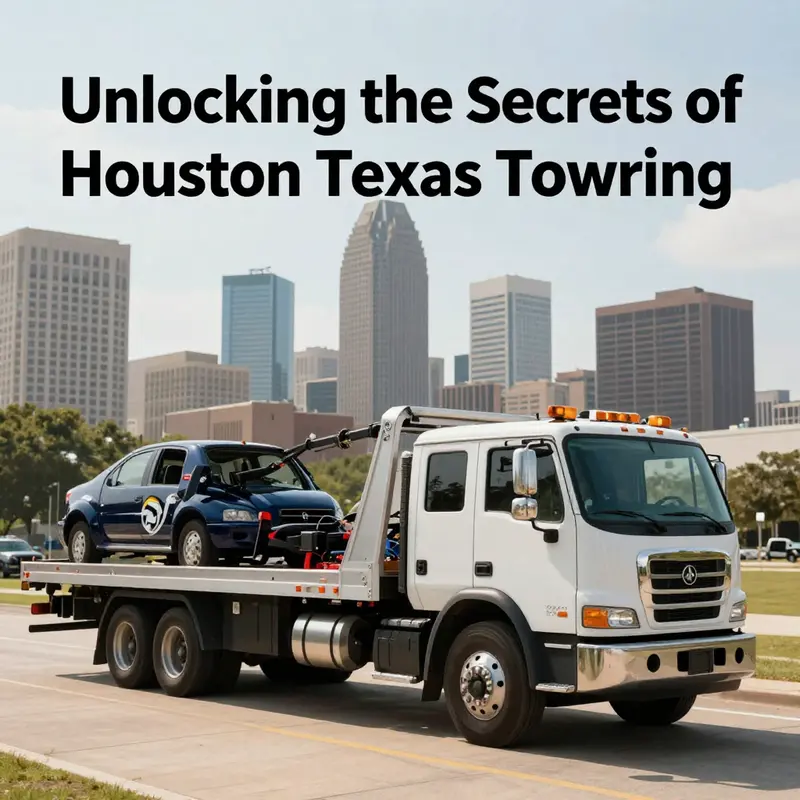
Houston sits on a vast network of interstates, expressways, and city streets that weave together neighborhoods, industries, and daily life. The sheer scale of the metropolis means that traffic incidents, abandoned vehicles, and parking violations are not rare anomalies but regular realities that shape how people move and how the city manages its streets. In this environment, towing services form a quiet but essential infrastructure. They are not just a roadside convenience; they are a critical part of traffic safety, urban order, and the practical rhythms of daily life in a city as sprawling as Houston. Behind the scenes, licensed private towing companies operate under contracts with the Houston Police Department (HPD) or other municipal authorities to handle a spectrum of situations: vehicles blocked on public streets, abandoned cars, or cars that have sustained enough damage to render them unsafe or unroadworthy. The result is a coordinated system that balances public safety with property rights, expedites clearance from crowded roadways, and maintains an orderly urban environment where emergency responders can reach the scenes they must attend to without delay.
The primary operations of Houston’s towing ecosystem can be understood as a trio of interlocking responsibilities. First, towing from public streets. When a vehicle is legally parked in a way that obstructs traffic, or when it has been involved in an accident, the vehicle may be towed to clear the roadway, reduce hazard, and prevent new violations. In practice, this involves a dispatch process that begins with police or parking enforcement, extends to a licensed towing provider, and ends with the vehicle being moved to a designated facility. The process is governed by ordinances that specify when towing is permissible, how fees are assessed, and how vehicle owners can reclaim their property. The driving force here is safety: freeing lanes, reducing the risk of secondary collisions, and ensuring that street space remains usable for everyone who shares it, from buses and emergency vehicles to residents stepping out for a quick errand.
Second, the management of impound lots. Once a vehicle is towed from the street, it typically lands in an impound facility operated under city oversight or in partnership with the private operator. These lots are not merely storage yards; they operate as controlled environments with defined hours, documentation requirements, and fee structures. Access to retrieves cars is conditioned on proper ownership proof, payment of fines or fees, and compliance with any holds that might be in place for investigations or liens. From the city’s perspective, the impound system serves multiple purposes: it creates an auditable record of the vehicle’s status, supports enforcement actions, and provides a clear path for owners to recover their property while ensuring that the process remains orderly and transparent. For residents who must navigate a tow recovery, the experience can feel impersonal, but the underlying design is meant to reduce confusion and streamline the release process as much as possible.
Third, roadside assistance as a bridge between the curb and the curbside lane. Beyond removing obstructive vehicles, towing teams frequently provide on-site help for common, non-criminal incidents. They might jump-start a dead battery, replace a flat tire, or deliver a small amount of fuel when a car stalls in a precarious position. These services, offered by many licensed providers, extend a safety net that keeps people moving and reduces the likelihood of dangerous situations that would arise if a driver stranded in the wrong lane were left unmanaged. In Houston, where weather patterns can swing between heat and sudden storms, the availability of reliable roadside assistance is especially valuable. The guarantee of 24/7 service reduces the anxiety that accompanies vehicle trouble in the middle of the night or during the rigors of the workday when every minute matters for someone’s schedule.
The orchestration of these functions relies on a tightly regulated framework designed to protect the public while preserving the rights and dignity of vehicle owners. Houston maintains a set of towing regulations on its official channels, outlining the responsibilities of licensed operators, the conduct expected of drivers, and the processes by which vehicles may be removed, stored, and released. This framework serves as a backbone for trust between residents and the professionals who manage the city’s street cleaning, traffic safety, and incident response. Within this landscape, operators are expected to carry the appropriate credentials, maintain insurance, and adhere to label and signage requirements that inform the public about tow procedures and contact points. In practice, the system’s reliability hinges on the discipline and coordination among several actors: law enforcement, private towing firms, impound facilities, and city agencies that oversee regulatory compliance.
For someone who studies or writes about urban mobility, Houston’s towing ecosystem represents a compelling example of how cities translate policy into practice on asphalt and concrete. It is a field where the stakes are immediate and personal. A tow can mean a lost afternoon or a return to a workplace, a missed appointment, or the difference between a usable street and a barrier that blocks a lane. Yet it is also a field marked by procedural care. The dispatch data that feed into a tow tell a story about where the city experiences congestion, where illegal parking is most common, and how incidents unfold across different neighborhoods. The private firms that participate in the process bring a mix of equipment, experience, and regional knowledge. Some are equipped with flatbeds designed to carry cars without lifting their frames, others with wheel-lift tow trucks that can reposition vehicles quickly in tight spaces. Their crews navigate the complexities of traffic, weather, and urban infrastructure while maintaining safety for themselves and for the general public.
The everyday reality of Houston towing also speaks to the human dimension of this service. Tow operators may arrive at the scene within minutes of a call, but those minutes can stretch into hours depending on demand, location, and the kind of vehicle involved. The drivers must discern whether a car can be moved safely in the current conditions, whether nearby parked vehicles might be impacted by the towing operation, and how to communicate with the vehicle owner who may be dealing with frustration, stress, or urgency. The best operators combine technical skill with patience and empathy, making sure that the vehicle is removed without collateral damage and that owners receive clear guidance about the next steps, from retrieval hours to fee schedules. In many moments, the interaction between a tow operator and a vehicle owner becomes a microcosm of city life—an exchange that reveals the city’s commitment to order, safety, and practical support for residents at moments of vulnerability.
From a policy perspective, the Houston towing framework is more than a technical service; it is a public safety instrument. The city’s laws and the oversight that accompanies them are designed to prevent abuses, ensure accountability, and provide a predictable path for recourse. For instance, if a vehicle is wrongly towed or if fees are misapplied, city authorities and the towing contracts in place provide mechanisms for review and resolution. Those protections are essential in a city as diverse as Houston, where residents come from many backgrounds and bring a wide range of vehicles and needs. The system also reflects a broader urban ambition: to keep traffic moving, preserve the surface of city streets, and support the smooth functioning of a dense, dynamic metropolis where the pace of life is rapid but not reckless.
As one considers the future of Houston’s towing operations, a few themes stand out. First, the ongoing integration of technology in dispatch and fleet management is likely to reduce response times and improve transparency for vehicle owners. Real-time updates, GPS routing, and standardized documentation make the process more efficient and easier to audit. Second, continued emphasis on safety will shape vehicle handling practices, equipment choices, and driver training, ensuring that all interactions—between tow operators, other motorists, and pedestrians—remain as safe as possible. Third, regulatory clarity will remain essential. The city’s towing pages and related ordinances offer a compass for both operators and residents, helping to prevent misunderstandings and ensuring that procedures are consistent across neighborhoods.
For readers seeking a practical starting point on how Houston’s towing ecosystem is organized and governed, a useful overview is available online. You can explore more about how these services are arranged and understood in the broader context of Houston’s street management by visiting a resource focused on Houston towing services: towing services in Houston.
Ultimately, the story of Houston’s towing services is a story about a city that must balance urgency and safety with fairness and accessibility. It is a story of routine and reliability in the daily choreography of urban life. The roadway is a shared stage, and towing services perform a crucial act—removing hazards, clearing lanes, and enabling the city to function even when things go wrong. In that sense, the ordinary act of a tow is actually a window into a carefully designed system that supports movement, protects people, and preserves the integrity of Houston’s public spaces. The next time a vehicle is moved from a busy street, or an impound lot empties a newly reclaimed car, it may feel like a small ordinary moment. Dig a little deeper, and you’ll find the careful science, policy, and human skill that keep Houston’s lifelines on the road.
External resource: City of Houston towing services page — https://www.houstontx.gov/police/towing.html
Tow Lines and Fairness: Navigating Houston’s Towing Laws and Consumer Protections
In a city as sprawling and busy as Houston, towing isn’t just a matter of moving a car from a curb. It is a disciplined exercise in balancing public safety with individual rights. The streets carry a constant rhythm of delivery trucks, commuter lanes, and neighborhoods that rely on clear access to homes, businesses, and emergency routes. When a vehicle is removed, the decision is rarely neutral. It creates a window into how a city governs itself, how businesses translate rules into service, and how citizens navigate processes that can feel opaque in moments of disruption. Houston’s approach to towing sits at this intersection of safety, order, and consumer protection, a framework shaped by local ordinances and state laws that together aim to prevent abuse while ensuring that streets remain navigable for everyone.
The backbone of the regulatory landscape in Houston is a municipal code that addresses traffic and vehicle management, with Chapter 12 frequently cited for towing and impound procedures. This chapter sets out the logic for when a tow is permissible, tying the action to concrete conditions rather than arbitrary discretion. In practice, a tow is justified when a vehicle is parked illegally, when it blocks the flow of traffic, or when it violates local parking regulations designed to keep lanes clear and incidents from spiraling into gridlock. The rules are intentionally precise: they require that towing be tethered to observable, enforceable conditions that the public can understand. The clarity of these standards matters, because it reduces the potential for misinterpretation and protects the motorist from surprise charges or arbitrary removals.
Beyond the justification for pulling a car, the licensing of towing operators is a central pillar of accountability. Houston requires tow companies to hold an operating license with the city. This licensing process is not a mere formality; it embeds expectations around notification, record-keeping, and customer service. When a vehicle is towed, the operator must follow a notification protocol that ensures the owner or a responsible party learns of the action promptly and with actionable information. The law emphasizes that a tow is not an opaque event but a service transaction that should be traceable from the moment it happens. The notification typically includes the towing company’s name, how to reach them, the location where the vehicle was taken, and instructions for retrieving the vehicle. The aim is to cut through confusion and give the owner a clear path back to their property, while also providing a reliable means of contacting the responsible party in case of questions or disputes.
For consumers, the rights that accompany these regulations are not a afterthought but a framework designed to preserve dignity and fairness at a moment of stress. Notice requirements stand at the heart of this framework. When a car is towed, the owner should receive immediate notice, commonly left on the vehicle’s windshield or door. The notice is more than a formality; it is a contract of transparency. It must carry the towing company’s identity and contact details, the precise location of the tow, and straightforward instructions about how to retrieve the vehicle. This information is essential for planning the next steps, whether that involves retrieving the car quickly or arranging for alternative transportation. Without such notice, a tow can be challenged as improper, and the consumer has a legitimate avenue to contest the action.
If a vehicle is removed without proper cause, the consequences fall on the towing company through formal complaint channels. Houston organizes avenues for recourse, directing dissatisfied or misinformed owners to authorities that can review the incident. Complaints can be filed with the Houston Police Department’s Traffic Division or the city’s Consumer Affairs Office. The availability of these channels is crucial, because it enables a process that is accessible to ordinary people, not just legal professionals. The goal is to provide a fair, timely assessment of whether the tow complied with established procedures, and if not, to correct the record and remedy the situation. The presence of such channels also encourages better business practices, because licensed operators know that their actions are subject to oversight and potential inquiry.
Another cornerstone of Houston’s towing regime is transparency in fees. Texas law requires fair and transparent pricing for towing services. Towing companies must avoid charging excessive fees or hidden costs, and they are expected to present an itemized accounting of charges when disputes arise. This is not merely about the price tag; it is about trust. A motorist who understands how fees are calculated, from base tow charges to storage and any administrative fees, is better positioned to compare options and prevent surprise charges. When conflicts emerge over amounts billed, the formal complaint process or small claims court become instruments for resolution. This framework recognizes that the value of the service extends beyond the moment of towing—it includes the subsequent costs of storing the vehicle, retrieving it, and settling any related administrative charges.
In practice, a driver who finds their car missing must begin with the notice. The windshield note should provide a clear, direct line to the responsible party and the lot where the vehicle now rests. From there, the path to retrieval should be straightforward: verify the tow location, obtain the necessary fees and receipts, and verify that the mileage and condition of the vehicle at pickup align with the tow notation. If any step seems unclear or if the notice is missing or incomplete, the consumer is entitled to seek clarification and to file complaints if the procedure fails to meet statutory requirements. The law supports this due diligence because it recognizes that the moment after a tow can be disorienting—addressing questions and establishing a transparent process helps restore a sense of control.
In a city where travel patterns are dense, where neighborhoods can shift from quiet to congested in a single rush hour, the regulatory balance matters. Houston’s rules are designed to deter opportunistic practices while still allowing authorized removals to keep traffic moving and properties accessible. The licensing and notice requirements push operators toward standardization, so a driver who experiences a tow in one part of the city can expect similar procedures and remedies if the incident occurs elsewhere. This uniformity is not merely bureaucratic; it translates into real-world protections for residents and visitors who rely on predictable, fair handling of towing matters.
For those who want a practical sense of how legitimate operators present themselves and engage with Houston’s market, it helps to examine the broader landscape of towing services in Houston. A general understanding of typical service models can illuminate how regulations shape everyday interactions, from the first call to the final payment. This is not about endorsing any specific company, but about recognizing the framework within which professionals operate and how the law holds them to account. To explore this broader context, readers can look at information that describes common practices in the city’s towing sector and how legitimate operators align with regulatory expectations. Such a background makes the experience of a tow more navigable and less intimidating, especially for first-time tow victims who must make rapid decisions under stress.
Within this chapter, the aim has been to sketch a cohesive picture of Houston’s towing environment—one that respects the public’s safety needs while safeguarding individual rights and ensuring fair treatment. The narrative connects the dots between street-level events and the policies that govern them, illustrating how a city’s law, when applied consistently, can support both efficiency and fairness. It is a reminder that in the practical world of towing, rules are not abstract abstractions; they are a living code that helps to prevent abuse, clarifies responsibilities, and channels disputes toward constructive resolution. Those who experience a tow can approach the moment with greater confidence, knowing that there are clear steps to verify legitimacy, to seek information, and to challenge overreach if it occurs.
If you want to see how these ideas translate into the everyday realities of service provision, consider the broader ecosystem of information about towing services in Houston. This can offer a practical complement to the statutory framework by describing how licensed operators present themselves, how customers can access transparent charges, and how the city’s oversight mechanisms respond when a process breaks down. For readers seeking a concrete pathway to additional details about Houston’s towing practices, a helpful entry point is the general information about towing services in Houston. You can learn more about typical service models and standards at the linked resource.
Internal resource for further exploration: towing services in Houston.
External resource: For official guidance and the latest procedural updates, consult the City of Houston’s traffic regulations at https://www.houstontx.gov/traffic.
Final thoughts
In summary, Houston Texas Towing plays a pivotal role in the automotive landscape of Houston, offering essential services for vehicle recovery and towing. For business owners, understanding both the operational services available and the legal regulations that govern their use is paramount. Armed with this knowledge, businesses can effectively address towing needs while protecting consumer rights. Whether in an emergency situation or a planned recovery, Houston Texas Towing is equipped to serve, ensuring smooth experiences for both businesses and consumers alike.