

For business owners in Houston, having reliable towing services is not just an option; it’s a necessity. Whether managing a fleet of vehicles or facing unexpected breakdowns, understanding towing options available in your area can safeguard your operations and keep your business running smoothly. This article delves into the best providers of towing services in Houston, highlighting their strengths and offerings. Furthermore, we will explore the importance of having access to 24/7 emergency towing solutions, ensuring that help is always just a call away. By the end of this article, you will have valuable insights to make informed decisions about towing and recovery services that meet your business needs.
Houston TX Towing: Inside the Trusted Network That Keeps Roads Moving
Houston is a city of miles and motion, where the rhythm of traffic, weather, and daily commerce creates a demand for a service that feels almost invisible until you need it most. When a vehicle breaks down on a busy beltway, or when a driver slides into a ditch after a rainstorm, the people who respond quickly and professionally become a lifeline. Towing in Houston isn’t just about moving a car from point A to point B; it’s about delivering calm in the middle of chaos, ensuring safety for drivers who are often far from familiar ground, and integrating with a broader ecosystem of roadside assistance, repairs, and community trust. The landscape of towing in Houston is shaped by the city’s scale, its dense neighborhoods, the constant hum of commerce, and the way storms can transform road conditions in a matter of minutes. In this context, the most reliable providers are those who combine technical capability with a deep understanding of Houston’s unique traffic patterns, its weather realities, and the human element that underpins every call for help.
The core value of a strong towing partner rests on more than the speed of arrival. It rests on reliability—drivers who arrive with the right equipment, a calm demeanor, and a clear plan for how to handle vehicles ranging from compact sedans to heavy-duty trucks. In Houston, where even small delays can cascade into windshield-time, missed appointments, or unexpected detours, a rapid response time is not merely a convenience; it’s a safety feature. A robust fleet, capable of handling a spectrum of scenarios—from lightweight roadside assistance to complex winching and long-distance towing—translates into fewer complications for customers and less downtime on the road. This is particularly important for commercial accounts and fleets that need predictable service windows and documentation for billing, insurance, and compliance. A good towing partner also commits to transparent practices: up-front estimates, clear communication about ETA, and a straightforward process for payment that reflects the realities of Houston’s pricing environment.
The experience of a caller is molded by the professionalism of the person who picks up the phone and the competence of the technician who arrives. In Houston, many drivers have learned to value not only a quick arrival but also a respectful approach that makes the stressful moment feel manageable. The best providers pride themselves on courteous, knowledgeable staff who can assess a situation in seconds, explain options, and avoid unnecessary procedures. They understand that a roadside incident is rarely just about the car; it is about the driver’s safety, the potential need for a ride home or to a shop, and the coordination that happens when a vehicle is towed to a destination that suits the driver’s plans. This human-centric approach often shows up in the way a dispatcher communicates: a steady cadence of updates, a realistic promise about when a tow will arrive, and a readiness to adapt if traffic conditions or weather shift suddenly. Houston’s heat, humidity, and seasonal storms add another layer of complexity, and the most trusted teams plan for these realities with well-maintuned operational practices.
Behind the scenes, the equipment and skill set that a towing provider brings to Houston are telling indicators of quality. A well-rounded operation keeps a variety of tow rigs ready, from light-duty wrecker units to heavy-duty fleets capable of handling commercial vehicles and SUVs that have found themselves wedged into drainage ditches or stranded on shoulder ramps. The field experience that technicians bring to a scene matters as much as the hardware. A technician who can quickly assess axle configurations, understand vehicle weight distribution, and choose the safest method of recovery is indispensable, especially on roadways that funnel speeds into narrow escape lanes during peak hours. In a city where construction projects constantly reconfigure traffic lanes, the ability to adapt—re-rerouting approaches, coordinating with police when needed, and ensuring that the tow does not create additional hazards—is a sign of maturity in a provider. This level of competency often develops through steady work in the local market, with teams who have learned the particular quirks of Houston’s major corridors, from I-10 to the Beltway, and the side streets that thread through inner neighborhoods.
All of this translates into a service that is as much about risk management as it is about moving a vehicle. A reputable provider collaborates with customers to understand the end destination for the tow, offering suggestions for whether an on-site repair is feasible, whether it makes more sense to deliver the vehicle directly to a shop, or whether a temporary fix can get the driver to a safer place before a more formal repair plan is executed. In Houston, where sudden downpours can reduce visibility and make slick pavement a real hazard, knowing that a tow operator has contingency plans for rain, fog, and high wind conditions becomes a part of dependable service. The best teams also maintain strong insurance and licensing credentials, which do more than satisfy regulatory requirements; they provide an extra layer of assurance to customers who may be dealing with the uncertainties of a breakdown or a vehicle that is out of service. When a driver taps into a network that operates with strict adherence to safety guidelines and proper documentation, the customer gains a sense of security—recognition that the professionals on the other end of the line are prepared to manage the situation with discipline and care.
Houston’s roadside ecosystem benefits from the ways in which towing services intersect with other forms of assistance. A well-coordinated provider does not operate in isolation. They connect with local repair shops, battery service teams, and rental or ride-along options so drivers can regain mobility quickly, even when a tow is unavoidable. This coordination becomes especially valuable during emergencies, when storms disrupt travel and make every minute count. In such moments, a towing partner’s ability to offer not just a tow but a holistic solution—such as a jump-start, tire assistance, or fuel delivery—can spare a driver from costly delays and provide a smoother transition to the next step in repair or recovery. The most trusted operators keep their service culture anchored in transparency: clear pricing, honest explanations about what can and cannot be done on a given call, and a willingness to walk customers through the options rather than pushing toward a single, preset outcome.
The public perception of top towing providers often comes from the consistency of reviews and the stories customers share after a tense incident. In Houston, where the city’s size magnifies the impact of delays, a handful of providers have built reputations for reliability by delivering on promises across a broad geography—from the inner-city corridors to the far-flung suburbs. The narratives tend to echo a few recurring themes: rapid arrival on a variety of roadways and times of day, professional behavior under pressure, and a level of technical competence that reduces the need for repeat calls. When a driver shows up with the right tool for the job, a calm demeanor, and a plan that emphasizes safety, the customer feels seen and heard, even in what might be an already stressful moment. Over time, those repeated experiences accumulate into a local culture of dependable roadside support that residents and businesses come to rely on.
The research into Houston’s towing landscape reveals a pattern: successful providers combine speed, safety, and service intelligence with a broad operational capacity. They are not merely responders but enablers of mobility in a city that is constantly in motion. They understand the weather rhythms of the Gulf Coast and plan for the seasonal surge of incidents that storms can trigger. They recognize the value of clear communication, the trust that comes from fair pricing, and the peace of mind that accompanies transparent, honest dialogue with customers. They invest in training for their drivers, in equipment that can handle a spectrum of vehicle types, and in the ability to integrate with a customer’s broader plans for getting back on the road. In the end, the city’s best towing partners emerge not just as technicians who haul a car away, but as experienced navigators who help people regain control of their day, even when the day has taken an unexpected turn.
For readers who want to explore the landscape further and read real customer experiences, a broad resource listing current opinions and ratings can be a helpful companion. It highlights how different providers are perceived in the marketplace and can illuminate what specific communities value most in a towing partner. If you want to explore options from a local, service-oriented angle, you may find it helpful to visit a resource that aggregates local opinions and offers practical insights into the day-to-day realities of Houston’s towing scene. This broader look complements the firsthand experiences described above and can help someone weigh their options when choosing a provider for a future need. In the meantime, the practical takeaway is clear: when you’re on a Houston roadway and the unexpected happens, a dependable towing partner is not a luxury but a dependable safety channel that connects you to the next step with minimal friction.
If you want to dig deeper into the practical side of selecting a local operator, you can learn more about available options and how they fit into a broader roadside strategy by visiting this resource on local towing services in Houston. It offers context about what services are commonly needed, how providers structure their responses, and what drivers should expect in terms of accessibility and support across different neighborhoods and times of day. This kind of information helps transform a stressful moment into a more manageable one, guiding drivers toward the right choice and ensuring they understand the steps involved in getting back on the road.
As a note on how this chapter connects with the broader article, the emphasis here is not merely on identifying a top provider by name but on understanding the attributes that make any Houston towing operation trustworthy. The city’s scale demands a network of service partners who can operate cohesively, respond quickly, and maintain a level of professionalism that makes customers feel protected and informed. The narrative around these providers is less about individual reputations and more about the shared standards that define quality service across the board: safety, transparency, responsiveness, and empathy for the stress that often accompanies a roadside incident. When these elements come together, they create a durable framework that supports Houston’s mobility and its people, from commuters and families to delivery drivers and business fleets.
To readers who want to see practical examples of how these principles manifest in real-world choices, consider exploring the broader pool of options and reading firsthand experiences from others who have navigated similar emergencies. For instance, a comprehensive directory of local towing resources can offer a comparative view of response times, pricing practices, and the range of services each provider offers. While the specifics will vary, the underlying lesson remains constant: in a city as dynamic as Houston, a dependable towing partner is a strategic asset that enables resilience, keeps journeys moving, and preserves the momentum of daily life even when the road throws a curveball. For more information about local options and how they fit into a broader plan for staying mobile in Houston, you can consult the resource linked above that focuses on towing services in the area. This is the kind of practical, grounded knowledge that helps residents and visitors alike feel more prepared when the road trips or the weather take an unexpected turn.
External resource for real-world feedback and up-to-date customer perspectives: https://www.yelp.com/search?cflt=towing&find_loc=Houston%2C%20TX
Steering Through the Night: A Deep Dive into 24/7 Emergency Towing in Houston, TX
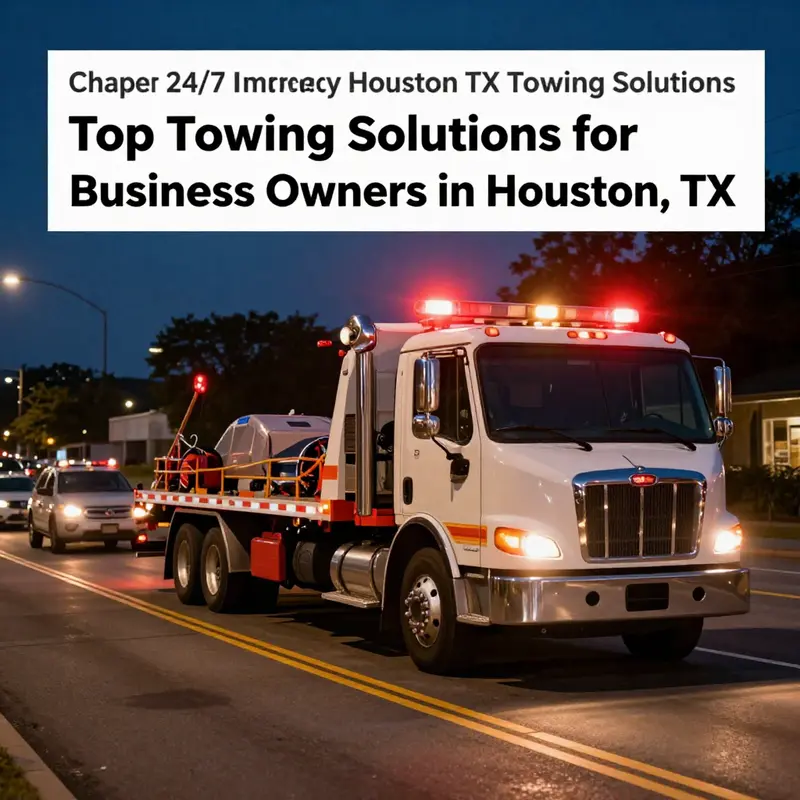
Houston sits at a crossroads of time and terrain, a sprawling metropolis where highways braid into neighborhoods, heat and humidity press on the asphalt, and traffic can surge with the clock. In this setting, towing is not merely a business; it is a daily lifeline. When a vehicle breaks down on the Interstate near the Galleria, when a fender-bender shatters the rhythm of a weekday commute, or when a car slips into a ditch after a heavy rain, the need for fast, reliable help is immediate. The Houston metro area has cultivated a network of towing operators that respond around the clock, around the city, and across its surrounding communities. The value of that network becomes clear not in the calm moments but in the urgency of the moment when every minute counts. A truly effective 24/7 towing service in Houston does more than haul a car from point A to point B; it coordinates safety, navigation, and care for the vehicle as it passes through unfamiliar hands, all while keeping the driver informed and protected on a chaotic canvas of concrete and weather.
To understand what distinguishes a dependable 24/7 emergency towing capability in Houston, it helps to look beyond the flash of bright roof lights and the sound of a winch. It is the quiet choreography that happens behind the scenes: the dispatcher who greets a caller with calm, precise questions; the technician who arrives with a clean, well-maintained rig, ready to adapt to the vehicle’s needs; the driver who can assess a scene, protect themselves and bystanders, and negotiate a safe, legal transport route through a city that never truly sleeps. Houston’s roads pose particular demands. The same overland routes that deliver goods and people also require crews to operate under shifting light, unpredictable weather, and the ever-present hazard of other drivers. In such a landscape, a towing service worth counting on must demonstrate consistency, accountability, and a capacity to respond quickly regardless of the hour.
What sets a 24/7 emergency towing operation apart begins with the core elements of licensing and insurance, because trust is built on accountability. A fully licensed provider carries proof of authority to operate in the state, and insurance coverage is not a nicety but a necessity. It protects the vehicle being towed and shields the customer from the risk of liability. In Houston, where insurance requirements can intersect with local regulations and rapid response realities, a reputable operator treats these foundations as non-negotiable. The vehicles in their fleet aren’t adjourned to a lot as a last resort; they are a mobile workshop, equipped to handle a range of scenarios—from simple roadside assistance to complex recoveries in challenging terrain, whether it is a flooded street after a heavy rain or a vehicle stuck on a shoulder where space is limited and safety is paramount.
Beyond the formalities, the real competence of a Houston 24/7 towing team lies in the logistics that translate into reliable outcomes. It begins with the dispatch system: a centralized hub where a trained operator captures essential details, such as exact location, the car’s appearance, possible hazards, and the preferred destination for repair. The dispatcher acts as the conductor of a fast-moving crew, coordinating arrival times, route selection, and the type of equipment required. In a city that features everything from compact sedans to heavy-duty trucks and aging fleets, the ability to quickly select the right rig—whether a flatbed for valuable or compromised chassis, a wheel-lift for specific situations, or a robust wrecker for recovery work—is critical. The most reputable teams also incorporate GPS tracking and transparency in ETA communication, so drivers waiting for help can plan with as much certainty as possible in stressful moments.
Once the unit arrives, the operator’s approach to safety becomes the next decisive factor. In Houston, incidents can occur on busy interchanges or narrow frontage roads where space is at a premium and traffic lanes are shifting. A professional crew will first secure the scene—brief the passengers if present, assess the vehicle’s safety, and implement warning measures so others on the road are aware of the operation. They will determine whether a simple tow, a roadside fuel delivery, a battery jump, or a more involved recovery is needed. This is where the distinction between quick, mechanical recovery and a methodical, safety-first process shows: the best teams minimize risk to people and property while protecting the vehicle’s integrity during loading and transport. The use of appropriate securing devices, such as straps, chains, and wheel nets, is not cosmetic; it is a practical guarantee that the car will reach its destination with its alignment intact and no accidental damage, a detail that matters immensely when a driver is counting on the repair timeline rather than a secondary setback.
But even the most capable crews operate within a broader ecosystem. A good 24/7 emergency towing provider in Houston understands the value of relationships with repair shops, lenders, and insurance providers, which expedites the overall process for the customer. When a car arrives at a shop or a secured lot, the operator can provide a clear handoff, including photos of the vehicle’s condition at pick-up, documentation of the loading process, and a concise summary of any pre-existing damage noted before transport. This posture of accountability helps all parties involved move forward with less friction and more confidence, a practical edge when time is of the essence and the vehicle’s downtime could disrupt a driver’s schedule or business operations.
Even with all the formal and procedural scaffolding, a Houston 24/7 towing team succeeds because of its people. The technicians you encounter in a roadside emergency bring a blend of mechanical know-how, situational awareness, and a calm, respectful demeanor. They may arrive in the middle of a rainstorm, a city transit window, or during the stillness of a late-night hour when fatigue can erode judgment. Their ability to communicate clearly—stating what they will do, why it matters, and how long it will take—builds trust in a moment where every decision feels consequential. Customer experience in these moments hinges on a few simple expectations: promptness, clarity, and care. When the night is long and the road ahead uncertain, knowing that help is not just available but reliable can transform anxiety into a sense of safety.
In Houston, where the climate and urban layout test a towing operation’s endurance, the quality of emergency response rests as much on planning as on attitude. A strong 24/7 provider maintains a versatile fleet capable of handling frequent incident patterns. For example, urban commutes during peak hours and long highway stretches require equipment capable of swift deployment and careful handling. Wet pavement, heat, and the city’s sprawling reach demand flexible routing and adaptive decision-making. The best teams continuously train for a wide spectrum of scenarios—from minor lockouts and fuel deliveries to complex recoveries from ditches or elevated areas that require winching and careful stabilization. In those moments, the operator’s prior experience, crew coordination, and the integrity of the equipment converge to determine whether a driver can resume their day with minimal disruption or face a longer-than-necessary delay.
For anyone who has faced an immobilized vehicle in Houston, the practical questions are often about access and cost. Transparent pricing is a sign of a trustworthy operation, but it is not a guarantee of instant clarity about every line item. A reputable company will provide a straightforward estimate after gathering essential details, and they will explain any potential variables that could affect price, such as distance, complexity of the tow, time of day, and the need for specialized equipment. While emergency towing is inherently more expensive than standard services, the best operators treat the price as a fair exchange for prompt, careful service and the safe handling of a customer’s property. The clarity of the billing process—before work begins, during the transport, and at handoff—helps prevent disputes and fosters a long-term relationship with drivers who rely on such services for the unpredictable moments on the road.
An often overlooked but increasingly important element is the aftercare that follows a tow. In a busy city like Houston, the attention to documentation, follow-up, and easy access to records can save a lot of time and friction for drivers who must coordinate with insurance adjusters, repair shops, or rental car agencies. A well-run operation will provide digital receipts, a concise summary of the incident, and direct contacts for follow-up questions. They may also offer guidance on what to do next—how to arrange for storage at a secure lot, what to tell the repair technician about the vehicle’s recent conditions, and how to verify that the correct information has been captured in the claim paperwork. This is where the narrative of a 24/7 emergency service extends beyond the physical act of towing into a reliable, ongoing service relationship that customers can depend on in future emergencies.
Those who work in or around Houston’s vehicle ecosystem will tell you that a strong 24/7 emergency towing capability is less about flashy trucks and more about the network that makes it possible to recover, protect, and move a vehicle efficiently, no matter the hour. It is about the ability to mobilize resources rapidly, to stay aligned with safety standards, and to maintain a customer-centered approach when time is scarce. It is about the subtle art of turning a crisis into a manageable situation by bringing order to chaos—the lane changes, the detours, the questions from anxious drivers, and the promise that help is on the way with a plan. In this sense, Houston’s 24/7 towing solutions are not a single service, but a distributed system of care that keeps the city moving and returns ordinary life to its course as quickly as possible.
To readers navigating a moment of roadside distress, the practical takeaway is simple: know that Houston’s night-and-day towing network exists to restore safety and mobility, but also prepare a few basics in advance. It helps to have the emergency contact handy, a rough sense of the vehicle’s location, and a willingness to share the essentials with the dispatcher. If you have a preferred repair shop or a destination for a tow, communicate it. If not, a dispatcher can usually recommend reputable options based on proximity and the vehicle type. In any case, remain in a safe location, turn on hazard lights, and avoid risks that could escalate the situation. If you can, gather essential information—license plate, the year and make of the vehicle, and any notable mechanical cues before the tow—so that the handoff to the towing crew is accurate from the outset. These small steps, while practical, can significantly reduce the stress of the moment and accelerate a smoother transition to the next phase of getting back on the road.
In the broader narrative of Houston’s towing landscape, a cohesive 24/7 emergency capability depends on the interplay between local knowledge and standardized procedures. A network anchored by licensed, insured operators with well-maintained fleets and a culture of safety can meet the city’s demands at any hour. It is this combination of readiness, accountability, and customer care that makes the idea of emergency towing in a sprawling urban environment not a problem to be endured, but a service that can be relied upon when the road ahead is uncertain. The story of Houston’s night-hour rescues is really a story about preparedness meeting opportunity, and about how a city’s infrastructure—physical, administrative, and human—collaborates to keep wheels turning, even when the clock says midnight and the humidity presses in from every side.
For readers seeking a concrete touchstone in this domain, consider a detailed overview of 24/7 emergency towing services in the Houston area, which highlights how rapid response, roadside assistance, and secure transport converge in practice. This resource underscores the importance of a licensed and insured provider capable of handling diverse scenarios, from accidents to breakdowns, with a focus on safety, efficiency, and clear communication. The information serves as a reminder that a reliable towing partner is not a single act of service but a sustained commitment across the city’s vast terrain, ready to respond when every minute counts.
For further exploration and to connect with a Houston-area resource that outlines the essentials of 24/7 emergency towing, readers can refer to industry guidance and up-to-date service details available online. These pages offer practical context for what a driver should expect and how to interact with dispatchers to maximize the speed and safety of a tow. Internal references to local service explorations and community-tested routines can also point readers toward broader understandings of reliable roadway support in Houston. In this sense, the story of emergency towing in Houston is not only about the moment of tow but about the continuity of care that follows, the way a driver lands back on the road with confidence, and the assurance that a dependable partner is nearby when the road suddenly narrows or turns treacherous.
Internal link cue: when you want to explore practical guidance on the topic from a Houston-based perspective, you can read about towing in Houston in more detail here: towing in Houston.
External resource for additional context and verification can be found at the following external website, which provides a perspective on 24/7 emergency towing services in Houston: https://www.houstontowingandrecovery.com/.
Final thoughts
In conclusion, selecting the right towing service in Houston, TX, is crucial for business owners aiming to maintain operational efficiency and ensure the safety of their assets. Whether you require standard towing or immediate emergency assistance, the recommended providers are well-equipped to meet your needs with professionalism and speed. Making informed choices about towing services will contribute significantly to your business’s resilience on the road.