
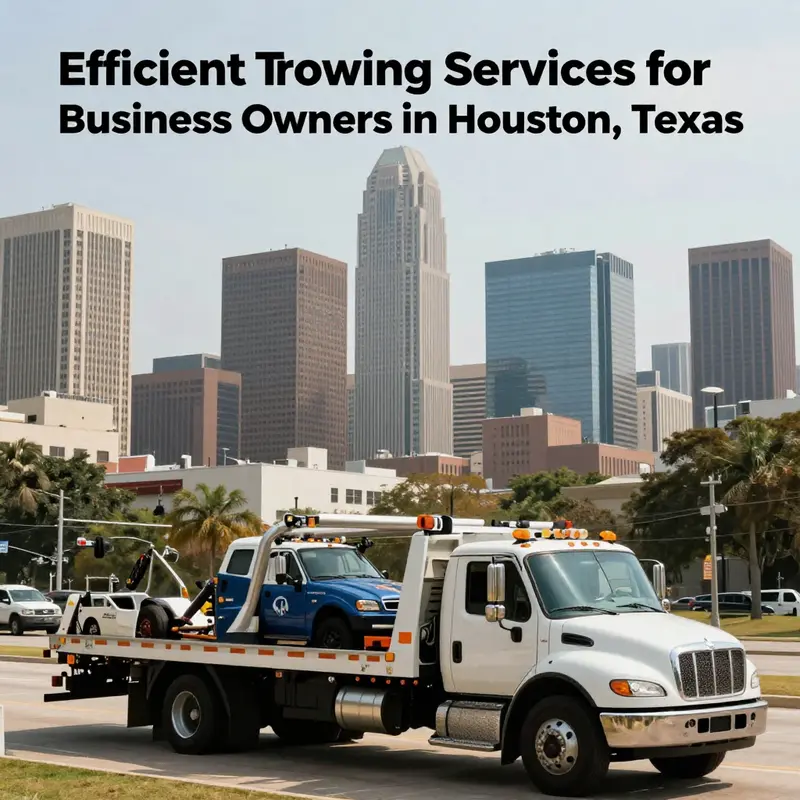
In the bustling environment of Houston, Texas, efficient towing services are crucial for business owners. The unique demands of operating a business in this vibrant city necessitate reliable partners who can manage vehicle logistics effectively. Whether it’s for roadside assistance or heavy-duty towing, understanding your options can prevent downtime and enhance operational efficiency. In the following chapters, we’ll explore some of the best towing services available in Houston and provide insights into the top-rated companies as per customer feedback, ensuring that your business can navigate towing requirements smoothly and effectively.
Houston’s Tow Network: How Local Towing Aligns Speed, Safety, andcitywide Logistics
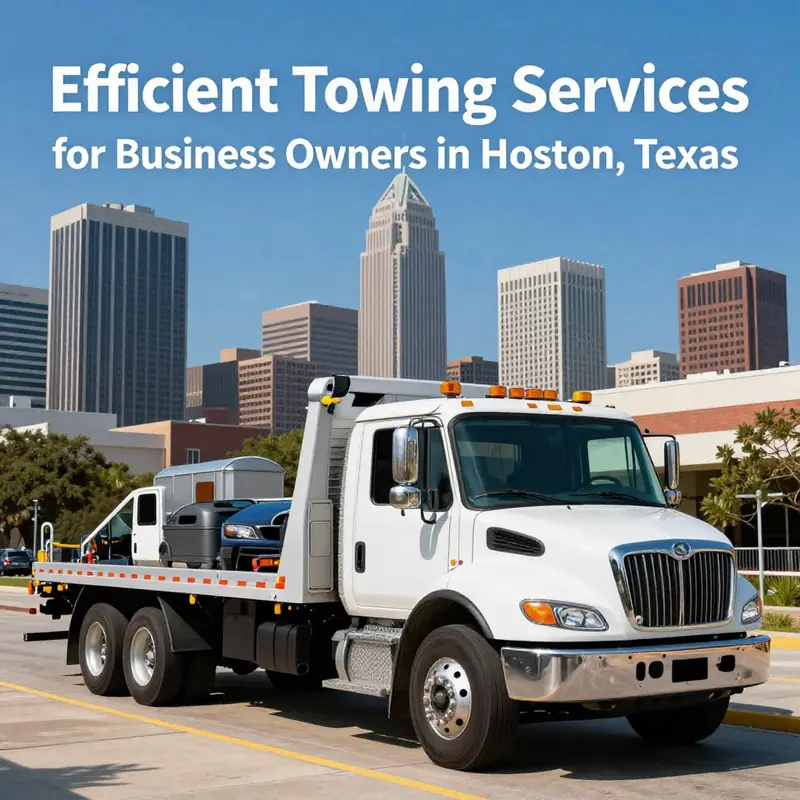
Houston sits at a unique crossroads of density, heat, and heavy equipment traffic. Its sprawling highways knot with port corridors, industrial ramps, and a constant stream of commuters, tourists, and freight. In this landscape, towing services aren’t just roadside helpers; they are critical extensions of public safety and everyday mobility. The best responders in this field are defined not only by how quickly they arrive, but by how thoroughly they assess scene safety, how carefully they manage vehicle recovery, and how clearly they communicate with drivers who are often stressed, frustrated, or stranded. The chapter that follows examines how Houston’s towing ecosystem operates at speed, under pressure, and with an eye toward accountability, reliability, and community service. It also reveals why a fleet’s composition, training, and dispatch discipline matter as much as its geographic reach.
To understand the demand, think of Houston’s roads as a living network that never truly shuts down. Breakdowns occur in bright sun on a Beltway offramp, at 2 a.m. on a service road, or after a collision on a multi-vehicle interstate stretch. The most effective towing teams answer with precision because they anticipate the city’s rhythms: peak commute hours that swell response times, weather events that complicate road clearances, and port-related traffic surges that demand clear coordination with authorities and a clear chain of custody for damaged vehicles. In this environment, the mechanic’s toolkit extends beyond a tow truck and a winch. It includes a robust communications protocol, a diversified fleet, and a culture of safety that prioritizes responders and motorists alike.
A modern towing operation in Houston is built to handle a spectrum of scenarios. Light-duty work—opening a car that won’t start, securing a vehicle after a minor collision, or transporting a passenger vehicle to a repair shop—requires nimble chassis, precise rigging, and a driver trained to minimize further damage. Heavy-duty work—truck towing, RVs, or fleet vehicles—demands heavier equipment, longer crews, and meticulous risk assessment before any hook is set. Then there are specialized recovery tasks that may involve off-road conditions, steep embankments, or vehicles that have rolled into ditches. In all cases, operators must manage safety for themselves, for bystanders, and for the vehicle occupants. The equipment mix matters: flatbeds reduce the risk of secondary damage by transporting vehicles upright, wheel-lift systems can be faster for standard cars, and recovery winches are essential when a vehicle lies off the pavement or against a barrier. The right blend of tools, paired with skilled operators, yields faster, safer outcomes that preserve the vehicle’s value and the driver’s peace of mind.
Beyond the physical assets lies the heartbeat of the operation: dispatch discipline and responsive communication. Houston’s roads demand speed, yet speed without clarity serves no one. A well-run towing service maintains a live link to the customer from the moment a call is placed. The dispatcher must extract critical details about location, vehicle type, traffic conditions, and any hazards at the scene. Then comes the trickier part: translating that information into an accurate ETA and a transparent service plan. The driver who calls in learns what to expect and when. The technician arriving on scene follows a concise briefing, confirms the proper tying and loading technique, and updates the customer as work progresses. This transparency matters because it reduces anxiety, improves trust, and often mitigates disputes over price or service scope after the fact. In Houston, where a single incident can ripple through traffic for miles, the efficiency of this exchange can be as important as the technical skill of the tow.
The broader significance of towing in Houston grows from its proximity to one of the nation’s busiest port regions. The Houston Ship Channel and related industrial corridors impose complex logistical challenges on all forms of transport. A body of research from the Engineer Research and Development Center notes operational delays and navigational constraints in maritime settings. While that study focuses on vessels and barges, it underscores a simple truth that translates to land-based recovery: the success of a complex operation depends on trained professionals who can anticipate bottlenecks, adapt to evolving conditions, and execute a plan with discipline. In practical terms, this means a Houston towing team must be ready to coordinate with on-scene police or highway authorities, adjust routes to avoid obstructed lanes, and preserve the integrity of hazardous or high-value assets during recovery. The city’s drivers rely on this readiness not just to get back on the road, but to ensure safety for everyone around them.
For residents and visitors alike, the value proposition of a reputable local towing provider rests on several interlocking capabilities. First is reliability: the promise of a quick response, accurate assessment, and a safe, controlled recovery. Houston drivers know that a well-coordinated crew can prevent additional damage, avoid escalation of a situation, and minimize the time a vehicle remains out of service. Second is transparency: clear explanations of pricing, service scope, and the steps involved in retrieval or transport. In a city where road conditions shift with weather and traffic patterns, drivers appreciate a firm that can articulate the plan and uphold it. Third is flexibility: the capacity to switch gears between simple jump-starts, flat-tire changes, or full-scale removals from precarious locations. A diversified fleet and adaptable operators make the difference when every minute counts and the scene presents unique challenges, from narrow streets to busy interchanges.
This integrated capability ecosystem—fleet versatility, disciplined dispatch, safety-forward practices, and adaptive communication—shapes how Houston residents evaluate potential providers. Customer feedback and external assessments reinforce what local drivers already sense on the ground: the best teams are as much about how they treat drivers during a stressful moment as about how quickly their trucks arrive. When a breakdown involves a vehicle that is your primary mode of work, school, or care, the quality of the tow becomes part of a larger relief response. It is no longer a simple transaction but a restoration of daily life. In that frame, the narrative of Houston towing blends practical mechanics with human-centered service, turning an emergency into a recoverable moment rather than a prolonged ordeal.
For readers exploring options in the Houston area, it helps to recognize the value of third-party references that summarize local capability. A widely consulted resource highlights the range of services available in the city, including around-the-clock towing and roadside assistance. This external perspective complements direct inquiries to providers, which remains essential to confirm availability, pricing, and any service-specific considerations. The key takeaway is that an informed customer approach yields better outcomes: compare response times, verify equipment and certifications, ask about how scenes are secured to prevent further damage, and seek clarity about the invoicing process before any work begins. In practice, this means taking a moment to research online reviews, talk to real-time operators, and request a written estimate for the service window and transport details. As drivers become more discerning, the industry adapts by offering greater transparency and more predictable pricing structures.
To bridge practice and planning, consider the following integration into your next service call. When you search for a provider, lean on the capacity to deliver not just a tow, but a reliable process. A dependable company will map its response network to your location, provide a realistic ETA, confirm the intended method of recovery, and keep you informed as the scene evolves. They will also respect your vehicle’s value, preserve evidence in the event of a collision, and handle insurance communications with care if needed. This approach matters whether you are stranded on a quiet local road or navigating the maze of an industrial corridor near the port. And because Houston’s landscape is dynamic, the fleet’s ability to reallocate resources quickly—pulling from nearby lanes, adjusting assignments during peak periods, and coordinating with police or highway authorities when necessary—becomes a practical advantage you can measure in minutes.
For readers who want a concrete sense of local options beyond general expectations, a practical step is to review a focused directory that highlights providers known for reliability and responsiveness in the area. As a starting point in the exploration, you can visit a dedicated resource about towing services in Houston. This internal reference can help you compare capabilities without wading through generic listings. towing services in Houston — a concise way to get a sense of what options exist and how a strong provider presents itself to customers.
In sum, Houston’s towing landscape is a dynamic blend of equipment, people, and process, all tuned to a city that never stops moving. The most effective teams treat every call as part of a larger responsibility: to restore safety and mobility quickly, to protect the person stranded on the roadside, and to maintain a smooth flow for everyone who shares the road. By aligning fleet versatility with disciplined dispatch, and by anchoring operations in safety, transparency, and local knowledge, Houston’s towing professionals keep the city moving—one scene, one mile, and one restored routine at a time.
External resource: https://www.yelp.com/biz/ej-towing-and-recovery-houston
Yelp’s Top 10 Towing Service Providers in Houston, Texas
When a vehicle breaks down in a sprawling city like Houston, the immediate concern is not only getting a tow but getting the right kind of help quickly and with transparent expectations. The Yelp list of top-rated towing providers in Houston offers a real-world snapshot of how customers judge reliability, responsiveness, and professionalism in a service that blends roadside assistance with heavy-duty logistics. The city’s traffic density, the mix of residential streets, major highways, and industrial corridors, and the region’s growing need for rapid, safe vehicle recovery all shape what customers value in a towing partner. Within this ecosystem, the standout quality is not simply a low price or a fast ETA; it is the ability to communicate clearly, dispatch accurately, and deliver on the promise to treat each incident with care, whether it is a minor roadside fix or a complex recovery operation on a busy artery at dusk.
Yelp’s compilation emphasizes several themes that resonate with anyone who has had to rely on a tow service. First, consistency of response matters. People want a firm that answers the call around the clock, arrives with the right equipment, and can assess a situation on the spot without turning a simple tow into a drawn-out ordeal. In a city that never truly slows down, the difference between an ETA of twenty minutes and an hour is not merely a schedule item; it is a matter of safety, coordinating with other traffic, and minimizing the time a stranded driver spends in vulnerable locations. Second, the capacity to handle a range of needs—from standard to heavy-duty towing and recovery—appeals to a broad audience. The urban- and suburban-based traffic in Houston can put a wide array of vehicles on the road, from compact cars to commercial trucks and specialized equipment. A provider that can flex between common roadside assistance and more demanding operations tends to earn higher marks for reliability.
The city’s top-rated providers, as reflected on Yelp, demonstrate a balance between local reach and technical competence. Some sit close to central neighborhoods where many calls originate, allowing rapid mobilization in high-demand areas. Others carve out specialized niches—such as heavy-duty recovery or long-distance transport—that address particular customer needs, including incidents at industrial sites or along major corridors that demand advanced equipment and trained crews. The reviews consistently highlight courteous dispatchers, transparent pricing, and thorough communication. These are not merely niceties; they reduce the uncertainty that often accompanies towing, such as whether the carrier can transport a vehicle with intact fluids, the expected cost range, or any extra charges for waiting time at the scene. In a service where a misstep can cause scrapes, further damage, or delayed transport, such clarity becomes a defining attribute of quality.
Beyond punctuality and capability, the reviews underscore the importance of safety practices. The best-rated services describe in their feedback loops how operators secure vehicles, manage wheel-lift or flatbed configurations, and comply with local laws and insurance requirements. Customers appreciate when a driver takes a moment to explain options—whether a tow is possible with a standard dolly setup, whether a flatbed is safer for a disabled luxury vehicle, or if a roadside repair could salvage a situation without a full tow. In Houston, where weather swings can influence road conditions and visibility, the ability to adapt on-site and communicate contingencies becomes a recurring theme in top-tier feedback. The online impressions thus reflect a combined emphasis on technical skill and human sensitivity: the technician who can talk a nervous driver through the process while doing the hands-on work with deliberate care often earns higher regard than someone who performs a flawless lift but communicates poorly.
From a planning perspective, Houston’s towing landscape benefits from a spectrum of providers that can meet diverse requirements. For residents and businesses alike, knowing there is a reliable option within a reasonable radius matters. The Yelp list, while not a substitute for direct pricing or real-time availability, serves as a guidepost for those who want to prequalify potential partners before an actual incident. It suggests that a strong reputation exists across a mix of neighborhood-centered operators and more expansive teams that maintain fleet versatility. The city’s industrial and port-adjacent activity further amplifies the need for operators who can handle complex salvage scenarios, not just regular roadside pulls. While the urban core demands rapid, precise dispatch, the outlying districts require durable equipment that can navigate less accessible streets and longer travel distances without compromising safety or service quality.
The broader context also reminds readers that a well-chosen towing partner is part of a network. In many cases, a customer-facing company will coordinate with wrecker specialists, vehicle transporters, or recovery contractors to ensure a vehicle reaches its destination in one piece. This collaborative approach is especially important in a city with active commercial traffic, repair shops with tight schedules, and logistic flows that depend on timely response. The Yelp rankings implicitly reward this coordination capability by recognizing providers who can organize efficient handoffs, secure accurate paperwork, and minimize downtime for the vehicle owner. In practical terms, that means a customer who needs a tow may appreciate an operator who can offer options, such as immediate roadside assistance when possible, a conventional tow for shorter distances, or a specialized recovery for a vehicle in a precarious location. The aim is to restore mobility with transparency and safety at the forefront.
For readers who want to translate this marketplace wisdom into their own everyday choices, a few guiding questions emerge. How quickly does the service respond after the call is placed? Does the dispatcher provide a clear ETA, explain the type of equipment that will be used, and outline any potential additional costs up front? Is the operator equipped to handle the specific vehicle type, including specialty or heavy-duty units? Are on-site safety practices and insurance considerations clearly communicated? Answering these questions helps a driver, a fleet manager, or a business owner align expectations with capabilities. It also points to the value of staying informed about the local capabilities described in the Yelp collection, which, while curated, reflects genuine customer experiences and patterns in Houston’s high-stakes road environment.
The conversation around these top-rated providers also intersects with the practical realities of Houston’s geography and infrastructure. In a city where major roadways intersect with industrial corridors and a busy port region, the ability to move quickly from a call to a loaded tow is not merely a matter of logistics; it is a matter of coordinating with traffic patterns, weather, and road restrictions. A tow operator trained in handling vehicles in close proximity to heavy traffic, with knowledge of the city’s preferred routes and safe recovery techniques, contributes to a safer, more efficient outcome. Even the best price cannot compensate for a service that arrives late, cannot safely secure a vehicle, or fails to communicate expected timelines. In that sense, Yelp’s top ten list functions less as a directory of bargains and more as a practical map of trusted responders who demonstrate consistency under pressure.
For readers seeking ongoing guidance, it is useful to couple the Yelp snapshot with direct inquiries to providers. Ask about service hours, response protocols for different neighborhoods, and the kinds of equipment in the fleet. In Houston, where the mix of urban, suburban, and industrial environments can demand varying approaches, a flexible operator who can adapt to the moment tends to outperform a one-size-fits-all provider. And while price sensitivity matters, the most resilient choice is a partner who can deliver predictable service quality, even when the clock is ticking and the weather is turning. In short, Yelp’s top ten offers more than a consumer-friendly shopping list. It presents a field report on what motorists and fleet operators across Houston value most in a towing partner: reliability, clear communication, capability across a spectrum of vehicle types, and a commitment to safety and professionalism that remains steadfast in the face of Houston’s dynamic road network.
For those who wish to explore options beyond the list, Houston’s towing landscape remains richly layered. A reader can start with a local, well-reviewed provider that can handle routine tows and roadside assistance and then broaden the search to include outfits that specialize in heavier recoveries, or to those positioned to manage cross-city transport for fleet needs. The city’s expanding commerce and the port’s ongoing operations ensure that the demand for capable, dependable towing services will persist. As readers navigate this space, the internal knowledge of how the market functions—what makes a service dependable, how to verify credentials, and how to interpret customer feedback—becomes as valuable as the service itself. The result is not just a successful tow, but a smoother process that minimizes stress and protects the vehicle, its occupants, and the surrounding traffic.
Internal link note: for readers who want a detailed look at the scope of services available in Houston and how a towing partner can fit into broader roadside assistance plans, see the overview on towing services in Houston. This resource provides context for the practical choices drivers face when a breakdown occurs and helps translate Yelp insights into real-world decision-making. towing services in Houston.
External resource: Yelp’s compilation of top towing providers in Houston offers an on-the-ground perspective on responsiveness, reliability, and service quality in 2026. Access the exchange of experiences and ratings here: https://www.yelp.com/search?cflt=towing&find_loc=Houston%2C%20TX
Final thoughts
In conclusion, having access to reliable towing services is not just beneficial but essential for business owners in Houston, Texas. Understanding the best local providers and utilizing platforms like Yelp for reviews can significantly enhance your operational capabilities. With the right towing partner, businesses can ensure that their logistics run smoothly, minimizing potential disruptions and maximizing efficiency. Investing in these services is investing in the longevity and productivity of your business.