
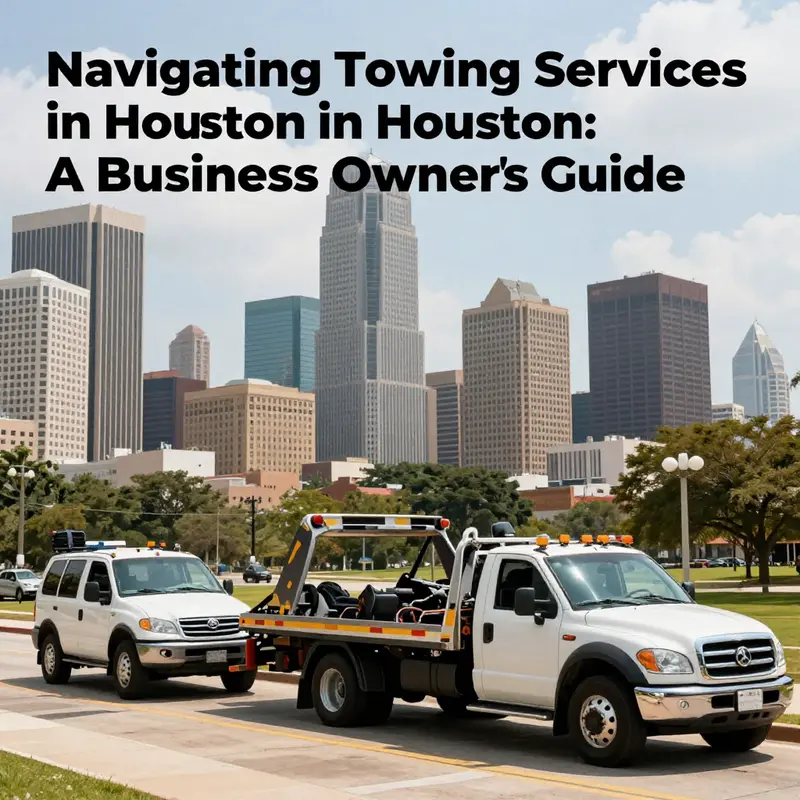
Towing services in Houston play a crucial role in ensuring the fluidity of transport and logistics within a bustling urban environment more than ever. The city’s heavy traffic and diverse vehicle types necessitate a reliable towing industry that not only assists individual motorists but also supports commercial enterprises requiring vehicle management. This article delves into the operational scope and array of services offered by towing companies in Houston, the economic implications of these services, including employment opportunities for the industry, and the latest technological trends shaping operational efficiency. Each chapter builds upon the understanding of how towing services are integral to both everyday life and the business ecosystem in Houston.
null
null
Tow Lines and Urban Growth: The Economic Footprint of Houston’s Towing Services
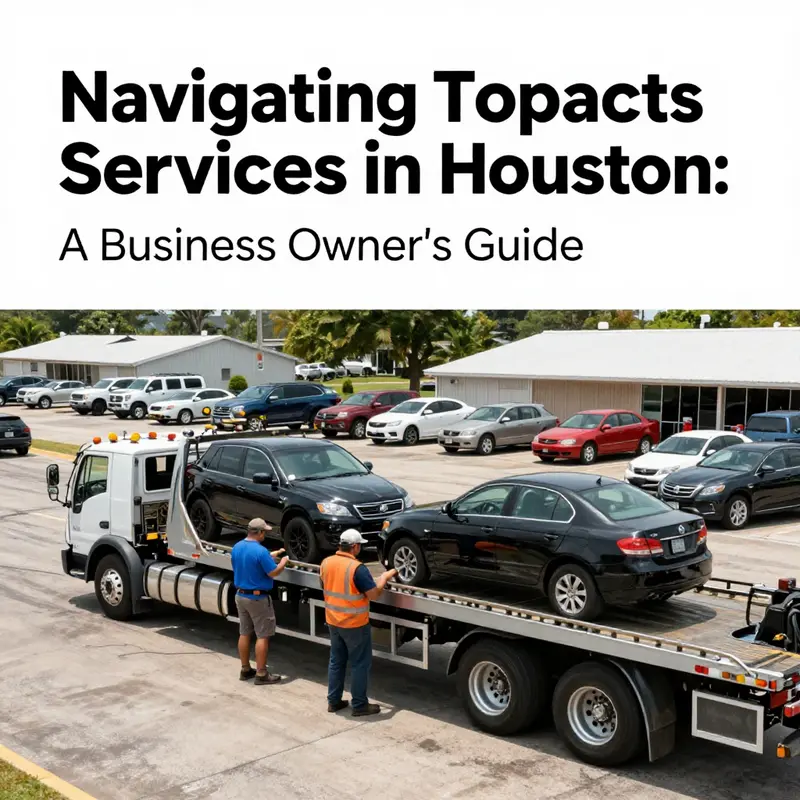
Houston’s streets are a living artery of commerce, culture, and constant motion. In this city, the towing industry functions as more than a roadside aid; it is a logistical backbone that keeps traffic flowing and emergencies addressed. The sheer volume of vehicles, the complexity of the highway network, and the frequency of incidents create a sustained demand for rapid recovery, safe vehicle handling, and efficient clearance of obstructed lanes. That demand translates into steady work for tow-truck operators, dispatchers, and support teams, and it underpins a sizable slice of Houston’s service economy. Indeed, data from Indeed shows 36 towing jobs available in Houston, TX, underscoring an active labor market rather than a fleeting need. Yet the economic story runs deeper than headline hires. Towing services intersect with maintenance, insurance, and logistics, enabling repair shops to receive damaged vehicles promptly, insurers to process claims efficiently, and fleets to minimize downtime in a city where minutes matter. In this sense, towing helps sustain urban activity. As demand grows, towing services in Houston become a critical component of the city’s economic resilience and daily function.
Beyond handling breakdowns, towing supports mobility and safety by quickly removing disabled or illegally parked vehicles from critical roadways. In a city with frequent bottlenecks, a prompt response prevents secondary incidents and reduces the ripple effect of a stalled lane into neighborhoods and business corridors. Towing services also facilitate emergency response, giving ambulances and fire units unfettered access to vital locations. The speed and reliability of recovery operations have a measurable economic impact: they shorten disruption, protect commercial operations, and preserve the public’s confidence in the transport system. As a result, the value of professional towing extends past the visible tow itself; it is a core part of Houston’s resilience on the road. With timely responses, communities experience less wear on local roads, shorter travel times for essential trips, and greater confidence in navigating rush hours. The economic case for fast towing also includes lower accident costs and reduced fuel waste from idling lanes.
Ancillary economic activity radiates from these core services. When a vehicle is hauled to a repair facility or storage lot, adjacent sectors gain momentum: collision repair shops secure repeat business, insurers manage claims, and storage spaces fill with vehicles awaiting service or disposition. Roadside assistance programs, already part of the ecosystem, expand the revenue footprint by offering help to drivers who might otherwise be stranded far from a repair shop. In a busy urban market like Houston, every tow can stimulate multiple touchpoints of economic activity, creating a multiplier effect that circulates money through local businesses—from auto parts suppliers to neighborhood service centers. Local service firms, garages, and parts suppliers rely on a steady inflow of work, anchoring employment and encouraging small-scale entrepreneurship. The forklift of this economy is the fleet of skilled workers who perform the actual recoveries and those who coordinate dispatch and logistics behind the scenes. The result is a web of interdependent services that keeps the transportation network functional and reliable.
For individuals seeking a career path, the towing industry offers tangible earning potential and flexible schedules. Industry data points to meaningful income opportunities, with workers able to earn about $100 per unit plus task-specific bonuses, and average monthly earnings reported in the range of several thousand dollars. While wages vary with experience, certifications, and shift patterns, the overall trajectory is upward for those who stay within the field and expand their capabilities, such as safe vehicle handling, accident response, and efficient dispatch. The Houston market, with its ongoing growth in commercial activity—from construction to logistics and hospitality—creates room for advancement within tow operations, garage support roles, and fleet management. This not only attracts new entrants but also helps reduce turnover in a sector that relies on skilled, reliable workers to meet tight deadlines and high-stakes emergencies. In this sense, the labor story of Houston’s towing sector mirrors the city’s broader employment landscape: persistent demand, clear skill paths, and meaningful earnings for those who commit to the trade. Careful training can also pave the way for diversification into supervisory roles, safety compliance, and regulatory oversight, further enriching long-term career prospects.
Navigating this landscape requires compliance as much as courage. The regulatory framework surrounding towing operations—licensing, consumer protections, and adherence to local ordinances—shapes the quality and trust customers expect. Licensed operators must demonstrate safety practices, proper vehicle handling, and transparent pricing, while municipalities enforce rules aimed at preventing unsafe practices and unfair towing charges. In parallel, advances in technology are reshaping efficiency and accountability. Global positioning systems guide crews to incidents with precision, while mobile dispatch platforms optimize response times and track service history. This modernization helps ensure that a city as dynamic as Houston receives reliable service even during peak hours. The converging forces of regulation and technology reinforce a common standard: that towing in Houston is a professional, accountable service integral to daily life rather than a reactive convenience. For the industry to sustain this trajectory, ongoing investment in training, equipment, and data literacy will be essential, ensuring that every tow, every dispatch, and every payment reflects the highest standards of service.
Taken together, these threads illuminate a chapter of the Houston economy where mobility, safety, and labor converge. As traffic patterns evolve and urban infrastructure expands, the towing sector stands ready to adapt, absorbing growth while maintaining essential service levels. The capacity to recruit skilled workers, offer competitive compensation, and adopt smarter dispatch and recovery methods will determine how deeply this industry embeds itself into the city’s broader economic fabric. In the end, the story of Houston’s towing services is not merely about moving vehicles from point A to point B; it is about sustaining the rhythm of a bustling metropolis. It is about reliability under pressure, steady employment, and a resilient mobility network that underpins every other aspect of urban life, from commerce to emergency response to daily commutes. And as the city continues to grow, so too will the opportunities—both for people who tow and for the communities that rely on them. For readers exploring the wider topic of towing services in Houston, this chapter maps how the trade contributes to economic vitality, workforce development, and the everyday efficiency that keeps Houston moving.
Towline of Tomorrow: How Technology Is Redefining Houston’s Towing Landscape
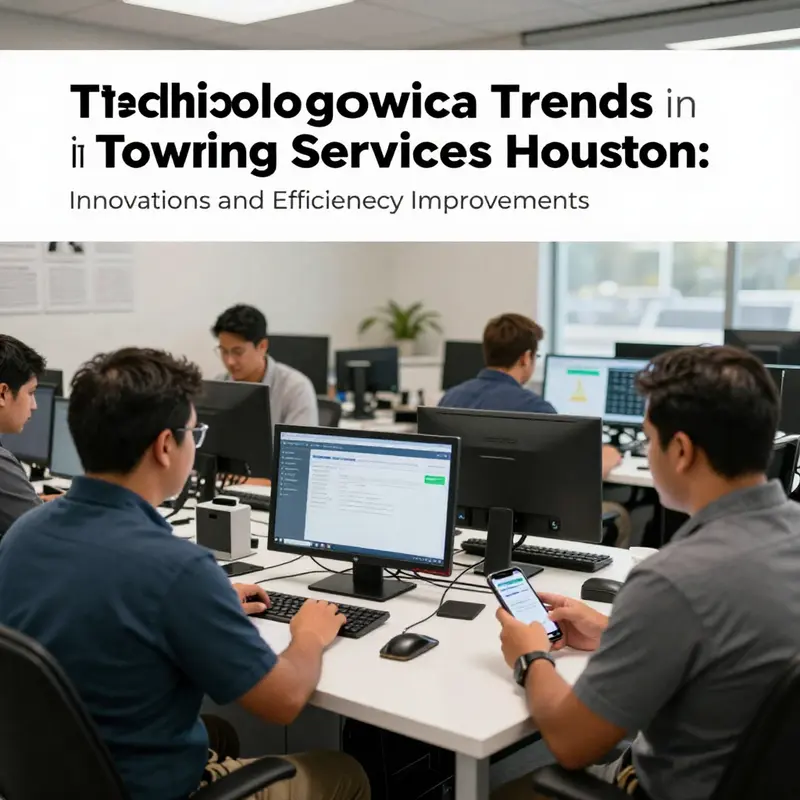
Houston’s roads pulse with traffic, weathered by the city’s heat, humidity, and the constant roars of highway exchanges. In this environment, the towing industry has long served as a quiet backbone—responding to breakdowns, fender-benders, and impassable incidents with urgency and care. Today, that backbone is being reinforced, not through louder sirens, but through a quiet, relentless integration of technology. Real-time data, smarter dispatch, and predictive maintenance are converging to transform how tow operators move, respond, and serve a city that never quite sleeps. The result is a choreography of efficiency and safety that cuts through Houston’s tangled network of freeways and arterials, enabling tow operators to reach the most critical moments with precision and speed while also reducing costs and downtime for the fleets that rely on them.
Central to this transformation is real-time GPS tracking and fleet management. Modern fleets operate on platforms that render a tow truck’s location, status, and performance visible at a glance. This visibility does more than shorten response times; it refines every mile driven. With sophisticated routing algorithms, operators can steer the closest available unit to a scene, avoid congestion, and estimate arrival times with a confidence that data alone cannot provide. When a call comes in from a stalled vehicle on a congested corridor or from a business district with high delivery volumes, the system can automatically propose the most efficient combination of unit, route, and resources. The practical impact is measurable: fleets using GPS-based dispatch systems have reported meaningful reductions in average response times, a win for customers and for the operators who must balance demand with limited hours in a day. In Houston’s dense traffic ecosystem, every minute saved translates into less idling, reduced wear on equipment, and faster relief for stranded drivers.
The customer-facing layer of this technology stack has grown just as robustly. Mobile applications are no longer conveniences but essential interfaces for both drivers and clients. For the driver, the app streamlines the workflow—from receiving a service request to navigating to the scene and updating the job status in real time. For the user, the same app offers visibility into ETA, digital invoicing, and post-service feedback. The integration with insurance claim workflows is a notable enhancement for accident-related towing. By syncing claim information and tow details directly into insurer portals, the process from incident to settlement becomes smoother, with fewer back-and-forth calls and miscommunications. A case study from a Houston-based association highlights how an app-focused platform significantly reduced the average wait time, underscoring the value of a seamless digital touchpoint in a field traditionally dominated by phone calls and radio chatter. Within this framework, the customer experience shifts from a series of reactive phone interactions to a proactive, transparent journey that reduces anxiety during moments of stress and uncertainty.
Teaming with the car’s own data stream is telematics, the set of sensors embedded in tow trucks that monitor engine health, brake wear, tire pressure, and other critical systems. Instead of waiting for a breakdown on a busy freeway, operators can anticipate failures and schedule maintenance before a fault becomes a roadside emergency. Predictive maintenance has proven its worth elsewhere, and national surveys indicate a clear reduction in unscheduled repairs when fleets adopt proactive monitoring. In practice, this means fewer stranded vehicles, shorter on-scene times, and more reliable service during peak demand. For Houston, where the logistics of multimodal transportation and warehousing create high requirements for uptime, predictive analytics can be the difference between a missed delivery and a satisfied customer. The data-driven approach also feeds into safety programs, providing a record of asset health that helps ensure tow operators uphold rigorous standards for equipment reliability and road safety.
Artificial intelligence further enhances the dispatching calculus. By layering historical performance data with live traffic patterns and weather signals, AI-powered systems assign the most suitable unit to each job. This intelligent routing doesn’t merely pick the nearest unit; it seeks the best-qualified unit given road conditions, load requirements, and the complexity of the tow. In a city like Houston, where a single block can feature wildly different traffic realities, AI helps prevent situations where a well-meaning but ill-suited truck arrives late or struggles with a heavy recovery. The outcome is a more predictable service level and a more resilient operation in the face of surges—whether caused by a storm, a major sporting event, or a holiday rush.
All of these technologies interlock with a broader ecosystem that stretches beyond the roadside. The most effective Houston operators view technology as a service-enabler rather than a mere efficiency play. By integrating GPS, mobile interfaces, telematics, and AI into a cohesive system, they can manage a more complex mix of light- and heavy-duty towing, roadside assistance, and specialized recoveries with the same discipline that underpins modern logistics networks. This alignment is particularly vital for commercial customers and fleet operators who depend on consistent turnaround times to maintain their own schedules and commitments. The regulatory environment, too, is increasingly attentive to safety, licensing, and consumer protections, pushing operators to demonstrate reliability not just in the field but in the data that underpins every call. In this sense, technology becomes a bridge between customer expectations and the careful, regulated practice that keeps Houston moving.
From a local perspective, the evolution of towing technology also invites a renewed appreciation for the human element—the technicians and dispatchers who translate data into action. The right tools do not replace expertise; they amplify it. A technician with real-time vehicle health dashboards can diagnose and address issues more quickly, while a dispatcher who can visualize the network at scale can allocate energy and attention where it matters most. For customers, this translates into a more predictable, transparent experience where a tow is not a question mark but a clearly communicated service window. It also underscores the importance of continuous learning, as the data generated by daily operations feeds back into training, safety programs, and best practices. Houston’s towing community, with its mix of independent operators and larger fleets, stands to gain from shared platforms and standardized data practices that elevate the entire industry without sacrificing local character or responsiveness.
For readers seeking a practical pathway into these advances, a local touchstone is the broader network of Houston-based towing resources that frame how technology translates into everyday service. See more about the local landscape at towing-service-houston. That accessible resource helps illustrate how a neighborhood operator upgrades from traditional to tech-enabled workflows while remaining rooted in the city’s unique needs and rhythms.
As the city grows and its transportation demands evolve, technological trends in towing will continue to push toward faster, safer, and more reliable outcomes. Real-time fleet management, customer-centric mobile interfaces, predictive maintenance, and AI-driven dispatching form a cohesive approach that aligns efficiency with service quality. The end result is not just a faster tow but a more resilient, responsive, and accountable system that Houston can depend on when every minute counts. External research corroborates these trajectories, offering deeper data on how real-time fleet management transforms towing operations across the country and beyond. For a broader perspective, consult the industry analysis on real-time fleet management in towing services: https://www.atri.org/research/real-time-fleet-management-in-towing-services
Final thoughts
In conclusion, towing services in Houston are more than just a necessary assistance mechanism for vehicle emergencies; they are a significant contributor to the city’s economic landscape. By understanding the operational scope and array of services provided, the positive economic impacts through job creation, and the embrace of technological advancements, business owners can appreciate how these services not only facilitate logistics but also drive local employment and efficiency. This comprehensive understanding allows businesses to engage more effectively with towing service providers, ensuring mutual benefit and support.