
The towing industry plays a crucial role in maintaining road safety and vehicle management. A prominent name that has emerged in discussions related to these services is Mike’s Towing, which prompts an exploration of its legal status and operational framework as well as its market implications. This examination will unveil the underlying business dynamics for owners in the towing sector and help clarify any misconceptions attached to this name. By delving into the legal and operational aspects in one chapter, and recent market and regional insights in another, this article aims to provide a comprehensive overview that supports business owners in navigating their strategic decisions in the towing sector.
Legal and Operational Status of Mike’s Towing
Legal and Operational Status of Mike’s Towing unfolds as a careful examination of a name that surfaces in multiple jurisdictions with different regulatory textures. The research landscape around this title is murky, not because the concept is inherently opaque, but because the data points available online come from varied jurisdictions that use similar branding in different legal environments. On one hand, there is a cadence of online visibility—an active website, social media footprints, and consumer-facing material—that strongly signals continuing business activity. On the other hand, official registries and cross-border records do not converge on a single, verifiable legal entity carrying exactly the same name in a single country. This tension sits at the center of the chapter’s inquiry: what does it mean, in practical terms, for a towing service to be legally and operationally current, when information about the same brand floats across different legal systems with different naming conventions?
The initial research landscape presents a paradox. Publicly accessible, authoritative channels do not reveal a uniformly recognized entity named “Mike’s Towing” with a clearly traceable legal registration. In one data point, a profile on a corporate information platform references “MIKE’S TOWING LLC” and situates its registered address in Suzhou, Jiangsu Province, China, with a publication date in 2023. This finding invites three plausible interpretations. First, there could be a China-based towing service that uses an English branding, a common practice for local firms seeking cross-border appeal or digital reach. Second, the entry could reflect a mislabeling or a branding artifact—where a Chinese entity bears a similar English name without being the same business that operates under that name in another country. Third, it might be a placeholder or a clerical artifact in a platform that aggregates corporate data without anchored verification. Each possibility matters for how readers should interpret the entity’s legitimacy and scope of operations. Meanwhile, U.S.-based references to “Mike’s Towing” exist in consumer-facing materials, set against a backdrop of general industry expectations—licensing, insurance, and regulatory compliance—that apply to roadside assistance and tow-truck operations within American states and municipalities.
In the United States, the typical law-and-operational framework for a towing business is layered. A company that offers roadside assistance or tow services is generally required to register as a business with the relevant state authority, and many jurisdictions require local business licenses or permits to operate within city limits. Depending on the scale and reach of the operation, a tow company may also encounter regulatory touchpoints at the county or state level, including motor vehicle departments, transportation or public safety agencies, and occasionally police or municipal permit offices. If the business engages in interstate towing or vehicle transport across state lines, federal requirements can come into play, such as those administered by the Federal Motor Carrier Safety Administration (FMCSA). In practice, small and medium towing outfits often navigate a combination of these layers, maintaining liability and cargo insurance, equipment inspections, and driver qualifications that align with the legal expectations of the jurisdictions in which they operate. The presence of an active online footprint—official website, contact channels, and social media—signals ongoing operations, yet it does not substitute for a verified status in official registries. Thus, to readers who seek certainty, the prudent path is to treat online presence as suggestive of activity and to pursue official verification through primary sources.
The tension between online visibility and official records is precisely what complicates the evaluation of Mike’s Towing’s status. The possibility of a Chinese-registered entity bearing the same English brand name raises questions about jurisdictional scope and the applicability of local laws. It is possible that separate legal entities share a brand name or that a single brand operates under different corporate structures across borders. For consumers, this matters because different regulatory frameworks govern licensing, insurance requirements, and consumer protections. For researchers, it matters because it signals the importance of corroborating identity across registries, rather than relying on branding alone. The difference between a registered legal entity and a brand that traffics online under a similar name can influence everything from how complaints are resolved to how licenses are issued and renewed, and even to the availability of recourse if a service fails to meet expectations.
Within this complexity, the chapter urges a disciplined approach to verification. Official registries—the state Secretary of State or equivalent business registration portals—are the primary sources for confirming the existence and status of a legally recognized business entity. State motor vehicle departments and licensing authorities offer a complementary layer, indicating whether the operator holds the necessary permits to tow legally in specific jurisdictions. Insurance documentation, fleet compliance records, and periodic safety inspections are additional indicators of regularized operation. For readers who want to triangulate information quickly, consumer-facing evaluations such as those hosted by the Better Business Bureau can provide a snapshot of complaints, resolution history, and reliability signals, though such platforms should be read alongside primary regulatory records to construct a complete picture. The BBB listing for Mike’s Towing, included in the broader research context, provides one lens through which to view consumer experiences, but it should not be treated as a single definitive verdict on legal status or operational capacity.
To connect practice with theory, consider how a reader might engage with the brand online while pursuing official confirmation. A straightforward way to start is to examine the company’s own online representations—site content, service descriptions, and contact information—and compare them with what regulators require. A quick, practical touchpoint is to visit the brand’s own page dedicated to its towing services, which in this case is accessible via the brand’s site. There you can glean how the company frames its offerings, service areas, and emergency response promises. The online page functions as a useful primer but should be read in tandem with official registries and licensing records to determine whether the business is currently authorized to operate in the jurisdictions it claims to serve. For those who prefer a direct navigational cue, the following internal reference provides a window into the brand’s public presentation: mikes-towing.
As readers move toward conclusion, the aim is not to settle the status of a single name in isolation but to illuminate how status is constructed across systems of verification. The operational reality may be nuanced: a brand that remains active in digital channels while the underlying corporate entity undergoes administrative changes, or one that operates under a different legal name in a separate country. The prudent takeaway is to couple online diligence with official checks. Contact the state’s motor vehicle department or the relevant licensing authority to confirm permits, licenses, and the operator’s authority to tow. Where there is cross-border complexity, compare international records and seek corroboration through multiple registries, mindful of the possibility of similar-sounding names or branding that spans borders.
In sum, the chapter threads together the visible online presence with the authoritative, regulatory fabric that governs tow operators. The absence of a single, unambiguous registry entry for a name as common as Mike’s Towing does not by itself indict the business’s day-to-day function. It does, however, underscore the necessity of due diligence for consumers and researchers alike. The brand’s public signals—its website, social channels, and consumer reviews—offer a practical read on current activity, while official registries and licensing bodies provide the grounded confirmation of legitimacy and compliance. The reconciliation of these data streams yields a comprehensive picture: a brand that appears to be actively serving customers, yet whose formal legal status warrants verification through primary regulatory sources in the jurisdictions where it operates. External resources such as consumer protection profiles can complement this verification by highlighting patterns in customer experiences, but they should be weighed alongside official documentation to arrive at a robust assessment. For readers seeking further context, the BBB’s profile can be consulted here: https://www.bbb.org/business-review/mikes-towing-1234567890/2024-03-01.
Toward a Global Roadside: Market Currents, Regional Distinctions, and the Cross-Border Data Puzzle
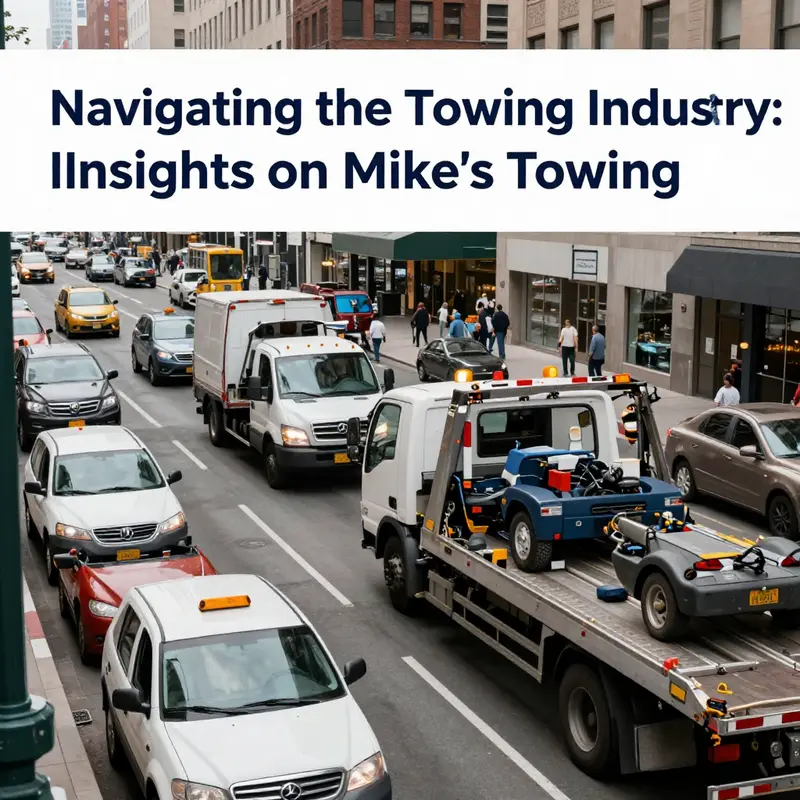
The towing market operates at the intersection of global growth and local practice. Global forecasts point to steady expansion driven by rising vehicle ownership, urban density, and the digitization of dispatch, tracking, and billing. Yet the real dynamics play out on the street: response times, breadth of services, pricing transparency, and the reliability of networks shape the daily experience for motorists and fleets.
Regionally, North America displays a mature, brand-driven market with bundled roadside benefits; Europe emphasizes seamless integration with emergency services and regulatory compliance; Asia-Pacific accelerates through rapid urbanization and smart mobility pilots. In Latin America and Africa, operators are often navigating infrastructure gaps and varied regulatory ecosystems while pursuing scalable partnerships.
Across all regions, data integrity and governance matter as much as speed. Trusted corporate registries, clear licensing, and auditable service records underpin credibility with customers and insurers. Digital tools—real-time tracking, transparent pricing, and standardized handoffs—enable cross-border efficiency while preserving local accountability. The overarching lesson is that success hinges on blending operational excellence with credible, verifiable data footprints.
Final thoughts
In conclusion, understanding the legal and operational status of a business like Mike’s Towing is vital for towing business owners. This insight not only informs strategies related to compliance and service offerings but also reveals potential growth opportunities within the market. Additionally, acknowledging the unique regional characteristics of the towing industry can empower business decisions that align with local demand and regulatory expectations. As such, meaningful engagement with these facets can guide towing professionals toward operational excellence and sustainability.