
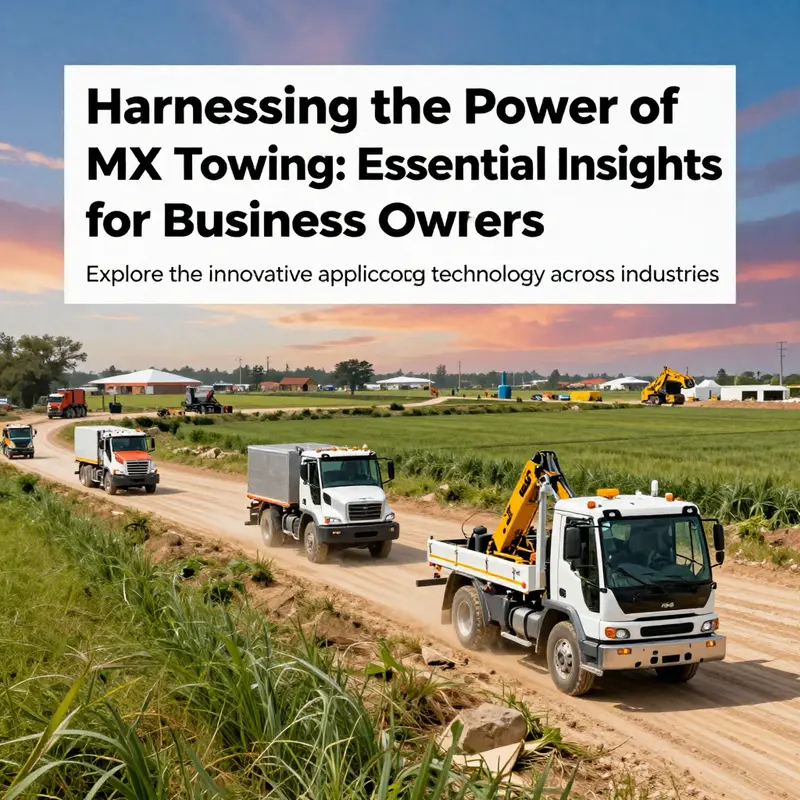
In the evolving landscape of industrial and agricultural operations, understanding the capabilities of MX towing systems becomes paramount for business owners. MX towing encompasses a range of equipment designed for high-performance towing and can significantly enhance operational efficiency. This article delves into the fundamental role of MX towing across various sectors, focusing on its applications in industrial and agricultural settings, technological advancements that bolster its capabilities, and its critical function in emergency services. By exploring these three dimensions, business owners can better assess how MX towing solutions can elevate their operational performance and competitive edge.
Tow Power on Rugged Ground: High-Load Towing Across Industrial and Agricultural Machinery
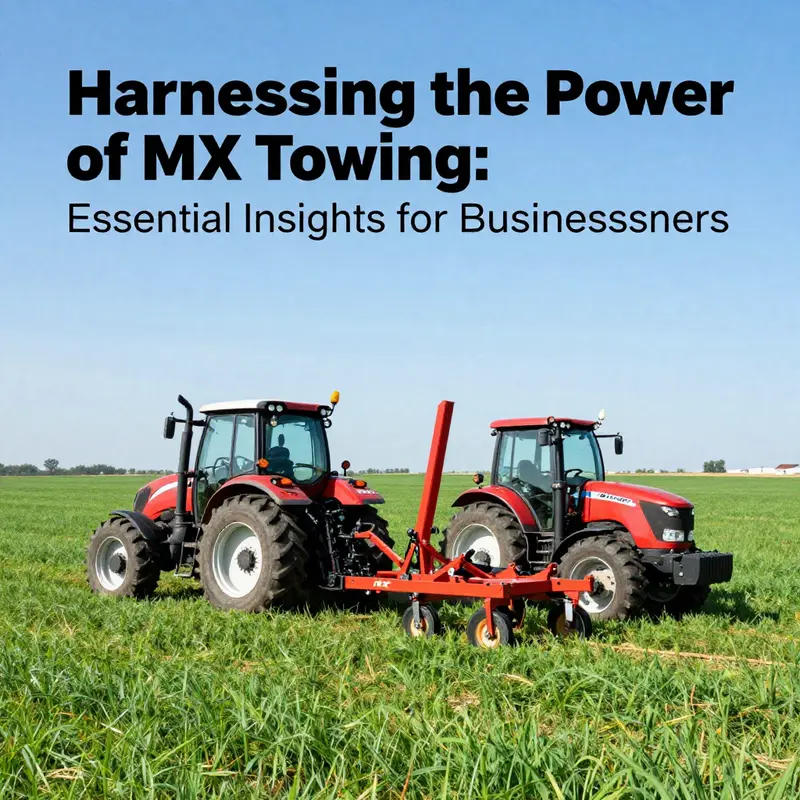
Towing, in the context of heavy-duty machinery, is more than a single action; it is a measure of endurance, control, and system integration. In industrial and agricultural settings, machines must combine raw traction with precise torque management to move heavy loads across uneven terrain, through mud, dust, and debris, while maintaining continuity of work. The essence of effective towing lies in the drivetrain’s ability to deliver sustained low-end torque, keep the wheels turning on slippery surfaces, and distribute power without sacrificing maneuverability. A dual-function approach often underpins this capability: a power unit that drives implements and also negotiates the heavy pulling task with a split or fission transmission that allocates torque where it is needed most. This design ensures that the vehicle can switch tasks without pausing operation, a feature indispensable when time is money on a field or a worksite. In practical terms, robust towing requires more than horsepower; it requires a harmony between engine, transmission, and the suspension system, so the machine can maintain traction, absorb shocks, and keep the load stable as ground conditions change. The result is a machine that can haul large implements, trailers, or loads directly associated with fieldwork or site operations, across conditions that would challenge lighter equipment. On soft ground or steep grades, the combination of four-wheel drive and a locked differential can mean the difference between progress and stalling. The suspension must also be designed to handle heavy loads without transferring excessive bounce to the operator, which in turn improves control and reduces fatigue on long shifts. In service terms, towing capability is a critical reliability metric. When fleets are deployed in remote or challenging environments, the ability to move gear quickly and safely translates into better productivity, reduced downtime, and lower maintenance costs over the life of the machine. The emphasis on stability under load is reflected in the choice of components such as heavy-duty clutches, reinforced gear trains, and robust shafts designed to withstand repeated stress. Even routine maintenance takes on a higher importance; the gearbox oil, cooling system, and drivetrain seals must perform reliably under continuous tow operations, and any failure can cascade into longer downtime and costly repairs. In agricultural practice, towing supports a broad spectrum of tasks. Large seeders, planters, and harvest aids often rely on a towing-ready platform to position and deploy tools across fields. In industrial settings, the same principle translates to moving modular equipment, towable power units, or trailers that shuttle between workstations, sites, or depots. The versatility of towing in these contexts hinges on the vehicle’s ability to sustain a heavy draw while preserving steering control and braking efficiency, which is especially crucial when the load alters the vehicle’s center of gravity during maneuvers. The broader ecosystem around towing has evolved with it. Smart scheduling, telemetry, and GPS-based tracking help coordinate multiple units performing towing tasks across a campus, farm, or supply chain. This level of coordination reduces response times, optimizes route selection, and improves safety by documenting the chain of custody for equipment and loads. For operators and owners, the goal is simple: maximize uptime and minimize risk, without compromising performance. In practice, this means selecting machinery whose powertrain, hydraulic systems, and chassis are engineered to support repetitive, high-torque tasks. It also means integrating maintenance and monitoring systems that can anticipate wear, quantify load, and guide preventive service decisions. To readers who manage fleets or operate on remote sites, the takeaway is clear: without robust towing capability, the efficiency and reach of industrial and agricultural work are greatly limited. The capacity to move heavy loads across rough terrain in a controlled manner is not a luxury; it is a core competency that determines how quickly tasks are completed and how safely they are executed. For practical towing service insights, see Mikes Towing. In the end, towing is a holistic performance trait—one that blends torque, traction, and resilience into a dependable workflow on the most demanding ground. For a deeper technical reference on the platform discussed here, the official product page provides a comprehensive overview of specifications and intended applications.
MX Towing Reimagined: The Technology Driving High-Load Pulling Across Agriculture, Industry, and Rescue
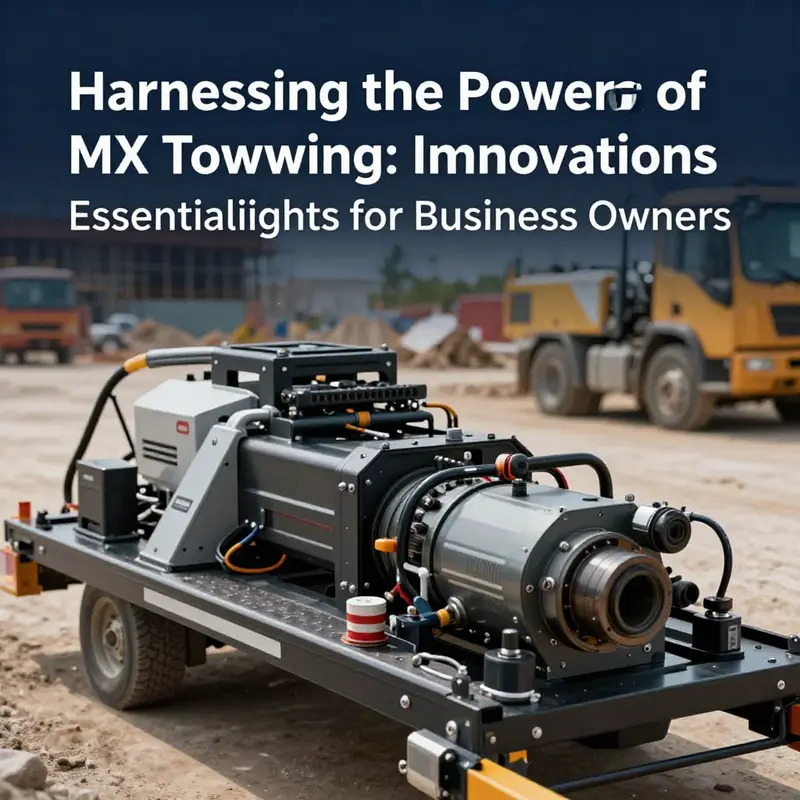
From the outset, towing is about leverage, torque, and control under heavy load. In the MX-towing spectrum, the backbone is the ability to transfer power efficiently from the source to the hook, hitch, or trailer, enabling work that ranges from field prep to off-road recovery. Modern MX systems emphasize resilience. They blend powertrain layout, torque distribution, and chassis rigidity to maintain traction while preserving operational safety in environments that demand both strength and finesse. The field view shows that the core demand is not just maximum pull; it is predictable, repeatable performance across changing conditions—soil moisture, mud, uneven surfaces, or the cemented surfaces of a workshop floor. Engineers approach this by designing drivetrains with adaptive torque distribution, robust tow frames, and control logic that prevents slip or overload while delivering the commanded pull. The result is a family of devices that can perform double-duty: they tow and they drive, balancing two essential roles without compromising either.
The most visible shift is electrification. Battery chemistry and power electronics are closing the historical gap between electric and conventional trucks on towing tasks. Higher energy density and faster charging reduce downtime, while advanced motor control sustains peak torque during hauls. In the broader industry, this trend is supported by research noting EV towing capacity and range are improving, redefining commercial utility. The implication for MX-influenced systems is meaningful: fewer interruptions, cleaner operation, and the flexibility to deploy devices in remote sites where refueling was once a barrier. Yet electrification does not stand alone; it is coupled with smarter scheduling and fleet visibility. Real-time GPS tracking, telemetry, and on-board diagnostics give dispatchers a clearer view of asset utilization and route viability. The combination of electrified powertrains with intelligent routing is reshaping costs and response times in emergency and routine towing alike. In practice, these advances translate into higher uptime and more predictable performance on tough jobs.
The chassis and mechanism follow a parallel trajectory. The evolution of towing frames and their mechanical foundations emphasizes resilience and precision. Frames are designed for tight spaces and long life under shock, torque, and vibration. They enable accurate turning in workshops and on uneven terrain alike, reducing the time needed to position a vehicle or load. For smaller operations or facilities with low towing frequency, compact tow machines provide essential capability without oversized footprints. What ties these trends together is a philosophy of adaptability: a tugging system must be strong, but also portable, modular, and serviceable. In practice, this means selecting materials that resist corrosion, joints that tolerate frequent flex, and modular supports that can be swapped as loads and tasks evolve. The operational narrative becomes less about single heavy lifts and more about dependable deployment, from the field to the repair bay. A modular approach supports different load classes and extends service life.
Public safety and field reliability run parallel to industry gains. In emergencies, rapid response, clear accountability, and robust data trails are increasingly expected. The MX lineage emphasizes reliability under stress, allowing responders to reach and clear incidents swiftly. In daily maintenance and training, professionals rely on a network of support services that ensure readiness. For hands-on operations, these networks are crucial. Mikes Roadside Service provides a practical model of how integrated assistance improves uptime and safety. In training contexts, crews rehearse controlled towing scenarios to reduce risk and protect both equipment and personnel.
Toward a future landscape, these threads converge toward a broader, smarter ecosystem. The MX innovations—the electrified powertrains, the smart fleet systems, and the versatile mechanical architectures—pull a wider set of activities farther and faster, with less downtime and greater predictability. The towing industry is evolving from brute strength to engineered reliability, where every pull is a measured, traceable sequence of power, control, and care. The ecosystem expands to include compact units for small workshops and heavy-duty rigs for demanding fields, all connected through data and protected by resilient hardware. The outcome is a towing landscape that values adaptability, safety, and efficiency as standard expectations. External resource: Electric vehicle towing: Closing the gap with ICE trucks. https://www.spglobal.com/marketintelligence/en/news-insights/research-reports/electric-vehicle-towing-closing-the-gap-with-ice-trucks-20251016
MX Towing: The Heavy-Lift Backbone of Emergency Response and Roadway Recovery
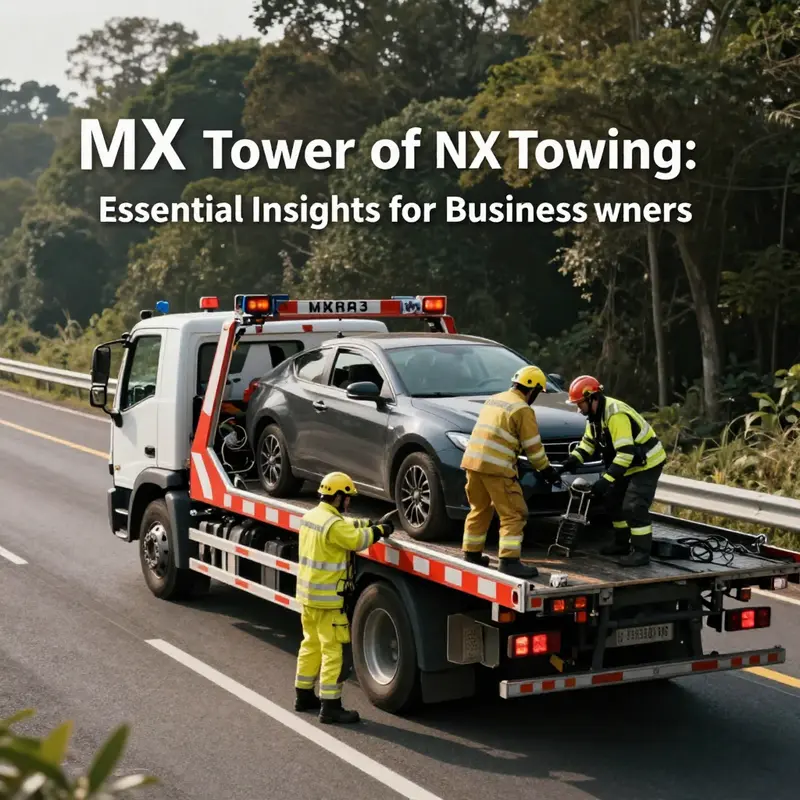
When a roadway comes to a standstill after a collision, breakdown, or a natural disruption, the scale of the challenge extends far beyond simply removing a stalled vehicle. MX towing—understood as the high-capacity, rugged towing capability embedded in heavy equipment and support fleets—acts as the quiet backbone of emergency services and recovery operations. It is not merely a matter of pulling one vehicle to the shoulder; it is about restoring mobility, stabilizing dangerous conditions, and returning a community to safe traffic flow as swiftly as possible. In this light, MX-tuned systems emphasize a dual-purpose strength: the ability to tow under heavy load while maintaining drive capability and control in difficult terrains, from rural lanes to congested interchanges. The essence lies in a drivetrain and chassis design that distributes torque with precision, protecting tires, drivetrains, and suspensions while offering enough leverage to move immobilized machines, damaged equipment, and even stranded heavy vehicles without compounding harm.
In emergency scenarios, time and safety converge into a single critical variable: speed of response. A flatbed, or rollback, towing approach is often employed because it minimizes ground contact and shields sensitive components from further damage. This is especially vital for vehicles with all-wheel or four-wheel-drive configurations, where unintended contact with rough surfaces can escalate wear or compromise alignment. The ability to lift the entire vehicle onto a hydraulically operated platform enables responders to transport damaged assets in a controlled, stage-managed manner. Such approaches reduce secondary failures during transit and allow for precise positioning at incident scenes, repair yards, or secure staging areas. The payoff is not only protection of assets but also the rapid clearance of lanes, which directly improves road safety and reduces downstream congestion.
Yet the work of MX-towed recovery extends beyond simply hoisting and hauling. Complex extrication tasks demand a coordinated, multilayered response. Stabilizing wrecked vehicles prevents sudden shifts that could injure responders or worsen vehicle damage. Hazardous materials, fuel leaks, and unstable loads require careful handling and interagency communication. In these moments, the towing team becomes part of a larger incident command, aligning with police, fire, EMS, and highway maintenance crews to maintain perimeter control, establish safe access routes, and secure respiration-safe zones for responders. The aim is to build a predictable sequence of operations where every action preserves life and limits environmental impact, while keeping the recovery on a schedule that minimizes exposure to hazards and protects bystanders.
Rapid deployment is the other indispensable thread in this narrative. The best MX-towing tasks are characterized by speed that does not compromise safety. A well-rehearsed protocol, coupled with access to a versatile fleet and portable recovery tools, allows responders to adapt to changing conditions on-scene. Whether a vehicle is buried off the shoulder in soft soil, overturned on a slope, or stranded behind guardrails, the ability to mobilize the right equipment quickly—without delay—often determines how quickly a highway can return to normal service. In this sense, the role of MX towing becomes a public safety service: it supports not only drivers in distress but also the broader movement of people and goods that rely on reliable road networks.
The qualitative strength of MX towing also resonates in cross-sector applications. Beyond immediate incident response, these systems underpin recovery operations in industrial and agricultural settings where heavy-duty towing and traction are essential to clearing stalled machinery, repositioning heavy assets after a disaster, or repositioning equipment during field operations. As technology evolves, intelligent dispatch and telematics increasingly enable real-time coordination among responders, fleets, and command centers. Such systems improve situational awareness, reduce downtime, and provide transparent data trails for accountability and post-incident analysis. The synergy between robust mechanical design and smart operational orchestration forms the core of effective emergency towing and recovery practice.
For practitioners and policymakers, the implications extend to training standards, safety protocols, and resource allocation. The literature and guidelines on vehicle recovery emphasize the importance of a structured, safety-first approach that preserves life and minimizes environmental risk. In practice, this means regular drills, clear roles on scene, and a culture of continuous improvement in equipment capability and operator skill. For readers seeking a practical reference to the technical specifics of flatbed recovery and related procedures, see the established guidelines on vehicle recovery operations.
Internal link: for a real-world perspective on how towing services integrate with emergency response and roadside recovery, consider the overview of a local towing service in Houston: towing service in Houston.
External resource: for broader, authoritative standards on vehicle recovery operations, consult the National Highway Traffic Safety Administration guidelines on vehicle recovery operations: https://www.nhtsa.gov/.
Final thoughts
Understanding the multifaceted applications of MX towing is essential for business owners aiming to leverage these innovations for competitive advantage. From enhancing operational efficiency in industries like agriculture and construction to providing critical support in emergency services, MX towing technology offers capabilities that can lead to improved productivity and service reliability. As businesses look toward the future, investing in advanced MX towing solutions will not only facilitate operational demands but also elevate their commitment to safety and responsiveness.