
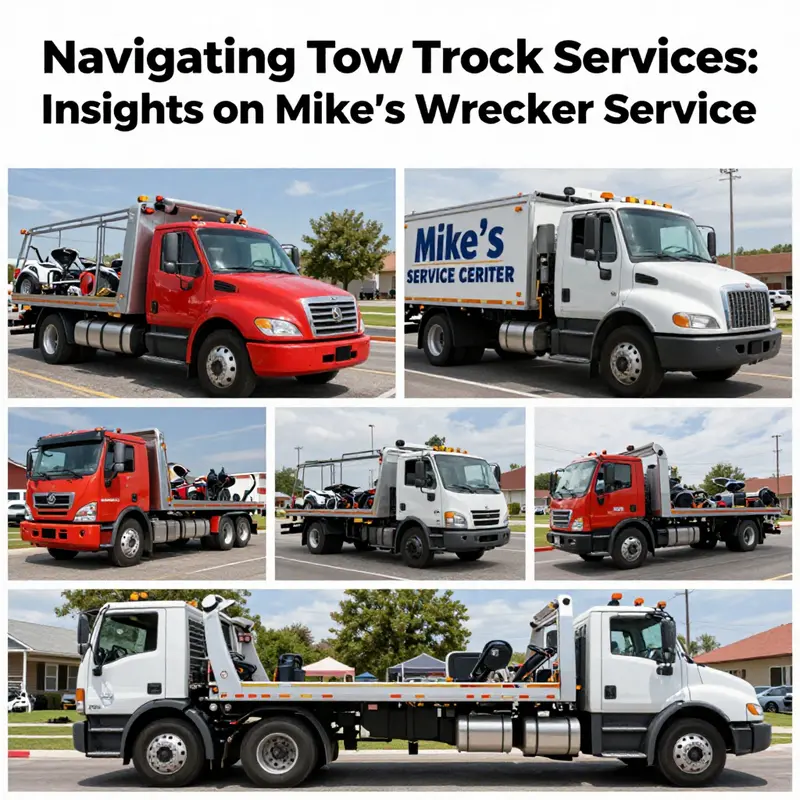
As the demands of transportation and roadside assistance continue to rise, business owners frequently find themselves navigating the complex landscape of towing services. Understanding the various offerings provided by companies like Mike’s Wrecker Service can significantly benefit those in need of reliable partnerships for vehicle recovery and assistance. This article examines two distinct branches of Mike’s Wrecker Service, highlighting their unique advantages, operational standards, and service commitments. By delving into the specifics of ‘Mike’s Service Center and Wrecker Service, Inc.’ and ‘Mike’s Wrecker Service,’ we aim to equip business owners with the knowledge necessary to make informed choices that enhance operational efficiency and ensure safety on the roads.
On the Road with Mike’s Service Center and Wrecker Service, Inc.: A Local Towing and Auto-Repair Chronicle
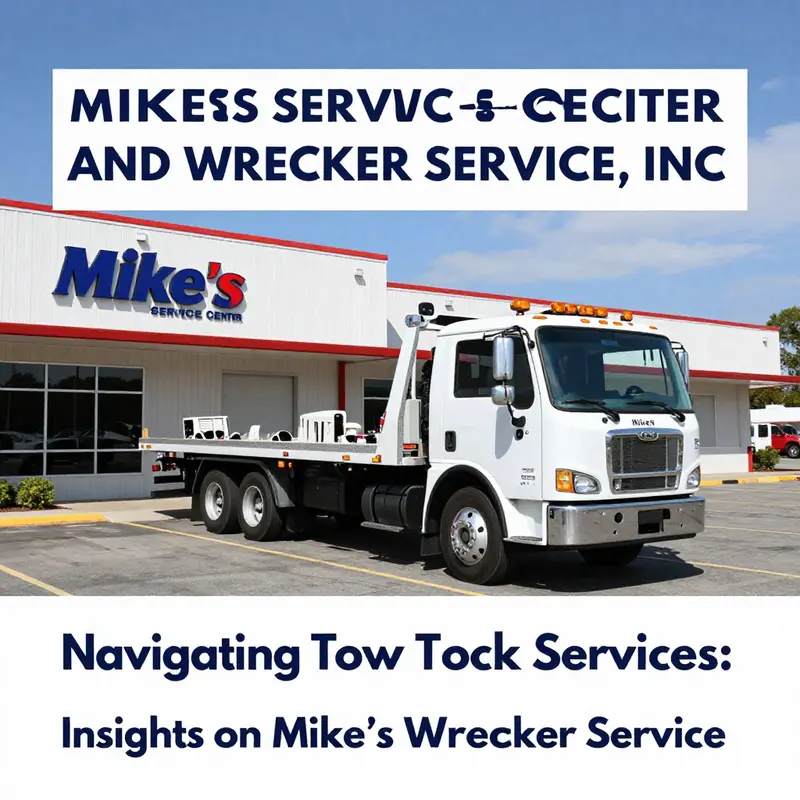
When the road loosens its grip and a vehicle falters, the first name that often surfaces in a community is the one trained for both rescue and repair. Mike’s Service Center and Wrecker Service, Inc. sits squarely in that tradition, a Georgia-based operation that has quietly built its reputation on reliability, a broad skill set, and the kind of steady presence that drivers learn to trust in the moment of need. The company profile that emerges from public records paints a clear, practical portrait: established on June 7, 2000, it operates out of Griffin, Georgia, with a primary office at 235 E. Taylor St., Griffin, GA 30223. Its status is listed as Active and in compliance, which signals a business that has endured the scrutiny of state regulators and maintained ongoing good standing. The official record also identifies a Registered Agent, Michael T. Weaver, whose address aligns with the business office, a detail that may seem administrative but is essential for accountability and legal clarity. In the cadence of small towns and growing counties, this is the kind of procedural backbone that allows customers to feel a measure of confidence when they dial a number in distress and expect a prompt, capable responder to arrive.
What truly defines Mike’s Service Center and Wrecker Service, Inc. beyond the legalese is its blended role as both an automotive repair shop and a towing service. The research into its offerings notes a broad scope: a shop that can diagnose and repair a range of mechanical issues while also providing towing for cases where a vehicle cannot be safely driven away from the scene. This dual capability matters for a community that often rides on a single reliable partner to bridge the gap between breakdown and return to the road. The ability to address both issues—repair and relocation—under one roof reduces the friction a driver experiences after an incident, turning a possibly chaotic moment into a coordinated service plan. It is a model rooted in practical redundancy: if the vehicle needs immediate road-side assistance and afterward requires a more comprehensive repair, the same team can see the process through, preserving time, safeguarding the driver’s schedule, and maintaining accountability from the initial call to the final disposition of the vehicle.
Public-facing details give a sense of the operation’s accessibility: a phone number, (770) 227-4290, stands as the direct line for appointments, after-hours inquiries, or urgent requests. In a world where roadside emergencies are intrinsically time-sensitive, such contact points are not mere niceties but lifelines that shape the overall experience. The Griffin business profile also hints at the broader ecosystem in which this company operates—local towing and repair are not isolated services but components of a tightly woven community network that includes law enforcement, insurance providers, and other service professionals. The Georgia Secretary of State records, accessible through official channels, provide a legal fingerprint of the enterprise, assuring customers and partners that the operation meets state requirements and maintains compliance. For readers who wish to verify or explore more about this company’s formal standing, the official profile hosted by the state is an essential resource that confirms the information visible in everyday conversations and online directories. The incorporation of such public records into a customer’s due-diligence routine is not a formality but a practical step toward building trust in a business that is called in during moments of vulnerability and urgency.
Within this Griffin context, the service proposition can be summarized as a dependable blend of repair skill and recovery capability. The repair facet indicates technicians capable of diagnosing and addressing a surprisingly wide array of automotive issues, spanning common mechanical concerns to electrical quirks that can stump a casual roadside remedy. The towing facet signals a fleet and crew trained to respond rapidly, safely, and efficiently, whether the situation involves a stalled car on a busy street, a wrecked vehicle in a driveway, or a vehicle in need of removal from a precarious spot after an accident. The combination is particularly valuable in a region where traffic patterns and weather conditions can combine to create a steady stream of incidents that require both on-the-spot judgment and follow-through logistics. A customer encountering a breakdown benefits from knowing a single point of contact can coordinate both the tow and the subsequent repair steps, reducing the likelihood of miscommunication or duplicated efforts and helping to restore mobility with minimal downtime.
It is worth noting that the landscape of similarly named services is wider than one Georgia address suggests. The public record highlights another Mike’s Wrecker Service, located at 161 McDowell Creek Rd, Manhattan, KS 66502, with a separate phone number, (785) 539-4221, and a set of hours indicating around-the-clock operation on at least three days (Monday to Wednesday, 24 hours). This contrast between a Georgia operation and a Kansas counterpart underscores a broader pattern in the roadside assistance sector: multiple local businesses can share familiar branding or naming conventions, yet each operates under different state laws, licensure regimes, and operational realities. For a consumer, that distinction matters. It means that a single name on a roadside sign does not automatically guarantee the same service quality, pricing standards, or compliance posture across state lines. When a driver is stranded in Georgia, the Griffin-based Mike’s Service Center and Wrecker Service, Inc. should be evaluated through the lens of Georgia regulations, the company’s specific local history, and the particular fleet and technicians available at that moment. If the caller happens to be near Manhattan or travels there, the Kansas outfit would be a separate entity with its own scheduling, insurance, and service protocols. The public-facing takeaway is simple but critical: verify the exact business entity you are engaging, confirm the service area, and check the official records for that jurisdiction to avoid misidentification or misaligned expectations.
A page on the internet sometimes serves as the storefront for local knowledge, and readers who want a direct, accessible touchpoint to the Griffin operation can explore a dedicated page that aggregates road-service offerings and towing experiences linked to the broader Mike’s Wrecker Service family. The page, often anchored by a name like mikes-wrecker-service, is a practical resource that many drivers turn to for quick orientation before a call. It is not a substitute for official records or direct confirmation from the shop, but it can support a broader understanding of how Mike’s Wrecker Service operates within a regional network of roadside assistance providers. For readers who want to reference such a resource directly, the page can be found at the following URL: mikes-wrecker-service. This link offers a window into the brand’s generalized approach to scoping services, scheduling, and presenting information to customers who need guidance amid stress. The inclusion of this internal resource is deliberate: it provides a conduit for readers to compare general service narratives across locations while keeping clearly in mind the jurisdictional differences that shape each operation’s everyday reality.
In a broader sense, the Mike’s story—both in Griffin, GA, and in Manhattan, KS—speaks to the essential role of local service providers in keeping communities moving. They sit at the intersection of mechanical competence and operational logistics, translating the language of breakdowns into concrete actions: assess, tow, repair, and restore. For a consumer, the most meaningful indicators of quality come down to reliability, transparency, and responsiveness. An established establishment with a visible address and a published phone number offers a degree of reassurance that a driver in distress can reach a real person who can mobilize a fleet, dispatch the right resources, and coordinate a path back to safety. The strong standing with state regulators, evidenced by active/compliant status in Georgia, further reinforces confidence that the business adheres to established standards and practices designed to protect customers, employees, and the vehicles entrusted to its care.
The two Mike’s entities also reveal how the roadside ecosystem can differ by geography. In Griffin, the blend of repair and towing within a single organization mirrors a regional preference for one-stop responsiveness. In Kansas, the 24/7 availability on weekdays hints at a demand pattern shaped by round-the-clock urban activity and the realities of road networks that can demand rapid response at any hour. These regional expressions of a shared service concept remind readers that while the underlying need is universal, the execution is tailored to local rhythms, regulations, and community expectations. For readers building a mental map of the landscape, this distinction is instructive: a name on a sign is less informative than the regulatory texture, the stated hours, the scope of services, and the proximity of a responsive team that can arrive with the right equipment and the right credentials to handle the situation safely and efficiently.
As readers move from awareness to action, the Georgia example anchors the practical steps a customer can take. Confirm the exact business entity through official records, such as the state’s business profile, to ensure the service you expect is the service you receive. This diligence is particularly important when a company shares a familiar name with other operators in different states. The public documentation—combining the Griffin shop’s founding date, address, and active status with the explicit agent information—helps create a reliable baseline for evaluating trust and professional legitimacy. If a reader wishes to cross-check or further explore the public profile, the Georgia Secretary of State portal provides a formal, verifiable resource for the enterprise’s status and history. Approaching a roadside incident with this level of context turns a potentially anxious moment into a sequence of well-informed decisions, where the driver knows who is responding, what capabilities the responding team brings, and how to anticipate the next steps in the process.
In sum, Mike’s Service Center and Wrecker Service, Inc. in Griffin presents a compact and pragmatic model of local reliability: an automotive repair shop and towing service operating within a framework of regulatory compliance and community trust. It stands as a reminder that the road is not simply about getting from point A to point B; it is about the partners who help you navigate the journey when the engine light flickers, when your vehicle can no longer move, or when the unexpected halts your forward momentum. The Kansas counterpart mentioned in public listings reinforces the same principle in a different regional cadence, underscoring the ubiquity of the need and the diversity of how it is met. For readers charting their own experiences with multiple Mike’s entities, it is a prompt to look beyond the name and into the concrete signals of professionalism—licensing, service scope, response times, and verified records—that truly define what it means to be a dependable partner on the road. The conversation about Mike’s is not only about a single company; it is about how communities calibrate trust in the essential service that keeps everyone moving, even when wheels are stuck and time is of the essence.
External resources can further illuminate the regulatory dimension of this landscape. For readers seeking official verification of the Griffin operation’s formal standing, the Georgia Secretary of State Business Profile provides a reliable point of reference. This external resource complements the practical, on-the-ground information presented in this chapter and can be used to corroborate the establishment date, address, and compliance status discussed above. The combination of local service experience and public records creates a fuller picture of what it means to rely on Mike’s for critical road moments and how such reliability is grounded in transparent governance and accountable practice.
Mike’s Wrecker Service: A Brand That Bridges Independent Branches Across States
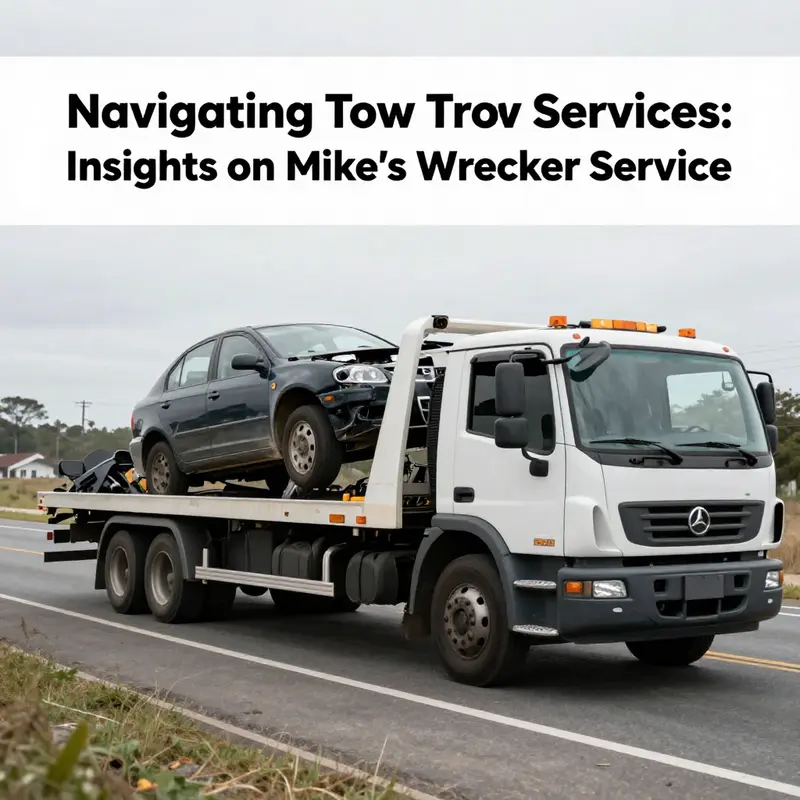
In the landscape of roadside assistance, Mike’s Wrecker Service stands as a case study in how a single name can grow into a modest network without surrendering local autonomy. The material footprint of this brand shows up in multiple branches scattered across distinct regions, each operating as its own unit while sharing a common identity. This arrangement reflects a practical philosophy: a recognizable name can provide a sense of reliability and scale, while the day-to-day control stays with operators who know the roads, the customers, and the local regulations of their own town. For travelers and locals alike, that balance between brand familiarity and local responsiveness can be the difference between a delayed return home and a quick, competent recovery on a busy night.
The clearest snapshot of this arrangement appears in three well-documented points of presence. One branch lies in Saginaw, Michigan, at 2522 Hess Ave, Saginaw, MI 48601. Public records and customer-facing platforms confirm this location operates around the clock, open 24 hours a day, seven days a week, ensuring that a battered vehicle or a stalled car is never far from help in a late-night emergency. The same certainty of availability is echoed by the Huntsville, Alabama branch, listed at 1100 Hoover St NW, Huntsville, AL 35801. Its contact number, (256) 934-2544, appears in consumer reviews and local listings, with linkage to an official web presence that positions it as a key node in the regional network. This combination of contactability and round-the-clock readiness is a common expectation in the wrecker service sector, where every minute counts when a driver’s options are limited by weather, traffic, or injury. Finally, Griffin, Georgia anchors the brand as its headquarters, identifying itself as Mike’s Service Center and Wrecker Service, Inc. The Griffin location carries a distinctive set of identifiers—registered in Georgia, established on June 7, 2000, and associated with an enterprise number of 0026456—signaling a formal corporate footprint while the address at 235 E. Taylor St. situates the company at the heart of its legal and operational base. These details matter not merely as trivia; they reveal how a single brand can fuse a cohesive public face with the practical realities of regional operation.
The deliberate structure of Mike’s Wrecker Service—distinct branches under one brand—speaks to a broader strategy in emergency transportation: scale that patients and drivers can trust, with the nimbleness of locally managed fleets. The Griffin headquarters, with its long-standing registration and compliance status, provides a governance anchor. That anchor helps align the other branches with broader standards around safety, licensing, and customer communication, while still allowing each location to respond to the quirks of its own market. This dual arrangement matters when a driver from Saginaw calls for help in a blustery night; the dispatch might be routed through the local crew, but the name behind the call affords a guaranteed continuity of process—from triage to tow to payment. In practical terms, customers benefit because the brand message—reliability, availability, and local competence—translates into consistent expectations, even when the caller is outside their home city.
To a reader surveying the map, the pattern is telling. A brand that travels well is not merely a logo on a roadside sign; it is a network of trained responders, familiar trucks, and practiced procedures that can ferry a problem from crisis to resolution with minimal friction. The Saginaw 24/7 operation suggests a fleet designed to meet demand regardless of the hour, while Huntsville’s presence underscores a push into a regional market where demand for quick, dependable recovery services is steady and visible in local businesses and online reviews. The Griffin HQ anchors the identity and provides a baseline of compliance that can reassure customers who worry about licensing, insurance, and accountability in an industry where missteps can be costly and dangerous. Even the surface-level fact that the Griffin company operates under the corporate banner of Mike’s Service Center and Wrecker Service, Inc. contributes to a perception of legitimacy and continuity that individual owner-operators may seek to emulate in similar markets.
As a reader follows the arc from a single local operator to a multi-branch brand, a number of practical implications emerge. First, the independent operation of each branch means customers should still verify their local driver’s credentials and local operating status before making expectations explicit about response times or pricing. Reviews on platforms like Yelp, which reference branches in Saginaw and Huntsville, illustrate how everyday customers judge performance in real-world scenarios—tow truck arrival speed, the care taken with their vehicle, and the clarity of pricing. The independence of each location also means that customers can encounter variations in service scope and capabilities—some locations may emphasize light-duty towing, others heavy-duty recovery, depending on their fleet composition and local demand. The Griffin headquarters provides a stabilizing thread, offering a standardized baseline for safety training, equipment maintenance, and incident reporting that the other branches can lean on when confronted with unfamiliar tasks or unusual weather conditions.
The human factor in this network should not be overlooked. Roadside distress is a condition that tests both machine reliability and human judgment. A wrecker operator must assess the scene quickly, identify the safest approach, and communicate clearly with a frightened or frustrated driver. The independent branches are staffed by local crews who bring to their work local knowledge—traffic patterns, neighborhood hazards, and the typical routes that a tow truck must navigate in a given city. The Griffin base, in turn, helps coordinate with the other locations, sustaining a shared culture of safety and accountability. This cultural coherence can translate into measurable outcomes: fewer preventable damage incidents during towing, more consistent customer communication, and a smoother handoff when a vehicle must be hauled across jurisdictional lines. The result is a brand that feels both intimate and expansive, a paradox that many service providers seek to achieve as they grow.
From the perspective of a potential customer, the existence of multiple, independently operated branches under a single name can be a relief and a source of caution at once. Relief comes in the form of broader geographic coverage and the reassurance that someone, somewhere in the brand’s network, is awake and ready to respond. Caution arises because the experience of one location may differ from another, depending on local leadership and the fleet’s composition. A savvy consumer learns to calibrate expectations accordingly: a quick call to the closest numbered branch to confirm availability, a glance at recent reviews for that specific location, and a check of the local operator’s credentials in the moment of need. It is precisely this nuance—brand familiarity paired with local authenticity—that underpins the appeal of a name like Mike’s Wrecker Service, especially to travelers who rely on a sense of continuity when they travel far from home. The brand’s footprint, visible in Saginaw, Huntsville, and Griffin, embodies a practical approach to coverage without sacrificing the agility that only local managers can provide.
Within this context, the reader can also appreciate a broader truth about the roadside assistance landscape: the power of the brand often rests on the quiet efficiency of its back-end systems. The Griffin HQ, the formal registration, and the adjacency to a local registry signal a commitment to reliability that resonates with customers who have learned, through experience, to value predictability in an industry driven by uncertainty. It is not just the presence of a 24-hour line or a nationwide-sounding name that matters; it is the fusion of that name with locally earned credibility. The Saginaw branch’s around-the-clock operation, the Huntsville location’s accessibility through a listed phone line and an official website, and the Griffin headquarters’ established foundation together create a practical mosaic of what a multi-branch wrecker service can look like when it aims to serve diverse communities without eroding its core promise.
For readers who want to connect the structural insight to everyday experience, consider the simple act of reading a local review or checking a business page for a nearby wrench of help. The pattern of independent yet unified operation explains why a driver might see the same name across states but encounter different faces when the tow arrives. It also clarifies how a brand can guard against inconsistency by maintaining a central governance mechanism while empowering local teams to respond to local realities. This dynamic is not simply a curiosity; it is a practical blueprint for resilience in a service sector where uptime and trust are the currency of success. The narrative of Mike’s Wrecker Service—three nodes, one identity, many hands—offers a template that could inform how other regional networks think about growth, risk management, and customer engagement as they scale.
As the chapter closes, the reader is left with a recognition that the brand story here is less about a single hub and more about a network poised to deliver dependable assistance wherever it is needed. The griffin address is not merely an address; it is a pledge that the company’s standards are anchored in a steady, documented foundation even as the day-to-day reality of service is managed by local crews who know their streets and their neighbors. The branding, the licensing, and the customer-facing touchpoints all converge to produce a coherent experience: a name that feels familiar, a service that feels ready, and a network that promises coverage when roads turn slick or stranded wheels fail to roll.
For readers who want a practical glimpse into the brand’s footprint, consider exploring the online presence that ties these branches together. The pattern of information across platforms reflects a consistent message about availability, accessibility, and accountability. And for those who wish to look beyond the immediate chapters and into the broader world of roadside assistance, a richer understanding emerges from seeing how a brand blends independence with a shared purpose. The next sections of this exploration will extend the thread, examining how regional operators balance fleet maintenance, dispatch efficiency, and customer communication in a marketplace where every mile counts. Meanwhile, the map of Mike’s Wrecker Service—Saginaw, Huntsville, Griffin—remains a living reminder of how a name can travel and adapt without losing its sense of home.
Internal resource: mikes-wrecker
External resource: http://www.mikeswreckerservicehsv.com
Final thoughts
In conclusion, understanding the operational capabilities and service philosophies of companies like Mike’s Wrecker Service can empower business owners to make proactive decisions regarding their vehicle recovery and assistance requirements. Whether it is the reliability of Mike’s Service Center and Wrecker Service, Inc. or the immediate responsiveness of Mike’s Wrecker Service, each segment showcases an unwavering commitment to safety and efficiency. Selecting the right towing partner can not only minimize downtime but also bolster overall business continuity. Embrace informed choices and leverage the professionalism of trusted wrecker services in your operational strategies.