
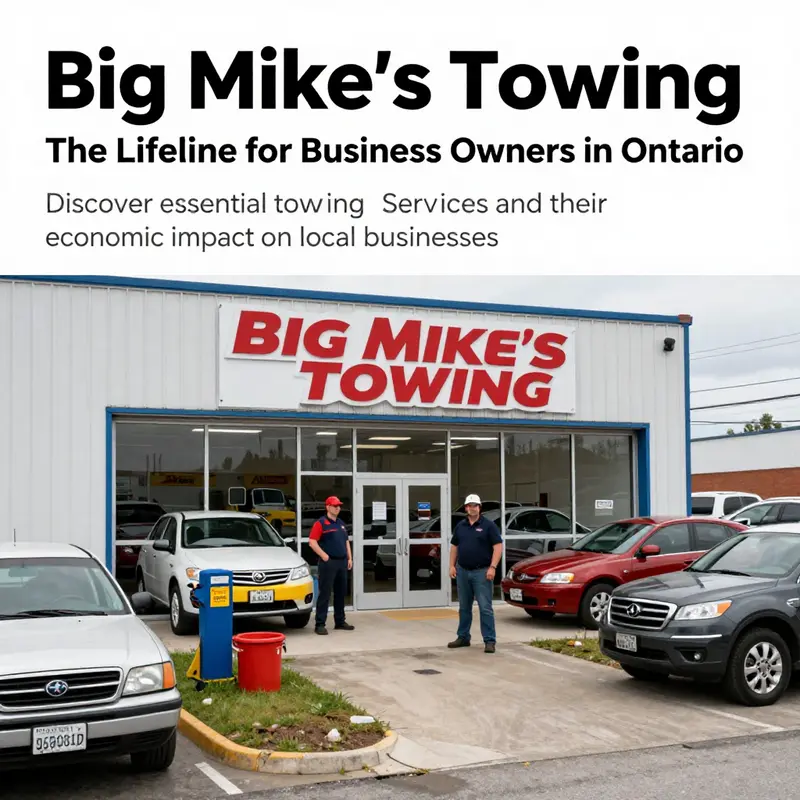
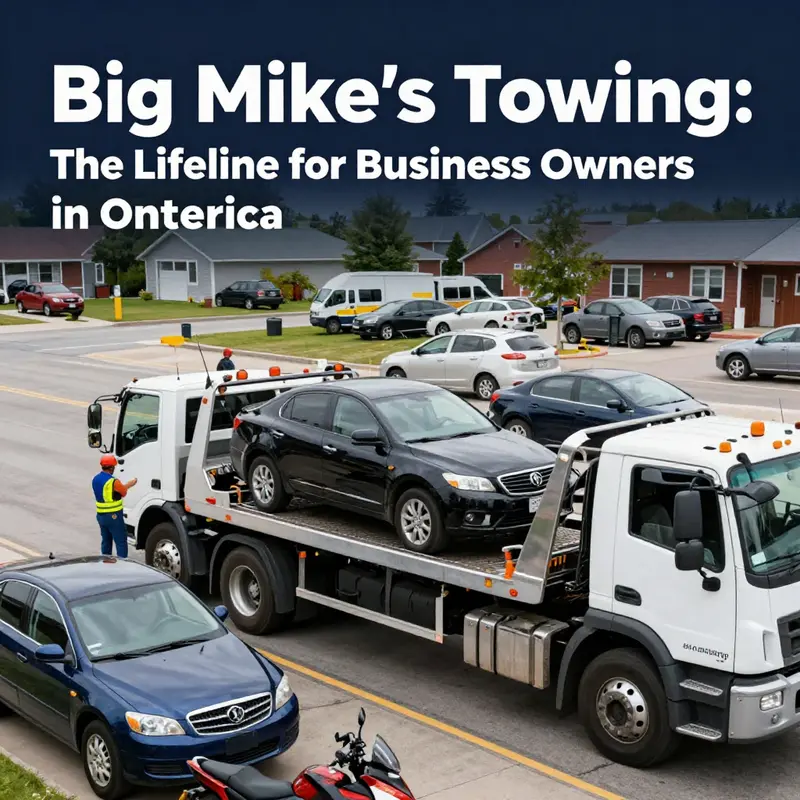
Towing services are not just about getting vehicles from one place to another; they are integral to the functioning of local economies. For business owners in areas like London, Ontario, Big Mike’s Towing offers critical support. With a 24/7 operation, their services cater to a diversity of vehicles including cars, trucks, motorcycles, and even heavy machinery, ensuring that business disruptions due to breakdowns or accidents are minimized. This introduction outlines two pivotal aspects of Big Mike’s Towing: the breadth of their services and the economic influence they exert within the region, benefitting a network of local businesses like those in automotive repair and construction.
null
null
Tow Lines, Towns, and Trade: The Economic Lifeblood of Big Mike’s Towing in Ontario
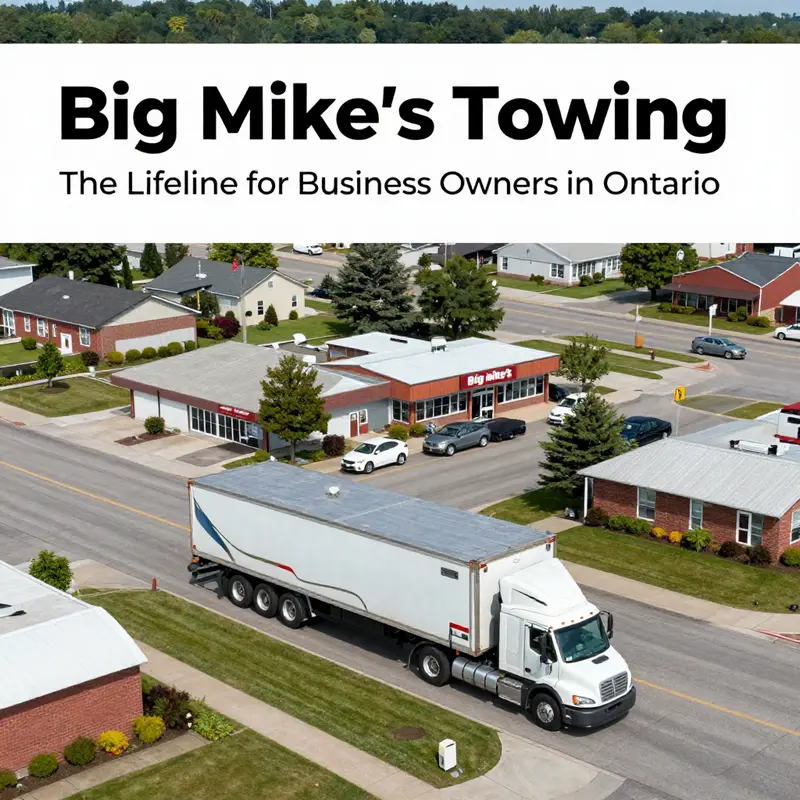
Ontario’s road network is more than a system of moving parts; it is an economic lifeline that binds manufacturers, distributors, and service providers to the daily rhythms of commerce. In the middle of this network sits Big Mike’s Towing, a 24/7 partner that keeps the wheels turning when a breakdown, collision, or heavy equipment mishap interrupts the flow. The company’s reach across London, Ingersoll, and Woodstock extends beyond the physical act of towing. It supports the reliability that modern supply chains depend on. When a truck breaks down at night or a rural piece of machinery stalls on a frontage road, the response is not merely about removing a stalled asset. It is about restoring a chain of activities that includes parts suppliers, repair shops, warehouses, and eventually consumers awaiting goods. In this sense, Big Mike’s Towing operates as a quiet economic architect, shaping outcomes that ripple through every storefront and factory floor in the service area. Its 24/7 accessibility reduces downtime, and that reduction translates directly into economic resilience for businesses that must keep moving to meet schedules and satisfy demand.
The most immediate impact of such a towing operation is transportation efficiency. When fleets can count on rapid recovery and safe consolidation of assets, freight planners can preserve delivery windows and minimize the risk of cascading delays. A late delivery or a postponed service call is not merely an inconvenience; it can trigger higher overtime costs, misplaced manpower, and production stoppages. Even in a region as diverse as Ontario, those tiny delays accumulate. Big Mike’s Towing contributes to a smoother operating environment by shortening the time a vehicle sits idle, by guiding drivers through safe recovery procedures, and by enabling drivers to re-enter routes with confidence. This efficiency factor is especially critical for fleets that run tight margins, where every hour of delay translates into a quantifiable hit to bottom lines. In practical terms, the company’s capability to handle cars, trucks, motorcycles, and even agricultural and construction equipment broadens the scope of incidents it can resolve quickly, preventing disruptions that would otherwise linger in the economy longer than the initial incident.
Beyond the immediate movement of assets, the company fosters employment and creates a stable labor market in the region. Tow operators, dispatchers, mechanics, and administrative staff find steady work that often includes training opportunities and pathways to career advancement. These roles are not merely entry points into the workforce; they are skilled positions that require judgment, safety awareness, and technical knowledge. High-quality positions in towing and roadside assistance contribute to household income and local purchasing power, strengthening demand for goods and services across the community. In more rural facets of the service area, dependable towing services also signal to farm operators and construction crews that critical tasks can proceed with minimal interruption, supporting productivity in sectors that can be sensitive to downtime. The ripple effect extends to ancillary businesses—from auto parts shops to fuel suppliers—because when a tow operation is steady, the ecosystem around it becomes more predictable and buoyant.
An equally vital dimension is the company’s investment in workforce quality. Training and safety protocols do more than reduce risk; they raise industry standards. When a tow operator is well-versed in safe vehicle handling, proper rigging techniques, and hazardous-material awareness, the entire local automotive service network benefits. Safer operations reduce the probability of secondary incidents, insurance claims, and repair costs for partner businesses. This safety culture can propagate through the sector, elevating expectations and encouraging garages, insurers, and police departments to collaborate more closely. Inter-industry collaboration, in turn, strengthens regional economic resilience. Big Mike’s Towing routinely coordinates with local garages for repairs, with insurers to streamline claims, and with law enforcement during accident recoveries. Each collaboration reduces friction, shortens lead times, and widens the capacity of the regional economy to absorb shocks without stumbling.
The service area itself—London, Ingersoll, Woodstock—offers a microcosm of how towing interlocks with regional development. Urban centers demand rapid, scalable support for incident response and heavy-duty recoveries, while rural and semi-rural corridors require the ability to move oversized loads and recover equipment in less forgiving terrain. A towing partner who can adapt across this spectrum provides a hedge against volatility. The ability to handle agricultural machinery and construction equipment is particularly important in Ontario, where farming cycles and infrastructure projects create predictable and cyclical demand for recovery services. When a critical piece of equipment halts on a farmland lane or a construction site, any delay can cascade into production setbacks, material shortages, and cost overruns. In such cases, a dependable towing operation does not simply recover a vehicle; it restores a project schedule and protects a company’s investment in time and capital.
Technological integration has become a cornerstone of this capability. Modern towing is not only about horsepower and winches; it involves data-driven dispatch, asset tracking, and precise handling that minimizes further damage during recovery. The most efficient crews operate with real-time knowledge about vehicle weight, load distribution, and terrain constraints. This level of sophistication allows for optimized routings and safer operations in challenging conditions—whether the vehicle is a compact car in a crowded city street or a piece of heavy equipment on uneven ground. The capability to deploy advanced equipment and coordinate complex recoveries supports a broader ecosystem: local repair shops can allocate their time more effectively, insurers can resolve claims faster, and customers encounter fewer delays in getting back on the road. In short, robust towing capabilities help keep Ontario’s commercial life moving with fewer interruptions.
From a public policy perspective, the regulatory framework governing towing operations provides the backbone for safe and reliable service. The Highway Traffic Act establishes responsibilities that protect motorists and ensure that towing practices align with broader road-safety goals. For Big Mike’s Towing, this means that training, licensing, and operational standards are not burdensome red tape but essential guardrails that sustain trust between drivers, operators, and the communities they serve. When a tow is executed under a clear regulatory framework, it reassures clients—from individual motorists to fleet managers—that the service they rely on meets defined safety and accountability criteria. That confidence translates into fewer disputes, faster settlements, and a healthier market for roadside services across the region. In this interlinked system, a single competent operator can contribute to a more predictable and business-friendly environment, encouraging investment in equipment, staff, and technology that further enhance reliability.
The economic narrative surrounding Big Mike’s Towing also reflects how digital presence and community visibility matter. A strong local brand, supported by a straightforward information hub, helps motorists in distress access timely assistance and makes the relationship between service providers and customers more transparent. The company’s online footprint, including dedicated service pages and contact options, becomes part of the reliability that shapes consumer behavior. When people can locate a trusted towing partner quickly, the risk of prolonged immobilization diminishes, and the path to recovery remains clear. As a practical illustration within the chapter’s broader arc, readers can explore the broader suite of services and learn more about the company’s approach to roadside support through the online hub at mikes-towing, which exemplifies how a regional towing operation communicates its readiness and professionalism to a diverse audience. This linkage demonstrates how digital presence translates into real-world speed and efficiency on Ontario’s roads.
In sum, the economic impact of Big Mike’s Towing in Ontario is multifaceted. It spans enhanced transportation efficiency, stable employment, safety-driven industry leadership, and robust cross-sector collaboration. It also embodies how a reliable tow partner helps municipal and provincial economies weather disruptions without derailing supply chains or construction schedules. The interconnectedness of these elements—service quality, workforce development, regulatory compliance, and community trust—creates a resilient economic fabric in which logistics, automotive services, and infrastructure can flourish. If one were to distill the chapter’s findings into a single reflection, it would be this: dependable, well-led towing operations do more than clear the road; they clear the way for growth, continuity, and shared prosperity across Ontario’s towns and countryside. And within that broader story, Big Mike’s Towing acts as a steady hand guiding the region toward greater mobility and economic confidence.
External resources provide additional context to this narrative. For policymakers and practitioners, the regulatory framework that governs towing activity is a critical enabler of safe, reliable service, and it underpins the economic stability discussed here. See the Highway Traffic Act, 2017 for a detailed outline of the rules shaping towing operations and public safety. https://www.ontario.ca/laws/statute/2017/c34
Internal reference: for readers curious about how a regional towing provider communicates its capabilities online, the following page offers a representative overview of the service approach and the commitment to rapid response: mikes-towing.
Final thoughts
In conclusion, Big Mike’s Towing is more than just a towing service; it is a crucial component of the local economy in Ontario. Their commitment to dependable, round-the-clock service minimizes disruptions for business owners across diverse sectors, ensuring operations run smoothly. The ability to efficiently manage both light and heavy-duty towing scenarios not only aids stranded motorists but significantly affects the economic vitality of the surrounding community. Business owners can find peace of mind knowing that Big Mike’s Towing is ready to assist at any hour, fostering a resilient local business environment.