
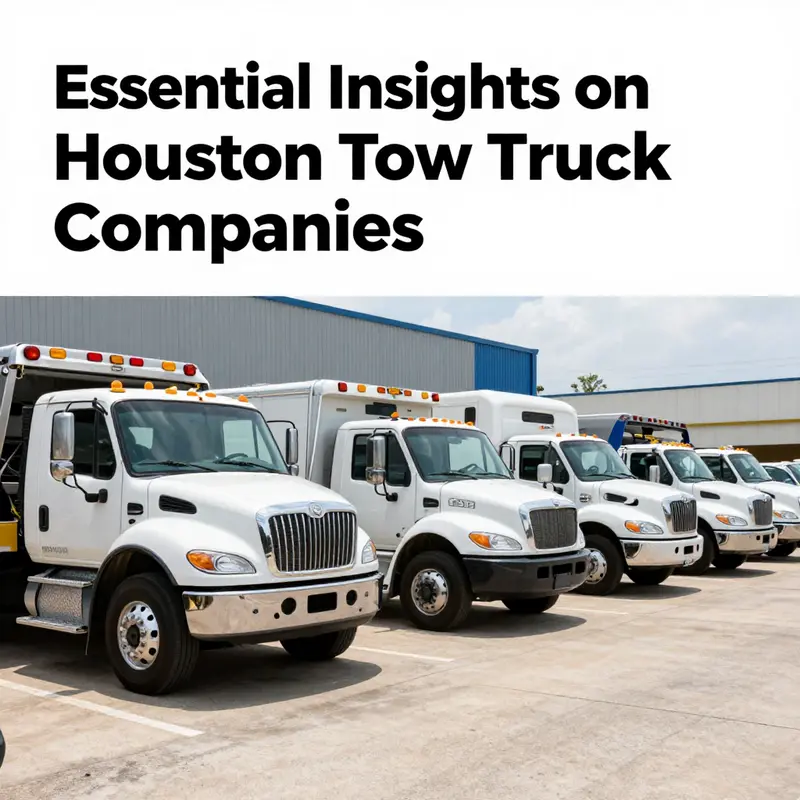
In the bustling city of Houston, vehicle breakdowns are an unfortunate reality for many business owners. Companies need reliable towing services to ensure minimal disruption to their operations. This article delves into the top-rated towing companies in Houston, highlighting their strengths and how they cater to local businesses. Furthermore, we will investigate the broader implications these towing companies have on the economy, illustrating their significance not just as service providers but as vital cogs in the community’s machinery.
On the Road Again: Houston’s Trusted Tow Network and What It Reveals About the City’s Roadside Resilience
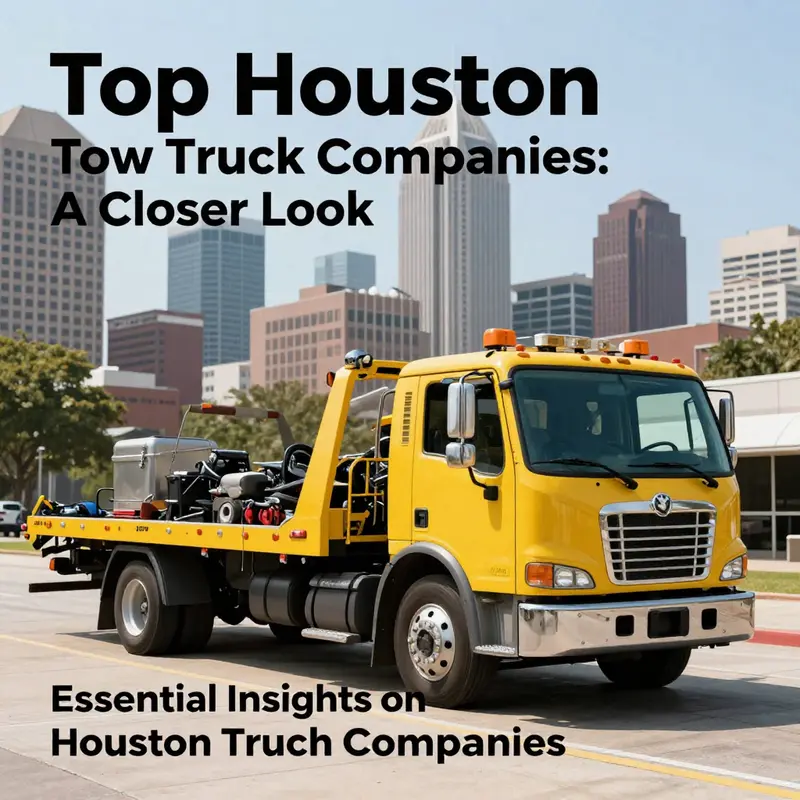
When a vehicle stalls on a Houston highway or a driver’s day collapses in a rain-slick neighborhood street, the first responders aren’t just the emergency crews or the insurance adjusters. Often the most reliable lifeline is a local tow truck operator who shows up with a steady hand, a calm voice, and the right equipment for the job. In a city as sprawling and diverse as Houston, the weather can shift in minutes, traffic can gridlock with unexpected ferocity, and timelines can diverge wildly from a driver’s plan. The chapter that follows isn’t merely a directory of names; it’s a study of how a city’s mobility survives breakdowns. It examines a cluster of towing services that—according to a 2026 update from Yelp—emerge as dependable, responsive, and professional. Readers will sense how these firms shape the experience of getting back on the road after an incident, and how the choices drivers make in those moments ripple outward into safety, insurance, and daily schedules.
To start, imagine a weekday evening when a car’s engine coughs and dies near a congested artery feeding into a sprawling urban core. A driver’s mind races through questions: Is the road safe to pull to the shoulder? How soon can a tow arrive? Will the operator be courteous and transparent about costs? In Houston, those questions have answers that land in the domain of several well-regarded firms. The 2026 Yelp update spots a core cohort that drivers consistently trust for speed, professionalism, and reliability. The reputations these companies have earned are built not on grandstanding but on repeated, verifiable acts: a technician who arrives with the right tools for the job, a dispatcher who communicates expected arrival times with clarity, and a wrecker that can handle a spectrum of scenarios—from small-car tow-ins to heavier recoveries in challenging terrain. The narrative that unfolds here is less about marketing and more about practice: the everyday competencies that make road emergencies more manageable and less stressful for families, commuters, gig workers, and visitors navigating Houston’s dynamic streets.
The most commonly cited attributes in the 2026 Yelp listings are speed, transparency, and courtesy. In practice, speed isn’t just about how quickly a tow truck reaches a scene; it encompasses the triad of dispatch efficiency, geographic coverage, and the operator’s ability to assess a situation and decide on the safest course of action. Houston’s terrain—rivers, bays, highways, industrial corridors, and residential neighborhoods—presents a mosaic of access challenges. The best firms in this city develop a flexible fleet that can adapt to those nuances: light-duty pickups for city streets, medium-duty units capable of maneuvering in tighter spaces, and heavy-duty rigs that can handle more demanding jobs during storms or after serious accidents. A standout feature across several firms is the willingness to provide immediate guidance when a driver calls for help. Whether it’s steering a stranded motorist to a safe location, advising on whether to disconnect a battery or secure a load to prevent secondary damage, this proactive approach reduces risk and uncertainty for everyone involved.
The Houston network identified in the Yelp update isn’t just a list of names; it reflects a pattern of service design that prioritizes reliability within a very large geographic footprint. Some firms emphasize emergency assistance around the clock, a crucial factor in a city where traffic patterns and weather can turn an ordinary breakdown into an urgent scenario. Others distinguish themselves with pricing practices that minimize surprises, offering upfront estimates and clear explanations of potential add-ons such as long-distance transport, brake placement, or winching when terrain proves difficult. In a city with frequent rain, floods, and occasional ice patches on overpasses, the ability to respond promptly while maintaining safety standards becomes a top priority. Drivers who’ve relied on these services often describe a sense of relief not just from the tow itself but from the manner in which the tow operator communicates and coordinates with them on the ground.
Beyond the broad themes of speed, price, and politeness, the Yelp-based portrait highlights several firms that address specific needs through specialized capabilities. One firm is recognized for its rapid response times, a quality that matters when a vehicle breaks down on a busy corridor or when a driver is stranded in a high-crime neighborhood after dark. Another operator is praised for affordability without sacrificing reliability, making them a frequent choice for drivers with tight budgets or for those who rely on towing for work-related necessities. Yet another firm earns esteem for comprehensive coverage that spans not just within the city lines but into surrounding suburbs and outlying neighborhoods, a feature essential to people who commute or travel to Houston’s outskirts for work, recreation, or family commitments.
In several respects, the Houston towing ecosystem mirrors the city’s own social fabric. Family-run firms bring a sense of continuity, local knowledge, and personal accountability that can be especially comforting to drivers who feel vulnerable during a roadside incident. The rapport cultivated in these firms matters as much as the mechanical capabilities they bring to a scene. A family-owned operator may know the neighborhoods by name and understand the preferred routes to avoid school zones during peak hours, or they may be more adept at communicating with drivers who aren’t native English speakers, offering reassurance in the moment. On the other hand, larger, more corporate outfits may offer the advantages of a broader service network, standardized dispatch processes, and more uniform training protocols. In Houston, the most resilient providers tend to blend the strengths of both forms: the local insight and empathetic customer care of a family business, paired with the disciplined operations of a larger outfit that can scale up during weather events or major incidents.
For readers seeking a concrete sense of the value these companies deliver, consider the range of scenarios they are equipped to handle. A straightforward tow from a breakdown in a residential area requires careful traffic management, a clean handover, and transparent billing. A more complex recovery—such as a vehicle off a roadside ditch or a transport from a flood-prone zone—demands heavier equipment, trained personnel, and a coordinated plan to protect the vehicle and surrounding property. A high-mileage tow, perhaps for a vehicle that needs longer-distance transportation to a specialty shop or a dealer, introduces considerations about insurance coverage, chain-of-custody documentation, and clear communication about timing and fees. Across the firms highlighted in the Yelp update, drivers often find themselves choosing based on a blend of these capabilities rather than a single feature. Some prefer a vendor that can respond quickly and dispatch with minimal friction, while others prioritize price transparency and a calm, respectful on-site demeanor that helps mitigate the stress of the moment.
The very structure of Houston’s towing landscape contributes to its resilience. When storms roll through the Gulf and steady rain slicks road surfaces, the need for timely assistance remains high. A robust set of providers, each with its own operating strengths, becomes more valuable than a single “one-size-fits-all” solution. This diversity matters for insured drivers, who may rely on preferred networks in their policies, and for uninsured motorists, who still benefit from knowing that dependable local service exists and can be reached without a protracted search. The comedy and tragedy of every day on Houston’s streets—the near-miss near a busy on-ramp, the sudden stop on a freeway shoulder, the late-night tire failure on a distant outpost—are met with a credible assurance that the local towing network can mobilize, deploy, and deliver practical, responsible outcomes. The best operators coordinate not only with the vehicle’s owner but also with insurance adjusters, roadside assistance programs, and, when necessary, authorities who manage traffic scenes and scene safety.
One notable thread in the documented results is the emphasis placed on customer care as a differentiator. Drivers consistently return to the same firms not because they expect miracles, but because they expect competence delivered with courtesy. A tow operator who explains the reason for a recommended course of action, who files the right paperwork for long-distance transport, and who follows up to confirm a successful delivery tends to build trust that lasts beyond a single incident. This trust is a practical asset in a city where a breakdown can disrupt a work schedule, delay family plans, and render a driver vulnerably dependent on the kindness and competence of strangers. When a dispatcher in Houston warmly explains expected arrival times, communicates any delays, and coordinates with on-site personnel to minimize wait time, the overall experience shifts from anxiety to a predictable sequence of steps. In such moments, drivers evaluate not just the service but the relationship they form with the firm, recognizing that a dependable tow partner can be a stable element in an otherwise uncertain day.
In the broader arc of this city’s roadside culture, several firms highlighted in the Yelp update stand out for their distinctive strengths. Some are lauded for their rapid on-site presence, a factor that reduces the duration of exposure to traffic hazards. Others emphasize affordability, presenting upfront pricing and a straightforward billing process that helps drivers manage costs after an expensive event. A few are commended for their recovery capabilities, with equipment and expertise that enable them to retrieve vehicles from challenging locations, recover damaged machinery, or handle multi-vehicle scenes with an eye toward minimizing further harm. Taken together, these traits form a composite image of what Houston drivers value: speed without haste, coverage without exorbitant fees, clarity without jargon, and, above all, reliability when the pressure is highest.
What does this mean for the everyday driver navigating Houston’s roads? The practical lesson is not merely to memorize a list of top names, but to cultivate an understanding of what to look for when a breakdown occurs. First, confirm availability around the location and time you need help. Second, seek transparency on pricing and anticipated extra costs before any service proceeds. Third, consider the provider’s capacity to handle the specific scenario you face—whether that’s a small sedan on a city street or a heavy-duty scenario that requires equipment capable of winching, stabilization, or emplacement on uneven terrain. Fourth, assess the demeanor of the dispatcher and the on-site technician: respectful communication matters as much as technical skill. Finally, think about how well the provider integrates with your broader roadside plan—whether you have a preferred insurer, an auto club, or a trusted local shop that can guide follow-up care. The Yelp-based snapshot suggests that Houston’s tow operators collectively excel in weaving these practical threads into a service experience that minimizes harm and fosters a sense of confidence in drivers who might otherwise feel stranded.
As you consider which firm to call when the next emergency arises, it’s worth noting a simple, pragmatic detail: accessibility. Houston’s geography makes distance a meaningful factor in any decision, and even a few minutes saved can translate into safer traffic behavior for others on the road and a quicker return to normal routines for the vehicle owner. The most effective operators build a culture of accessibility into their operations. They maintain diverse fleets so they can choose the right vehicle for each job, invest in training that sharpens both technical skills and customer communication, and establish clear processes for dispatch, arrival, and payment. In practice, this combination of fleet versatility, trained personnel, and client-centered service produces a reliable, if often invisible, backbone for the city’s mobility. When storms threaten, when a highway corridor is clogged, or when a quiet suburban street reveals a hidden hazard, Houston’s tow network stands ready to translate uncertain moments into manageable outcomes.
If you’re new to this landscape, a straightforward way to begin is to research the local options through trusted channels and to compare not just the headline ratings but the small interactions that shape the experience. Read the dispatch notes, ask how they handle unusual loads, and learn whether the firm can accommodate long-distance transports or specialized recoveries. The Yelp list from 2026 reflects a community-wide appreciation for firms that strike a balance between speed, affordability, and professional poise. It’s not enough to show up fast; the most lasting impression comes from a crew that arrives prepared, acts with integrity under pressure, and follows through with clear, courteous communication. In the end, these are the qualities that turn a potentially fraught roadside moment into a controlled, practical resolution.
For readers who want to explore more about Houston’s towing landscape beyond the immediate experiences of the day-to-day driver, a broader view is available in the industry’s evolving online conversations. A well-curated profile of the city’s towing network can be found through a dedicated resource that aggregates local providers and customer feedback. As a practical starting point, you can explore https://mikes1towing.com/towing-in-houston/ to gain a grounded sense of how these firms present themselves, how they describe their services, and how drivers compare their experiences across different neighborhoods and times of day. This additional context helps readers understand why certain firms become preferred partners for regular commuters and for visitors who encounter Houston’s roads for the first time. The picture that emerges is of a city that invests in steady, dependable service as a core element of its infrastructure, one that recognizes that the moment a vehicle stalls can carry consequences far beyond the miles left on the odometer.
External perspective can also illuminate how a city’s towing ecosystem interacts with larger forces—insurance practices, municipal traffic management, and the hospitality of street-level encounters that define daily life in a vast, growing metropolis. For a broader view of the industry’s landscape and to compare the practical performances described here with wider public feedback, consult Yelp’s curated list of Top 10 Towing in Houston, which aggregates user experiences and serves as a useful barometer of real-world outcomes. https://www.yelp.com/biz/top-10-towing-in-houston-tx?find_desc=Top%2010%20Towing%20Near%20Houston%2C%20Texas%20-%20With%20Real%20Reviews
Tow Lines, Local Lifelines: How Houston’s Tow Truck Network Shapes the City’s Economy
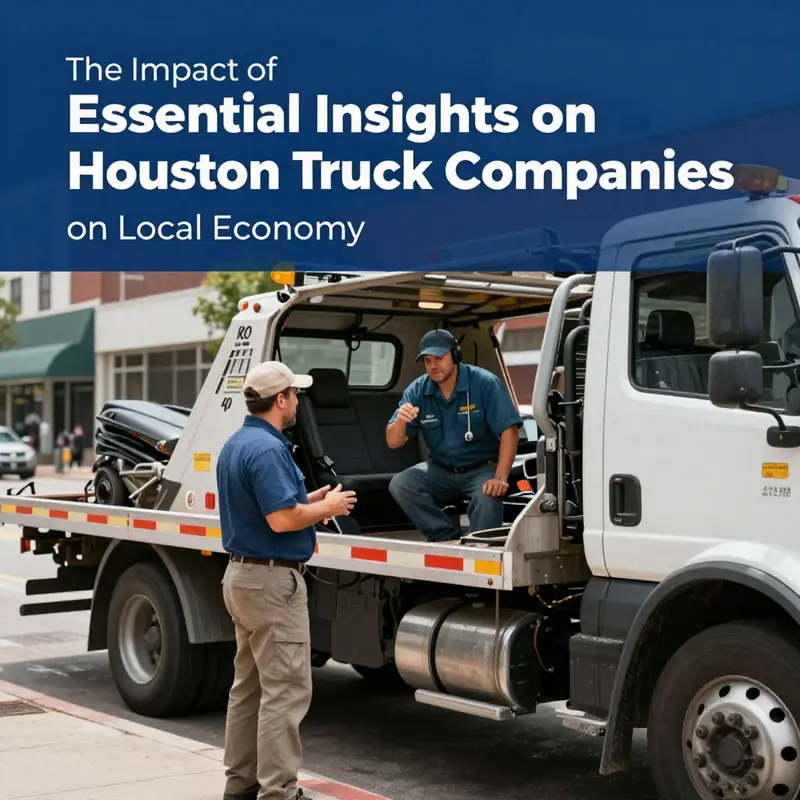
Houston exists at a complex junction where land, sea, and industry converge. Its roadways carry the rhythm of a city that never really rests, moving crude oil, consumer goods, and the everyday life of millions. In the middle of that movement are tow trucks, vehicles that often appear during emergencies yet quietly orchestrate a much larger economic performance. They are not the loudest players on the stage, but they function as crucial components of a system designed to minimize downtime, protect cargo value, and maintain the reliability that freight and everyday mobility depend on. The economic story of Houston’s tow truck companies is not merely a tale of roadside rescues; it is a narrative about how a city keeps its wheels turning, how small businesses supplement a continental supply chain, and how rapid response capabilities translate into tangible outcomes for residents, employers, and the regional economy at large.
To understand the economic role of tow trucks in Houston, one must first recognize the scale and structure of the city’s transportation ecosystem. Houston stands as a major hub for freight and logistics in the United States, with a sprawling port complex, vast industrial corridors, and an interconnected web of highways that support both local commuting and long-distance distribution. This combination creates a constant demand for recovery, towing, and roadside assistance services. When a vehicle breaks down on a major artery like I-45 or Beltway 8, the immediate need is not just to move a car. It is to restore lane availability, reduce accident spillovers, and reestablish the flow of goods and people. In those moments, tow operator teams become a bridge between a disrupted moment and the broader restoration of economic normalcy. Their ability to arrive quickly, manage the scene safely, and coordinate with police, highway departments, and insurance providers matters in ways that extend far beyond the vehicle involved.
One of the most telling indicators of the economic importance of towing is how widely the work supports employment throughout the city. Tow truck operations create a spectrum of jobs that starts with drivers and dispatchers and extends to shop staff, estimators, and administrative personnel. Even in a market with a diverse set of service providers, each tow operator requires a trained crew, capable of handling complex roadside situations, securing loads, and communicating with customers under stressful conditions. The employment impact also spills into ancillary sectors. Insurance agents, parts suppliers, and local vendors who provide fuel, tires, winching equipment, and vehicle recovery gear all benefit from a steady demand. In Houston, where the labor market is robust and competition among towing firms tends to be brisk, the ability to attract and retain skilled workers translates directly into more efficient operations and better service outcomes. That translates into more stable household incomes for families who depend on those jobs, which in turn supports consumer spending in the broader economy.
Beyond direct employment, tow companies contribute to small business vitality in a way that mirrors the ecosystem logic of a mature urban economy. Many Houston tow operators are small to mid-sized family-run enterprises that deliver personalized service and quick decision-making. This entrepreneurial dynamic creates a network of competition that keeps rates fair and service levels high. Small operators often adapt rapidly to neighborhood needs, offering specialized services such as light-duty towing for commuter cars, heavy-duty recovery for commercial fleets, and after-hours dispatch that aligns with the irregular demands of shift work and late-night freight activity. This flexibility is vital in a city like Houston, where large-scale logistics must be complemented by local service providers who can respond to the unpredictable cadence of traffic, weather, and incidents. The result is a more resilient local economy, where many different businesses contribute to a common objective: keeping traffic moving and ensuring that goods flow continues despite the occasional disruption.
The economic upside of reliable towing reaches deep into traffic management and the prevention of unnecessary losses. When accidents occur on busy corridors, clearance times become a direct determinant of lost productivity and fuel consumption. Delays ripple outward, affecting freight pickups and deliveries, school and medical appointments, and even the scheduling of emergency services. Tow trucks help cut those costs by clearing lanes faster and enabling responders to access the scene without delay. This capacity is not simply about removing a stranded vehicle; it is about preserving time-sensitive value along critical routes. In a logistics environment where every minute matters, the speed and accuracy with which a tow operator can secure a vehicle and coordinate removal can determine whether a shipment remains on its schedule or faces cascading delays that affect downstream customers. In other words, tow operators act as unsung logistics coordinators, turning a roadside incident into a manageable blip rather than a systemic disruption.
Emergency response is another dimension of economic impact that deserves close attention. Houston’s climate and industrial activity create scenarios where weather events, auto incidents, and even the occasional infrastructure fault can momentarily halt road use. Tow operators partner with emergency responders and traffic management systems to clear hazards promptly, reducing the risk of secondary accidents and the broader economic damages associated with congested roadways. The speed at which a vehicle is removed after a collision or mechanical failure has a measurable effect on the time drivers spend sitting in traffic, the wear on other vehicles, and the energy consumption of the broader transportation network. For businesses that rely on reliable delivery windows, the predictability of road conditions—partly determined by the responsiveness of towing services—translates into a competitive advantage. Even the perception of reliability matters. When shippers and carriers observe consistent road clearance and on-time recovery, they are more willing to schedule routes with tighter delivery windows, which in turn improves fleet utilization and reduces idle time.
The movement of goods in the Houston region hinges on a delicate balance between port activities, rail, and highway transport. Tow services enable the smooth transfer of cargo by rapidly removing obstructive vehicles from lanes that lead to port facilities, rail yards, and distribution centers. In a port-centric economy, where drayage and intermodal transfers are routine, every delay avoided contributes to lower per-unit costs and higher throughput. A robust towing framework supports the efficiency of the freight economy by preventing bottlenecks that can escalate into days-long disruptions under the wrong circumstances. This is particularly true when you consider the scale of the region’s industrial activity, which includes energy sectors and manufacturing hubs that demand a steady cadence of supply chain movements. The presence of a dependable towing network helps maintain confidence among operators who must coordinate with carriers, shippers, and customs or regulatory agencies on a near-daily basis.
The interplay between towing and larger logistics firms can be subtle but meaningful. Houston’s status as a freight crossroads makes it likely that large logistics companies rely on a visible, responsive towing ecosystem to protect their operations. When a heavy-duty truck breaks down on a key corridor, it is not just a single vehicle that is affected; it is a node in a wider network of dependencies. The sooner recovery occurs, the less likely a single incident will trigger a ripple effect across multiple supply chains. This interconnectedness underscores why public-private collaboration around towing capabilities matters for the city’s economic health. The City of Houston, for its part, acknowledges the importance of reliable recovery services as part of its broader transportation and public works strategy, recognizing that incident response is integral to maintaining mobility and economic momentum across the metropolitan region.
Public policy and infrastructure planning play a supporting yet vital role in sustaining a healthy towing sector. A well-functioning urban road system reduces the frequency and severity of traffic incidents, but when incidents do occur, the speed and safety of recovery operations become critical. Local authorities work to streamline permitting, regulate safety standards, and coordinate with towing companies to ensure that crews can operate efficiently without compromising public safety. This alignment is not merely a matter of bureaucratic process; it is a recognition that the economics of road usage depends on dependable incident response. The relationship between city agencies and towing operators is built on trust and shared goals: to minimize disruption, protect road users, and reduce the overall societal costs of accidents and breakdowns. In this sense, towing is a public-private partnership that helps sustain the city’s pace of life and its economic vitality.
An economic view of Houston’s tow truck landscape also invites reflection on consumer experiences and the role of local reputation. The city’s market is shaped by customer satisfaction, reliability, and the ability to provide clear communication during stressful moments. The reputational capital of a towing company—its track record for prompt response, fair pricing, and respectful service—directly influences demand and the willingness of residents and businesses to depend on it. In an environment with multiple providers, positive word-of-mouth can translate into higher utilization without proportionally rising marketing costs, allowing responsible operators to reinvest in better equipment, more trained staff, and improved dispatch systems. This virtuous cycle reinforces the health of the local economy by channeling earnings back into the community through wages, equipment upgrades, and service-level improvements, which in turn attract new customers and foster a sense of reliability that ripples across the market.
The broader economic significance of tow services also becomes evident when considering how residents access help during emergencies and non-emergency times. For individuals stranded by a breakdown on a busy street or freeway, the speed with which a tow arrives can determine the difference between a minor inconvenience and a larger disruption to daily routines. For families, this translates into less time lost from work, fewer missed appointments, and reduced stress during a challenging moment. For small business owners who rely on vehicle fleets to serve customers, fast, dependable towing means less downtime and more consistent service levels. In aggregate, these micro-level outcomes accumulate into measurable economic benefits: improved productivity, enhanced consumer confidence, and a more predictable environment for a city that hosts a large and diversified economy.
To connect the practical with the policy, consider the resource-level implications of a robust towing network. The presence of a reliable recovery ecosystem supports continuous operations for critical sectors—from construction and manufacturing to healthcare and emergency services. It also underscores the importance of ongoing workforce development in these trades. Training programs, certification requirements, and safety standards contribute to a more capable, safer, and more efficient workforce. As operators invest in gear such as heavy-duty tow trucks, powerful winches, and scene safety equipment, they also invest in the capacity to handle increasingly complex recoveries. This investment cycle strengthens the region’s ability to respond to incidents of varying scale, from a single disabled vehicle to a multi-vehicle incident that could otherwise simmer into a larger logistical challenge.
For readers seeking to explore Houston’s towing landscape further, it helps to understand the terrain of local services and how to access reliable assistance when needed. The landscape is diverse, ranging from nimble, after-hours responders to established firms with fleets that can handle heavy lifts and multi-vehicle recoveries. Understanding what drives the reliability of these services—rapid response, transparent pricing, professional on-scene conduct, and coordination with insurance or law enforcement—gives residents and businesses a practical framework for selecting a provider. When someone asks, what should I look for in a towing service in Houston, the answer lies in the consistency of service, the speed of arrival, and the quality of the outcome when the vehicle is removed and the scene is cleared. A pragmatic approach to choosing a provider makes it easier for drivers to navigate the tense moments of breakdowns and collisions, which in turn supports the overall efficiency and resilience of the city’s economy.
As Houston continues to grow and evolve, the role of tow truck companies in supporting the city’s transport and logistics backbone will remain essential. Whether it is keeping a corridor like a major interstate clear after a collision or ensuring that a fleet can meet a tight delivery window, the work of these operators translates into real economic value. It is a reminder that infrastructure is not only about roads and bridges but also about the people and services that keep them usable. The next time a driver replaces a flat tire, a fleet manager schedules a delivery, or a homeowner calls for help after a breakdown, the chain of value becomes visible: a local service, operating within a broader system of mobility, supporting livelihoods, enabling commerce, and helping Houston maintain its status as a dynamic hub of activity and opportunity.
For residents who seek reliable service while navigating the broader ecosystem of Houston’s towing options, the landscape is navigable and understandable when approached with the right frame of reference. The small but mighty world of tow operators forms a bridge between immediate needs and longer-term economic stability. It is through this everyday work—dispatch queues, safe vehicle loading, quick on-scene assessments, and careful coordination with insurers—that the city’s economic engine remains well-tuned. In the end, the story of Houston’s tow truck network is not merely about vehicles and drivers; it is about continuity, inference, and the quiet maintenance of a metropolis that relies on the steady hum of a well-functioning transportation system. It is about how the city protects its drivers, supports its businesses, and preserves the reliability that residents expect from a modern, freight-forwarding metropolis. And it is a reminder that economic health in a complex urban environment often lies in the hands of those who keep the wheels turning when the road gets rough.
Internal link to exploring Houston towing options. This link provides a practical overview for readers seeking to understand local service options and how to evaluate the available providers in the Houston area, offering a grounded starting point for those who want to engage with a reliable local partner when the unexpected happens. The broader public policy context that frames these services is also documented by city agencies that manage road safety and infrastructure maintenance, underscoring how essential a responsive recovery ecosystem is to keeping commerce moving and communities safe. For a broader framework, see City of Houston Public Works: https://www.houstontx.gov/publicworks/.
Final thoughts
Houston’s thriving economy relies heavily on the efficiency and reliability of local towing companies. These service providers not only ensure vehicles are promptly removed from accidents or breakdowns, but they also play a crucial role in supporting daily business operations. As we navigate the future, the relationship between businesses and towing services will only deepen, reinforcing why it’s essential for business owners to select trustworthy towing partners.