
In the heart of Houston, vehicle breakdowns can happen to anyone, making reliable towing services a necessity. As a business owner, understanding the local towing landscape not only helps in managing potential vehicle issues but also opens avenues for partnerships and enhanced customer services. This article delves into the top towing services available in Houston, the comprehensive roadside assistance and recovery services they offer, and how these businesses impact the local economy. Let’s navigate through noteworthy towing options, essential services, and the broader significance of the towing industry in Houston.
Tow Lines in Houston: Navigating a Crowded Landscape of Roadside Support
Houston’s roads stretch wide and busy, a city where a flat tire, a dead battery, or a fender bender can turn a quick commute into a delay that reverberates through the day. In a region that blends oil-country grit with dense urban corridors and coastal weather, the demand for dependable towing and roadside help is a constant. The 2026 Yelp snapshot captures a city that benefits from choice, with a tier of providers that residents and visitors learn to trust when time is critical. The list includes EJ Towing And Recovery, North Star Hauling, Galeano Brothers, Select Towing, A Tow Truck, Amine Towing, Rest Towing, Reaper Towing & Recovery, Fast Track Towing, Houston Towing & Recovery, and Lone Star Towing, all repeatedly mentioned in reviews as pillars of accessibility across the metro. This tapestry of options mirrors a larger truth: Houston’s size and climate demand a robust, localized support system that can respond quickly, adapt to road conditions, and coordinate with insurers, shops, and authorities when needed.
That demand shapes a landscape where speed matters, but reliability matters more. The top names aren’t just about moving metal from one curb to another; they embody a spectrum of capabilities designed to keep people moving. Roadside assistance has evolved into a multi-tool service. It starts with the basics—jump starts, tire changes, fuel delivery, and lockouts—but can expand into more complex recoveries from ditches, off-road sites, or collision scenes, where the right equipment and trained personnel matter for safety and damage control. In Houston, fleets often carry a mix of rigs: flatbeds for delicate or high-value vehicles, wheel-lift units for rapid response, and recovery gear tailored to larger vehicles or difficult terrain. The choice of equipment is not a stylistic preference; it directly affects safety, minimizes additional damage, and ensures that a potentially hazardous scene remains under control.
Choosing the right service in Houston hinges on several practical factors beyond the quoted price. First is response time, especially during rush hours or after a storm when minutes can feel like hours. Reputable providers emphasize transparency—clear ETA estimates, progress updates, and a straightforward explanation of what will happen on arrival. Licensing and insurance aren’t optional in a city with complicated traffic patterns and frequent emergencies; a legitimate partner carries the appropriate credentials, adheres to state regulations, and demonstrates accountability in the event of an error. A trustworthy towing partner should handle a broad range of needs—from accident towing that supports police reports to on-site assistance that gets a driver back on the road as soon as possible. Local knowledge is a quiet but essential asset: knowing Houston’s street layouts, the status of flood-prone corridors, and the best staging areas for a safe and efficient handover. This is not only about moving a vehicle but also about managing a scene in a way that protects drivers, professionals, and bystanders alike. Pricing should reflect transparency, with written estimates or dispatch notes that prevent surprises when the bill arrives.
The leading firms in the Houston area typically advertise around-the-clock availability and a willingness to coordinate with insurance providers, dealers, and repair shops to ensure a smooth handoff. The 2026 Yelp list reinforces a simple, enduring truth: the city’s roadside ecosystem thrives on reliability and breadth of service. Some operators specialize in routine trips along major corridors with quick turnarounds, while others emphasize heavier recovery capabilities that can address off-ramps, flooded lanes, or multi-vehicle incidents. For a closer look at local options, see towing in Houston. This link offers a practical sense of how firms position themselves in the market and what customers should expect when they place a call.
Beyond the technical prowess, there is a human layer that turns a crisis into a manageable moment. In Houston, the dispatcher who answers, the driver who arrives with a calm, competent presence, and the shop that ultimately takes custody of the vehicle all contribute to the experience. Weather and traffic can conspire to complicate a single breakdown, so the most memorable services are the ones that communicate with candor—clear estimates, honest explanations, and a practical plan for recovery. A good operator explains what will be done, why it is necessary, and what the next steps will be, from securing the scene to arranging transport to a repair facility. This continuity matters for insurance claims, for the availability of rental cars if needed, and for the driver’s peace of mind while navigating the city’s sprawling geography. Reviews repeatedly highlight not only the speed and skill but also courtesy and accountability, qualities that elevate routine roadside work into a trusted lifeline during a stressful moment.
For readers planning trips or everyday commutes, preparation remains a practical companion. Gather your location details, the vehicle’s make and model, and any relevant notes about the outage or immobilization. Providing precise information helps dispatchers allocate the correct rig and anticipate arrival times, reducing waiting anxiety. A quick photo of the scene can also clarify the situation and prevent miscommunications about the required service level. In a city like Houston, where the landscape changes with storms and the traffic grid adapts to events, the best choices are those grounded in reliability, transparency, and a commitment to safe recovery. The Yelp listing from 2026 serves as a useful barometer of current sentiment and capability, reminding readers that the landscape is dynamic and that informed decisions—rooted in recent experiences—yield the best outcomes for drivers and their families. External resource: https://www.yelp.com/search?finddesc=Towing&findloc=Houston%2C%20TX%2077073
Houston’s Roadside Network: How Tow Services Keep the City Moving
In a city like Houston, the road is a living, shifting landscape—hot afternoons giving way to sudden thunderstorms, traffic that swells with every event, and long stretches of highway where a breakdown can turn a routine trip into a test of patience. When that moment arrives, a dependable roadside response can be the difference between a day saved and a day derailed. This chapter will walk you through the heart of Tow Houston’s world, where speed, skill, and steady reassurance converge to get drivers back on the road with minimal disruption. It is not just about moving a car; it is about restoring momentum, protecting people, and preserving plans that rely on reliable transportation.
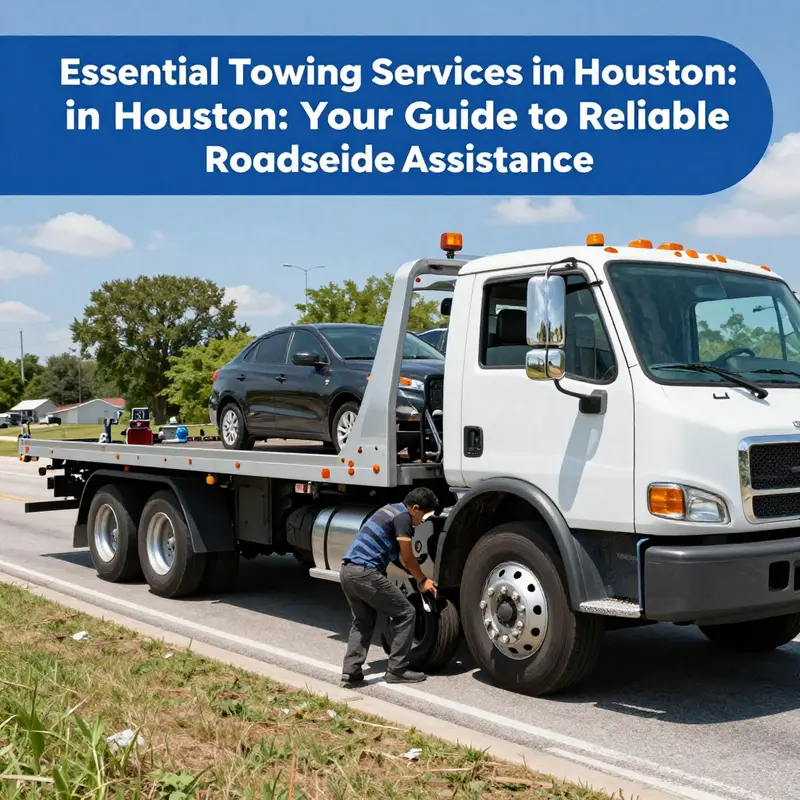
What unfolds when a vehicle fails on Houston’s roads is a sequence of practical, customer-centered actions. Roadside assistance encompasses more than a simple tow. It involves on-site diagnostics, guidance, and a plan that fits the driver’s needs at that exact moment. For many common incidents—the tire go flat, the fuel tank runs dry, the battery refuses to wake up, or a lockout traps someone inside—the immediate response is to stabilize the situation and decide whether an on-site fix is possible or if transportation to a repair shop is the safer route. In all cases, the professional responder comes equipped with the right tools, a readiness to adapt, and a demeanor that communicates calm under pressure. A well-prepared crew can switch gears from a tire change on a busy shoulder to a careful winch operation in a tricky recovery, then coordinate a ride to the customer’s chosen destination. The aim is not merely to move a car from A to B but to minimize risk, protect people, and respect the driver’s schedule.
The mechanics of reliability are rooted in coverage, dispatch efficiency, and equipment versatility. Houston demands a broad reach: a dispatcher who can interpret live traffic data, weather alerts, and GPS signals to assign the nearest available crew; crews who can respond with a flatbed for delicate or high-value vehicles or with a versatile wheel-lift unit for everyday breakdowns; and a network that can scale during peak travel times, after storms, or during major events when road conditions shift rapidly. The best roadside partners blend quick reaction with prudent decision-making. They communicate transparently about what they will do, how long it will take, and what the costs might be before proceeding, so a driver can feel informed rather than surprised when the call ends and the road ahead remains.
In recent consumer observations, highly rated providers consistently earn praise for speed, courtesy, and clear, candid communication. Reviewers repeatedly note that the difference between a momentary setback and a solvable snag is often the way a dispatcher and their team handle the situation: a friendly, precise update; a realistic ETA; and a respectful approach to the vehicle and its owner. The city’s motorists, visitors, and truck drivers share a common expectation—that a roadside partner will show up promptly, treat the vehicle with care, and guide the driver through the next steps with honesty. This is critical in a metropolis where a delay can ripple through a workday, an itinerary, or a family’s transportation plan. The value of dependable roadside service, then, lies not just in getting a car off the road, but in delivering peace of mind when the city’s streets are crowded and time is scarce.
When choosing a service on the spot, certain guardrails help ensure a fair and smooth experience. Confirm that the provider operates legally in the state, carries current insurance, and can clearly outline an ETA and a broad fee range upfront. Asking for a simple, itemized explanation of the expected work—whether it’s a jump-start, a tire change on the curb, or a tow to a nearby shop—reduces the chance of surprise charges after the work is done. Sharing precise location details, mile markers, or landmarks helps responders locate the vehicle quickly, which is especially important along the region’s major corridors. A professional technician should offer a plan, describe the likely next steps, and avoid locking in a rigid estimate before assessing the situation on-site. The goal is transparency, patient instruction for any questions, and a path forward that aligns with the driver’s preferences, whether that means continuing the trip after a quick fix or securing a tow to a preferred shop.
Houston’s road network is a blend of residential neighborhoods, business districts, and sprawling corridors that keep the city moving, not just for residents but for visitors who rely on efficient transportation to reach airports, hospitals, and venues. Roadside recovery here blends swift action with sensitivity to the driver’s context—families with children, professionals rushing to meetings, or travelers who have to catch a connector. A capable team respects this mix: they understand the pressure a stuck driver faces, they communicate clearly to reduce uncertainty, and they coordinate logistics so that the driver’s next step—the appointment, the flight, the drive home—remains on track. This is the essence of Tow Houston’s role in the city: a trusted, scalable response system that can transform a problematic moment into a resolvable one, with the least possible disruption.
For readers seeking a broader sense of how these services fit into everyday driving in Houston, consider exploring a general overview of towing in the area. It helps frame how a single call can lead to a smoother detour rather than a prolonged halt. See further context here: Towing in Houston.
External perspectives shed additional light on the reliability and customer experience that shape these services. Customer voices on local platforms reflect the importance of consistent performance, transparent pricing, and respectful handling of both people and vehicles. If you want to examine a representative consumer perspective, you can review a Yelp listing that highlights a top-rated Houston tow and recovery provider: https://www.yelp.com/biz/ej-towing-and-recovery-houston
Tow Lines and City Lines: How Houston’s Towing Network Moves the Local Economy
Houston sits at a crossroads of commerce, culture, and perpetual motion. The city’s arteries—its beltways, interstates, main streets, and the port corridor—carry a daily load of vehicles, from long-haul trucks to commuter cars, taxis, and ride-share fleets. In this ecosystem, towing services are not merely a roadside convenience; they are an embedded piece of the urban machinery that keeps traffic moving, incidents contained, and the broader economy functioning. When a vehicle breaks down on the Katy Freeway at dawn, or a collision sifts through a downtown block, a tow truck and its crew do more than remove a car. They restore a portion of order, restore access to hospitals and work, and enable emergency responders to clear scenes promptly, reestablishing routes that thousands rely on in the minutes that follow.
This integrated function has a cascading economic effect. Towing services support road safety by removing disabled vehicles that might otherwise cause secondary collisions or block lanes during peak hours. They provide rapid response that reduces downtime for stranded drivers, which in turn minimizes the risk of secondary incidents and keeps workers on schedule. Beyond the immediate recovery of vehicles, these operations ripple outward into the service ecosystem. Auto repair shops depend on a steady stream of tow-in vehicles to triage, assess, and repair, often coordinating with insurance providers to expedite claims for customers who must get back on the road after an accident. Rental car agencies, too, rely on prompt towing and vehicle recovery to replace damaged cars and to keep the flow of travelers uninterrupted. Legal and administrative processes surrounding towing fees and impoundments create another layer of activity, from lien filings to dispute resolution, all of which require specialized knowledge and local understanding.
In Houston, the landscape of towing services is shaped by the city’s distinctive traffic patterns, its status as a major port city, and its sprawling geography. The demand for towing and recovery is not uniform; it spikes in the morning and evening rush windows, around large events, and along corridors near port terminals where heavy trucks mingle with passenger traffic. Operators must balance speed with safety, dispatching a network of trucks that can reach a stalled vehicle in minutes, while also coordinating with police and traffic management teams during incidents that attract media attention or require temporary traffic diversions. In many cases, tow operators serve as a first point of contact with citizens in distress, offering guidance about next steps, whether it is arranging a ride, directing someone to nearby services, or assisting with an insurance claim after a roadside event. This front-line role places them at the intersection of public safety and consumer protection, reinforcing public trust in the systems people rely upon when a vehicle problem arises far from home.
The economic significance of this sector extends beyond the drivers and dispatchers on the road. Tow trucks and their crews generate demand for specialized equipment, maintenance of fleets, and fuel supply logistics. They anchor a network of repair shops, which hire mechanics, parts suppliers, and service staff, and they feed into the insurance ecosystem that processes claims and manages payouts after accidents or breakdowns. The rental car sector depends on a consistent flow of recovered vehicles and serviced fleet inventory to meet demand during peak travel seasons or after disruptions. In short, towing operations act like a mutable gear in a much larger machine—the machine that moves people, goods, and ideas through a metropolitan hub.
From a macro view, national data from the U.S. Bureau of Labor Statistics shows that the transportation and warehousing sector, which includes towing and recovery, contributes billions to the economy. Houston’s metropolitan area amplifies this contribution thanks to an expansive highway network, busy port activity, and a large and diverse population. While precise figures for towing alone aren’t typically published, the sector’s integration with logistics, maintenance, and emergency services makes it a vital piece of regional resilience and competitiveness. For a broader context about how these dynamics fit into the national economy, the U.S. Bureau of Labor Statistics offers comprehensive data and analysis on transportation-related employment and output. See https://www.bls.gov/ for more detail.
In practical terms, that translates into real opportunities for workers, businesses, and communities across Houston. Dispatchers who coordinate a fleet under pressure learn to read weather, traffic, and incident risk with a practical fluency that comes only from on-the-ground experience. Technicians and tow operators develop specialized expertise not only in vehicle recovery but in the delicate negotiation of fees, customer communication, and compliance with local ordinances. The city’s residents and visitors, in turn, benefit from a more stable urban experience: fewer blocked lanes, quicker clearance of scenes, and a sense that the transportation system is responsive, accountable, and capable of recovering from disruption with minimal ripple effects.
The interconnectedness of towing with law enforcement, insurers, and service providers also highlights an essential truth about Houston’s economy: resilience is built not by a single industry, but by an ecosystem that can absorb shocks and reconfigure itself quickly. As traffic patterns shift with growth, aging infrastructure, and evolving mobility options, the role of towing services evolves too—embracing new dispatch technologies, coordinated response protocols, and closer alignment with public safety strategies. In this sense, the everyday work of tow operators becomes a quiet engine of urban governance, one that quietly underpins the confidence of motorists navigating the city’s sprawling lanes.
For readers seeking further resonance with local practice, exploring a Houston-oriented resource such as towing-in-houston can illuminate how city-specific factors shape service availability and customer expectations in different neighborhoods. As Houston continues to grow, the tug between connectivity and disruption will persist, and the towing sector will remain a constant, if often unseen, partner in keeping the city moving.
External references help place this discussion in a broader landscape. The U.S. Bureau of Labor Statistics provides the macro picture of transportation and warehousing, detailing employment trends and the economic footprint of the sector that includes towing and recovery. For a broader context, see https://www.bls.gov/.
Final thoughts
Understanding the landscape of towing services in Houston is not only beneficial for every driver but presents a significant opportunity for business owners. From forming connections with reliable towing companies to leveraging their services within your business operations, being informed can enhance your customer engagement and operational readiness. Embrace the local towing industry as an integral component of Houston’s transportation and economy.