
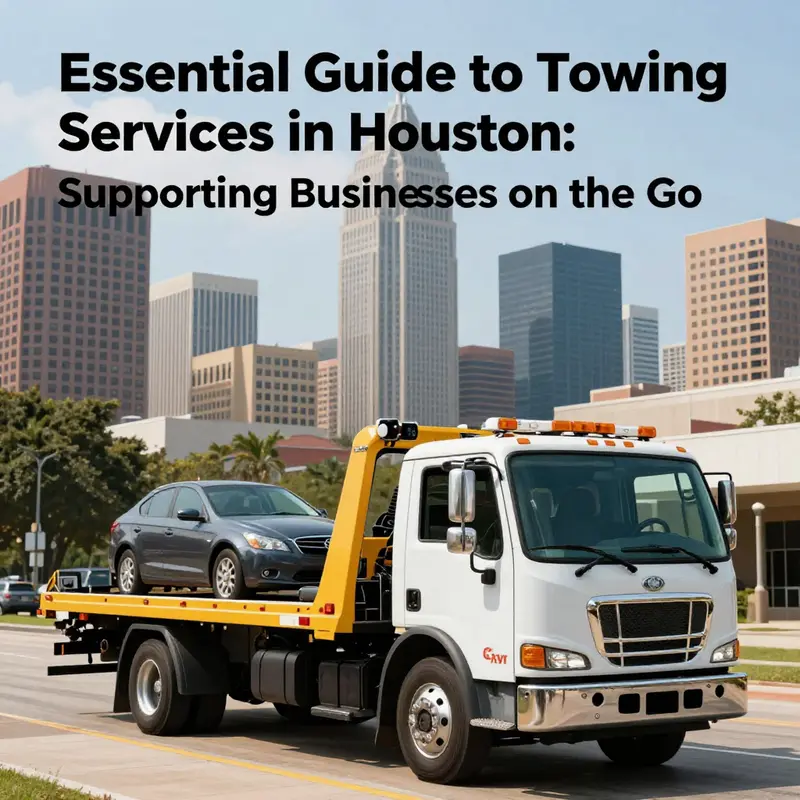
Navigating the bustling streets of Houston, businesses face unique challenges when it comes to vehicle maintenance and emergencies. Towing services play a pivotal role in ensuring fleet vehicles remain operational and employees can quickly resolve roadside issues. This guide delves into the diverse towing options available in Houston, focusing on the essential services that help businesses minimize downtime and ensure efficient operations. The first chapter will provide an overview of the various towing services, discussing what local providers offer to support businesses effectively. The subsequent chapter will detail emergency towing and roadside assistance, emphasizing their importance for businesses relying on reliable transportation solutions.
Tow Lines Across the Bayou City: Navigating Houston’s Roadside Help, Response Times, and Road Safety
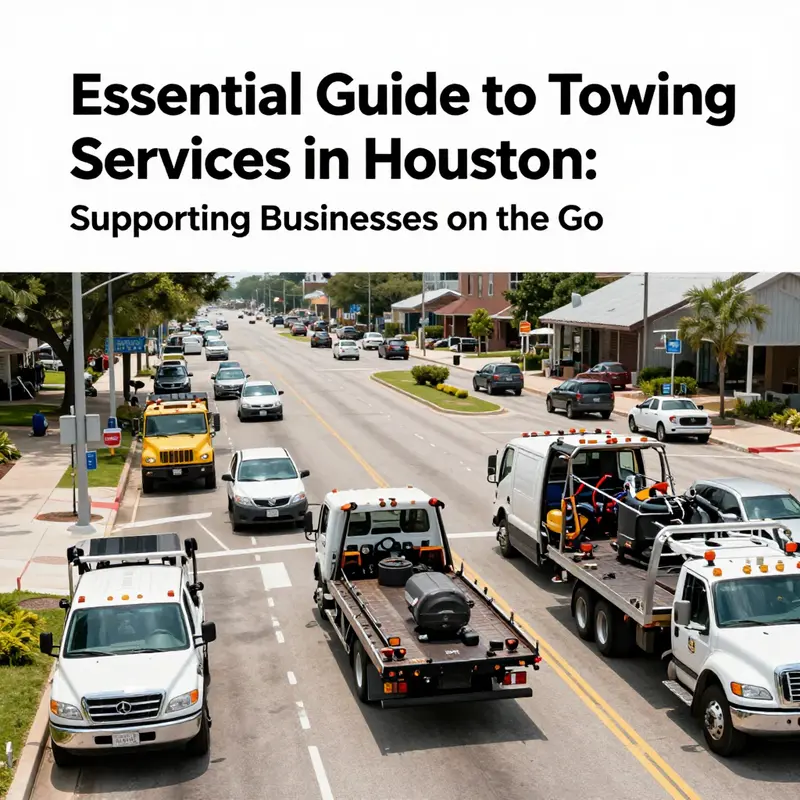
Houston sits at the crossroads of commerce and culture, a sprawling city where highways braid into neighborhoods, and a single detour can ripple into a long, congested crawl. In this setting, towing services are more than a convenience; they are a safety net that helps people keep moving when engines fail, tires spin helplessly, or weather suddenly rains down on busy streets. The landscape of Houston towing is a mosaic built from urgency, local knowledge, and the steady professionalism of crews who arrive with the right gear, the right attitude, and the right timing. The city’s size, its climate, and its traffic patterns all shape what it means to offer reliable roadside assistance, and those who work in this field continually adapt to meet the moment. When a driver is stranded, every minute matters. A quick response can reduce the risk of secondary incidents, keep lanes clear for emergency traffic, and make a bad day feel a little less out of control. In Houston, the function of a tow extends beyond moving a vehicle from one place to another; it often involves scene safety, on-site problem solving, and a link to a broader network of repair options that can determine how quickly a person can get back on the road or back home.
The Houston region is a dense tapestry of urban corridors, industrial zones, and suburban pockets that stretch from downtown toward beltways and coastal plains. The result is a high demand for a varied set of services that can handle everything from a routine jump start to a complex recovery after a collision. A practical truth about towing in this area is that no single solution fits every call. Some breakdowns are best addressed with flatbed towing, which preserves alignment and minimizes additional wear on a disabled car. Others require a heavy-duty wrecker to manage a vehicle embedded in mud or a ditch, or a winch-out when a car is pockets deep in a roadside hazard. There are also times when a roadside specialist can deliver a jump start, assist with a lockout, or simply provide a well-timed battery service that buys a driver the moment needed to reach a dealership, auto shop, or home.
A key element of Houston’s towing ecosystem is its geographic reach. Operators keep fleets positioned across the metro area to speed up response times for neighborhoods that range from the energy-rich inner city to the more residential belts to the south and east. The ability to dispatch a truck from a nearby hub matters as much as the crew’s technical skill. In practice, this means a driver stranded near a major artery like I-45 or the Katy Freeway can often be met by someone who already knows the lay of the land, understands how traffic shifts with weather, and can anticipate common bottlenecks that slow transit. It also means that a driver who is far from a repair shop has a reasonable chance of reaching a shop-friendly location that can take in the vehicle for evaluation or repair. The network is designed to keep the vehicle moving, even if the initial trip is a tow to a repair facility rather than a ride back home.
For those who study or use these services, the most noted strengths tend to be reliability and responsiveness. In this context, reliability means more than showing up. It means showing up with the right equipment, with trained personnel who know how to secure a vehicle to prevent further damage, and with the ability to explain the process in clear terms. Consumers value honesty about what is possible on the spot and what will require a longer fix. They also want transparency around costs and the options available for on-site repair versus tow to a shop. Houston providers who communicate clearly about the steps involved in a tow — from size of the vehicle to the route to the destination — tend to earn higher marks for trust and repeat business. The city’s drivers are often making split-second decisions under pressure, and the most respected operators bring a calm, methodical approach to what can be an emotionally charged moment.
The landscape of services is similarly diverse. The core offerings include flatbed towing, which is favored for its gentleness on the vehicle and its suitability for low-clearance cars or vehicles with damaged frames. Wrecker service delivers flexibility for more challenging recoveries, such as cars stuck in mud, snow, or impassable ditches. Jump starts can rescue a vehicle that has simply exhausted its battery, while lockouts help owners regain access without resorting to potentially risky forced entry. Winch-outs provide an additional safety layer for situations where a vehicle is immobilized in precarious positions. Auto transport covers longer moves, for instance when a car must be relocated to a dealership, auction, or storage facility. Roadside assistance bundles these capabilities with the human touch of guidance and reassurance, which matters when someone is stranded in unfamiliar streets or after hours.
Within this mix, Houston’s service providers often describe a philosophy that blends speed with careful execution. The most successful operators balance rapid dispatch with precise on-scene assessment. They train crews to manage traffic risks, to secure scenes, and to protect bystanders, property, and the vehicles themselves. They also invest in continuously updating their equipment, from tow trucks with adjustable wheel lifts to winches with higher pulling power that can handle heavier vehicles without compromising safety. A crew’s competence is about more than technique; it involves judgment in choosing the right method for each situation and communicating expectations so the vehicle owner knows what to anticipate. This blend of skill and judgment is vital in a city where weather can flip from sunny to sudden downpour in minutes and where rush-hour momentum can transform a minor alarm into a larger disruption.
Another facet of the Houston towing experience concerns the relationship between roadside operators and repair facilities. Many providers offer on-site repair or body work, recognizing that some problems can be resolved promptly without moving the vehicle to a shop. For other cases, the choice is to tow to a nearby facility that can diagnose and repair the issue more thoroughly. Some companies also offer discounts if the tow ends at their own shop, a consideration that can influence a driver’s decision when repairs are expected to be longer or more complex than a simple fix. This interplay between on-site capabilities and the options at a shop highlights a practical advantage in a city with a sprawling repair ecosystem. It allows drivers to weigh the immediate feasibility of on-site service against the longer, more comprehensive work available at a partner facility. In practice, this often means a dispatcher will discuss multiple pathways with a caller, helping to align the cost, time, and quality of service with the vehicle’s needs and the owner’s constraints.
The role of customer reviews and public feedback should not be underestimated here. In an information-rich market, drivers frequently consult online sources to gauge the reputation and reliability of providers before a call is made. Yelp, in particular, serves as a barometer for how well a company translates technical skill into real-world results. These reviews tend to spotlight not only the speed of response and the professionalism of the crew, but also the clarity of pricing, the fairness of the repair recommendations, and the level of courtesy shown to drivers who may be stressed or worried about their schedules. The breadth of sentiment across Houston’s towing landscape is a reminder that every call is a unique encounter and that the human element of service matters as much as the mechanical one. While the summaries of top-rated providers may change over time, the underlying themes persist: dependable response, responsible handling of vehicles, and transparent, supportive communication.
For anyone navigating a roadside crisis, choosing a reputable service hinges on several practical considerations. First is response time. While the ideal is a near-immediate arrival, the reality is shaped by traffic density, time of day, and weather. A strong operator will set realistic expectations, share an ETA, and then live up to it with efficient on-scene work. Second is the vehicle’s condition and destination. If a car is drivable and can be stabilized on the spot, a lighter intervention may suffice; if not, a secure flatbed transport becomes the safer option. Third is the safety environment. Houston’s roads can be hazardous. A towing crew must cordon off the area, coordinate with other drivers, and minimize any chance of harm. Fourth is pricing transparency. Owners appreciate knowing how the base rate scales with distance, the added cost of out-of-pocket expenses, and any after-hours surcharges. Providers who explain these elements clearly, before proceeding, are typically the ones who earn trust and repeat business.
The practical rhythms of Houston also shape how people prepare for and recover from incidents. A little preemptive planning can reduce stress and speed up the eventual resolution. Keeping the vehicle in regular maintenance helps prevent surprises on the road. Carrying a basic roadside kit — including a flashlight, reflective vest, gloves, and a small toolkit — can make a critical difference while waiting for help. Having the insurer’s roadside assistance number handy, along with a preferred local towing contact, can cut through confusion when time is of the essence. Drivers who know their exact location, cross streets, or mile markers provide an invaluable boost to the dispatcher’s ability to locate them quickly. For those who drive in areas with limited mobile coverage, a location pin shared via a trusted contact can be the difference between a smooth recovery and a long, uncertain wait.
The broader transportation network in Houston, including its weather patterns and flood-prone seasons, further underscores the value of a versatile, well-equipped tow fleet. When rain and wind converge with heavy traffic, the potential for fender-benders and stalls increases. In those moments, a well-staffed service can manage the complexity by coordinating with other responders, directing traffic away from vulnerable roadways, and ensuring that the tow operation itself does not create additional hazards. A seasoned operator understands how to sequence a rescue in a way that minimizes exposure for the vehicle owner and the crew while preserving the vehicle’s integrity. This attentiveness to the broader road-safety ecosystem is what turns a difficult situation into a recoverable one and, in many cases, into a stepping stone toward a timely repair and restoration of normal routines.
The future of towing in Houston promises even more integration with digital tools and customer-centric practices. Real-time tracking, mobile payment options, and digital invoices are becoming standard features that simplify the post-call experience. Dispatchers can coordinate multiple supports in a single episode, aligning a jump-start technician, a lockout specialist, and a tow truck to arrive in a coordinated fashion when time is critical. As cities like Houston continue to grow and evolve, the demand for drivers who combine mechanical skill with empathetic communication will remain strong. In this environment, the best providers are those who listen first, explain clearly, and then execute with precision. A driver’s trust is earned through consistent performance over time, not just a single successful tow.
For readers who want a concrete sense of how a local Houston service describes its availability and approach, a practical example can be found in the broader online conversation about the city’s towing landscape. towing company in Houston offers a window into a local perspective on service areas, fleet readiness, and the balance between on-site and shop-based work. This kind of resource helps illustrate how a dispatcher translates a call into a plan that respects the vehicle’s needs and the owner’s schedule, while still protecting everyone’s safety on the road. It is a reminder that behind every tow there is a complex choreography of equipment, people, and timing, all working together to restore mobility in a city that never stops.
Ultimately, the Houston towing ecosystem thrives on a simple principle: when the road fails you, the people who respond must be ready, capable, and considerate. The city’s roads are a stage where this principle plays out every day — a live demonstration of how practical expertise, logistical coordination, and human kindness come together to move people forward, one tow at a time. The next time the car stalls, the engine coughs, or a wheel clatters to a stop on a rain-washed curb, that anticipatory teamwork will be there, steady as a lighthouse on an ever-changing shoreline. It is the quiet efficiency of a crew who knows the city’s rhythms, who respects the urgency of a delay, and who takes pride in delivering not just a vehicle to a place, but a pathway back to routine life on the busy streets of Houston.
External resource: for firsthand impressions and consumer feedback from drivers in Houston, the Yelp community offers extensive reviews and perspectives on local tow services. See https://www.yelp.com/biz/the-best-10-towing-in-houston-tx?osq=Towing.
On the Edge of the Freeway: How Houston’s Towing Network Keeps the City Moving
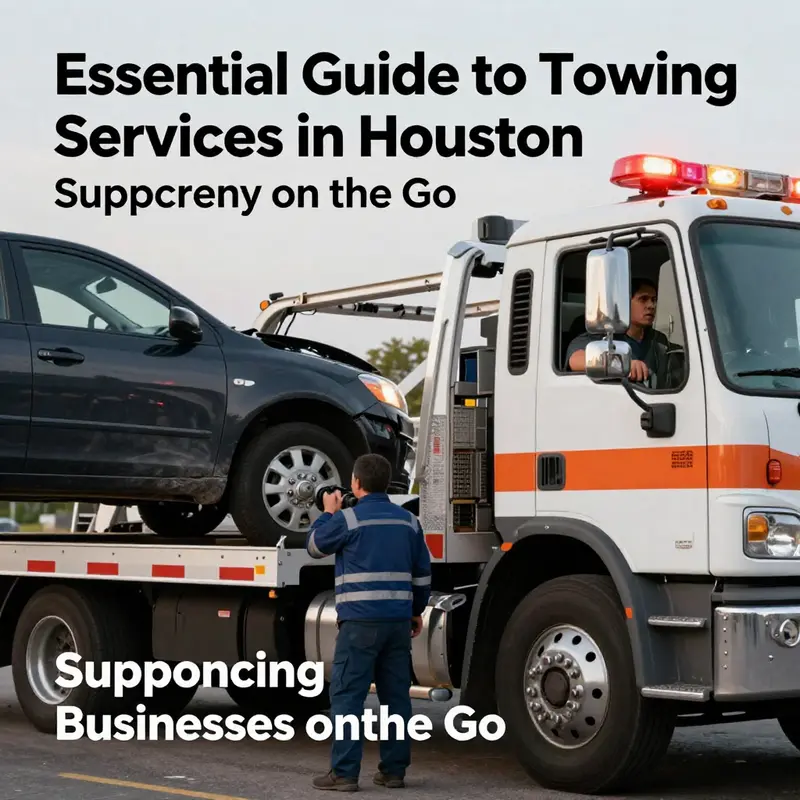
When a vehicle stalls on a busy highway, a quiet system springs into action. It is a system built not on spectacle but on readiness, discipline, and intimate local knowledge of roadways that bend around rivers, loop through dense neighborhoods, and stretch toward the industrial heart of a city that never truly sleeps.
In Houston, where traffic is a daily rhythm and the climate can test resilience, the work of towing and roadside assistance forms a vital thread in the urban fabric. It is not merely about hauling a car from one place to another; it is about restoring movement, reducing risk, and restoring a sense of control to someone who has just learned how quickly a day can pivot from routine to precarious. The scope of this chapter is not to catalog every tool a tow truck might carry or every protocol an operator might memorize. Instead, it aims to sketch a cohesive picture of how emergency towing and roadside support function in a sprawling, dynamic city. It is a chapter about readiness—how providers prepare, how dispatchers coordinate, how technicians assess a scene, and how drivers—often strangers to the people they help—enter moments of stress with steadiness and care.
In Houston, the emergency towing and roadside ecosystem rests on three pillars: rapid dispatch, professional handling of a vehicle under strain, and a flexible array of services that can respond to a wide range of situations. The dispatch centers that coordinate these efforts serve as the nerve center of the operation. A caller describes a breakdown, a location, and the immediate hazards, and the dispatcher translates those data points into a plan of action. The plan considers the vehicle type, the terrain, the traffic conditions, and the safety of everyone involved. From there, a trained operator is deployed, often with a crew that understands the city’s corridors, the neighborhoods that tighten around I-10, the outskirts that lead toward the bay or toward the suburbs, and the docks that wake up long lines of trucks at dawn. The arrival of the tow vehicle is not the end of the story but a crucial turning point. The technician must quickly assess whether the situation is best resolved on-site or requires a controlled move to a shop or repair facility. This decision hinges on a blend of safety, legality, insurance requirements, and the vehicle’s condition after the incident. The operator’s job is not simply to hoist a car and cart it away; it is to manage risk, preserve the vehicle’s integrity, and minimize the disruption to the driver’s life.
The geographic reality of Houston shapes how this system operates. The city sprawls across a wide urban footprint, with hubs in central districts and outlying communities like Webster, Pearland, and Clear Lake. Each neighborhood presents its own set of challenges: narrow lanes in older sections, wide arterials with heavy traffic, or industrial corridors where timing matters because delays cascade into congestion for whole clusters of commuters. A well-functioning towing network adapts to this mosaic. Vehicles are stationed across key areas so response times remain quick regardless of where a breakdown happens. A driver stranded on a mournful stretch of highway at the edge of rush hour may be rescued by a unit that has already logged miles in that area, recognizes the typical bottlenecks, and understands the safest way to maneuver through lanes crowded with other motorists who are also trying to regain momentum. In practice, that kind of local fluency translates into fewer minutes spent waiting, less exposure to the stress of the situation, and a smoother transition from the moment of need to the moment of relief.
Beyond speed, Houston’s roadside support hinges on the competence and calm of the personnel at the wheel. A tow operator is often the first professional a driver meets after a breakdown, and that first interaction can set the tone for the entire experience. The job demands a blend of mechanical acumen and people skills: the technician must diagnose a problem with minimal tools when possible, communicate clearly what is found, explain the options in plain language, and respect the driver’s concerns—whether those concerns are about the safety of leaving the vehicle where it sits, the cost of service, or the implications for an important appointment. The rules of engagement are simple but essential: secure the scene, protect everyone from traffic hazards, and treat the vehicle as a passenger in a delicate journey rather than an object to be disposed of as quickly as possible. This approach—where skill and empathy coexist—helps rebuild a driver’s confidence even in the worst moments. It also encourages repeat reliance on a local provider, which is vital for a city that depends on a reliable, go-to partner when every minute matters.
The range of services offered within this ecosystem matters as well, though it is easy to lose sight of the broader aim in the middle of a tense moment. In Houston, the roadside support network positions itself to assist with a spectrum of needs that extend beyond the single act of towing. Drivers may require assistance to jump-start a battery that has given out after a long night, or they may find themselves locked out of the vehicle after a travel misstep. Some situations involve a more intricate set of steps: the car may need to be moved off the road to a safe location so that an inspection can be performed and, if necessary, a referral to a repair facility can be arranged. In other instances, a vehicle that has sustained damage may need a temporary relocation to a shop for assessment and a plan for permanent repair. The goal in all cases is to restore mobility with minimal disruption and to do so with a clear understanding of what the vehicle can endure on short notice while being transported to a safe destination.
On-site solutions also play a crucial role in this network. For many drivers, getting back on the road quickly means not waiting for a full shop evaluation. A provider can often perform certain fixes or stabilize a vehicle at the roadside, enabling the driver to complete a journey with a minimum detour. When on-site repair isn’t possible, efficient coordination with a repair facility becomes essential. In these scenarios, the provider can arrange transport to a trusted facility, sometimes offering discounts when the vehicle is towed there rather than elsewhere. This capability supports drivers who are balancing schedules, deadlines, and budgets, turning a potentially catastrophic disruption into a manageable interruption. It is a practical reminder that the value of a towing network is not only in the speed of response but in the thoughtful orchestration of recovery options tailored to each driver’s needs.
For the consumer, navigating this landscape requires an awareness that the choice of a towing provider touches more than cost. Licensing, insurance coverage, and the provider’s track record for safe handling are part of the decision. Transparency about pricing and the scope of the service—from the initial dispatch to any potential storage or diagnostic fees—helps reduce anxiety and build trust. In a city as diverse as Houston, where conditions can shift within hours and neighborhoods can change character across miles, it pays to select a partner who has a proven capacity to respond to emergencies across different terrains and weather contexts. The most reliable providers maintain consistency in the quality of service, regardless of whether they are dispatched in the thick of the morning rush or during late-night hours when conditions are more hazardous and the stakes higher. Those qualities—consistency, transparency, and local fluency—together form the backbone of a service that drivers can count on when the ordinary rhythm of life is interrupted by a breakdown or an accident.
As a citizen and as a consumer, it helps to understand that this is not a solitary enterprise. It depends on a coordinated network of drivers, dispatchers, repair facilities, and insurance partners who share a common objective: to restore movement with safety at the forefront. The city’s roadways become navigable again not merely because a vehicle is lifted or moved, but because the entire chain of care functions with poise and reliability. In this sense, the Houston towing ecosystem resembles a well-rehearsed chorus, where each part—alarm, response, secure handling, and post-incident care—contributes to a smooth, humane outcome for the person who needs help. The result is not simply a vehicle that arrives at its destination; it is a driver who experiences their day resuming its prior arc, a family that is no longer stranded at the curb, and a city that remains functional under pressure.
For readers who want a concrete sense of the practical landscape, consider exploring a focal overview of what a Houston-based towing company might offer, including how they structure response times, pricing transparency, and on-site versus shop-based options. This kind of overview can illuminate the choices that drivers face when the road constrains their plans and time becomes a critical factor. To delve into a representative profile, you can visit this overview of a Houston towing company: https://mikes1towing.com/towing-company-houston/. This resource helps ground the general discussion in a real-world frame, illustrating the balance between speed, safety, and adaptability that defines Houston’s roadside assistance network.
As the city continues to evolve, the role of towing and roadside services will remain essential, evolving alongside traffic patterns, weather, and the infrastructure that supports them. The emphasis, again, is on readiness and responsible care: a crew that arrives with the right balance of technique and empathy, a plan that aligns with the driver’s immediate needs, and a commitment to delivering a dependable path back to normalcy. In Houston, where the human and the mechanical interplay is constant, the value of such a system becomes clear not in grand statements but in the steady, practiced confidence it gives to people when they most need help. That confidence, built from years of dispatch accuracy, careful scene management, and professional handling, is the quiet engine that keeps the city moving when a single vehicle’s failure could otherwise ripple into a wider delay or danger. For those who navigate the Bayou City’s roads, this is more than a service; it is a form of reliability that joins the everyday with the essential, turning moments of stress into episodes of practical, respectful support. In the end, that is the heart of towing in Houston: a pragmatic, human-centered response to disruption that allows life to proceed with a little less friction and with safety as the shared end goal.
External resource: For a snapshot of customer experiences and perceptions, you can consult Yelp reviews of Houston towing services at https://www.yelp.com/biz/the-best-10-towing-in-houston-tx.
Final thoughts
Understanding the crucial role that towing services and roadside assistance play in Houston equips business owners with the knowledge to effectively manage their vehicle fleets and respond to emergencies. Reliable towing not only minimizes downtime but also ensures that businesses maintain operational continuity, ultimately leading to enhanced productivity and customer satisfaction. Exploring the array of services offered, from flatbed towing to roadside assistance, empowers business owners to make informed decisions that best suit their operational needs.